
Start here
A few places to begin, from the aircraft’s story to the people who fly it.
Meet the aircraft
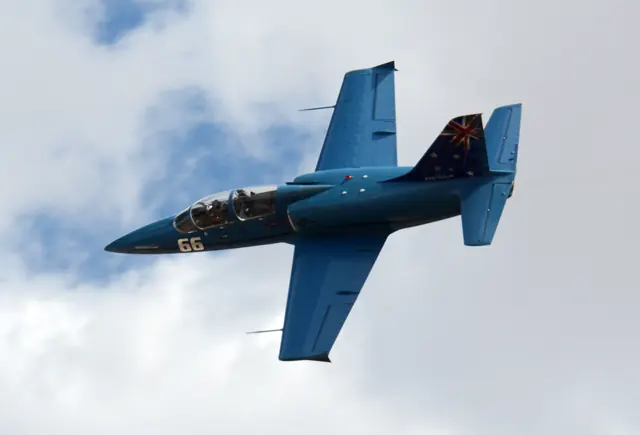
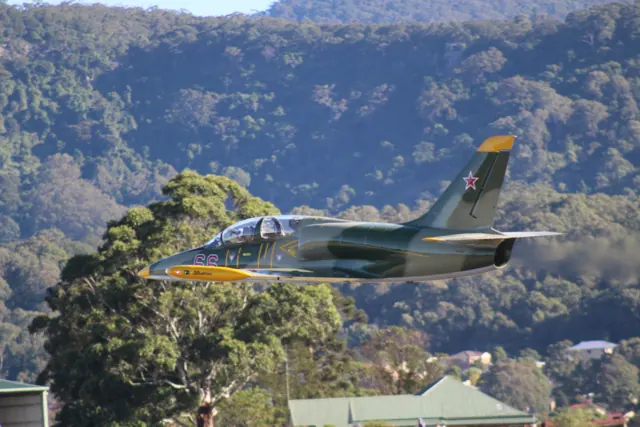
Designed by Aero Vodochody, the L-39 Albatros was built around the training role. Instructor and student sit in tandem under separate canopy sections, with a single jet engine in the fuselage. It was widely adopted by military operators, and armed versions also served in light-attack roles. An L-39 trainer, an armed derivative and a privately operated racer can share a recognisable airframe while carrying different equipment.
Aircraft background
Wikipedia contributors · Read more ↗A corporate pilot learns a different sort of jet flying
Mark already flew corporate jets when he began an L-39 checkout with Greg Morris at Gauntlet Warbirds near Chicago. The narrow cockpit, parachute and unfamiliar markings required adjustment, but the most awkward early lesson was steering with rudder pedals and a hand-operated brake. Once airborne, he found the controls light and responsive.
AOPA Pilot, April 2012. Checkout with Greg Morris in an AI-25-powered L-39; individual training experience.
AOPA Pilot · Read more ↗Into the cockpit
 YouTube
Max_Afterburner · 15 min ·
L-39 "Albatros" Jet Flight Footage
Cockpit and exterior footage of two L-39 Albatros jets, including aerobatic sequences.
Real aircraft · Aero Vodochody L-39
Watch on YouTube ↗Preview images are served by AirframeDB. Videos open on YouTube only when you choose to watch.
Meet Aero Vodochody L-39
Designed by Aero Vodochody, the L-39 Albatros was built around the training role. Instructor and student sit in tandem under separate canopy sections, with a single jet engine in the fuselage. It was widely adopted by military operators, and armed versions also served in light-attack roles.
Trainer, armed and civilian racing versions carry different equipment within the same airframe lineage. The simulator products identify their represented versions.
Aero Vodochody L-39
Aero Vodochody → · Explore the family →
Aero Vodochody L-39
Wikipedia contributors · Aero L-39 Albatros ↗Microsoft Flight Simulator · MSFS 2024 →Aircraft type designators
Use the code for the model you are flying. The linked authority lists the applicable aircraft.
History & design
Development milestones
Designer: Jan Vlček
First flight: 4 November 1968
Developed from: Aero L-29 Delfín
Wikipedia contributors · Aero L-39 Albatros ↗Aero L-39 Albatros · family/variant named by the source · Wikipedia revision 1372785053
Pilot accounts
A corporate pilot learns a different sort of jet flying
Mark already flew corporate jets when he began an L-39 checkout with Greg Morris at Gauntlet Warbirds near Chicago. The narrow cockpit, parachute and unfamiliar markings required adjustment, but the most awkward early lesson was steering with rudder pedals and a hand-operated brake. Once airborne, he found the controls light and responsive. Steep turns and a roll were exhilarating, although the pitch sensitivity made small attitude errors grow quickly.
Repeated visual circuits proved unexpectedly tiring for someone accustomed to business-jet approaches and go-arounds. Mark initially struggled to control the acceleration while turning downwind, then improved as Morris coached the timing and power changes. The engine's slow response from idle remained a central consideration throughout the training. Practice approaches simulating a flameout also made the classroom discussion of energy management more concrete. By the time he was preparing for the checkride, the once-unfamiliar cockpit felt increasingly comfortable, even if the pleasure of flying the Albatros had hardly become routine.
AOPA Pilot, April 2012. Checkout with Greg Morris in an AI-25-powered L-39; individual training experience.
Read the full account · AOPA Pilot ↗A former student introduces his instructor to a transformed Albatros
Hirschman had once taught Jimmy Hayes tailwheel and aerobatic flying. Years later, their roles reversed when Hayes introduced him to N395MK, an extensively rebuilt L-39 with a Garrett engine and Garmin avionics. From the raised rear cockpit, Hirschman enjoyed the visibility and balanced pitch and roll response. The speeds and altitudes involved in their aerobatics were much larger than those of the piston aircraft he usually flew.
The sustained loading during turns and over-the-top figures made the flight a physical workout. Hirschman noted that the pull force became lighter as the G loading increased, while Hayes coached him through the manoeuvres and watched their altitude. Hayes then handled the overhead approach and return to Sarasota. This account belongs to that particular L-39X conversion: its different engine, fuel arrangement and avionics are central to the experience. Hirschman enjoyed seeing his former student become the pilot introducing him to a new aircraft.
AOPA Pilot, September 2024. N395MK L-39X with a Garrett TFE731 conversion; performance and handling are not presented as those of an unmodified L-39.
Read the full account · AOPA Pilot ↗From simulator practice to the rear cockpit of OK-JET
Hančar prepared for an invited flight in OK-JET by studying the airfield and practising in a simulator. On the day, low cloud near Plzeň initially threatened the plan, but he was soon strapped into the rear cockpit with test pilot Vladimír Kvarda in front. The briefing included emergency actions and how they would communicate. Kvarda flew the departure and aerobatics, giving Hančar a vivid impression of the longer, sustained loading compared with his previous light-aircraft experiences.
Kvarda then handed over the controls for circuits. Hančar found the elevated rear-seat view excellent and the aircraft responsive, with enough time to check both instruments and the scene outside. Kvarda continued managing the gear and flaps and coaching the flight path. The landing view differed from what the simulator had prepared him for, and the first touchdown required guidance. A second circuit felt more relaxed. His Czech-language account distinguishes that supervised introduction from independent qualification, while conveying the excitement of finally experiencing a familiar simulated aircraft in the air.
Aeroweb.cz, 14 January 2009; flight in October 2006. English summary of a Czech first-person account; supervised handling in OK-JET, with Kvarda retaining responsibility and managing configuration.
Read the full account · Aeroweb.cz ↗In your simulator
Systems, equipment and documentation for each developer’s aircraft.
MSFS 2024L-39
Microsoft Flight Simulator · Released
L-39
Microsoft Flight Simulator · Released
Aircraft specifications
Published figures for the named real-aircraft variant. Simulator equipment and performance can differ.
| Specification | Published value |
|---|---|
| Length | 12.13 m (39 ft 10 in) |
| Wingspan | 9.46 m (31 ft 0 in) |
| Height | 4.77 m (15 ft 8 in) |
| Wing area | 18.8 m² (202 sq ft) |
| Empty weight | 3,455 kg (7,617 lb) |
| Max takeoff weight | 4,700 kg (10,362 lb) |
| Powerplant | 1 × Ivchenko AI-25TL turbofan engine, 16.87 kN (3,790 lbf) thrust |
| Maximum speed | 750 km/h (470 mph, 400 kn) at 5,000 m (16,000 ft) |
| Range | 1,100 km (680 mi, 590 nmi)(internal fuel) |
| Service ceiling | 11,000 m (36,000 ft) |
| Rate of climb | 21 m/s (4,100 ft/min) |
Manuals & resources
Find your next read
Choose a topic for a short introduction and a link to the original source. Simulator references identify the developer and edition they cover.
Pilot account
A corporate pilot learns a different sort of jet flyingAOPA Pilot, April 2012. Checkout with Greg Morris in an AI-25-powered L-39; individual training experience.
Mark already flew corporate jets when he began an L-39 checkout with Greg Morris at Gauntlet Warbirds near Chicago. The narrow cockpit, parachute and unfamiliar markings required adjustment, but the most awkward early lesson was steering with rudder pedals and a hand-operated brake. Once airborne, he found the controls light and responsive. Steep turns and a roll were exhilarating, although the pitch sensitivity made small attitude errors grow quickly.
Robert Mark
AOPA Pilot · Read the source ↗A former student introduces his instructor to a transformed AlbatrosAOPA Pilot, September 2024. N395MK L-39X with a Garrett TFE731 conversion; performance and handling are not presented as those of an unmodified L-39.
Hirschman had once taught Jimmy Hayes tailwheel and aerobatic flying. Years later, their roles reversed when Hayes introduced him to N395MK, an extensively rebuilt L-39 with a Garrett engine and Garmin avionics. From the raised rear cockpit, Hirschman enjoyed the visibility and balanced pitch and roll response. The speeds and altitudes involved in their aerobatics were much larger than those of the piston aircraft he usually flew.
Dave Hirschman
AOPA Pilot · Read the source ↗Read the original documentation from the people who created it. Manuals open on their publisher’s website.
Manual
Microsoft Flight Simulator aircraft manualsMicrosoft / aircraft developersAircraft background
Aero L-39 AlbatrosWikipedia contributors · Research background · Wikipedia revision 1372785053 · retrieved 2026-09-12Resource
MSFS 2024 FAQ and edition aircraft inventoryMicrosoftType designator
ICAO Doc 8643 — aircraft type designatorsInternational Civil Aviation Organization · Public search data retrieved 2026-09-14; authority update 2026-09-03Built-in force-feedback profiles
Read the documentary basis, editable starting settings and remaining questions for the aircraft you fly. Each explanation refers to the exact profile revision shown.
Catalogue programme-20261022-v1 · 1 profile choice
Aero Vodochody L-39
Free and Pro · Revision 1 · Partial review
MSFS 2024
Aero Vodochody L-39: Mechanical rods, levers and balancing devices motivate speed-dependent resistance, without recreating the elevator bungee's exact travel law.
Discuss this aircraft (0)
Questions, observations and useful sources from the community.
No published discussions yet. Bring a question or share a useful source.
Open aircraft discussions →Content expanded · What’s new
Something missing or a source that needs attention?
Suggest a correction ↗