

Start here
A few places to begin, from the aircraft’s story to the people who fly it.
Meet the aircraft
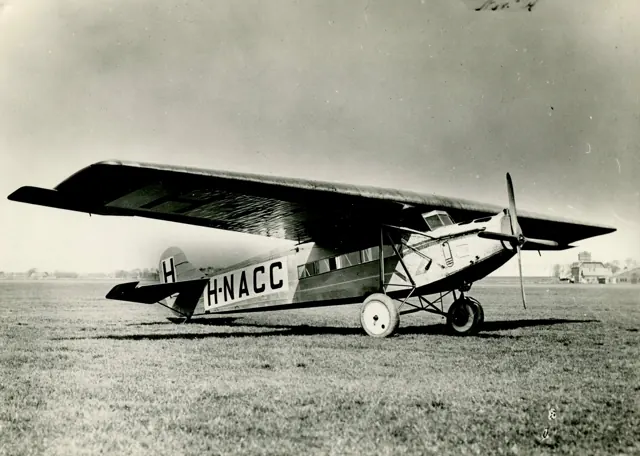
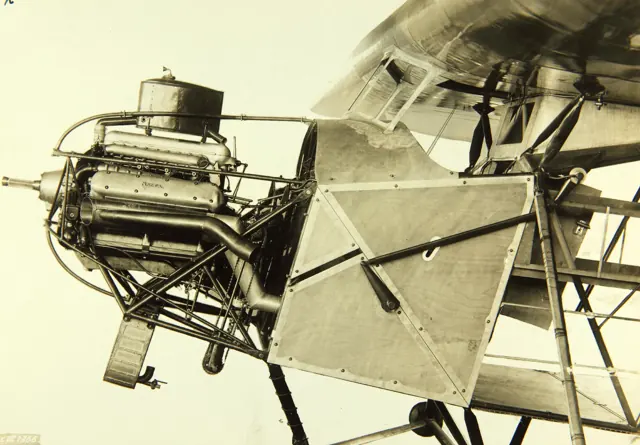
Fokker's F.VII began as a single-engine airliner, with its engine in the nose. The trimotor developments added two engines beneath the wing and helped establish early airline networks and long-distance routes. Cabin size and engine choices varied across the family and licensed production.
Aircraft background
Wikipedia contributors · Read more ↗A celebrated arrival prompts thanks to the whole crew
After the Tasman crossing, Kingsford Smith found facing the crowd a different challenge from flying. He joked about his speaking ability and recalled being swept away from the aircraft by the reception. His thanks concentrated on the other three members of the crew. He credited Ulm’s organisation, Litchfield’s navigation and McWilliam’s efforts to restore communications in the storm.
Contemporary report of his Christchurch reception speech after the September 1928 Tasman crossing. Original Southern Cross; distinct from his earlier Pacific flight.
Otago Witness / Papers Past · Read more ↗The package includes different engine configurations
The linked MSFS 2020 guide distinguishes single-engine and trimotor configurations. It provides family background; this older document does not establish unchanged MSFS 2024 controls.
F.VII · Microsoft Flight Simulator · MSFS 2024
Microsoft / aircraft developers · Read more ↗Into the cockpit
 YouTube
Microsoft Flight Simulator · 2 min ·
Microsoft Flight Simulator | Local Legend 2: Fokker F.VII
Microsoft presents the Fokker F.VII package and its historic variants.
Simulator · Microsoft Fokker F.VII · MSFS
Watch on YouTube ↗Preview images are served by AirframeDB. Videos open on YouTube only when you choose to watch.
Meet Fokker F.VII
Fokker's F.VII began as a single-engine airliner, with its engine in the nose. The trimotor developments added two engines beneath the wing and helped establish early airline networks and long-distance routes. Cabin size and engine choices varied across the family and licensed production.
The F.VIIa and F.VIIb differed in configuration. The simulator package includes several historical aircraft and later retrofits, with different ground controls and navigation equipment.
Fokker F.VII
Aircraft type designators
A model-specific ICAO or FAA designator has not been confirmed in the references reviewed for this aircraft.
History & design
A damaged replica returns through a long restoration
HARS records a landing-gear failure in 2002, subsequent storage and its acquisition of the dismantled replica in 2010. A dedicated restoration team rebuilt the aircraft; the operator links a proving flight dated 5 December 2023.
Historical Aircraft Restoration Society · Fokker FVIIB Southern Cross Replica ↗History of replica VH-USU; separate from the preserved original
Development milestones
Designer: Walter Rethel
First flight: 24 November 1924
Developed from: Fokker F.V
Wikipedia contributors · Fokker F.VII ↗Fokker F.VII · family/variant named by the source · Wikipedia revision 1353777083
Pilot accounts
A celebrated arrival prompts thanks to the whole crew
After the Tasman crossing, Kingsford Smith found facing the crowd a different challenge from flying. He joked about his speaking ability and recalled being swept away from the aircraft by the reception. His thanks concentrated on the other three members of the crew.
He credited Ulm’s organisation, Litchfield’s navigation and McWilliam’s efforts to restore communications in the storm. The flight, he insisted, depended on all four men. He also explained the wreaths they had dropped for Hood and Moncrieff, who had disappeared attempting the crossing.
Contemporary report of his Christchurch reception speech after the September 1928 Tasman crossing. Original Southern Cross; distinct from his earlier Pacific flight.
Read the full account · Otago Witness / Papers Past ↗Taking over after a night in the storm
Ulm recalled a night of lightning, rain and ice over the Tasman. Water entered the cockpit, the windscreen repeatedly iced over, and the cold became intense. Kingsford Smith flew through most of the worst weather while the crew members worked at navigation and radio repairs.
When conditions improved, Ulm relieved him at the controls for much of the remaining journey. A gap in the clouds revealed land, followed by a flight over Wellington and a welcome at Christchurch. Afterwards, Ulm praised his colleagues and defended the radio operator, whose equipment had failed despite hours of determined work in difficult conditions.
Contemporary first-person interview after the September 1928 Tasman crossing. The same newspaper also reports Kingsford Smith’s separate speech.
Read the full account · Otago Witness / Papers Past ↗A retired airline pilot takes a replica around Australia
Watt’s airline career had taken him through several generations of transport aircraft before the Southern Cross replica offered a different sort of journey. After endorsement training, he set out with copilot Peter Gardiner on a promotional tour visiting Australian capitals, regional towns and outback centres. The aircraft helped raise money for the Royal Flying Doctor Service.
The biography follows the flying through three months of stops and returns to Adelaide, then into a later New Zealand tour. That overseas journey required extra fuel tanks and navigation equipment. Watt continued making occasional promotional flights before his last recorded outing in the replica in 1995.
Squadron Association biography recording the Southern Cross replica tours from 1987. Modern engines, propellers and ground equipment distinguish this aircraft from the 1928 original.
Read the full account · 44 (Rhodesia) Squadron Association ↗In your simulator
Systems, equipment and documentation for each developer’s aircraft.
Compare simulator versions →MSFS 2024F.VII
Microsoft Flight Simulator · Released
F.VII
Microsoft Flight Simulator · Released
MSFS 2020F.VII
Microsoft Flight Simulator · Released
F.VII
Microsoft Flight Simulator · Released
Aircraft specifications
Published figures for the named real-aircraft variant. Simulator equipment and performance can differ.
| Specification | Published value |
|---|---|
| Length | 14.50 m (47 ft 7 in) |
| Wingspan | 21.71 m (71 ft 3 in) |
| Wing area | 67.6 m² (728 sq ft) |
| Empty weight | 3,100 kg (6,834 lb) |
| Gross weight | 5,300 kg (11,684 lb) |
| Powerplant | 3 × Wright J-6 Whirlwind 9-cylinder air-cooled radial piston engine, 220 kW (300 hp) each |
| Maximum speed | 210 km/h (130 mph, 110 kn) |
| Cruise speed | 178 km/h (111 mph, 96 kn) |
| Range | 1,200 km (750 mi, 650 nmi) |
| Service ceiling | 4,400 m (14,400 ft) |
Manuals & resources
Find your next read
Choose a topic for a short introduction and a link to the original source. Simulator references identify the developer and edition they cover.
Simulator documentation
The package includes different engine configurationsF.VII · Microsoft Flight Simulator · MSFS 2024
The linked MSFS 2020 guide distinguishes single-engine and trimotor configurations. It provides family background; this older document does not establish unchanged MSFS 2024 controls.
Legacy manual · MSFS 2024 interface remains unverified
Microsoft / aircraft developers · Read the source ↗Ground controls differ between the original and retrofit aircraftF.VII · Microsoft Flight Simulator · MSFS 2020
The single-engine F.VIIa and original Southern Cross use tailskids without toe brakes. Modern retrofits have toe brakes and a castoring tailwheel; the guide requires full forward yoke to enable its free movement during taxi.
MSFS 2020 manual · PDF page 31, visually checked
Microsoft / aircraft developers · Read the source ↗Select the configuration before the liveryF.VII · Microsoft Flight Simulator · MSFS 2020
The guide lists a single-engine transport, original Southern Cross trimotor, Friendship floatplane, modern retrofits and ski-equipped Josephine Ford. Aircraft selection comes before the separate livery tab.
MSFS 2020 manual · PDF pages 10–11
Microsoft / aircraft developers · Read the source ↗Choose an in-game checklist or the reference cardsF.VII · Microsoft Flight Simulator · MSFS 2020
The manual offers in-game checklists, its included Quick Reference Cards or the Ctrl+E quick-start command.
MSFS 2020 manual · PDF page 31
Microsoft / aircraft developers · Read the source ↗Check the units for the selected variantF.VII · Microsoft Flight Simulator · MSFS 2020
The original configurations’ speed tables use kilometres per hour; the modern retrofit table uses knots. The two tables use different speed units.
MSFS 2020 manual · PDF pages 29–30
Microsoft / aircraft developers · Read the source ↗The original MSFS 2020 releaseF.VII · Microsoft Flight Simulator · MSFS 2020
The January 2022 Local Legend II announcement offers the F.VII for both PC and Xbox. Its recreated historic aircraft include Southern Cross, Josephine Ford and Friendship.
2022-01-31 · release and package scope
Microsoft Flight Simulator Team · Read the source ↗Pilot account
A celebrated arrival prompts thanks to the whole crewContemporary report of his Christchurch reception speech after the September 1928 Tasman crossing. Original Southern Cross; distinct from his earlier Pacific flight.
After the Tasman crossing, Kingsford Smith found facing the crowd a different challenge from flying. He joked about his speaking ability and recalled being swept away from the aircraft by the reception. His thanks concentrated on the other three members of the crew. He credited Ulm’s organisation, Litchfield’s navigation and McWilliam’s efforts to restore communications in the storm. The flight, he insisted, depended on all four men.
Charles Kingsford Smith
Otago Witness / Papers Past · Read the source ↗Taking over after a night in the stormContemporary first-person interview after the September 1928 Tasman crossing. The same newspaper also reports Kingsford Smith’s separate speech.
Ulm recalled a night of lightning, rain and ice over the Tasman. Water entered the cockpit, the windscreen repeatedly iced over, and the cold became intense. Kingsford Smith flew through most of the worst weather while the crew members worked at navigation and radio repairs. When conditions improved, Ulm relieved him at the controls for much of the remaining journey. A gap in the clouds revealed land, followed by a flight over Wellington and a welcome at Christchurch.
Charles Ulm
Otago Witness / Papers Past · Read the source ↗Read the original documentation from the people who created it. Manuals open on their publisher’s website.
Manual
Fokker F. VII ManualMicrosoft / aircraft developers Microsoft Flight Simulator aircraft manualsMicrosoft / aircraft developersAircraft background
Fokker F.VIIWikipedia contributors · Research background · Wikipedia revision 1353777083 · retrieved 2026-09-12 Fokker FVIIB Southern Cross ReplicaHistorical Aircraft Restoration Society · Operator’s aircraft history · retrieved September 2026Resource
MSFS 2024 FAQ and edition aircraft inventoryMicrosoftDeveloper documentation
Local Legend II: Fokker F.VIIMicrosoft Flight Simulator Team · 2022-01-31 · release and package scopeBuilt-in force-feedback profiles
Read the documentary basis, editable starting settings and remaining questions for the aircraft you fly. Each explanation refers to the exact profile revision shown.
Catalogue programme-20261022-v1 · 1 profile choice
Fokker F.VII
Free and Pro · Revision 2 · Partial review
MSFS 2024 · MSFS 2020
Fokker F.VII: The chosen response supplies period-transport resistance.
Discuss this aircraft (0)
Questions, observations and useful sources from the community.
No published discussions yet. Bring a question or share a useful source.
Open aircraft discussions →Content expanded · What’s new
Something missing or a source that needs attention?
Suggest a correction ↗

