MSFS X-Plane
Robin DR400/100 Cadet ↗
A wooden touring-aircraft family recognisable by the upward-angled outer wing panels.
5 implementations+ Compare
Explore the aircraft. Find your simulator. Follow the sources.
A wooden touring-aircraft family recognisable by the upward-angled outer wing panels.
A streamlined twin-engine helicopter with a Fenestron tail rotor and retractable landing gear.
A 1920s flying boat with two engines arranged in tandem above the wing.
A light amphibian with a hull, retractable wheels and a pusher propeller.
Japan’s postwar regional turboprop, with Rolls-Royce Dart power and a career spanning passenger, freight and specialist government flying.
A modern composite twin with a roomy cabin and two wing-mounted piston engines.
A First World War trainer that became a familiar sight in the barnstorming era.
An early CRJ regional jet with rear-mounted engines and a small airliner flight deck.
TorqueSim's Pocket Rocket, a simulated PT6-powered light aircraft with two gear layouts.
Piper's two-seat trainer with fixed tricycle landing gear.
A three-engine airliner that became a mainstay of Soviet and Russian passenger transport.
A five-seat turbine helicopter developed from Robinson's smaller piston-helicopter line.
A twin-hull flying boat with its engines mounted together above the wing.
A post-war Businessliner with a radial engine, cabin transport ambitions and tailwheel gear.
A large long-haul twin that introduced Boeing's first commercial fly-by-wire airliner flight controls.
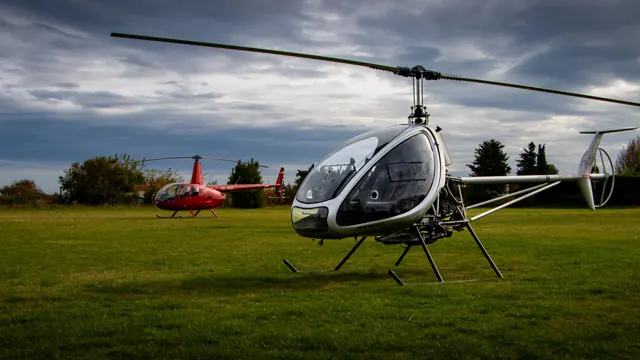
A Belgian light helicopter with two seats arranged side by side.
A two-seat training single with a high wing and fixed tricycle landing gear.
A six-engine heavy transport created for exceptionally large external and internal loads.
A composite two-seat light sport aircraft with an unobstructed cantilever high wing.
A light turbine helicopter whose land-based Scout and naval Wasp branches served different jobs.
The H130 utility helicopter, descended from the AS350 and fitted with a Fenestron.
A twin-turboprop family whose smaller conventional-tail and larger T-tail branches have distinct identities.
The four-engine Flying Fortress, a major American bomber of the Second World War.
A twin-turbine Huey descendant with a four-blade main rotor.
This is AirframeDB’s first release. More features and aircraft research are planned. Leave your email if you’d like occasional updates.