
Start here
A few places to begin, from the aircraft’s story to the people who fly it.
Meet the aircraft
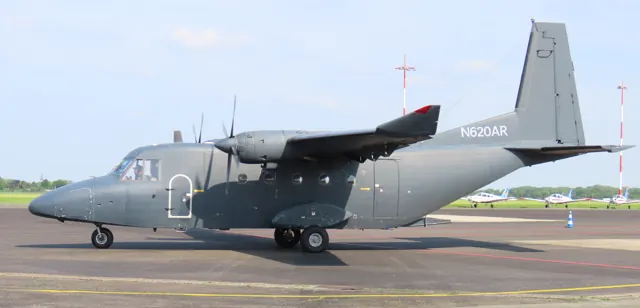
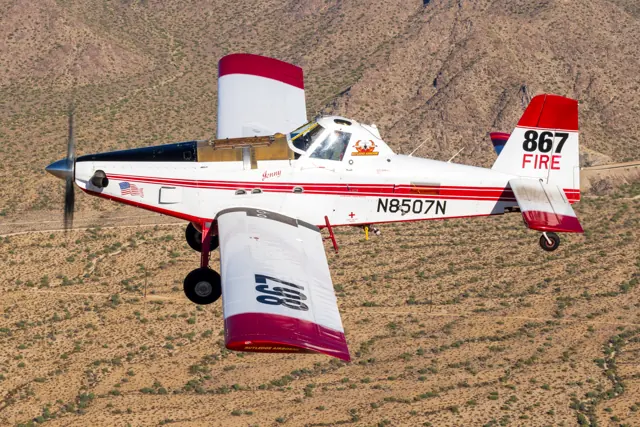
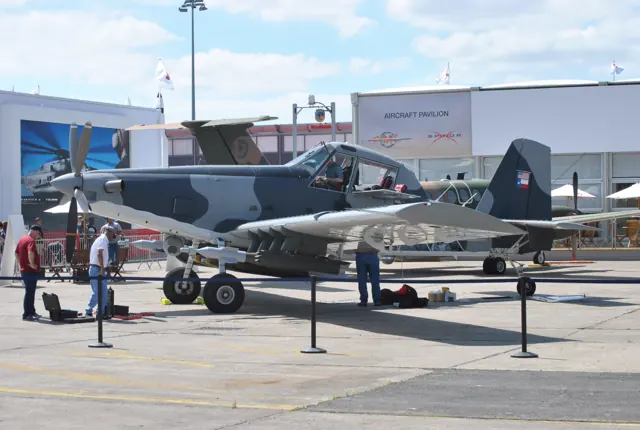
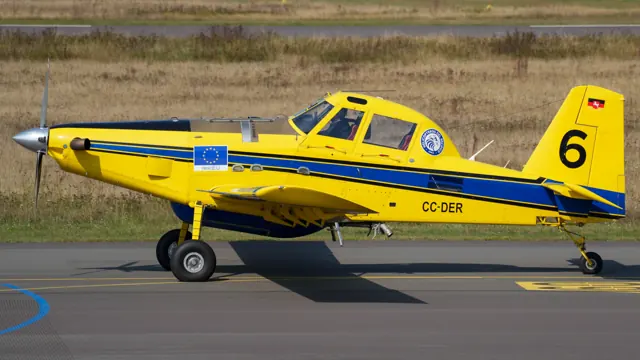
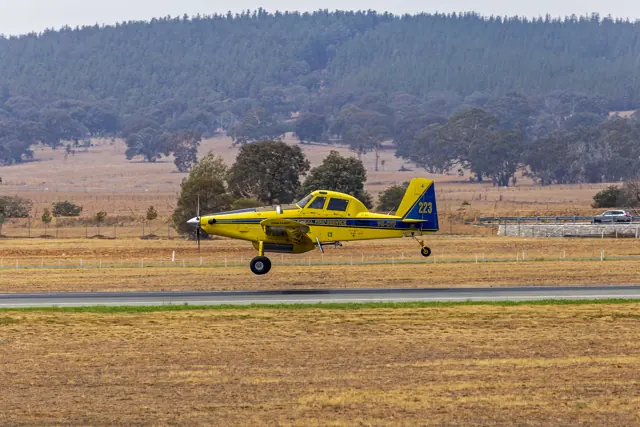
The AT-802 carries its working load in a hopper ahead of the cockpit. Its low wing, large turboprop and elevated pilot position reflect its agricultural origins. The same basic platform has been adapted for firefighting and other specialist work. An agricultural aircraft and an amphibious Fire Boss are distinct configurations. Floats, water collection and delivery equipment change the role as well as the appearance.
Aircraft background
Wikipedia contributors · Read more ↗A first water scoop proves harder than it looks
McSpadden joined Dauntless Air's annual training at Cleburne, Texas, flying with chief pilot Jesse Weaver in a Fire Boss. He found the aircraft's ordinary handling approachable, despite its size and large floats, and admired how Weaver used bank, flap and careful energy management to position it smoothly. A simulated attack on an island in Lake Whitney demonstrated the coordination between aircraft making successive drops.
AOPA Pilot, August 2023. Firsthand supervised Fire Boss training report; simulated fire attack and an interrupted practice scoop.
AOPA Pilot · Read more ↗Into the cockpit
 YouTube
Guillem · 1 min ·
Air Tractor AT-802's cockpit 1
A brief look around the cockpit and exterior of a firefighting AT-802.
Real aircraft · Air Tractor AT-802
Watch on YouTube ↗Preview images are served by AirframeDB. Videos open on YouTube only when you choose to watch.
Meet Air Tractor AT-802
The AT-802 carries its working load in a hopper ahead of the cockpit. Its low wing, large turboprop and elevated pilot position reflect its agricultural origins. The same basic platform has been adapted for firefighting and other specialist work.
An agricultural aircraft and an amphibious Fire Boss are distinct configurations. Floats, water collection and delivery equipment change the role as well as the appearance. The simulator products identify their agricultural or firefighting mission equipment.
Air Tractor AT-802
Air Tractor → · Explore the family →
Air Tractor AT-802
Wikipedia contributors · Air Tractor AT-802 ↗Microsoft Flight Simulator · MSFS 2024 →Aircraft type designators
Use the code for the model you are flying. The linked authority lists the applicable aircraft.
History & design
Development milestones
First flight: 1990
Wikipedia contributors · Air Tractor AT-802 ↗Air Tractor AT-802 · family/variant named by the source · Wikipedia revision 1369127342
Pilot accounts
A first water scoop proves harder than it looks
McSpadden joined Dauntless Air's annual training at Cleburne, Texas, flying with chief pilot Jesse Weaver in a Fire Boss. He found the aircraft's ordinary handling approachable, despite its size and large floats, and admired how Weaver used bank, flap and careful energy management to position it smoothly. A simulated attack on an island in Lake Whitney demonstrated the coordination between aircraft making successive drops.
His own attempt to collect water brought a different experience. Concerned about engine limits, he added too little power while the hopper filled. The aircraft began to oscillate, and his control inputs did not settle it. Weaver directed him to dump the water and accelerate away. McSpadden describes the relief as the load disappeared and the aircraft lifted off. The exercise made the distinction between basic floatplane handling and a well-executed scoop tangible; Weaver explained that even experienced seaplane pilots needed dedicated practice.
AOPA Pilot, August 2023. Firsthand supervised Fire Boss training report; simulated fire attack and an interrupted practice scoop.
Read the full account · AOPA Pilot ↗Bringing close-air-support habits to the fire line
Young connects his earlier A-10 service with his work flying Air Spray's AT-802F Fire Bosses from Chico, California. In Air Tractor's interview, he describes the familiar demands of airspace coordination, communication and supporting people on the ground. Flying in organised groups, under an air tactical supervisor or lead aircraft, gives that support a structure he recognised from military operations.
The aircraft still demanded humility. Young warned that a pilot arriving with complete confidence in an ability to fly anything would quickly meet a challenge in the Fire Boss. His emphasis was on preparation, disciplined execution and honest debriefing. Annual spring training brought crews back to scooping, dropping and coordinated tactics before the season. The work also had a local significance: the Camp Fire had affected colleagues, neighbours and families around Chico. This is a manufacturer's published interview, with Young's operational experience clearly attributed to him.
Air Tractor, 2 March 2019. Manufacturer-published interview with Air Spray USA’s chief SEAT pilot; commercial source context retained.
Read the full account · Air Tractor ↗A cargo stop leads to a new kind of flying
Young first encountered a Fire Boss during a cargo stop at Galena, Alaska, in 2021. A tour with its pilot persuaded her to pursue the aircraft herself. Coming from work as a mechanic, flight engineer and cargo pilot, she took leave to train, paid for simulator time and built aerial-application experience on jobs including tree fertilising. She joined Dauntless Air in 2022 and flew her first fire in Alaska that year.
In Sylvia Schneider Horne's interview, Young describes enjoying both the independence of a single-pilot cockpit and the formation work and group tactics of firefighting. Scooping was a distinct challenge that required its own practice, even for someone already comfortable with floatplanes. Alaska remained central to her enjoyment of the work and where she wanted to spend the summer.
AOPA Pilot, September 2025. Interview describing training, first fire in 2022 and subsequent Fire Boss experience in Alaska.
Read the full account · AOPA Pilot ↗The satisfaction of a useful drop, and the limits of the weather
Smajo moved from military flying instruction into Croatia's firefighting squadron when it needed additional pilots in 2008. In his interview about the AT-802 Fire Boss, he describes an aircraft whose manoeuvrability allowed useful work around difficult terrain and the edges of a fire. The most satisfying moment was a well-placed water drop and the knowledge that it had helped people below. He also wanted recognition for the maintainers and other crews whose work was often overlooked.
The 2011 Brač fire remained a difficult memory: lingering smoke reduced visibility, and sustained effort left the crews exhausted. At other times, strong wind and turbulence kept them grounded while a fire continued to spread. He describes the frustration of being needed but unable to fly, as happened around Split before conditions improved the next day. His family helped him recover from the emotional demands.
Morski.hr, 25 July 2017. Croatian-language interview; AT-802 Fire Boss operational recollections, including Brač in 2011 and the 2017 fire season.
Read the full account · Morski.hr ↗In your simulator
Systems, equipment and documentation for each developer’s aircraft.
MSFS 2024AT-802
Microsoft Flight Simulator · Released
AT-802
Microsoft Flight Simulator · Released
Aircraft specifications
Published figures for the named real-aircraft variant. Simulator equipment and performance can differ.
| Specification | Published value |
|---|---|
| Length | 35 ft 11 in (10.95 m) |
| Wingspan | 59 ft 3 in (18.06 m) |
| Height | 12 ft 9 in (3.89 m) |
| Wing area | 401.0 sq ft (37.25 m² ) |
| Empty weight | 6,505 lb (2,951 kg) |
| Max takeoff weight | 16,000 lb (7,257 kg) |
| Powerplant | 1 × Pratt & Whitney PT6A -67AG turboprop , 1,350 shp (1,010 kW) |
| Cruise speed | 221 mph (356 km/h, 192 kn) at 8,000 ft (2,440 m) |
| Stall speed | 91 mph (146 km/h, 79 kn) (power off, flaps down) |
| Range | 800 mi (1,300 km, 700 nmi) |
| Service ceiling | 13,000 ft (4,000 m) |
| Rate of climb | 850 ft/min (4.3 m/s) |
Manuals & resources
Find your next read
Choose a topic for a short introduction and a link to the original source. Simulator references identify the developer and edition they cover.
Pilot account
A first water scoop proves harder than it looksAOPA Pilot, August 2023. Firsthand supervised Fire Boss training report; simulated fire attack and an interrupted practice scoop.
McSpadden joined Dauntless Air's annual training at Cleburne, Texas, flying with chief pilot Jesse Weaver in a Fire Boss. He found the aircraft's ordinary handling approachable, despite its size and large floats, and admired how Weaver used bank, flap and careful energy management to position it smoothly. A simulated attack on an island in Lake Whitney demonstrated the coordination between aircraft making successive drops. His own attempt to collect water brought a different experience.
Richard McSpadden
AOPA Pilot · Read the source ↗Bringing close-air-support habits to the fire lineAir Tractor, 2 March 2019. Manufacturer-published interview with Air Spray USA’s chief SEAT pilot; commercial source context retained.
Young connects his earlier A-10 service with his work flying Air Spray's AT-802F Fire Bosses from Chico, California. In Air Tractor's interview, he describes the familiar demands of airspace coordination, communication and supporting people on the ground. Flying in organised groups, under an air tactical supervisor or lead aircraft, gives that support a structure he recognised from military operations. The aircraft still demanded humility.
Mike Young
Air Tractor · Read the source ↗Read the original documentation from the people who created it. Manuals open on their publisher’s website.
Manual
Microsoft Flight Simulator aircraft manualsMicrosoft / aircraft developersAircraft background
Air Tractor AT-802Wikipedia contributors · Research background · Wikipedia revision 1369127342 · retrieved 2026-09-12Resource
MSFS 2024 FAQ and edition aircraft inventoryMicrosoftType designator
ICAO Doc 8643 — aircraft type designatorsInternational Civil Aviation Organization · Public search data retrieved 2026-09-14; authority update 2026-09-03Built-in force-feedback profiles
Read the documentary basis, editable starting settings and remaining questions for the aircraft you fly. Each explanation refers to the exact profile revision shown.
Catalogue programme-20261022-v1 · 1 profile choice
Air Tractor AT-802
Free and Pro · Revision 2 · Partial review
MSFS 2024
Air Tractor AT-802: The wheeled agricultural configuration supplies equipment context; the profile's speed-dependent resistance remains nominal control loading.
Air Tractor AT-802
Air Tractor AT-802: The wheeled agricultural configuration supplies equipment context; the profile's speed-dependent resistance remains nominal control loading.
Aircraft and simulator scope
- Air Tractor AT-802 · MSFS 2024 · family starting point
Air Tractor AT-802A manufacturer specification page; floats, firefighting derivatives and other AT-802 installations need distinct evidence. · Selected choice: Air Tractor AT-802. Documentary scope does not establish every variant, add-on revision or simulator binding.
The simulator model and controls
The AT-802 carries its working load in a hopper ahead of the cockpit. Its low wing, large turboprop and elevated pilot position reflect its agricultural origins. The same basic platform has been adapted for firefighting and other specialist work.
This starting point selects Air Tractor AT-802. Its aircraft-level settings do not select a particular developer’s custom systems.
How this profile feels
Spring resistance builds with the selected airspeed response. A separate aerodynamic term adds speed-dependent control load.
Valid trim provides the configured pressure relief. Autopilot following is off.
Controls and trim
Air Tractor describes the wheeled AT-802A with its PT6A-65AG installation and agricultural working configuration. Main wheels, a tailwheel and flap-dependent performance belong to that layout. Amphibious Fire Boss equipment is a separate selection. Working speed and published cruise conditions describe aircraft operation rather than a calibration of the selected stick-loading response.
About the values
The gains are normalized profile settings. They describe the chosen effect balance; hand force depends on the device and its output limits. IAS references are tuning values rather than operating limits. Physical acceptance of this revision remains pending.
What the documentation establishes
The source identifies the AT-802A PT6A-65AG installation and wheeled agricultural configuration.
A turbine engine, main/tail wheels and flap-dependent performance are documented for this wheeled AT-802A.
Cruise and working speeds have distinct conditions; published flap-up/down stall figures are not a universal force-reference speed.
Documentary review and sources
These decisions describe the documentary basis and remaining gaps for this revision. Aircraft documentation and a starting setting describe different kinds of evidence.
Aircraft and variant
ReviewedThis starting point selects Air Tractor AT-802. Its aircraft-level settings do not select a particular developer’s custom systems.
Flight controls
Not yet reviewedAir Tractor describes the wheeled AT-802A with its PT6A-65AG installation and agricultural working configuration. Main wheels, a tailwheel and flap-dependent performance belong to that layout. Amphibious Fire Boss equipment is a separate selection. Working speed and published cruise conditions describe aircraft operation rather than a calibration of the selected stick-loading response.
Trim
Not yet reviewedPitch-trim relief is a selected software response. The manufacturer overview does not provide an exact trim-to-stick force relationship. Pitch authority 0.3 provides load relief and permitted centre movement; roll authority is 0.14.
Autopilot and stability
Not yet reviewedAutopilot following is off; the configured spring and load retain the hardware feel.
Equipment
ReviewedGear, flap and ground cues follow the selected settings and available simulator-reported states.
Speeds and limits
ReviewedThe indicated-speed references set the profile response scale; they are separate from aircraft operating limits.
Simulator integration
Not yet reviewedThe profile targets msfs2024. Add-on-specific controls use only the supported references configured by this profile.
Force-feedback settings
Not yet reviewedThe settings define the profile’s effect balance. Device output limits affect physical hand force.
Starting settings and their rationale
These configured values are starting estimates. The explanations describe what each setting controls; physical validation appears separately below.
| Setting | Starting value | What it controls and why |
|---|---|---|
| Spring strength | Starting value0.74 | What it controls and whyThe wheeled agricultural configuration supplies equipment context; the profile's speed-dependent resistance remains nominal control loading. The baseline spring is 0.74. Its low-speed blend reaches baseline strength at 72.5 KIAS. |
| Master force gain | Starting value0.85 | What it controls and whyScales overall profile strength while preserving effect balance, subject to device and output limits. |
| Profile force gain | Starting value0.68 | What it controls and whyThe aerodynamic-load gain is 0.68 with an indicated-speed reference of 145 KIAS. This supplies speed-dependent loading alongside the spring. |
| Force tuning speed/reference | Starting value145.0 kt | What it controls and whySets the IAS reference for aerodynamic loading. It is an estimate, not published cruise TAS or a flight limit. |
| Spring response reference speed | Starting value72.5 kt | What it controls and whySets the IAS where the low-speed blend reaches baseline strength; high-speed stiffening also uses it. |
| Aileron force scale | Starting value0.72 | What it controls and whyRoll and pitch aerodynamic scales are 0.72 and 1, respectively. They set the aerodynamic axis balance. No custom spring-travel curve is enabled. |
| Elevator force scale | Starting value1.0 | What it controls and whyScales pitch aerodynamic loading; pitch spring travel and trim responses are separate settings. |
| Trim feel | Starting valueEnabled | What it controls and whyRetained for compatibility and group membership. Trim relief, rather than this flag, controls centre movement. |
| Trim relief | Starting valueEnabled | What it controls and whyAllows trim relief with supported control law and valid telemetry. Axis authorities set its amount. |
| Autopilot follow | Starting valueDisabled | What it controls and whyAutopilot following is off; the configured spring and load retain the hardware feel. |
| Autopilot neutral hold | Starting valueDisabled | What it controls and whyPermits centering hold during a supported AP state, separate from following a moving target. |
| Output force limit | Starting value0.55 | What it controls and whyCaps directed-force output. Native spring effects and device limits remain separate. |
All 44 starting settings and their rationale
The settings define the profile’s effect balance. Device output limits affect physical hand force.
| Setting | Starting value | What it controls and why |
|---|---|---|
| Spring strength | Starting value0.74 | What it controls and whyThe wheeled agricultural configuration supplies equipment context; the profile's speed-dependent resistance remains nominal control loading. The baseline spring is 0.74. Its low-speed blend reaches baseline strength at 72.5 KIAS. |
| Spring deadband | Starting value0.05 | What it controls and whySets travel around the centre before the baseline spring resists. Smaller values engage it sooner. |
| Profile force gain | Starting value0.68 | What it controls and whyThe aerodynamic-load gain is 0.68 with an indicated-speed reference of 145 KIAS. This supplies speed-dependent loading alongside the spring. |
| Master force gain | Starting value0.85 | What it controls and whyScales overall profile strength while preserving effect balance, subject to device and output limits. |
| QBlend Enabled | Starting valueEnabled | What it controls and whyAllows baseline spring strength to rise with indicated airspeed where the control law permits it. |
| QSpring Minimum Factor | Starting value0.55 | What it controls and whySets low-speed spring strength as a fraction of baseline when blending is enabled. One keeps full strength. |
| QSpring Start Knots | Starting value20 kt | What it controls and whySets the IAS where the low-speed spring blend starts rising. This is a feel threshold, not a flight limit. |
| Spring response reference speed | Starting value72.5 kt | What it controls and whySets the IAS where the low-speed blend reaches baseline strength; high-speed stiffening also uses it. |
| Force tuning speed/reference | Starting value145.0 kt | What it controls and whySets the IAS reference for aerodynamic loading. It is an estimate, not published cruise TAS or a flight limit. |
| Airspeed spring stiffening gain | Starting value0.1 | What it controls and whyThe high-speed spring-stiffening gain is 0.1. It strengthens the permitted spring response above 72.5 KIAS, with the squared-speed ratio capped at 5. |
| Airspeed spring stiffening limit | Starting value5 | What it controls and whyLimits the squared airspeed ratio used for high-speed spring stiffening; it is not a device-force cap. |
| Aileron force scale | Starting value0.72 | What it controls and whyRoll and pitch aerodynamic scales are 0.72 and 1, respectively. They set the aerodynamic axis balance. No custom spring-travel curve is enabled. |
| Elevator force scale | Starting value1.0 | What it controls and whyScales pitch aerodynamic loading; pitch spring travel and trim responses are separate settings. |
| Output force limit | Starting value0.55 | What it controls and whyCaps directed-force output. Native spring effects and device limits remain separate. |
| Trim feel | Starting valueEnabled | What it controls and whyRetained for compatibility and group membership. Trim relief, rather than this flag, controls centre movement. |
| Trim relief | Starting valueEnabled | What it controls and whyAllows trim relief with supported control law and valid telemetry. Axis authorities set its amount. |
| Elevator Authority | Starting value0.3 | What it controls and whyPitch-trim relief is a selected software response. The manufacturer overview does not provide an exact trim-to-stick force relationship. Pitch authority 0.3 provides load relief and permitted centre movement; roll authority is 0.14. |
| Aileron Authority | Starting value0.14 | What it controls and whyScales supported roll-trim relief and permitted centre movement. Zero removes roll response. |
| Force Trim Enabled | Starting valueDisabled | What it controls and whyEnables local force trim, separate from aircraft-owned trim and add-on integration qualification. |
| GLoad Enabled | Starting valueEnabled | What it controls and whyAllows load-factor changes to modify permitted spring laws. Passive fly-by-wire feel can suppress it. |
| Rate Damping Enabled | Starting valueEnabled | What it controls and whyEnables rate damping with the configured coefficients and control law. |
| Autopilot follow | Starting valueDisabled | What it controls and whyAutopilot following is off; the configured spring and load retain the hardware feel. |
| Autopilot follow authority | Starting value0.1 | What it controls and whySets admitted AP-follow gain, not a percentage of travel. Runtime ownership and input limits still apply. |
| Autopilot neutral hold | Starting valueDisabled | What it controls and whyPermits centering hold during a supported AP state, separate from following a moving target. |
| Autopilot neutral hold strength | Starting value0.6 | What it controls and whySets admitted AP neutral-hold strength; inactive while neutral hold is disabled. |
| Enabled | Starting valueEnabled | What it controls and whyEnables aerodynamic cues; each still needs nonzero strength and its simulator conditions. |
| Gain | Starting value0.28 | What it controls and whySets stall-buffet strength. Zero removes the cue without changing simulator stalls or warnings. |
| Gain | Starting value0 | What it controls and whySets high-Mach buffet strength; onset and full-strength thresholds are separate. |
| Gain | Starting value0.14 | What it controls and whySets flap buffet at the configured position and speed gates. Flap movement texture is separate. |
| Maximum flap index | Starting value3 | What it controls and whySets the final flap index for detent normalization. UP plus three detents uses maximum index3. |
| Minimum flap index | Starting value2 | What it controls and whySets the first flap detent that admits buffet; this is a handle index, not degrees. |
| Gain | Starting value0 | What it controls and whySets gear aerodynamic buffet; movement and ground-contact cues are separate. |
| Shaker Enabled | Starting valueDisabled | What it controls and whyPermits shaker at supported warning conditions; the switch does not establish aircraft equipment. |
| Stick shaker amplitude | Starting value0.5 | What it controls and whySets triggered shaker strength; inactive while the shaker feature is disabled. |
| Enabled | Starting valueEnabled | What it controls and whyEnables ground effects; each still needs its own strength and contact or motion telemetry. |
| Gain | Starting value0.42 | What it controls and whySets rolling texture strength, modified by speed, surface and undercarriage configuration. |
| Gain | Starting value0.32 | What it controls and whySets gear-bump texture during ground motion, separate from touchdown impact. |
| Gain | Starting value0.82 | What it controls and whySets landing-impact strength; landing telemetry and response shape determine the pulse. |
| Gain | Starting value0.48 | What it controls and whySets reverse-thrust vibration with valid reverser and engine conditions. Zero removes the cue. |
| Enabled | Starting valueEnabled | What it controls and whyEnables engine cues with nonzero settings and valid running-engine telemetry. |
| Gain | Starting value0.06 | What it controls and whySets estimated engine vibration using configured telemetry and response, not measured cockpit vibration. |
| Enabled | Starting valueEnabled | What it controls and whyEnables accessory cues with configured strengths and observed accessory movement. |
| Gain | Starting value0.12 | What it controls and whySets texture from observed flap movement; a command without movement does not establish the cue. |
| Gain | Starting value0 | What it controls and whySets texture from observed gear movement, separate from aerodynamic and touchdown effects. |
Limits and open questions
- The manufacturer performance page does not explain the AT-802A primary-control transmission or cockpit force source.
- Flap-dependent stall speeds are listed, but trim mechanism and authority are not.
- No AT-802A autopilot installation or simulator servo interface is specified on this page.
- Real-aircraft specifications do not establish simulator flap, gear or force-feedback telemetry.
- The AT-802A performance figures do not determine a physical stick-force gradient or the preset's force coefficients.
Physical validation
No physical force validation is recorded in this public catalogue for this revision. Documentary review and software checks do not establish how a particular device feels.
Discuss this aircraft (0)
Questions, observations and useful sources from the community.
No published discussions yet. Bring a question or share a useful source.
Open aircraft discussions →Content expanded · What’s new
Something missing or a source that needs attention?
Suggest a correction ↗