
Start here
A few places to begin, from the aircraft’s story to the people who fly it.
Meet the aircraft
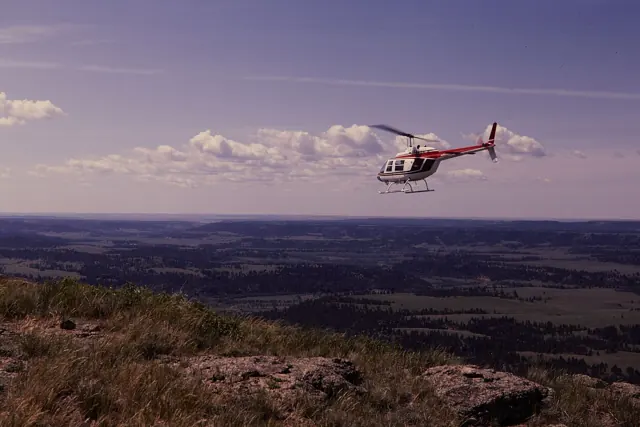
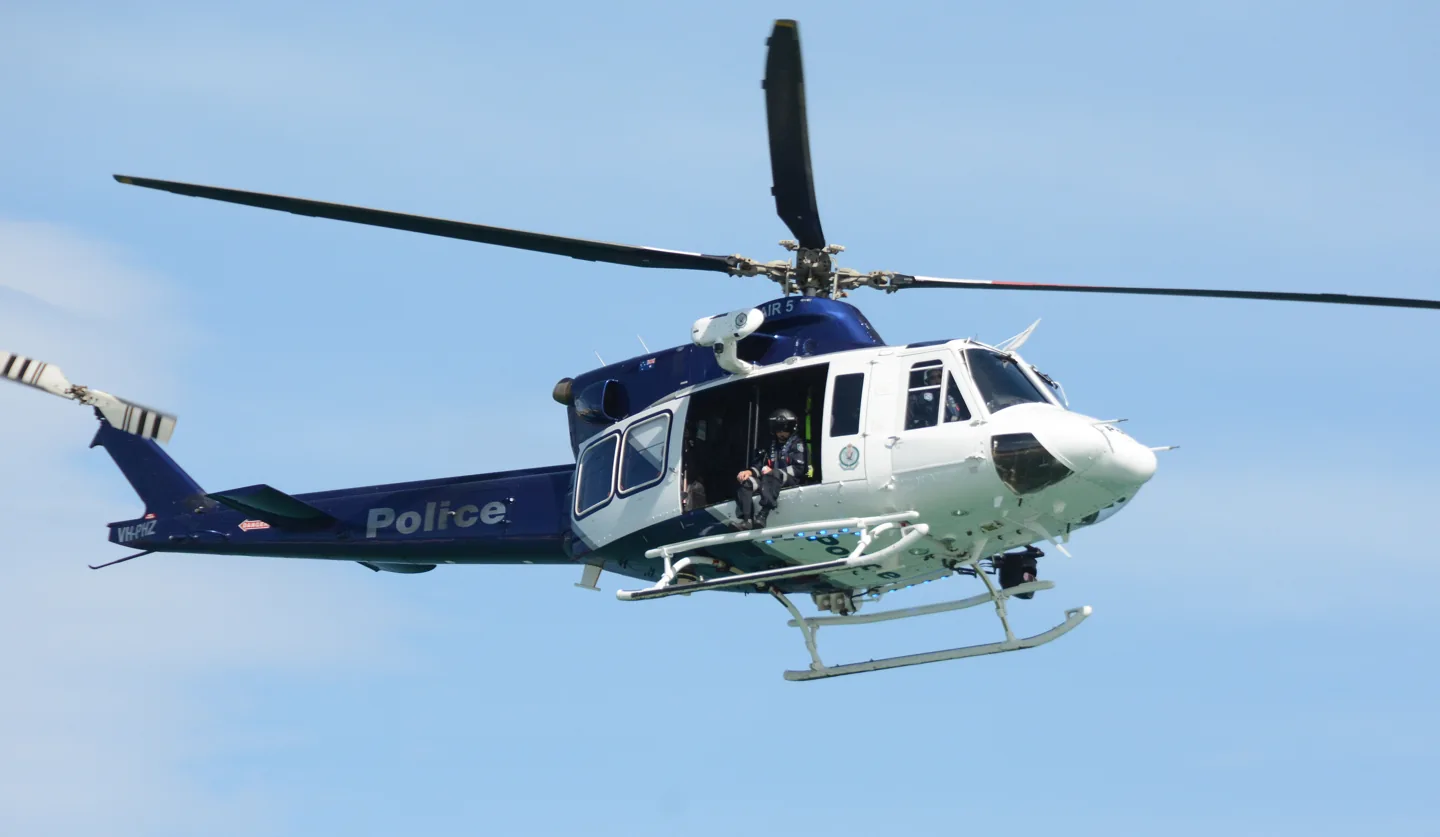
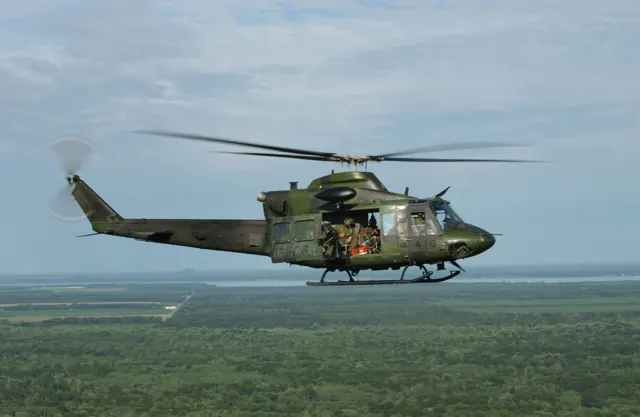
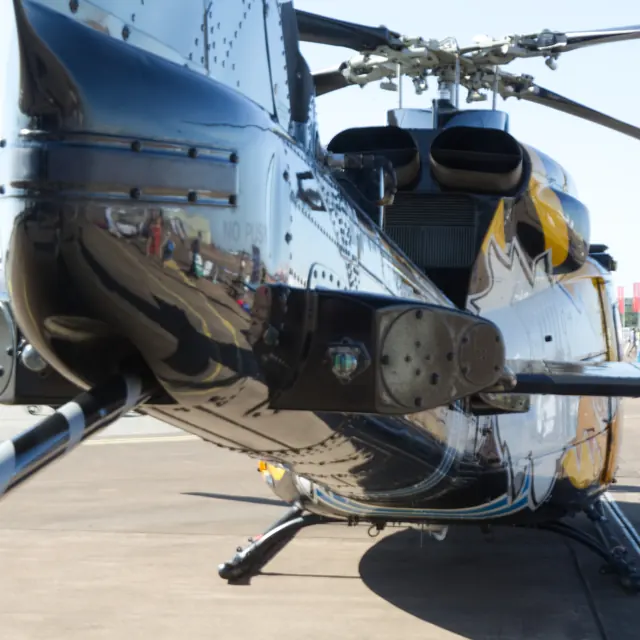
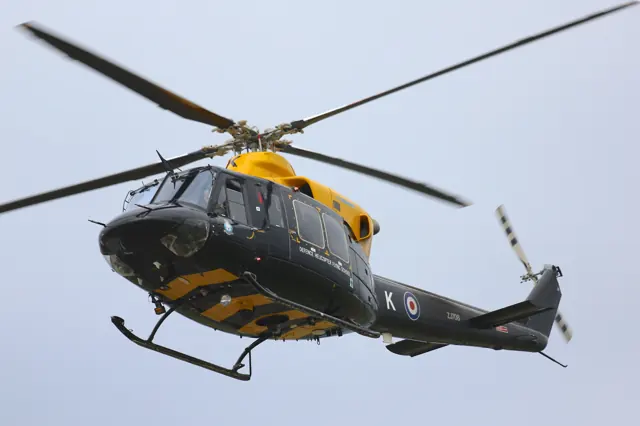
The 412 developed from Bell's 212, replacing the earlier main-rotor arrangement with a composite four-blade system. The airframe found both civilian and military customers, and later versions introduced further cockpit and equipment changes. It belongs to the wider Huey family but has its own rotor, performance and systems context.
Aircraft background
Wikipedia contributors · Read more ↗Familiar Huey roots and a long trip home
Charles felt at home in the 412EPX after earlier Huey flying, although the mix of familiar switches and newer displays still offered discoveries. Greg Maitlen accompanied the Arizona demonstration, which included photography, a mountain landing and a simulated engine failure. Bright sunlight made some autopilot buttons difficult to read, and Charles initially used more pedal movement than the helicopter needed. The introduction continued with a lengthy ferry to Colorado.
Vertical · June 2022. Early-May 412EPX demonstration from Falcon Field, Arizona, with Greg Maitlen, followed by a ferry to Colorado; the demonstration aircraft was lightly loaded.
Vertical · Read more ↗Mission equipment gives the utility helicopter work to do
X-Trident’s listing describes a winch and rescue operations, a water-drop system, a NIGHTSUN spotlight and a FLIR camera. It also includes a landing dolly, custom failures and configurable attached objects.
Bell 412 · X-Plane 11 · X-Plane 12
X-Trident · Read more ↗Into the cockpit
 YouTube
nicolas ruchonnet
Bell 412 Startup
A startup demonstration of the older X-Plane edition; check the current manual for changes.
X-Trident Bell 412; X-Plane 10.35; historical tutorial
Watch on YouTube ↗Preview images are served by AirframeDB. Videos open on YouTube only when you choose to watch.
Meet Bell 412
The 412 developed from Bell's 212, replacing the earlier main-rotor arrangement with a composite four-blade system. The airframe found both civilian and military customers, and later versions introduced further cockpit and equipment changes. It belongs to the wider Huey family but has its own rotor, performance and systems context.
Bell 412
Aircraft type designators
Use the code for the model you are flying. The linked authority lists the applicable aircraft.
History & design
The EPX grows from a long utility lineage
Charles places the 412EPX within the Huey, 212 and 412 family. Bell and Subaru’s development work for Japan’s UH-2 also produced changes offered in the civil EPX, connecting a familiar airframe lineage with a newer programme.
Vertical · Subaru-Bell’s new pickup: the 412EPX ↗Family and programme background reported in 2022
Development milestones
First flight: August 1979 ( 1979-08 )
Developed from: Bell 212
Wikipedia contributors · Bell 412 ↗Bell 412 · family/variant named by the source · Wikipedia revision 1367914534
Pilot accounts
Familiar Huey roots and a long trip home
Charles felt at home in the 412EPX after earlier Huey flying, although the mix of familiar switches and newer displays still offered discoveries. Greg Maitlen accompanied the Arizona demonstration, which included photography, a mountain landing and a simulated engine failure. Bright sunlight made some autopilot buttons difficult to read, and Charles initially used more pedal movement than the helicopter needed.
The introduction continued with a lengthy ferry to Colorado. Mountain winds gave him another reason to appreciate the autopilot, while the absence of the optional fuel-flow display was something he noticed during the journey. By the end of the day, familiarity had grown into affection. His report balances that response with small cockpit frustrations and the conditions of the particular aircraft he flew.
Vertical · June 2022. Early-May 412EPX demonstration from Falcon Field, Arizona, with Greg Maitlen, followed by a ferry to Colorado; the demonstration aircraft was lightly loaded.
Read the full account · Vertical ↗A dark landing site leaves a lasting memory
A nighttime medical call brought McClendon and two nurses towards a road accident in rain showers. Information about obstacles at the proposed landing site was uncertain, and the urgency surrounding the patient added pressure. When the helicopter’s lights revealed power lines, he abandoned the approach and reconsidered how to reach the scene.
After landing, McClendon spoke with the firefighter who had been helping on the ground. The encounter changed the tone of his memory: the man was wet, tired and doing unfamiliar work under difficult circumstances. McClendon remained shaken by how close the approach had come to the wires. His recollection focuses on incomplete communication and the people involved, preserving the discomfort of the event without turning the eventual approach into a technique to copy.
Vertical · November 2024, recalling a Bell 412 medical flight in spring 1991. This is the pilot’s retrospective account, with no exact location given.
Read the full account · Vertical ↗A night flight exposes a problem in the organisation
McClendon joined a programme where the chief pilot discouraged autopilot use, despite the Bell 412 having the equipment installed. Having used automation in other aircraft, he studied the manual and explored the system in clear weather. The experience made him question the assumptions that had kept it out of routine use.
Later, on a return flight around three in the morning, deteriorating visibility led him to use an instrument approach to an airport and arrange an ambulance transfer. Afterwards he concealed the autopilot use from his chief pilot, a detail that exposes the organisation’s poor climate for discussing experience. This is a different event from his power-line recollection.
Vertical · February 2025. A separate recollection from a Midwestern Bell 412 medical programme; exact date and operator are not stated.
Read the full account · Vertical ↗In your simulator
Systems, equipment and documentation for each developer’s aircraft.
X-Plane 11 · X-Plane 12Bell 412
X-Trident · Released
Bell 412
X-Trident · Released
Aircraft specifications
Published figures for the named real-aircraft variant. Simulator equipment and performance can differ.
| Specification | Published value |
|---|---|
| Length | 56 ft 1 in (17.09 m) including rotors |
| Height | 15 ft 0 in (4.57 m) |
| Empty weight | 6,789 lb (3,079 kg) |
| Max takeoff weight | 11,900 lb (5,398 kg) |
| Powerplant | 1 × Pratt & Whitney Canada PT6T-3D Twin-Pac or PT6T-3DF Twin-Pac coupled turboshaft engine - each, 1,250 shp (930 kW) |
| Main rotor diameter | 46 ft 0 in (14.02 m) |
| Main rotor area | 1,662 sq ft (154.4 m² ) |
| Maximum speed | 140 kn (160 mph, 260 km/h) |
| Cruise speed | 122 kn (140 mph, 226 km/h) |
| Range | 529 nmi (609 mi, 980 km) |
| Service ceiling | 20,000 ft (6,100 m) |
| Rate of climb | 1,350 ft/min (6.9 m/s) |
Manuals & resources
Find your next read
Choose a topic for a short introduction and a link to the original source. Simulator references identify the developer and edition they cover.
Simulator documentation
Mission equipment gives the utility helicopter work to doBell 412 · X-Trident · X-Plane 11 · X-Plane 12
X-Trident’s listing describes a winch and rescue operations, a water-drop system, a NIGHTSUN spotlight and a FLIR camera. It also includes a landing dolly, custom failures and configurable attached objects.
Gathered X-Plane.org developer listing · retrieved September 2026
X-Trident · Read the source ↗The X-Plane versions have different update historiesBell 412 · X-Trident · X-Plane 11 · X-Plane 12
The listing supports X-Plane 11 and 12, while identifying the 5.x updates as X-Plane 12-specific. Version 5.0 added rain and wiper effects and individual loading sliders; 5.1 added Apple Silicon support. The displayed 5.2 date conflicts between the summary and history, so it is not used as a reliable chronology.
Gathered listing · version history 4.0–5.2
X-Trident · Read the source ↗Pilot account
Familiar Huey roots and a long trip homeVertical · June 2022. Early-May 412EPX demonstration from Falcon Field, Arizona, with Greg Maitlen, followed by a ferry to Colorado; the demonstration aircraft was lightly loaded.
Charles felt at home in the 412EPX after earlier Huey flying, although the mix of familiar switches and newer displays still offered discoveries. Greg Maitlen accompanied the Arizona demonstration, which included photography, a mountain landing and a simulated engine failure. Bright sunlight made some autopilot buttons difficult to read, and Charles initially used more pedal movement than the helicopter needed. The introduction continued with a lengthy ferry to Colorado.
Michael Maya Charles
Vertical · Read the source ↗A dark landing site leaves a lasting memoryVertical · November 2024, recalling a Bell 412 medical flight in spring 1991. This is the pilot’s retrospective account, with no exact location given.
A nighttime medical call brought McClendon and two nurses towards a road accident in rain showers. Information about obstacles at the proposed landing site was uncertain, and the urgency surrounding the patient added pressure. When the helicopter’s lights revealed power lines, he abandoned the approach and reconsidered how to reach the scene. After landing, McClendon spoke with the firefighter who had been helping on the ground.
Woody McClendon
Vertical · Read the source ↗Read the original documentation from the people who created it. Manuals open on their publisher’s website.
Aircraft background
Bell 412Wikipedia contributors · Research background · retrieved 2026-09-12Product
Bell 412X-Trident · Official developer / designated store catalogue · checked 2026-09-12Type designator
ICAO Doc 8643 — aircraft type designatorsInternational Civil Aviation Organization · Public search data retrieved 2026-09-14; authority update 2026-09-03Built-in force-feedback profiles
Read the documentary basis, editable starting settings and remaining questions for the aircraft you fly. Each explanation refers to the exact profile revision shown.
Catalogue programme-20261022-v1 · 2 profile choices
X-Trident Bell 412
X-Trident · Free and Pro · Revision 2 · Inherited starting point
X-Plane 12
X-Trident Bell 412: The configured cyclic centre and damping provide nominal resistance for the selected four-bladed helicopter, separate from its guidance modes.
Bell 412
Free and Pro · Revision 1 · Partial review
X-Plane 12 · X-Plane 11
Bell 412: The configured cyclic centre and damping provide nominal resistance for the selected four-bladed helicopter, separate from its guidance modes.
Bell 412
Bell 412: The configured cyclic centre and damping provide nominal resistance for the selected four-bladed helicopter, separate from its guidance modes.
Aircraft and simulator scope
- Bell 412 · X-Plane 12 · family starting point
- Bell 412 · X-Plane 11 · family starting point
XTrident Bell 412 product page; the attached DOT noise report does not document a Bell 412 and is excluded from system conclusions. · Selected choice: Bell 412. Documentary scope does not establish every variant, add-on revision or simulator binding.
The simulator model and controls
The 412 developed from Bell's 212, replacing the earlier main-rotor arrangement with a composite four-blade system. The airframe found both civilian and military customers, and later versions introduced further cockpit and equipment changes. It belongs to the wider Huey family but has its own rotor, performance and systems context.
This starting point selects Bell 412. Its aircraft-level settings do not select a particular developer’s custom systems.
How this profile feels
Spring resistance builds with the selected airspeed response. A separate aerodynamic term adds speed-dependent control load.
Local force trim is off. Autopilot following is off.
Cyclic damping is on. Its configured gain is 0.35; it resists hardware motion separately from the spring and aircraft stabilization.
Controls and trim
X-Trident describes its Bell 412 as a twin-turbine, four-blade helicopter on skids, with hydraulic, electrical and fuel systems and a custom four-channel autopilot. Its many modes belong to the aircraft's own guidance logic. Older improvement notes do not establish the units or meaning of a current servo target, and disabled Bridge following does not mean the add-on lacks an AFCS.
About the values
The gains are normalized profile settings. They describe the chosen effect balance; hand force depends on the device and its output limits. IAS references are tuning values rather than operating limits. Physical acceptance of this revision remains pending.
What the documentation establishes
The XTrident page identifies its Bell 412 systems and custom autopilot implementation.
A custom four-channel autopilot with numerous modes is advertised; disabled following is not evidence of absent AFCS.
Fuel, hydraulic and electrical systems are listed; the page does not provide force-cue magnitudes.
Documentary review and sources
These decisions describe the documentary basis and remaining gaps for this revision. Aircraft documentation and a starting setting describe different kinds of evidence.
Aircraft and variant
ReviewedThis starting point selects Bell 412. Its aircraft-level settings do not select a particular developer’s custom systems.
Flight controls
Not yet reviewedX-Trident describes its Bell 412 as a twin-turbine, four-blade helicopter on skids, with hydraulic, electrical and fuel systems and a custom four-channel autopilot. Its many modes belong to the aircraft's own guidance logic. Older improvement notes do not establish the units or meaning of a current servo target, and disabled Bridge following does not mean the add-on lacks an AFCS.
Trim
Not yet reviewedCyclic damping is on. Its configured gain is 0.35; it resists hardware motion separately from the spring and aircraft stabilization.
Autopilot and stability
ReviewedAutopilot following is off; the configured spring and load retain the hardware feel.
Equipment
ReviewedGear, flap and ground cues follow the selected settings and available simulator-reported states.
Speeds and limits
Not yet reviewedThe indicated-speed references set the profile response scale; they are separate from aircraft operating limits.
Simulator integration
Not yet reviewedThe profile targets xplane12, xplane11. Add-on-specific controls use only the supported references configured by this profile.
Force-feedback settings
Not yet reviewedThe settings define the profile’s effect balance. Device output limits affect physical hand force.
Starting settings and their rationale
These configured values are starting estimates. The explanations describe what each setting controls; physical validation appears separately below.
| Setting | Starting value | What it controls and why |
|---|---|---|
| Spring strength | Starting value0 | What it controls and whyThe configured cyclic centre and damping provide nominal resistance for the selected four-bladed helicopter, separate from its guidance modes. The baseline spring is 0. Its low-speed blend reaches baseline strength at 60 KIAS. |
| Master force gain | Starting value0.85 | What it controls and whyScales overall profile strength while preserving effect balance, subject to device and output limits. |
| Profile force gain | Starting value0.35 | What it controls and whyThe aerodynamic-load gain is 0.35 with an indicated-speed reference of 120 KIAS. This supplies speed-dependent loading alongside the spring. |
| Force tuning speed/reference | Starting value120.0 kt | What it controls and whySets the IAS reference for aerodynamic loading. It is an estimate, not published cruise TAS or a flight limit. |
| Spring response reference speed | Starting value60.0 kt | What it controls and whySets the IAS where the low-speed blend reaches baseline strength; high-speed stiffening also uses it. |
| Aileron force scale | Starting value1 | What it controls and whyRoll and pitch aerodynamic scales are 1 and 1, respectively. They set the aerodynamic axis balance. No custom spring-travel curve is enabled. |
| Elevator force scale | Starting value1 | What it controls and whyScales pitch aerodynamic loading; pitch spring travel and trim responses are separate settings. |
| Trim feel | Starting valueDisabled | What it controls and whyRetained for compatibility and group membership. Trim relief, rather than this flag, controls centre movement. |
| Trim relief | Starting valueDisabled | What it controls and whyAllows trim relief with supported control law and valid telemetry. Axis authorities set its amount. |
| Autopilot follow | Starting valueDisabled | What it controls and whyAutopilot following is off; the configured spring and load retain the hardware feel. |
| Autopilot neutral hold | Starting valueDisabled | What it controls and whyPermits centering hold during a supported AP state, separate from following a moving target. |
| Output force limit | Starting value0.55 | What it controls and whyCaps directed-force output. Native spring effects and device limits remain separate. |
All 44 starting settings and their rationale
The settings define the profile’s effect balance. Device output limits affect physical hand force.
| Setting | Starting value | What it controls and why |
|---|---|---|
| Spring strength | Starting value0 | What it controls and whyThe configured cyclic centre and damping provide nominal resistance for the selected four-bladed helicopter, separate from its guidance modes. The baseline spring is 0. Its low-speed blend reaches baseline strength at 60 KIAS. |
| Spring deadband | Starting value0.02 | What it controls and whySets travel around the centre before the baseline spring resists. Smaller values engage it sooner. |
| Profile force gain | Starting value0.35 | What it controls and whyThe aerodynamic-load gain is 0.35 with an indicated-speed reference of 120 KIAS. This supplies speed-dependent loading alongside the spring. |
| Master force gain | Starting value0.85 | What it controls and whyScales overall profile strength while preserving effect balance, subject to device and output limits. |
| QBlend Enabled | Starting valueEnabled | What it controls and whyAllows baseline spring strength to rise with indicated airspeed where the control law permits it. |
| QSpring Minimum Factor | Starting value1 | What it controls and whySets low-speed spring strength as a fraction of baseline when blending is enabled. One keeps full strength. |
| QSpring Start Knots | Starting value16.8 kt | What it controls and whySets the IAS where the low-speed spring blend starts rising. This is a feel threshold, not a flight limit. |
| Spring response reference speed | Starting value60.0 kt | What it controls and whySets the IAS where the low-speed blend reaches baseline strength; high-speed stiffening also uses it. |
| Force tuning speed/reference | Starting value120.0 kt | What it controls and whySets the IAS reference for aerodynamic loading. It is an estimate, not published cruise TAS or a flight limit. |
| Airspeed spring stiffening gain | Starting value0 | What it controls and whyAdds permitted spring resistance above the full-blend speed. Zero removes this high-speed increase. |
| Airspeed spring stiffening limit | Starting value5 | What it controls and whyLimits the squared airspeed ratio used for high-speed spring stiffening; it is not a device-force cap. |
| Aileron force scale | Starting value1 | What it controls and whyRoll and pitch aerodynamic scales are 1 and 1, respectively. They set the aerodynamic axis balance. No custom spring-travel curve is enabled. |
| Elevator force scale | Starting value1 | What it controls and whyScales pitch aerodynamic loading; pitch spring travel and trim responses are separate settings. |
| Output force limit | Starting value0.55 | What it controls and whyCaps directed-force output. Native spring effects and device limits remain separate. |
| Trim feel | Starting valueDisabled | What it controls and whyRetained for compatibility and group membership. Trim relief, rather than this flag, controls centre movement. |
| Trim relief | Starting valueDisabled | What it controls and whyAllows trim relief with supported control law and valid telemetry. Axis authorities set its amount. |
| Elevator Authority | Starting value0.3 | What it controls and whyScales supported pitch-trim relief and permitted centre movement. Zero removes pitch response. |
| Aileron Authority | Starting value0.3 | What it controls and whyScales supported roll-trim relief and permitted centre movement. Zero removes roll response. |
| Force Trim Enabled | Starting valueDisabled | What it controls and whyA local spring latch remains a reduced trim representation and does not reproduce the full four-channel AFCS. Local force trim is off. The stored latch parameters are inactive; the profile does not supply a local hold-where-left neutral. |
| GLoad Enabled | Starting valueDisabled | What it controls and whyAllows load-factor changes to modify permitted spring laws. Passive fly-by-wire feel can suppress it. |
| Rate Damping Enabled | Starting valueEnabled | What it controls and whyEnables rate damping with the configured coefficients and control law. |
| Autopilot follow | Starting valueDisabled | What it controls and whyAutopilot following is off; the configured spring and load retain the hardware feel. |
| Autopilot follow authority | Starting value0.05 | What it controls and whySets admitted AP-follow gain, not a percentage of travel. Runtime ownership and input limits still apply. |
| Autopilot neutral hold | Starting valueDisabled | What it controls and whyPermits centering hold during a supported AP state, separate from following a moving target. |
| Autopilot neutral hold strength | Starting value0.6 | What it controls and whySets admitted AP neutral-hold strength; inactive while neutral hold is disabled. |
| Enabled | Starting valueEnabled | What it controls and whyEnables aerodynamic cues; each still needs nonzero strength and its simulator conditions. |
| Gain | Starting value0 | What it controls and whySets stall-buffet strength. Zero removes the cue without changing simulator stalls or warnings. |
| Gain | Starting value0 | What it controls and whySets high-Mach buffet strength; onset and full-strength thresholds are separate. |
| Gain | Starting value0 | What it controls and whySets flap buffet at the configured position and speed gates. Flap movement texture is separate. |
| Maximum flap index | Starting value1 | What it controls and whySets the final flap index for detent normalization. UP plus three detents uses maximum index3. |
| Minimum flap index | Starting value1 | What it controls and whySets the first flap detent that admits buffet; this is a handle index, not degrees. |
| Gain | Starting value0 | What it controls and whySets gear aerodynamic buffet; movement and ground-contact cues are separate. |
| Shaker Enabled | Starting valueDisabled | What it controls and whyPermits shaker at supported warning conditions; the switch does not establish aircraft equipment. |
| Stick shaker amplitude | Starting value0.5 | What it controls and whySets triggered shaker strength; inactive while the shaker feature is disabled. |
| Enabled | Starting valueEnabled | What it controls and whyEnables ground effects; each still needs its own strength and contact or motion telemetry. |
| Gain | Starting value0 | What it controls and whySets rolling texture strength, modified by speed, surface and undercarriage configuration. |
| Gain | Starting value0 | What it controls and whySets gear-bump texture during ground motion, separate from touchdown impact. |
| Gain | Starting value0.5 | What it controls and whySets landing-impact strength; landing telemetry and response shape determine the pulse. |
| Gain | Starting value0 | What it controls and whySets reverse-thrust vibration with valid reverser and engine conditions. Zero removes the cue. |
| Enabled | Starting valueEnabled | What it controls and whyEnables engine cues with nonzero settings and valid running-engine telemetry. |
| Gain | Starting value0.06 | What it controls and whySets estimated engine vibration using configured telemetry and response, not measured cockpit vibration. |
| Enabled | Starting valueEnabled | What it controls and whyEnables accessory cues with configured strengths and observed accessory movement. |
| Gain | Starting value0 | What it controls and whySets texture from observed flap movement; a command without movement does not establish the cue. |
| Gain | Starting value0 | What it controls and whySets texture from observed gear movement, separate from aerodynamic and touchdown effects. |
Limits and open questions
- VR cyclic/collective support describes interaction, without establishing primary-control force transmission.
- The feature page does not define Bell 412 force-trim release or external trim-center ownership.
- The examined feature list does not validate a configuration-specific indicated-speed force reference.
- Custom autopilot and VR control features do not publish an external force-feedback ownership contract.
- System modeling does not calibrate cyclic force or rotor cues; the unrelated noise citation supplies no Bell 412 force evidence.
Physical validation
No physical force validation is recorded in this public catalogue for this revision. Documentary review and software checks do not establish how a particular device feels.
Discuss this aircraft (0)
Questions, observations and useful sources from the community.
No published discussions yet. Bring a question or share a useful source.
Open aircraft discussions →Content expanded · What’s new
Something missing or a source that needs attention?
Suggest a correction ↗