


Start here
A few places to begin, from the aircraft’s story to the people who fly it.
Meet the aircraft
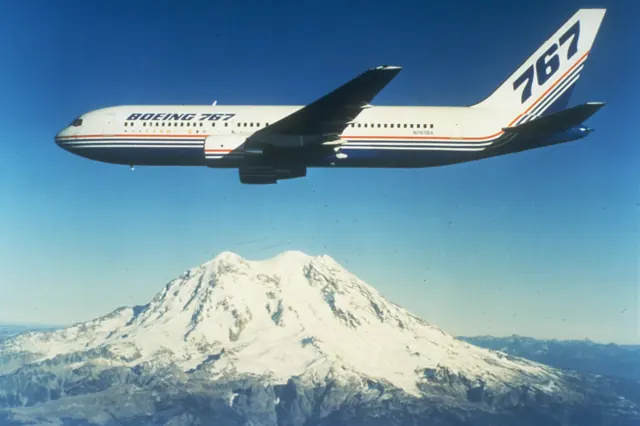
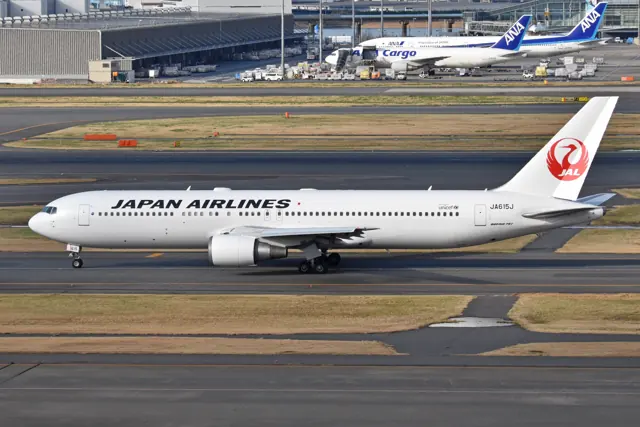
The 767 first flew in 1981 and entered service in 1982. Its twin-engine wide-body layout served routes between smaller narrow-bodies and the largest long-haul aircraft. Stretched, extended-range and freight versions broadened the programme. The -200, -300 and -400 are different airframes, and the -400 also brought substantial cockpit changes. Simulator products may cover only part of that range.
Aircraft background
Wikipedia contributors · Read more ↗The first jet, the mentor and the next horizon
After joining Ansett Express on the Fokker 50, Ferguson moved to the 767 as his first jet. He was surprised by how quickly he became comfortable in it, helped by a training captain and his existing knowledge of the company’s operation. He particularly remembers the feedback through the controls and the way the flight guidance reduced workload, while domestic and international sectors gave him different kinds of experience.
Down Under Aviation News · December 2021. Recollections of Ansett and Air Mauritius 767 flying; variant unspecified.
Down Under Aviation News · Read more ↗A separately developed wide-body simulation
The 767-300ER product describes independent captain and first-officer instruments, dual flight-management units, three inertial reference systems and selectable instrument sources. Autoland capability can degrade with simulated system failures.
Boeing 767 · FlightFactor · FlightFactor · X-Plane 11 · X-Plane 12
FlightFactor via authorized store · Read more ↗Into the cockpit
 YouTube
PilotPeteFly · 37 min ·
Inside the Cockpit: Flying a Boeing 767 from Atlanta to Oakland | Airline Pilot POV
A pilot's view of a Boeing 767 flight from Atlanta to Oakland.
Real aircraft · Boeing 767
Watch on YouTube ↗Preview images are served by AirframeDB. Videos open on YouTube only when you choose to watch.
Meet Boeing 767
The 767 first flew in 1981 and entered service in 1982. Its twin-engine wide-body layout served routes between smaller narrow-bodies and the largest long-haul aircraft. Stretched, extended-range and freight versions broadened the programme.
The -200, -300 and -400 are different airframes, and the -400 also brought substantial cockpit changes. Simulator products cover different parts of that range, identified by variant and developer.
Boeing 767
Aircraft type designators
Use the code for the model you are flying. The linked authority lists the applicable aircraft.
History & design
Development milestones
First flight: September 26, 1981 ( 1981-09-26 )
Wikipedia contributors · Boeing 767 ↗Boeing 767 · family/variant named by the source · Wikipedia revision 1373987116
Pilot accounts
The first jet, the mentor and the next horizon
After joining Ansett Express on the Fokker 50, Ferguson moved to the 767 as his first jet. He was surprised by how quickly he became comfortable in it, helped by a training captain and his existing knowledge of the company’s operation. He particularly remembers the feedback through the controls and the way the flight guidance reduced workload, while domestic and international sectors gave him different kinds of experience.
Captain Joe Wilson left a lasting impression through both handling skill and the atmosphere he created for the whole crew. Ferguson studied his flying and kept copies of his notes. Yet achieving a childhood ambition did not end his restlessness. A period flying the 767 for Air Mauritius brought European weather and routes across Africa, Asia and the Indian Ocean, refreshing his interest before he returned to Ansett.
Down Under Aviation News · December 2021. Recollections of Ansett and Air Mauritius 767 flying; variant unspecified.
Read the full account · Down Under Aviation News ↗Two weeks away, then two weeks at home
Showing a reporter around a UPS 767 at Louisville, Hoke describes cargo that could range from family parcels to electronics and seafood. His usual trip took him through Anchorage to Tokyo, followed by roughly a week and a half of flying within Asia. Away from home, much of the time between sectors went into resting, preparing for the next flight and keeping himself ready for the schedule.
After about two weeks abroad, another two weeks at home gave him a chance to share responsibilities his wife had carried while he was away. The interview connects the large aircraft and international network with ordinary family life. Hoke’s interest in flying had become a career after lessons during an airport-management course; decades later, the work still meant balancing the pleasure of aviation with long stretches of absence from home.
WFPL / Louisville Public Media · Rick Howlett’s March 2017 interview aboard a UPS 767. Written report; operating pattern at that time.
Read the full account · Louisville Public Media / WFPL ↗The extraordinary view during a break from flying
Borja’s camera became a way to share the atmospheric scenes he encountered from the 767. Carrying it regularly allowed him to combine flying with a growing interest in landscape photography. A storm over the Pacific south of Panama attracted particular attention, but he also valued sunrises, unusual clouds and the changing coastline on the aircraft’s routes between North and South America.
He explains that the opportunities came during commuting flights or breaks on long-haul sectors with an augmented crew, while other pilots operated the aircraft. Good conditions were far from guaranteed: clouds could hide the most interesting formations, and a clear view might appear only briefly. His recollection of the Pacific storm emphasises the contrast between the cloud’s visible power and the still air around the aircraft, a moment whose scale he wanted the photograph to convey.
AOPA Pilot · January 2017 portfolio. Boeing 767-300ER first officer; photographs taken during commuting or rest periods with other pilots flying.
Read the full account · AOPA Pilot ↗In your simulator
Systems, equipment and documentation for each developer’s aircraft.
X-Plane 11 · X-Plane 12Boeing 767 · FlightFactor
FlightFactor · Released
Boeing 767 · FlightFactor
FlightFactor · Released
Aircraft specifications
Published figures for the named real-aircraft variant. Simulator equipment and performance can differ.
| Specification | Published value |
|---|---|
| Length | 180 ft 3 in (54.94 m) |
| Wingspan | 156 ft 1 in (47.57 m) |
| Height | 52 ft 7 in (16.03 m) |
| Wing area | 3,049.4 sq ft (283.30 m² ) |
| Empty weight | 198,440 lb (90,011 kg) |
| Max takeoff weight | 412,000 lb (186,880 kg) |
| Powerplant | 2 × Pratt & Whitney PW4060 high-bypass turbofan engines, 60,000 lbf (270 kN) thrust each |
| Maximum speed | 410 mph (670 km/h, 360 kn) calibrated airspeed |
| Maximum speed | Mach 0.86 |
| Cruise speed | 528 mph (850 km/h, 459 kn) at 39,000 ft (12,000 m) |
| Range | 6,630 mi (10,670 km, 5,760 nmi) |
| Service ceiling | 43,100 ft (13,100 m) |
Manuals & resources
Find your next read
Choose a topic for a short introduction and a link to the original source. Simulator references identify the developer and edition they cover.
Simulator documentation
A separately developed wide-body simulationBoeing 767 · FlightFactor · FlightFactor · X-Plane 11 · X-Plane 12
The 767-300ER product describes independent captain and first-officer instruments, dual flight-management units, three inertial reference systems and selectable instrument sources. Autoland capability can degrade with simulated system failures.
767-300ER Professional · gathered developer product description, 10 September 2026
FlightFactor via authorized store · Read the source ↗Aircraft condition follows the aircraftBoeing 767 · FlightFactor · FlightFactor · X-Plane 11 · X-Plane 12
The product’s persistent maintenance system carries wear and misuse into subsequent flights. Its loading and maintenance pages sit alongside door and ground-equipment controls, while the cabin interaction can report configuration or passenger-comfort problems.
767-300ER Professional · Custom Systems and Failure model; On Screen menus; Custom Sounds
FlightFactor via authorized store · Read the source ↗A checklist helper and a separate reference displayBoeing 767 · FlightFactor · FlightFactor · X-Plane 11 · X-Plane 12
The interactive checklist recognises completed actions, with an optional helper and tutorial prompts. A pop-out EFB gathers checklists, options and menus. The product also lists in-flight Navigraph charts and configurable avionics presentations; service access depends on the relevant provider.
767-300ER Professional · New Features; Flexible Options; Interactive checklists
FlightFactor via authorized store · Read the source ↗Pilot account
The first jet, the mentor and the next horizonDown Under Aviation News · December 2021. Recollections of Ansett and Air Mauritius 767 flying; variant unspecified.
After joining Ansett Express on the Fokker 50, Ferguson moved to the 767 as his first jet. He was surprised by how quickly he became comfortable in it, helped by a training captain and his existing knowledge of the company’s operation. He particularly remembers the feedback through the controls and the way the flight guidance reduced workload, while domestic and international sectors gave him different kinds of experience.
Andrew Ferguson
Down Under Aviation News · Read the source ↗Two weeks away, then two weeks at homeWFPL / Louisville Public Media · Rick Howlett’s March 2017 interview aboard a UPS 767. Written report; operating pattern at that time.
Showing a reporter around a UPS 767 at Louisville, Hoke describes cargo that could range from family parcels to electronics and seafood. His usual trip took him through Anchorage to Tokyo, followed by roughly a week and a half of flying within Asia. Away from home, much of the time between sectors went into resting, preparing for the next flight and keeping himself ready for the schedule.
Ken Hoke
Louisville Public Media / WFPL · Read the source ↗Read the original documentation from the people who created it. Manuals open on their publisher’s website.
Manual
X-Plane aircraft and avionics manualsLaminar ResearchAircraft background
Boeing 767Wikipedia contributors · Research background · Wikipedia revision 1373987116 · retrieved 2026-09-12Resource
FlightFactor 767-300ER published specificationFlightFactor via authorized store FlightFactor productsFlightFactorProduct
767-400ER ProfessionalFlightFactor · Official developer / designated store catalogue · checked 2026-09-12 767-300ER ProfessionalFlightFactor · Official developer / designated store catalogue · checked 2026-09-12 767 Professional Avionics UpgradeFlightFactor · Official developer / designated store catalogue · checked 2026-09-12 767 Professional Extended upgradeFlightFactor · Official developer / designated store catalogue · checked 2026-09-12Type designator
ICAO Doc 8643 — aircraft type designatorsInternational Civil Aviation Organization · Public search data retrieved 2026-09-14; authority update 2026-09-03Built-in force-feedback profiles
Read the documentary basis, editable starting settings and remaining questions for the aircraft you fly. Each explanation refers to the exact profile revision shown.
Catalogue programme-20261022-v1 · 9 profile choices
FlightFactor 767-300ER
FlightFactor · Free and Pro · Revision 4 · Inherited starting point
X-Plane 12
FlightFactor 767-300ER: The selected powered-control feel remains nominal; the -400ER's display and autopilot architecture does not calibrate hand force for other 767s.
FlightFactor 767-200ER
FlightFactor · Free and Pro · Revision 3 · Inherited starting point
X-Plane 12
FlightFactor 767-200ER: The selected powered-control feel remains nominal; the -400ER's display and autopilot architecture does not calibrate hand force for other 767s.
FlightFactor 767-300F
FlightFactor · Free and Pro · Revision 3 · Inherited starting point
X-Plane 12
FlightFactor 767-300F: The selected powered-control feel remains nominal; the -400ER's display and autopilot architecture does not calibrate hand force for other 767s.
FlightFactor 767-400ER
FlightFactor · Free and Pro · Revision 3 · Inherited starting point
X-Plane 12
FlightFactor 767-400ER: The selected powered-control feel remains nominal; the -400ER's display and autopilot architecture does not calibrate hand force for other 767s.
FlightFactor Boeing 767-200SF
FlightFactor · Free and Pro · Revision 2 · Inherited starting point
X-Plane 12
FlightFactor Boeing 767-200SF: The selected powered-control feel remains nominal; the -400ER's display and autopilot architecture does not calibrate hand force for other 767s.
Boeing 767-300ER
Free and Pro · Revision 3 · Inherited starting point
X-Plane 11 · X-Plane 12
Boeing 767-300ER: The selected powered-control feel remains nominal; the -400ER's display and autopilot architecture does not calibrate hand force for other 767s.
Boeing 767-200ER
Free and Pro · Revision 1 · Inherited starting point
X-Plane 11 · X-Plane 12
Boeing 767-200ER: The selected powered-control feel remains nominal; the -400ER's display and autopilot architecture does not calibrate hand force for other 767s.
Boeing 767-300F
Free and Pro · Revision 1 · Inherited starting point
X-Plane 11 · X-Plane 12
Boeing 767-300F: The selected powered-control feel remains nominal; the -400ER's display and autopilot architecture does not calibrate hand force for other 767s.
Boeing 767-400ER
Free and Pro · Revision 1 · Partial review
X-Plane 11 · X-Plane 12
Boeing 767-400ER: The selected powered-control feel remains nominal; the -400ER's display and autopilot architecture does not calibrate hand force for other 767s.
Boeing 767-300ER
Boeing 767-300ER: The selected powered-control feel remains nominal; the -400ER's display and autopilot architecture does not calibrate hand force for other 767s.
Aircraft and simulator scope
- Boeing 767-300ER · X-Plane 11 · Variant starting point
- Boeing 767-300ER · X-Plane 12 · Variant starting point
FlightFactor 767-400ER product page; -200ER, -300ER and freighter specifics remain inherited. · Selected choice: Boeing 767-300ER. Documentary scope does not establish every variant, add-on revision or simulator binding.
The simulator model and controls
The 767 first flew in 1981 and entered service in 1982. Its twin-engine wide-body layout served routes between smaller narrow-bodies and the largest long-haul aircraft. Stretched, extended-range and freight versions broadened the programme.
This starting point selects Boeing 767-300ER. Its aircraft-level settings do not select a particular developer’s custom systems.
How this profile feels
Spring resistance builds with the selected airspeed response. A separate aerodynamic term adds speed-dependent control load.
Valid trim provides the configured pressure relief. Autopilot following is enabled for supported control references.
Controls and trim
FlightFactor's 767 family includes 200ER, 300ER, 200SF, 300F and 400ER configurations. The -400ER has a modern six-screen EFIS and its own three-channel autopilot and system scope. Its 777-like display arrangement does not make its controls a 777 installation. Passenger and freighter identities and engine choices remain separate from a shared family force starting point.
About the values
The gains are normalized profile settings. They describe the chosen effect balance; hand force depends on the device and its output limits. IAS references are tuning values rather than operating limits. Physical acceptance of this revision remains pending.
Documentary review and sources
These decisions describe the documentary basis and remaining gaps for this revision. Aircraft documentation and a starting setting describe different kinds of evidence.
Aircraft and variant
InheritedThis starting point selects Boeing 767-300ER. Its aircraft-level settings do not select a particular developer’s custom systems.
Flight controls
Not yet reviewedFlightFactor's 767 family includes 200ER, 300ER, 200SF, 300F and 400ER configurations. The -400ER has a modern six-screen EFIS and its own three-channel autopilot and system scope. Its 777-like display arrangement does not make its controls a 777 installation. Passenger and freighter identities and engine choices remain separate from a shared family force starting point.
Trim
Not yet reviewedPitch-trim response remains the profile's approximation and does not imply a documented force-output contract from the three-channel autopilot. Pitch authority 0.3 relieves permitted loading; hydraulic centre movement is off. Roll authority is 0.09.
Autopilot and stability
InheritedFollowing is on at 0.1 authority when a supported, valid autopilot control reference is available.
Equipment
InheritedGear, flap and ground cues follow the selected settings and available simulator-reported states.
Speeds and limits
Not yet reviewedThe indicated-speed references set the profile response scale; they are separate from aircraft operating limits.
Simulator integration
Not yet reviewedThe profile targets xplane11, xplane12. Add-on-specific controls use only the supported references configured by this profile.
Force-feedback settings
Not yet reviewedThe settings define the profile’s effect balance. Device output limits affect physical hand force.
Starting settings and their rationale
These configured values are starting estimates. The explanations describe what each setting controls; physical validation appears separately below.
| Setting | Starting value | What it controls and why |
|---|---|---|
| Spring strength | Starting value0.8 | What it controls and whyThe selected powered-control feel remains nominal; the -400ER's display and autopilot architecture does not calibrate hand force for other 767s. The baseline spring is 0.8. Its low-speed blend reaches baseline strength at 90 KIAS. |
| Master force gain | Starting value0.85 | What it controls and whyScales overall profile strength while preserving effect balance, subject to device and output limits. |
| Profile force gain | Starting value0.25 | What it controls and whyThe aerodynamic-load gain is 0.25 with an indicated-speed reference of 270 KIAS. The hydraulic-load factor of 0.35 scales that modeled term; it is a selected artificial-feel approximation. |
| Force tuning speed/reference | Starting value270.0 kt | What it controls and whySets the IAS reference for aerodynamic loading. It is an estimate, not published cruise TAS or a flight limit. |
| Spring response reference speed | Starting value90 kt | What it controls and whySets the IAS where the low-speed blend reaches baseline strength; high-speed stiffening also uses it. |
| Aileron force scale | Starting value0.65 | What it controls and whyRoll and pitch aerodynamic scales are 0.65 and 0.65, respectively. They set the aerodynamic axis balance. No custom spring-travel curve is enabled. |
| Elevator force scale | Starting value0.65 | What it controls and whyScales pitch aerodynamic loading; pitch spring travel and trim responses are separate settings. |
| Trim feel | Starting valueEnabled | What it controls and whyRetained for compatibility and group membership. Trim relief, rather than this flag, controls centre movement. |
| Trim relief | Starting valueEnabled | What it controls and whyAllows trim relief with supported control law and valid telemetry. Axis authorities set its amount. |
| Autopilot follow | Starting valueEnabled | What it controls and whyFollowing is on at 0.1 authority when a supported, valid autopilot control reference is available. |
| Autopilot neutral hold | Starting valueDisabled | What it controls and whyPermits centering hold during a supported AP state, separate from following a moving target. |
| Output force limit | Starting value0.55 | What it controls and whyCaps directed-force output. Native spring effects and device limits remain separate. |
All 44 starting settings and their rationale
The settings define the profile’s effect balance. Device output limits affect physical hand force.
| Setting | Starting value | What it controls and why |
|---|---|---|
| Spring strength | Starting value0.8 | What it controls and whyThe selected powered-control feel remains nominal; the -400ER's display and autopilot architecture does not calibrate hand force for other 767s. The baseline spring is 0.8. Its low-speed blend reaches baseline strength at 90 KIAS. |
| Spring deadband | Starting value0.035 | What it controls and whySets travel around the centre before the baseline spring resists. Smaller values engage it sooner. |
| Profile force gain | Starting value0.25 | What it controls and whyThe aerodynamic-load gain is 0.25 with an indicated-speed reference of 270 KIAS. The hydraulic-load factor of 0.35 scales that modeled term; it is a selected artificial-feel approximation. |
| Master force gain | Starting value0.85 | What it controls and whyScales overall profile strength while preserving effect balance, subject to device and output limits. |
| QBlend Enabled | Starting valueEnabled | What it controls and whyAllows baseline spring strength to rise with indicated airspeed where the control law permits it. |
| QSpring Minimum Factor | Starting value0.55 | What it controls and whySets low-speed spring strength as a fraction of baseline when blending is enabled. One keeps full strength. |
| QSpring Start Knots | Starting value20 kt | What it controls and whySets the IAS where the low-speed spring blend starts rising. This is a feel threshold, not a flight limit. |
| Spring response reference speed | Starting value90 kt | What it controls and whySets the IAS where the low-speed blend reaches baseline strength; high-speed stiffening also uses it. |
| Force tuning speed/reference | Starting value270.0 kt | What it controls and whySets the IAS reference for aerodynamic loading. It is an estimate, not published cruise TAS or a flight limit. |
| Airspeed spring stiffening gain | Starting value0 | What it controls and whyThe high-speed spring-stiffening gain is 0. No additional speed-driven stiffening is added; this does not disable independent aerodynamic loading. |
| Airspeed spring stiffening limit | Starting value5 | What it controls and whyLimits the squared airspeed ratio used for high-speed spring stiffening; it is not a device-force cap. |
| Aileron force scale | Starting value0.65 | What it controls and whyRoll and pitch aerodynamic scales are 0.65 and 0.65, respectively. They set the aerodynamic axis balance. No custom spring-travel curve is enabled. |
| Elevator force scale | Starting value0.65 | What it controls and whyScales pitch aerodynamic loading; pitch spring travel and trim responses are separate settings. |
| Output force limit | Starting value0.55 | What it controls and whyCaps directed-force output. Native spring effects and device limits remain separate. |
| Trim feel | Starting valueEnabled | What it controls and whyRetained for compatibility and group membership. Trim relief, rather than this flag, controls centre movement. |
| Trim relief | Starting valueEnabled | What it controls and whyAllows trim relief with supported control law and valid telemetry. Axis authorities set its amount. |
| Elevator Authority | Starting value0.3 | What it controls and whyPitch-trim response remains the profile's approximation and does not imply a documented force-output contract from the three-channel autopilot. Pitch authority 0.3 relieves permitted loading; hydraulic centre movement is off. Roll authority is 0.09. |
| Aileron Authority | Starting value0.09 | What it controls and whyScales supported roll-trim relief and permitted centre movement. Zero removes roll response. |
| Force Trim Enabled | Starting valueDisabled | What it controls and whyEnables local force trim, separate from aircraft-owned trim and add-on integration qualification. |
| GLoad Enabled | Starting valueEnabled | What it controls and whyAllows load-factor changes to modify permitted spring laws. Passive fly-by-wire feel can suppress it. |
| Rate Damping Enabled | Starting valueEnabled | What it controls and whyEnables rate damping with the configured coefficients and control law. |
| Autopilot follow | Starting valueEnabled | What it controls and whyFollowing is on at 0.1 authority when a supported, valid autopilot control reference is available. |
| Autopilot follow authority | Starting value0.1 | What it controls and whySets admitted AP-follow gain, not a percentage of travel. Runtime ownership and input limits still apply. |
| Autopilot neutral hold | Starting valueDisabled | What it controls and whyPermits centering hold during a supported AP state, separate from following a moving target. |
| Autopilot neutral hold strength | Starting value0.6 | What it controls and whySets admitted AP neutral-hold strength; inactive while neutral hold is disabled. |
| Enabled | Starting valueEnabled | What it controls and whyEnables aerodynamic cues; each still needs nonzero strength and its simulator conditions. |
| Gain | Starting value0.3 | What it controls and whySets stall-buffet strength. Zero removes the cue without changing simulator stalls or warnings. |
| Gain | Starting value0.22 | What it controls and whySets high-Mach buffet strength; onset and full-strength thresholds are separate. |
| Gain | Starting value0.14 | What it controls and whySets flap buffet at the configured position and speed gates. Flap movement texture is separate. |
| Maximum flap index | Starting value6 | What it controls and whySets the final flap index for detent normalization. UP plus three detents uses maximum index3. |
| Minimum flap index | Starting value2 | What it controls and whySets the first flap detent that admits buffet; this is a handle index, not degrees. |
| Gain | Starting value0.1 | What it controls and whySets gear aerodynamic buffet; movement and ground-contact cues are separate. |
| Shaker Enabled | Starting valueEnabled | What it controls and whyPermits shaker at supported warning conditions; the switch does not establish aircraft equipment. |
| Stick shaker amplitude | Starting value0.9 | What it controls and whySets triggered shaker strength; inactive while the shaker feature is disabled. |
| Enabled | Starting valueEnabled | What it controls and whyEnables ground effects; each still needs its own strength and contact or motion telemetry. |
| Gain | Starting value0.4 | What it controls and whySets rolling texture strength, modified by speed, surface and undercarriage configuration. |
| Gain | Starting value0.32 | What it controls and whySets gear-bump texture during ground motion, separate from touchdown impact. |
| Gain | Starting value0.9 | What it controls and whySets landing-impact strength; landing telemetry and response shape determine the pulse. |
| Gain | Starting value0.5 | What it controls and whySets reverse-thrust vibration with valid reverser and engine conditions. Zero removes the cue. |
| Enabled | Starting valueEnabled | What it controls and whyEnables engine cues with nonzero settings and valid running-engine telemetry. |
| Gain | Starting value0.06 | What it controls and whySets estimated engine vibration using configured telemetry and response, not measured cockpit vibration. |
| Enabled | Starting valueEnabled | What it controls and whyEnables accessory cues with configured strengths and observed accessory movement. |
| Gain | Starting value0.12 | What it controls and whySets texture from observed flap movement; a command without movement does not establish the cue. |
| Gain | Starting value0.12 | What it controls and whySets texture from observed gear movement, separate from aerodynamic and touchdown effects. |
Limits and open questions
- The cited product page is specifically 767-400ER and lists its flight-control display and modeled systems.
- For Boeing 767-300ER, the cited feature is inherited from the explicitly scoped family/implementation evidence; this variant was not separately established by that source.
- A control MFD and hydraulic-system feature list do not establish physical cockpit force transmission.
- The examined feature page does not describe trim mechanism or justify shared trim authority for all four choices.
- Three-channel autopilot is advertised for the -400ER implementation; enabled following is not a proven servo contract.
- Hydraulic systems are listed; the page does not calibrate gear/flap motion-force cues or the other variants' installations.
- The cited page does not derive the common indicated-speed force reference or variant-specific envelope.
- Autopilot channel count does not establish external servo telemetry or controller ownership.
- Product-system descriptions do not calibrate 767 spring strength, force gradient or axis ratio.
Physical validation
No physical force validation is recorded in this public catalogue for this revision. Documentary review and software checks do not establish how a particular device feels.
Discuss this aircraft (0)
Questions, observations and useful sources from the community.
No published discussions yet. Bring a question or share a useful source.
Open aircraft discussions →Content expanded · What’s new
Something missing or a source that needs attention?
Suggest a correction ↗