
Start here
A few places to begin, from the aircraft’s story to the people who fly it.
Meet the aircraft
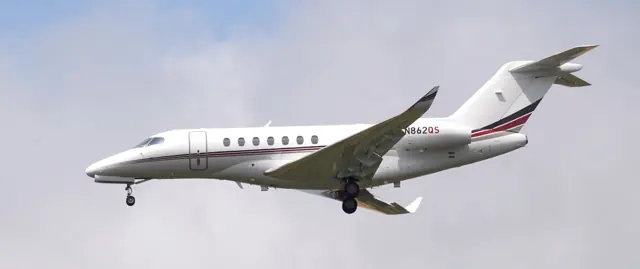
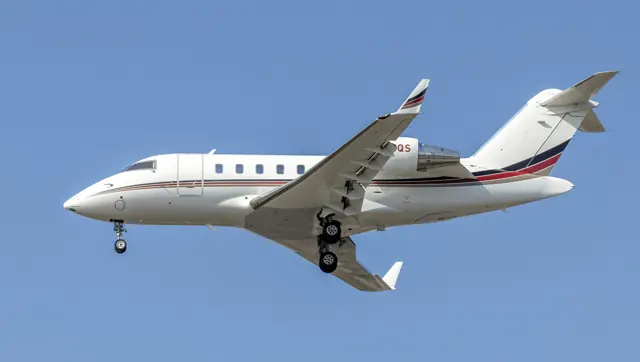
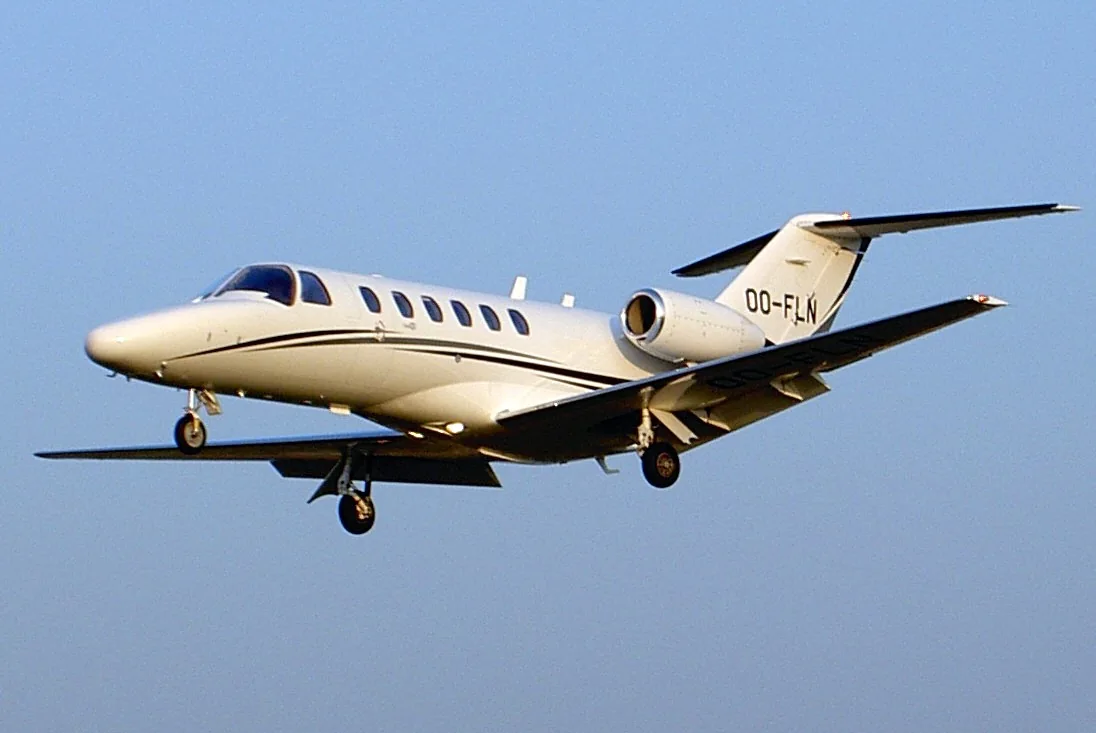
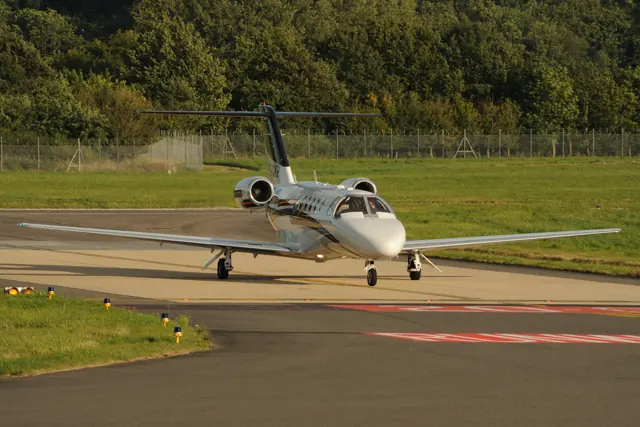
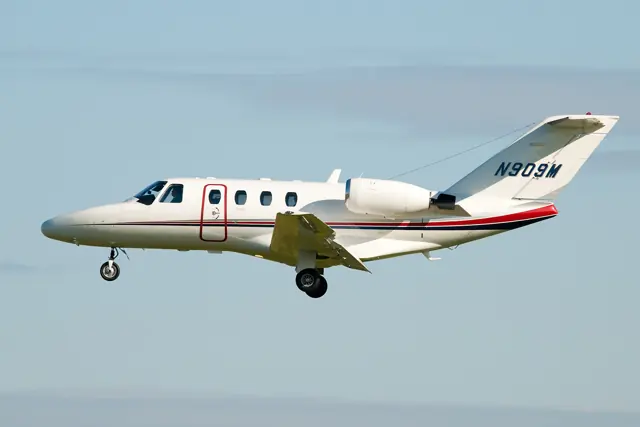
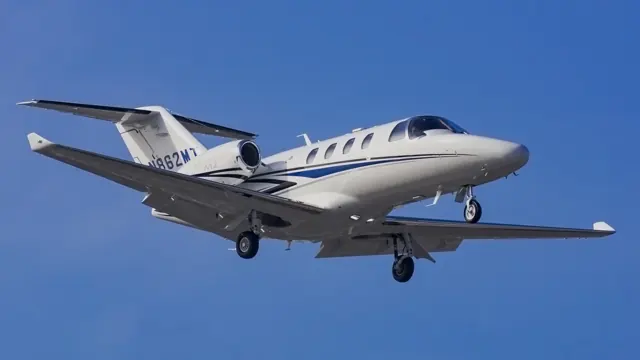
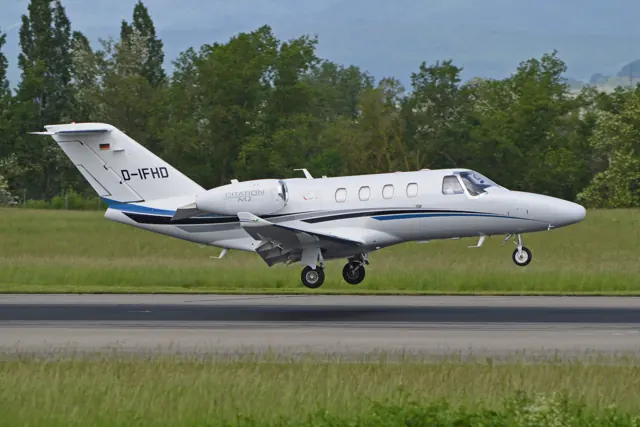
Cessna launched the CitationJet in 1989 and flew the Model 525 prototype in April 1991. Deliveries followed in 1993. The design combined part of the earlier Citation fuselage lineage with a new wing and T-tail, powered by two Williams FJ44 engines. Later CJ and M2 versions belong to the wider family, with distinct specifications.
Aircraft background
Wikipedia contributors · Read more ↗A short ferry flight becomes a lesson in staying ahead
Boyer expected the short journey to Frederick to be straightforward. Instead, frequency changes, headings, altitude instructions and preparation for an instrument approach arrived faster than he felt able to organise them. He had flown capable aircraft before, but the jet’s pace exposed how much of his attention the unfamiliar cockpit still required.
AOPA Pilot · October 2008. Recollection of an early CitationJet flight from Baltimore/Washington to Frederick after AOPA acquired its aircraft.
AOPA Pilot · Read more ↗Circuit breakers connect with custom systems
TorqueSim describes custom electrical, hydraulic, fuel and pneumatic systems, with circuit-breaker changes affecting connected equipment.
Cessna CitationJet 525 · TorqueSim · X-Plane 12
X-Aviation / TorqueSim · Read more ↗Into the cockpit
 YouTube
Jump N · 9 min ·
Flying a CitationJet + Inside Look at the CJ Series
A flight in a 1998 CitationJet, with discussion of its systems and the wider CJ series.
Real aircraft · original Cessna 525 CitationJet, 1998
Watch on YouTube ↗Preview images are served by AirframeDB. Videos open on YouTube only when you choose to watch.
Meet Cessna CitationJet 525
Cessna launched the CitationJet in 1989 and flew the Model 525 prototype in April 1991. Deliveries followed in 1993. The design combined part of the earlier Citation fuselage lineage with a new wing and T-tail, powered by two Williams FJ44 engines. Later CJ and M2 versions belong to the wider family, with distinct specifications.
Cessna Citation
Cessna → · Explore the family →
Cessna CitationJet 525
Wikipedia contributors · Cessna CitationJet/M2 ↗TorqueSim · X-Plane 12 →Aircraft type designators
Use the code for the model you are flying. The linked authority lists the applicable aircraft.
History & design
The original CitationJet gives way to the CJ1
Horne’s 2000 report describes the transition after the 359th original CitationJet. The CJ1 introduced a Pro Line 21 panel in place of the earlier Honeywell installation, explaining why accounts and simulator cockpits within the Model 525 family can look different.
AOPA Pilot · CJ Step-Up ↗Contemporary report; original CJ and later CJ1 distinguished
Development milestones
First flight: 29 April 1991
Developed from: Cessna Citation II
Wikipedia contributors · Cessna CitationJet/M2 ↗Cessna CitationJet/M2 · family/variant named by the source · Wikipedia revision 1361933577
Pilot accounts
A short ferry flight becomes a lesson in staying ahead
Boyer expected the short journey to Frederick to be straightforward. Instead, frequency changes, headings, altitude instructions and preparation for an instrument approach arrived faster than he felt able to organise them. He had flown capable aircraft before, but the jet’s pace exposed how much of his attention the unfamiliar cockpit still required.
Slowing the aircraft and preparing it for the arrival gave him time to think again. Looking back, he connected the episode with the need to learn automation well enough that it actually helps. The distance covered was small, but the flight stayed with him as a useful reminder that a new aircraft changes the rhythm of even a familiar journey.
AOPA Pilot · October 2008. Recollection of an early CitationJet flight from Baltimore/Washington to Frederick after AOPA acquired its aircraft.
Read the full account · AOPA Pilot ↗Weather sets the rhythm of a cross-country demonstration
Horne’s demonstration flight put the CJ1 to work on a real journey from Wichita to Frederick with four people aboard. Weather limited the climb below the altitude they had hoped to use, and thunderstorms over Missouri required attention to the radar and a route around the cells. The trip supplied a practical setting for becoming familiar with the newer cockpit.
After two and a half hours, the aircraft reached Frederick and Horne managed a landing he regarded as acceptable. The unfamiliar luxury of arriving in a business jet at his home airport added to the experience. His account combines the pleasure of the trip with the ordinary weather and cockpit tasks that continued throughout it.
AOPA Pilot · August 2000. Wichita-to-Frederick flight with Cessna demonstration pilot Daniel J. Grace in a CJ1, the later Model 525 variant with a different instrument panel.
Read the full account · AOPA Pilot ↗A weekly journey turns jet ownership into a training goal
Martin bought his first CitationJet in 1995 before he was qualified to operate it himself. Flying was tied closely to his racing work: a regular Tuesday visit from Florida to the North Carolina race shop made the arrangements for taking another pilot increasingly inconvenient. Qualifying to fly the aircraft alone became a clear personal goal.
By the end of 1996 he had achieved it. In the interview, Martin acknowledged how quickly he had pushed through his early flying ambitions, from a private licence to instruments, multiple engines and a jet. He enjoyed flying, but usually wanted a destination and a purpose. The CitationJet fitted into that life as a way to reach work and places he wanted to visit.
AOPA Pilot interview · March 2009. Martin describes his original CitationJet and single-pilot qualification; the CJ4 mentioned later in the article was still on order.
Read the full account · AOPA Pilot ↗In your simulator
Systems, equipment and documentation for each developer’s aircraft.
X-Plane 12Cessna CitationJet 525
TorqueSim · Released
Cessna CitationJet 525
TorqueSim · Released
Manuals & resources
Find your next read
Choose a topic for a short introduction and a link to the original source. Simulator references identify the developer and edition they cover.
Simulator documentation
Circuit breakers connect with custom systemsCessna CitationJet 525 · TorqueSim · X-Plane 12
TorqueSim describes custom electrical, hydraulic, fuel and pneumatic systems, with circuit-breaker changes affecting connected equipment.
Developer feature description for X-Plane 12
X-Aviation / TorqueSim · Read the source ↗The Honeywell panel belongs to the original CJCessna CitationJet 525 · TorqueSim · X-Plane 12
The product describes a custom Honeywell ED600 EADI/EHSI suite, combining electronic flight instruments with traditional gauges. This differs from the later CJ1 panel discussed in Horne’s real-aircraft account.
TorqueSim CJ525 for X-Plane 12 · public product feature panel, retrieved September 2026
X-Aviation / TorqueSim · Read the source ↗Navigation choices have different availabilityCessna CitationJet 525 · TorqueSim · X-Plane 12
The listing names VOR, FMS and RealityXP GNS/GTN options. It still labels TDS GTNXi integration as forthcoming; that wording does not confirm its availability in an installed package.
Public product description; optional integrations and their present installed operation were not tested
X-Aviation / TorqueSim · Read the source ↗Pilot account
A short ferry flight becomes a lesson in staying aheadAOPA Pilot · October 2008. Recollection of an early CitationJet flight from Baltimore/Washington to Frederick after AOPA acquired its aircraft.
Boyer expected the short journey to Frederick to be straightforward. Instead, frequency changes, headings, altitude instructions and preparation for an instrument approach arrived faster than he felt able to organise them. He had flown capable aircraft before, but the jet’s pace exposed how much of his attention the unfamiliar cockpit still required. Slowing the aircraft and preparing it for the arrival gave him time to think again.
Phil Boyer
AOPA Pilot · Read the source ↗Weather sets the rhythm of a cross-country demonstrationAOPA Pilot · August 2000. Wichita-to-Frederick flight with Cessna demonstration pilot Daniel J. Grace in a CJ1, the later Model 525 variant with a different instrument panel.
Horne’s demonstration flight put the CJ1 to work on a real journey from Wichita to Frederick with four people aboard. Weather limited the climb below the altitude they had hoped to use, and thunderstorms over Missouri required attention to the radar and a route around the cells. The trip supplied a practical setting for becoming familiar with the newer cockpit. After two and a half hours, the aircraft reached Frederick and Horne managed a landing he regarded as acceptable.
Thomas A. Horne
AOPA Pilot · Read the source ↗Read the original documentation from the people who created it. Manuals open on their publisher’s website.
Aircraft background
Cessna CitationJet/M2Wikipedia contributors · Research background · retrieved 2026-09-12Product
CitationJet 525TorqueSim · Official developer / designated store catalogue · checked 2026-09-12Developer documentation
TorqueSim CitationJet 525 product featuresX-Aviation / TorqueSim · Public product feature panel · retrieved 13 September 2026Type designator
ICAO Doc 8643 — aircraft type designatorsInternational Civil Aviation Organization · Public search data retrieved 2026-09-14; authority update 2026-09-03Built-in force-feedback profiles
Read the documentary basis, editable starting settings and remaining questions for the aircraft you fly. Each explanation refers to the exact profile revision shown.
Catalogue programme-20261022-v1 · 2 profile choices
TorqueSim CitationJet 525
TorqueSim · Free and Pro · Revision 3 · Inherited starting point
X-Plane 12
TorqueSim CitationJet 525: The selected original-525 yoke resistance is nominal and does not inherit CJ4 or Longitude control architecture from a shared Citation name.
Cessna CitationJet 525
Free and Pro · Revision 2 · Partial review
X-Plane 12
Cessna CitationJet 525: The selected original-525 yoke resistance is nominal and does not inherit CJ4 or Longitude control architecture from a shared Citation name.
TorqueSim CitationJet 525
TorqueSim CitationJet 525: The selected original-525 yoke resistance is nominal and does not inherit CJ4 or Longitude control architecture from a shared Citation name.
Aircraft and simulator scope
- TorqueSim CitationJet 525 · TorqueSim · X-Plane 12 · Add-on starting point
The simulator model and controls
Cessna launched the CitationJet in 1989 and flew the Model 525 prototype in April 1991. Deliveries followed in 1993. The design combined part of the earlier Citation fuselage lineage with a new wing and T-tail, powered by two Williams FJ44 engines. Later CJ and M2 versions belong to the wider family, with distinct specifications.
This profile selects TorqueSim CitationJet 525 for X-Plane 12.
How this profile feels
Spring resistance builds with the selected airspeed response. A separate aerodynamic term adds speed-dependent control load.
Valid trim provides the configured pressure relief. Autopilot following is off.
Controls and trim
TorqueSim identifies the original Model 525 CitationJet with Honeywell ED600 avionics, custom autopilot and alternative navigator/FMS installations. Its X-Plane 12 manual download requires forum sign-in; the acquired index is not a completed manual review. FJ44 audio and engine-simulation features do not establish a physical vibration amplitude or external servo reference.
The selected implementation
TorqueSim original525 uses ED600/custom AP and navigator choices. The acquired manual index requires sign-in and is not a completed manual review.
About the values
The gains are normalized profile settings. They describe the chosen effect balance; hand force depends on the device and its output limits. IAS references are tuning values rather than operating limits. Physical acceptance of this revision remains pending.
Documentary review and sources
These decisions describe the documentary basis and remaining gaps for this revision. Aircraft documentation and a starting setting describe different kinds of evidence.
Aircraft and variant
InheritedThis profile selects TorqueSim CitationJet 525 for X-Plane 12.
Flight controls
InheritedTorqueSim identifies the original Model 525 CitationJet with Honeywell ED600 avionics, custom autopilot and alternative navigator/FMS installations. Its X-Plane 12 manual download requires forum sign-in; the acquired index is not a completed manual review. FJ44 audio and engine-simulation features do not establish a physical vibration amplitude or external servo reference.
Trim
InheritedPitch relief remains a selected software response; the accessible product description does not calibrate trim or autopilot-driven hardware motion. Pitch authority 0.3 provides load relief and permitted centre movement; roll authority is 0.1.
Autopilot and stability
InheritedAutopilot following is off; the configured spring and load retain the hardware feel.
Equipment
InheritedTorqueSim original525 uses ED600/custom AP and navigator choices. The acquired manual index requires sign-in and is not a completed manual review.
Speeds and limits
InheritedThe indicated-speed references set the profile response scale; they are separate from aircraft operating limits.
Simulator integration
InheritedThe profile targets xplane12. Add-on-specific controls use only the supported references configured by this profile.
Force-feedback settings
InheritedThe settings define the profile’s effect balance. Device output limits affect physical hand force.
Starting settings and their rationale
These configured values are starting estimates. The explanations describe what each setting controls; physical validation appears separately below.
| Setting | Starting value | What it controls and why |
|---|---|---|
| Spring strength | Starting value0.74 | What it controls and whyThe selected original-525 yoke resistance is nominal and does not inherit CJ4 or Longitude control architecture from a shared Citation name. The baseline spring is 0.74. Its low-speed blend reaches baseline strength at 65 KIAS. |
| Master force gain | Starting value0.85 | What it controls and whyScales overall profile strength while preserving effect balance, subject to device and output limits. |
| Profile force gain | Starting value0.8 | What it controls and whyThe aerodynamic-load gain is 0.8 with an indicated-speed reference of 220 KIAS. This supplies speed-dependent loading alongside the spring. |
| Force tuning speed/reference | Starting value220 kt | What it controls and whySets the IAS reference for aerodynamic loading. It is an estimate, not published cruise TAS or a flight limit. |
| Spring response reference speed | Starting value65 kt | What it controls and whySets the IAS where the low-speed blend reaches baseline strength; high-speed stiffening also uses it. |
| Aileron force scale | Starting value0.74 | What it controls and whyRoll and pitch aerodynamic scales are 0.74 and 1, respectively. They set the aerodynamic axis balance. No custom spring-travel curve is enabled. |
| Elevator force scale | Starting value1 | What it controls and whyScales pitch aerodynamic loading; pitch spring travel and trim responses are separate settings. |
| Trim feel | Starting valueDisabled | What it controls and whyRetained for compatibility and group membership. Trim relief, rather than this flag, controls centre movement. |
| Trim relief | Starting valueEnabled | What it controls and whyAllows trim relief with supported control law and valid telemetry. Axis authorities set its amount. |
| Autopilot follow | Starting valueDisabled | What it controls and whyAutopilot following is off; the configured spring and load retain the hardware feel. |
| Autopilot neutral hold | Starting valueDisabled | What it controls and whyPermits centering hold during a supported AP state, separate from following a moving target. |
| Output force limit | Starting value0.55 | What it controls and whyCaps directed-force output. Native spring effects and device limits remain separate. |
All 44 starting settings and their rationale
The settings define the profile’s effect balance. Device output limits affect physical hand force.
| Setting | Starting value | What it controls and why |
|---|---|---|
| Spring strength | Starting value0.74 | What it controls and whyThe selected original-525 yoke resistance is nominal and does not inherit CJ4 or Longitude control architecture from a shared Citation name. The baseline spring is 0.74. Its low-speed blend reaches baseline strength at 65 KIAS. |
| Spring deadband | Starting value0.045 | What it controls and whySets travel around the centre before the baseline spring resists. Smaller values engage it sooner. |
| Profile force gain | Starting value0.8 | What it controls and whyThe aerodynamic-load gain is 0.8 with an indicated-speed reference of 220 KIAS. This supplies speed-dependent loading alongside the spring. |
| Master force gain | Starting value0.85 | What it controls and whyScales overall profile strength while preserving effect balance, subject to device and output limits. |
| QBlend Enabled | Starting valueEnabled | What it controls and whyAllows baseline spring strength to rise with indicated airspeed where the control law permits it. |
| QSpring Minimum Factor | Starting value0.5 | What it controls and whySets low-speed spring strength as a fraction of baseline when blending is enabled. One keeps full strength. |
| QSpring Start Knots | Starting value8 kt | What it controls and whySets the IAS where the low-speed spring blend starts rising. This is a feel threshold, not a flight limit. |
| Spring response reference speed | Starting value65 kt | What it controls and whySets the IAS where the low-speed blend reaches baseline strength; high-speed stiffening also uses it. |
| Force tuning speed/reference | Starting value220 kt | What it controls and whySets the IAS reference for aerodynamic loading. It is an estimate, not published cruise TAS or a flight limit. |
| Airspeed spring stiffening gain | Starting value0.15 | What it controls and whyThe high-speed spring-stiffening gain is 0.15. It strengthens the permitted spring response above 65 KIAS, with the squared-speed ratio capped at 5. |
| Airspeed spring stiffening limit | Starting value5 | What it controls and whyLimits the squared airspeed ratio used for high-speed spring stiffening; it is not a device-force cap. |
| Aileron force scale | Starting value0.74 | What it controls and whyRoll and pitch aerodynamic scales are 0.74 and 1, respectively. They set the aerodynamic axis balance. No custom spring-travel curve is enabled. |
| Elevator force scale | Starting value1 | What it controls and whyScales pitch aerodynamic loading; pitch spring travel and trim responses are separate settings. |
| Output force limit | Starting value0.55 | What it controls and whyCaps directed-force output. Native spring effects and device limits remain separate. |
| Trim feel | Starting valueDisabled | What it controls and whyRetained for compatibility and group membership. Trim relief, rather than this flag, controls centre movement. |
| Trim relief | Starting valueEnabled | What it controls and whyAllows trim relief with supported control law and valid telemetry. Axis authorities set its amount. |
| Elevator Authority | Starting value0.3 | What it controls and whyPitch relief remains a selected software response; the accessible product description does not calibrate trim or autopilot-driven hardware motion. Pitch authority 0.3 provides load relief and permitted centre movement; roll authority is 0.1. |
| Aileron Authority | Starting value0.1 | What it controls and whyScales supported roll-trim relief and permitted centre movement. Zero removes roll response. |
| Force Trim Enabled | Starting valueDisabled | What it controls and whyEnables local force trim, separate from aircraft-owned trim and add-on integration qualification. |
| GLoad Enabled | Starting valueEnabled | What it controls and whyAllows load-factor changes to modify permitted spring laws. Passive fly-by-wire feel can suppress it. |
| Rate Damping Enabled | Starting valueEnabled | What it controls and whyEnables rate damping with the configured coefficients and control law. |
| Autopilot follow | Starting valueDisabled | What it controls and whyAutopilot following is off; the configured spring and load retain the hardware feel. |
| Autopilot follow authority | Starting value0.1 | What it controls and whySets admitted AP-follow gain, not a percentage of travel. Runtime ownership and input limits still apply. |
| Autopilot neutral hold | Starting valueDisabled | What it controls and whyPermits centering hold during a supported AP state, separate from following a moving target. |
| Autopilot neutral hold strength | Starting value0.6 | What it controls and whySets admitted AP neutral-hold strength; inactive while neutral hold is disabled. |
| Enabled | Starting valueEnabled | What it controls and whyEnables aerodynamic cues; each still needs nonzero strength and its simulator conditions. |
| Gain | Starting value0.35 | What it controls and whySets stall-buffet strength. Zero removes the cue without changing simulator stalls or warnings. |
| Gain | Starting value0 | What it controls and whySets high-Mach buffet strength; onset and full-strength thresholds are separate. |
| Gain | Starting value0 | What it controls and whySets flap buffet at the configured position and speed gates. Flap movement texture is separate. |
| Maximum flap index | Starting value2 | What it controls and whySets the final flap index for detent normalization. UP plus three detents uses maximum index3. |
| Minimum flap index | Starting value2 | What it controls and whySets the first flap detent that admits buffet; this is a handle index, not degrees. |
| Gain | Starting value0 | What it controls and whySets gear aerodynamic buffet; movement and ground-contact cues are separate. |
| Shaker Enabled | Starting valueDisabled | What it controls and whyPermits shaker at supported warning conditions; the switch does not establish aircraft equipment. |
| Stick shaker amplitude | Starting value0.5 | What it controls and whySets triggered shaker strength; inactive while the shaker feature is disabled. |
| Enabled | Starting valueEnabled | What it controls and whyEnables ground effects; each still needs its own strength and contact or motion telemetry. |
| Gain | Starting value0.4 | What it controls and whySets rolling texture strength, modified by speed, surface and undercarriage configuration. |
| Gain | Starting value0.25 | What it controls and whySets gear-bump texture during ground motion, separate from touchdown impact. |
| Gain | Starting value0.65 | What it controls and whySets landing-impact strength; landing telemetry and response shape determine the pulse. |
| Gain | Starting value0 | What it controls and whySets reverse-thrust vibration with valid reverser and engine conditions. Zero removes the cue. |
| Enabled | Starting valueEnabled | What it controls and whyEnables engine cues with nonzero settings and valid running-engine telemetry. |
| Gain | Starting value0.06 | What it controls and whySets estimated engine vibration using configured telemetry and response, not measured cockpit vibration. |
| Enabled | Starting valueEnabled | What it controls and whyEnables accessory cues with configured strengths and observed accessory movement. |
| Gain | Starting value0.12 | What it controls and whySets texture from observed flap movement; a command without movement does not establish the cue. |
| Gain | Starting value0.12 | What it controls and whySets texture from observed gear movement, separate from aerodynamic and touchdown effects. |
Limits and open questions
- TorqueSim CitationJet 525; xplane12. Previously observed titles and implementation identifiers are retained; installed matching remains deferred.
- Conventional manually controlled light-jet yoke with IAS feel estimate. This is original525, not powered-surface CitationX or CJ4 software; no inferred hydraulic primary-control load.
- Estimated pitch/roll tab relief for the conventional525 architecture. Exact custom trim and failure states remain unqualified; no automatic trim injection.
- Custom Honeywell autoflight, ED600 and optional navigation/FMS systems. Official manual file was not retrievable anonymously; no undocumented targets or detailed mode-force claims. AP servo-follow and neutral hold remain disabled; engagement indicators are not force-demand signals.
- Twin jets, retractable wheels and flaps. Keep original525 identity; optional third-party winglet modifications do not gain automatic coverage.
- 220 KIAS is an estimated feel reference, not cruise TAS or a certified limit. No invented Mach, VNE or weight scheduling.
- Read-only native telemetry for aircraft motion and accessory positions. Custom switches, display animations and mode lamps are not calibrated servo targets. No unverified LVars/datarefs or simulator writes.
- Spring 0.74; lateral scale 0.74; trim authorities 0.3/0.1; per-axis output cap 0.55. Editable engineering estimates, not measured hand forces. No body-rate torque, surface following or fabricated hydraulic-failure loads.
- New physical and installed-product checks deferred by owner. Existing separately recorded acceptance retains its original device, simulator, add-on and version limits. Source review does not broaden custom telemetry acceptance.
- Only actual accessory position changes drive movement texture; static drag and command-triggered kicks are disabled. Select and save an aircraft default when telemetry lacks a discriminating developer/configuration identity.
Physical validation
No physical force validation is recorded in this public catalogue for this revision. Documentary review and software checks do not establish how a particular device feels.
Discuss this aircraft (0)
Questions, observations and useful sources from the community.
No published discussions yet. Bring a question or share a useful source.
Open aircraft discussions →Content expanded · What’s new
Something missing or a source that needs attention?
Suggest a correction ↗