


Start here
A few places to begin, from the aircraft’s story to the people who fly it.
Meet the aircraft
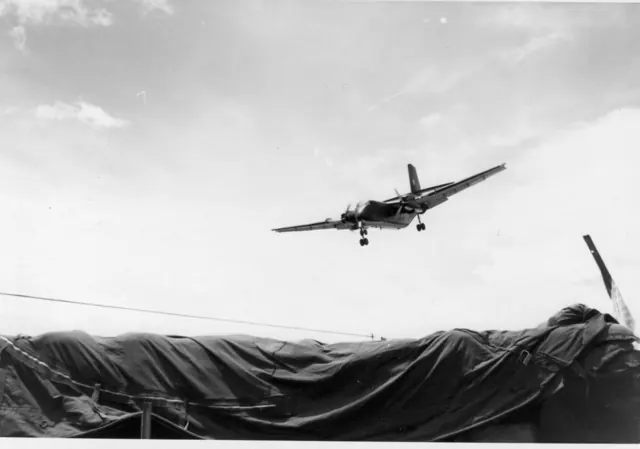
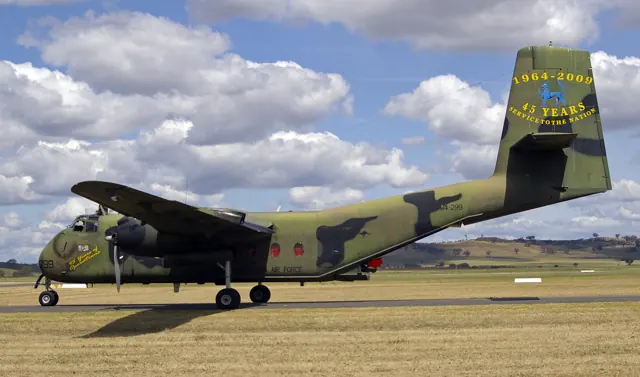
The Caribou first flew in 1958. It was built to move personnel and cargo using relatively short airfields, pairing a high wing with a large loading ramp and rugged landing gear. Military operators formed a major part of its service history. It is larger and more specialised than the Beaver, yet belongs to the same Canadian utility-aircraft tradition.
Aircraft background
Wikipedia contributors · Read more ↗The satisfaction of getting a demanding landing right
Jaensch’s affection for the Caribou grew from how much of the flying remained in the crew’s hands. Without an autopilot or weather radar, getting from place to place kept them occupied. He found the overhead engine controls more comfortable than their position might suggest, and valued the view from the elevated seats. The flight engineer also brought essential loading and maintenance experience.
Author’s expanded 2017 article. RAAF Caribou flying during 2005–2009 and later Historical Aircraft Restoration Society flights.
Chris Jaensch / DHC4and5.org · Read more ↗The original Local Legend package
Microsoft released the Caribou as Local Legend VIII alongside World Update XII: New Zealand in February 2023. The original package included seven liveries, spanning plain, striped and camouflage schemes. The MSFS 2024 edition inventory records its later inclusion.
DHC-4 Caribou · Microsoft Flight Simulator · MSFS 2024
Xbox Wire · Read more ↗Into the cockpit
 YouTube
Historical Aviation Film Unit · 5 min ·
de Havilland DHC-4 Caribou - STOL Master
A film showing the Caribou's short-field operation and distinctive transport role.
Real aircraft · De Havilland Canada DHC-4 Caribou
Watch on YouTube ↗Preview images are served by AirframeDB. Videos open on YouTube only when you choose to watch.
Meet De Havilland Canada DHC-4 Caribou
The Caribou first flew in 1958. It was built to move personnel and cargo using relatively short airfields, pairing a high wing with a large loading ramp and rugged landing gear. Military operators formed a major part of its service history.
It is larger and more specialised than the Beaver, yet belongs to the same Canadian utility-aircraft tradition. Two piston engines and a large cargo cabin supported transport work beyond the capacity of lighter bush aircraft.
De Havilland Canada DHC-4 Caribou
De Havilland Canada → · Explore the family →
De Havilland Canada DHC-4 Caribou
Wikipedia contributors · De Havilland Canada DHC-4 Caribou ↗Microsoft Flight Simulator · MSFS 2024 →Microsoft Flight Simulator · MSFS 2020 →Aircraft type designators
Use the code for the model you are flying. The linked authority lists the applicable aircraft.
History & design
From Army CV-2 to Air Force C-7
The Caribou first flew in 1958, and early American deliveries went to the Army in 1961. Initially designated AC-1, it became CV-2 in 1962 and C-7 when transferred to the Air Force in January 1967. Its role centred on bringing troops, patients and supplies to short, unimproved strips.
National Museum of the United States Air Force · De Havilland C-7A Caribou ↗US Air Force museum · American service designations
A cargo aircraft for remote destinations
Developed for military transport, the Caribou also found commercial work carrying cargo. De Havilland Canada describes access to remote locations as a defining part of its role. The accounts here show that work in different settings, from peacekeeping deployments to humanitarian transport and heritage flying.
De Havilland Canada · Legacy Aircraft ↗Manufacturer’s legacy description · accounts linked separately
Development milestones
First flight: 30 July 1958
Wikipedia contributors · De Havilland Canada DHC-4 Caribou ↗De Havilland Canada DHC-4 Caribou · family/variant named by the source · Wikipedia revision 1373346083
Pilot accounts
The satisfaction of getting a demanding landing right
Jaensch’s affection for the Caribou grew from how much of the flying remained in the crew’s hands. Without an autopilot or weather radar, getting from place to place kept them occupied. He found the overhead engine controls more comfortable than their position might suggest, and valued the view from the elevated seats. The flight engineer also brought essential loading and maintenance experience.
Slow approaches could demand large control movements, while the final landing and change into reverse required close coordination between pilots. Getting the touchdown right was especially satisfying. Humanitarian missions into Papua New Guinea were his strongest memories. Later, he captained the delivery of HARS’s first Caribou to Wollongong in 2011 and flew displays, extending his connection with the aircraft beyond its military service.
Author’s expanded 2017 article. RAAF Caribou flying during 2005–2009 and later Historical Aircraft Restoration Society flights.
Read the full account · Chris Jaensch / DHC4and5.org ↗A Caribou tour among mountains and improvised strips
Returning to the Caribou with a heritage organisation brought Kelly back to his time supporting United Nations observers in Kashmir. He arrived expecting a handover, but illness among the other pilots put him straight into operational flying. On an early trip he landed beside waiting UN vehicles, only to have their occupants point out the intended airstrip elsewhere.
Other deliveries involved a stadium landing area shared with wandering cattle, makeshift runway lighting and routes through the Himalayas. His recollections retain the humour of those unusual assignments alongside the demands of operating a piston transport around high terrain. He credits the maintenance engineers who kept the aircraft available, drawing a connection with the volunteers whose work later allowed him to fly the Caribou again.
Sydney Flight Training · March 2024. Recollections of his 1977 Kashmir deployment with No. 38 Squadron RAAF and later HARS flying.
Read the full account · Sydney Flight Training ↗Peacekeeping cargo, unexpected loads and a grounded fleet
Mayer volunteered for United Nations flying while looking for a more adventurous posting. Conversion courses brought him to the Caribou and Otter before he left Canada for Egypt. The work included moving personnel and supplies, with poor weather information, limited navigation aids and uncertain conditions at remote landing areas complicating the crew’s day.
Caribou cargo could be surprising. He remembers arriving to find one aircraft packed with rabbit cages and boxes of rubber waders, making access to the cockpit difficult. Another episode showed how quickly the work depended on maintenance: corrosion at the wing-flap hinges grounded the Caribou fleet. A borrowed Dakota took over its tasks while the transports were unavailable. His account places the aircraft within the wider effort of keeping a remote operation supplied.
Vintage Wings of Canada · July 2021. Recollections of RCAF United Nations service in Egypt and Yemen beginning in 1963; Caribou episodes distinguished from his Otter and Dakota flying.
Read the full account · Vintage Wings of Canada ↗In your simulator
Systems, equipment and documentation for each developer’s aircraft.
Compare simulator versions →MSFS 2024DHC-4 Caribou
Microsoft Flight Simulator · Released
DHC-4 Caribou
Microsoft Flight Simulator · Released
MSFS 2020DHC-4 Caribou
Microsoft Flight Simulator · Released
DHC-4 Caribou
Microsoft Flight Simulator · Released
X-Plane 12DHC4 C-7A Caribou
X-Hangar · Released
DHC4 C-7A Caribou
X-Hangar · Released
Aircraft specifications
Published figures for the named real-aircraft variant. Simulator equipment and performance can differ.
| Specification | Published value |
|---|---|
| Length | 72 ft 7 in (22.12 m) |
| Wingspan | 95 ft 7.5 in (29.147 m) |
| Height | 31 ft 9 in (9.68 m) |
| Wing area | 912 sq ft (84.7 m² ) |
| Max takeoff weight | 28,500 lb (12,927 kg) |
| Powerplant | 2 × Pratt & Whitney R-2000-7M2 Twin Wasp 14-cylinder air-cooled radial piston engines, 1,450 hp (1,080 kW) each |
| Propellers | 3-bladed Hamilton Standard type 43D50-7107A fully-feathering constant-speed reversible-pitch propellers |
| Maximum speed | 187 kn (215 mph, 346 km/h) at 6,500 ft (2,000 m) |
| Cruise speed | 158 kn (182 mph, 293 km/h) at 7,500 ft (2,300 m) (maximum & econ) |
| Stall speed | 59 kn (68 mph, 109 km/h) |
| Range | 1,136 nmi (1,307 mi, 2,104 km) with maximum fuel inc. 45 minutes reserve |
| Service ceiling | 24,800 ft (7,600 m) |
| Rate of climb | 1,355 ft/min (6.88 m/s) |
Manuals & resources
Find your next read
Choose a topic for a short introduction and a link to the original source. Simulator references identify the developer and edition they cover.
Simulator documentation
The original Local Legend packageDHC-4 Caribou · Microsoft Flight Simulator · MSFS 2024
Microsoft released the Caribou as Local Legend VIII alongside World Update XII: New Zealand in February 2023. The original package included seven liveries, spanning plain, striped and camouflage schemes. The MSFS 2024 edition inventory records its later inclusion.
Xbox Wire · February 2023 release context; current package revision not observed
Xbox Wire · Read the source ↗The original MSFS 2020 releaseDHC-4 Caribou · Microsoft Flight Simulator · MSFS 2020
The February 2023 Local Legend VIII release offers the Caribou in the MSFS 2020 Marketplace with seven liveries. It predates the later Aviator-edition inclusion.
2023-02-24 · release and package scope
Microsoft Flight Simulator Team · Read the source ↗Pilot account
The satisfaction of getting a demanding landing rightAuthor’s expanded 2017 article. RAAF Caribou flying during 2005–2009 and later Historical Aircraft Restoration Society flights.
Jaensch’s affection for the Caribou grew from how much of the flying remained in the crew’s hands. Without an autopilot or weather radar, getting from place to place kept them occupied. He found the overhead engine controls more comfortable than their position might suggest, and valued the view from the elevated seats. The flight engineer also brought essential loading and maintenance experience.
Chris Jaensch
Chris Jaensch / DHC4and5.org · Read the source ↗A Caribou tour among mountains and improvised stripsSydney Flight Training · March 2024. Recollections of his 1977 Kashmir deployment with No. 38 Squadron RAAF and later HARS flying.
Returning to the Caribou with a heritage organisation brought Kelly back to his time supporting United Nations observers in Kashmir. He arrived expecting a handover, but illness among the other pilots put him straight into operational flying. On an early trip he landed beside waiting UN vehicles, only to have their occupants point out the intended airstrip elsewhere.
Mark Kelly
Sydney Flight Training · Read the source ↗Developer documentation
DHC4 C-7A Caribou — product listingDHC4 C-7A Caribou · X-Plane 12
Product listing captured 2026-09-23; edition scope from the reviewed catalogue
store.x-plane.org · Read the source ↗Read the original documentation from the people who created it. Manuals open on their publisher’s website.
Manual
Microsoft Flight Simulator aircraft manualsMicrosoft / aircraft developersAircraft background
De Havilland Canada DHC-4 CaribouWikipedia contributors · Research background · Wikipedia revision 1373346083 · retrieved 2026-09-12 De Havilland C-7A CaribouNational Museum of the United States Air Force · Museum fact sheet · AC-1, CV-2 and C-7 chronology Legacy AircraftDe Havilland Canada · Manufacturer’s legacy-aircraft descriptions · retrieved September 2026Resource
MSFS 2024 FAQ and edition aircraft inventoryMicrosoftDeveloper documentation
Local Legend VIII: DHC-4 CaribouMicrosoft Flight Simulator Team · 2023-02-24 · release and package scope Microsoft Flight Simulator Adds New Plane To Local Legend SeriesXbox Wire · 23 February 2023 · Local Legend VIIIType designator
ICAO Doc 8643 — aircraft type designatorsInternational Civil Aviation Organization · Public search data retrieved 2026-09-14; authority update 2026-09-03Product
DHC4 C-7A Caribou-xhangar-dhc4store.x-plane.org · Product listing captured 2026-09-23; edition scope from the reviewed catalogueBuilt-in force-feedback profiles
Read the documentary basis, editable starting settings and remaining questions for the aircraft you fly. Each explanation refers to the exact profile revision shown.
Catalogue programme-20261022-v1 · 2 profile choices
X-Hangar DHC-4 Caribou
X-Hangar · Free and Pro · Revision 3 · Inherited starting point
X-Plane 12
X-Hangar DHC-4 Caribou: The profile combines sustained transport resistance with separate radial-engine cues.
De Havilland Canada DHC-4 Caribou
Free and Pro · Revision 2 · Partial review
MSFS 2024 · MSFS 2020
De Havilland Canada DHC-4 Caribou: The profile combines sustained transport resistance with separate radial-engine cues.
De Havilland Canada DHC-4 Caribou
De Havilland Canada DHC-4 Caribou: The profile combines sustained transport resistance with separate radial-engine cues.
Aircraft and simulator scope
- De Havilland Canada DHC-4 Caribou · MSFS 2024 · family starting point
- De Havilland Canada DHC-4 Caribou · MSFS 2020 · family starting point
De Havilland Canada DHC-4 Caribou · Microsoft identifies the DHC-4 Caribou STOL transport and its simulator release.
The simulator model and controls
The Caribou first flew in 1958. It was built to move personnel and cargo using relatively short airfields, pairing a high wing with a large loading ramp and rugged landing gear. Military operators formed a major part of its service history.
This starting point selects De Havilland Canada DHC-4 Caribou. Its aircraft-level settings do not select a particular developer’s custom systems.
How this profile feels
The profile combines sustained transport resistance with separate radial-engine cues. Spring resistance builds with the selected airspeed response. A separate aerodynamic term adds speed-dependent control load.
Configured pitch relief is independent of the cargo-pod selection. Valid trim provides the configured pressure relief. Autopilot following is off.
Controls and trim
X-Hangar’s Caribou is a twin-radial STOL transport with retractable gear and a cargo ramp. Its optional belly pod changes the cargo configuration. The cargo arrangement and engine type describe the transport around its flight controls.
About the values
The gains are normalized profile settings. They describe the chosen effect balance; hand force depends on the device and its output limits. IAS references are tuning values rather than operating limits. Physical acceptance of this revision remains pending.
What the documentation establishes
Microsoft identifies the DHC-4 Caribou STOL transport and its simulator release.
Retractable tricycle gear, double-slotted full-span flaps and two radial piston engines are explicitly described; flap detents are not.
The release gives 182-mph cruise, 68-mph stall and 215-mph top speed without a full configuration or IAS schedule.
Documentary review and sources
These decisions describe the documentary basis and remaining gaps for this revision. Aircraft documentation and a starting setting describe different kinds of evidence.
Aircraft and variant
ReviewedThis starting point selects De Havilland Canada DHC-4 Caribou. Its aircraft-level settings do not select a particular developer’s custom systems.
Flight controls
Not yet reviewedX-Hangar’s Caribou is a twin-radial STOL transport with retractable gear and a cargo ramp. Its optional belly pod changes the cargo configuration. The cargo arrangement and engine type describe the transport around its flight controls.
Trim
Not yet reviewedConfigured pitch relief is independent of the cargo-pod selection. Pitch authority 0.3 provides load relief and permitted centre movement; roll authority is 0.
Autopilot and stability
Not yet reviewedAutopilot following is off; the configured spring and load retain the hardware feel.
Equipment
ReviewedGear, flap and ground cues follow the selected settings and available simulator-reported states.
Speeds and limits
ReviewedThe indicated-speed references set the profile response scale; they are separate from aircraft operating limits.
Simulator integration
Not yet reviewedThe profile targets msfs2024, msfs2020. Add-on-specific controls use only the supported references configured by this profile.
Force-feedback settings
Not yet reviewedThe settings define the profile’s effect balance. Device output limits affect physical hand force.
Starting settings and their rationale
These configured values are starting estimates. The explanations describe what each setting controls; physical validation appears separately below.
| Setting | Starting value | What it controls and why |
|---|---|---|
| Spring strength | Starting value0.74 | What it controls and whyThe profile combines sustained transport resistance with separate radial-engine cues. The baseline spring is 0.74. Its low-speed blend reaches baseline strength at 72.5 KIAS. |
| Master force gain | Starting value0.85 | What it controls and whyScales overall profile strength while preserving effect balance, subject to device and output limits. |
| Profile force gain | Starting value0.8 | What it controls and whyThe aerodynamic-load gain is 0.8 with an indicated-speed reference of 145 KIAS. This supplies speed-dependent loading alongside the spring. |
| Force tuning speed/reference | Starting value145.0 kt | What it controls and whySets the IAS reference for aerodynamic loading. It is an estimate, not published cruise TAS or a flight limit. |
| Spring response reference speed | Starting value72.5 kt | What it controls and whySets the IAS where the low-speed blend reaches baseline strength; high-speed stiffening also uses it. |
| Aileron force scale | Starting value0.72 | What it controls and whyRoll and pitch aerodynamic scales are 0.72 and 1, respectively. They set the aerodynamic axis balance. No custom spring-travel curve is enabled. |
| Elevator force scale | Starting value1.0 | What it controls and whyScales pitch aerodynamic loading; pitch spring travel and trim responses are separate settings. |
| Trim feel | Starting valueEnabled | What it controls and whyRetained for compatibility and group membership. Trim relief, rather than this flag, controls centre movement. |
| Trim relief | Starting valueEnabled | What it controls and whyAllows trim relief with supported control law and valid telemetry. Axis authorities set its amount. |
| Autopilot follow | Starting valueDisabled | What it controls and whyAutopilot following is off; the configured spring and load retain the hardware feel. |
| Autopilot neutral hold | Starting valueDisabled | What it controls and whyPermits centering hold during a supported AP state, separate from following a moving target. |
| Output force limit | Starting value0.55 | What it controls and whyCaps directed-force output. Native spring effects and device limits remain separate. |
All 44 starting settings and their rationale
The settings define the profile’s effect balance. Device output limits affect physical hand force.
| Setting | Starting value | What it controls and why |
|---|---|---|
| Spring strength | Starting value0.74 | What it controls and whyThe profile combines sustained transport resistance with separate radial-engine cues. The baseline spring is 0.74. Its low-speed blend reaches baseline strength at 72.5 KIAS. |
| Spring deadband | Starting value0.045 | What it controls and whySets travel around the centre before the baseline spring resists. Smaller values engage it sooner. |
| Profile force gain | Starting value0.8 | What it controls and whyThe aerodynamic-load gain is 0.8 with an indicated-speed reference of 145 KIAS. This supplies speed-dependent loading alongside the spring. |
| Master force gain | Starting value0.85 | What it controls and whyScales overall profile strength while preserving effect balance, subject to device and output limits. |
| QBlend Enabled | Starting valueEnabled | What it controls and whyAllows baseline spring strength to rise with indicated airspeed where the control law permits it. |
| QSpring Minimum Factor | Starting value0.5 | What it controls and whySets low-speed spring strength as a fraction of baseline when blending is enabled. One keeps full strength. |
| QSpring Start Knots | Starting value20 kt | What it controls and whySets the IAS where the low-speed spring blend starts rising. This is a feel threshold, not a flight limit. |
| Spring response reference speed | Starting value72.5 kt | What it controls and whySets the IAS where the low-speed blend reaches baseline strength; high-speed stiffening also uses it. |
| Force tuning speed/reference | Starting value145.0 kt | What it controls and whySets the IAS reference for aerodynamic loading. It is an estimate, not published cruise TAS or a flight limit. |
| Airspeed spring stiffening gain | Starting value0.15 | What it controls and whyThe high-speed spring-stiffening gain is 0.15. It strengthens the permitted spring response above 72.5 KIAS, with the squared-speed ratio capped at 5. |
| Airspeed spring stiffening limit | Starting value5 | What it controls and whyLimits the squared airspeed ratio used for high-speed spring stiffening; it is not a device-force cap. |
| Aileron force scale | Starting value0.72 | What it controls and whyRoll and pitch aerodynamic scales are 0.72 and 1, respectively. They set the aerodynamic axis balance. No custom spring-travel curve is enabled. |
| Elevator force scale | Starting value1.0 | What it controls and whyScales pitch aerodynamic loading; pitch spring travel and trim responses are separate settings. |
| Output force limit | Starting value0.55 | What it controls and whyCaps directed-force output. Native spring effects and device limits remain separate. |
| Trim feel | Starting valueEnabled | What it controls and whyRetained for compatibility and group membership. Trim relief, rather than this flag, controls centre movement. |
| Trim relief | Starting valueEnabled | What it controls and whyAllows trim relief with supported control law and valid telemetry. Axis authorities set its amount. |
| Elevator Authority | Starting value0.3 | What it controls and whyConfigured pitch relief is independent of the cargo-pod selection. Pitch authority 0.3 provides load relief and permitted centre movement; roll authority is 0. |
| Aileron Authority | Starting value0 | What it controls and whyScales supported roll-trim relief and permitted centre movement. Zero removes roll response. |
| Force Trim Enabled | Starting valueDisabled | What it controls and whyEnables local force trim, separate from aircraft-owned trim and add-on integration qualification. |
| GLoad Enabled | Starting valueEnabled | What it controls and whyAllows load-factor changes to modify permitted spring laws. Passive fly-by-wire feel can suppress it. |
| Rate Damping Enabled | Starting valueEnabled | What it controls and whyEnables rate damping with the configured coefficients and control law. |
| Autopilot follow | Starting valueDisabled | What it controls and whyAutopilot following is off; the configured spring and load retain the hardware feel. |
| Autopilot follow authority | Starting value0.1 | What it controls and whySets admitted AP-follow gain, not a percentage of travel. Runtime ownership and input limits still apply. |
| Autopilot neutral hold | Starting valueDisabled | What it controls and whyPermits centering hold during a supported AP state, separate from following a moving target. |
| Autopilot neutral hold strength | Starting value0.6 | What it controls and whySets admitted AP neutral-hold strength; inactive while neutral hold is disabled. |
| Enabled | Starting valueEnabled | What it controls and whyEnables aerodynamic cues; each still needs nonzero strength and its simulator conditions. |
| Gain | Starting value0.35 | What it controls and whySets stall-buffet strength. Zero removes the cue without changing simulator stalls or warnings. |
| Gain | Starting value0 | What it controls and whySets high-Mach buffet strength; onset and full-strength thresholds are separate. |
| Gain | Starting value0.14 | What it controls and whySets flap buffet at the configured position and speed gates. Flap movement texture is separate. |
| Maximum flap index | Starting value4 | What it controls and whySets the final flap index for detent normalization. UP plus three detents uses maximum index3. |
| Minimum flap index | Starting value2 | What it controls and whySets the first flap detent that admits buffet; this is a handle index, not degrees. |
| Gain | Starting value0.1 | What it controls and whySets gear aerodynamic buffet; movement and ground-contact cues are separate. |
| Shaker Enabled | Starting valueDisabled | What it controls and whyPermits shaker at supported warning conditions; the switch does not establish aircraft equipment. |
| Stick shaker amplitude | Starting value0.5 | What it controls and whySets triggered shaker strength; inactive while the shaker feature is disabled. |
| Enabled | Starting valueEnabled | What it controls and whyEnables ground effects; each still needs its own strength and contact or motion telemetry. |
| Gain | Starting value0.4 | What it controls and whySets rolling texture strength, modified by speed, surface and undercarriage configuration. |
| Gain | Starting value0.25 | What it controls and whySets gear-bump texture during ground motion, separate from touchdown impact. |
| Gain | Starting value0.65 | What it controls and whySets landing-impact strength; landing telemetry and response shape determine the pulse. |
| Gain | Starting value0 | What it controls and whySets reverse-thrust vibration with valid reverser and engine conditions. Zero removes the cue. |
| Enabled | Starting valueEnabled | What it controls and whyEnables engine cues with nonzero settings and valid running-engine telemetry. |
| Gain | Starting value0.12 | What it controls and whySets estimated engine vibration using configured telemetry and response, not measured cockpit vibration. |
| Enabled | Starting valueEnabled | What it controls and whyEnables accessory cues with configured strengths and observed accessory movement. |
| Gain | Starting value0.12 | What it controls and whySets texture from observed flap movement; a command without movement does not establish the cue. |
| Gain | Starting value0.12 | What it controls and whySets texture from observed gear movement, separate from aerodynamic and touchdown effects. |
Limits and open questions
- The release articles do not explain the Caribou's primary-control mechanism.
- No trim mechanism or trim-force relationship is documented by these announcements.
- The articles do not establish the presence or absence of a Caribou autopilot.
- Official product availability does not publish aircraft-specific external signals.
- STOL capability and confident handling descriptions provide no measured wheel force or radial vibration amplitude.
- De Havilland Canada DHC-4 Caribou documentary evidence does not establish force-feedback hardware acceptance.
Physical validation
No physical force validation is recorded in this public catalogue for this revision. Documentary review and software checks do not establish how a particular device feels.
Discuss this aircraft (0)
Questions, observations and useful sources from the community.
No published discussions yet. Bring a question or share a useful source.
Open aircraft discussions →Content expanded · What’s new
Something missing or a source that needs attention?
Suggest a correction ↗

