
Start here
A few places to begin, from the aircraft’s story to the people who fly it.
Meet the aircraft
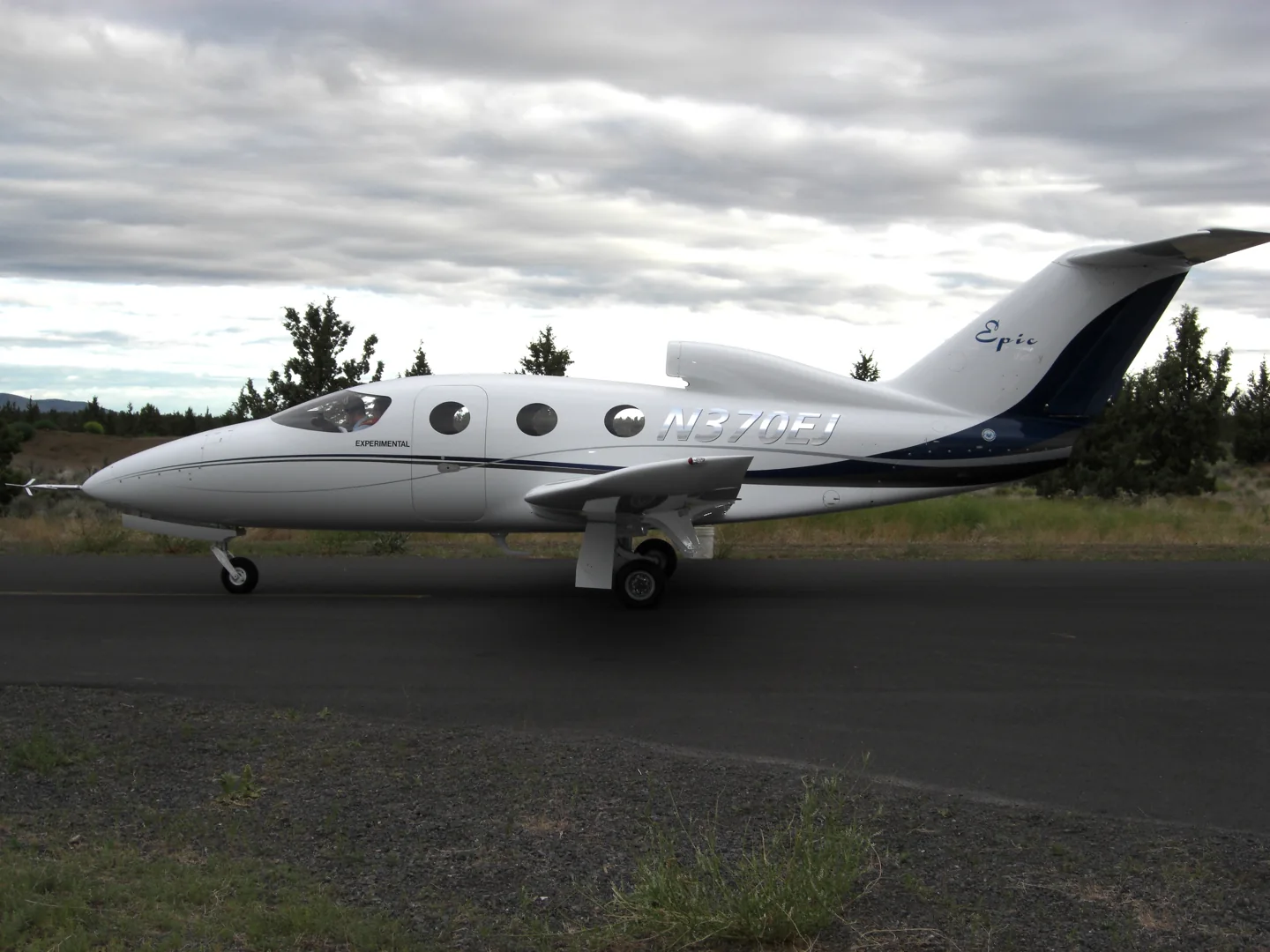
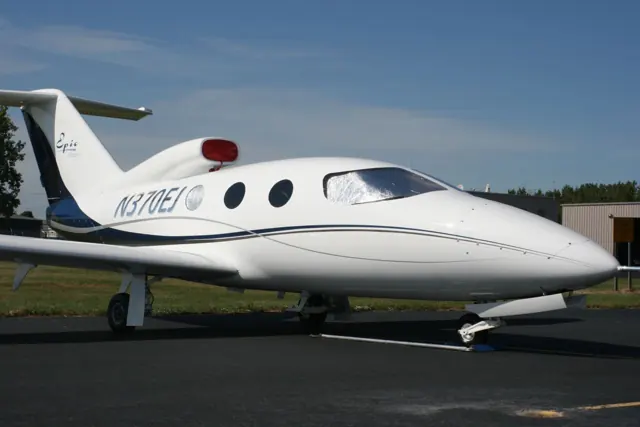
The Victory was Epic Aircraft's second experimental jet design. The company's 2009 bankruptcy interrupted its development, after which new owners acquired the assets. Aerobask's simulator interpretation has its own features and performance descriptions.
Aircraft background
Wikipedia contributors · Read more ↗An unfinished cockpit in a very early jet
Ibold’s flight took place early enough that the Victory still lacked a finished interior and had a basic instrument panel and uncomfortable seats. He found the low-speed handling surprisingly approachable for a jet, comparing aspects of its control harmony with familiar piston twins. The experience also exposed work still to do, including pronounced lateral oscillation and the absence of aileron trim.
Firsthand forum report · November 2007. Early Epic Victory prototype; Ibold described himself as its fourth pilot. Development intentions are kept separate from completed equipment.
Pilots of America · Read more ↗An autopilot with an extra mode
Aerobask lists a GFC700 autopilot with a custom CSC mode using FADEC-based autothrottle. The CSC mode is an Aerobask addition to the G1000-based cockpit.
Aerobask Epic Victory G1000 Edition · X-Plane 12
Aerobask · Read more ↗Into the cockpit
 YouTube
Aerobask · 2 min ·
Aerobask Epic Victory
Aerobask's showcase of the Epic Victory for X-Plane 12.
Simulator · Aerobask Epic Victory · X-Plane 12
Watch on YouTube ↗Preview images are served by AirframeDB. Videos open on YouTube only when you choose to watch.
Meet Epic Victory
The Victory was Epic Aircraft's second experimental jet design. The company's 2009 bankruptcy interrupted its development, after which new owners acquired the assets. Aerobask's simulator interpretation has its own features and performance descriptions.
Epic Victory
Epic Aircraft → · Explore the family →
Epic Victory
Wikipedia contributors · Epic Victory ↗Aerobask · X-Plane 12 →Aircraft type designators
Use the code for the model you are flying. The linked authority lists the applicable aircraft.
History & design
The first Victory leaves Redmond
AVweb’s contemporary report identifies Len Fox as pilot of the 6 July 2007 first flight from Redmond, Oregon. The initial flight lasted about fifty minutes with the landing gear extended. Epic’s CEO said further flying followed during the weekend.
AVweb · Victory Is In The Air For Epic Aircraft ↗Contemporary news report based on Epic’s account
The early prototype and the proposed programme
That first aircraft used a Williams FJ33 engine. Epic described experimental and proposed certified versions with different avionics plans. These were the company’s intentions in July 2007; the announcement does not establish that the proposed production configurations were subsequently delivered.
AVweb · Victory Is In The Air For Epic Aircraft ↗Programme plans as reported at the time
Development milestones
First flight: 6 July 2007
Wikipedia contributors · Epic Victory ↗Epic Victory · family/variant named by the source · Wikipedia revision 1334841462
Pilot accounts
An unfinished cockpit in a very early jet
Ibold’s flight took place early enough that the Victory still lacked a finished interior and had a basic instrument panel and uncomfortable seats. He found the low-speed handling surprisingly approachable for a jet, comparing aspects of its control harmony with familiar piston twins. The experience also exposed work still to do, including pronounced lateral oscillation and the absence of aileron trim.
The trip included photography towards Mount Shasta, with the search for useful light forming part of the outing. Back in Bend, a forgotten camera cable delayed sharing the pictures. It remains an account of an unfinished prototype: modifications discussed in the thread were intentions, and other participants’ questions do not supply additional pilot experiences.
Firsthand forum report · November 2007. Early Epic Victory prototype; Ibold described himself as its fourth pilot. Development intentions are kept separate from completed equipment.
Read the full account · Pilots of America ↗In your simulator
Systems, equipment and documentation for each developer’s aircraft.
X-Plane 12Epic Victory
Aerobask · Released
Epic Victory
Aerobask · Released
Aircraft specifications
Published figures for the named real-aircraft variant. Simulator equipment and performance can differ.
| Specification | Published value |
|---|---|
| Length | 33 ft 5 in (10.19 m) |
| Wingspan | 36 ft 4 in (11.08 m) |
| Height | 10 ft 8.5 in (3.26 m) |
| Empty weight | 2,700 lb (1,225 kg) |
| Gross weight | 5,500 lb (2,495 kg) |
| Powerplant | 1 × Pratt & Whitney Canada PW600 |
| Maximum speed | 368 mph (592 km/h, 320 kn) |
| Cruise speed | 288 mph (463 km/h, 250 kn) |
| Range | 1,380 mi (2,222 km, 1,200 nmi) |
| Service ceiling | 28,000 ft (8,537 m) |
Manuals & resources
Find your next read
Choose a topic for a short introduction and a link to the original source. Simulator references identify the developer and edition they cover.
Simulator documentation
Look beyond the main displaysAerobask Epic Victory G1000 Edition · X-Plane 12
The product description includes a GCU477 keypad, MD302 standby instruments and optional touchscreen features. It also lists pressurization, oxygen, circuit-breaker behaviour and icing effects.
Avionics and aircraft systems
Aerobask · Read the source ↗An autopilot with an extra modeAerobask Epic Victory G1000 Edition · X-Plane 12
Aerobask lists a GFC700 autopilot with a custom CSC mode using FADEC-based autothrottle. The CSC mode is an Aerobask addition to the G1000-based cockpit.
Avionics · GFC700 and CSC mode
Aerobask · Read the source ↗Aerobask’s Victory has a specific engine and cockpitEpic Victory · Aerobask · X-Plane 12
The XP12 package uses a PW617F engine, rather than the Williams engine in the 2007 first-flight report. Aerobask combines Laminar G1000 displays with optional custom engine monitoring, synthetic vision and touch input. Its GFC700 includes a custom CSC mode described as a FADEC-based autothrottle.
Gathered Aerobask page; developer’s represented configuration
Aerobask · Read the source ↗Explore the systems through the cockpit and tabletEpic Victory · Aerobask · X-Plane 12
The published feature list includes pressurisation, oxygen, configurable circuit-breaker reliability and custom engine failure. A GCU477 keypad offers optional physical-keyboard capture, with separate popups for several instruments. The AviTab tablet supplies another interface, and both 4K and lower-resolution liveries are offered.
Aerobask’s documented XP12 features
Aerobask · Read the source ↗Pilot account
An unfinished cockpit in a very early jetFirsthand forum report · November 2007. Early Epic Victory prototype; Ibold described himself as its fourth pilot. Development intentions are kept separate from completed equipment.
Ibold’s flight took place early enough that the Victory still lacked a finished interior and had a basic instrument panel and uncomfortable seats. He found the low-speed handling surprisingly approachable for a jet, comparing aspects of its control harmony with familiar piston twins. The experience also exposed work still to do, including pronounced lateral oscillation and the absence of aileron trim.
Ken Ibold
Pilots of America · Read the source ↗Read the original documentation from the people who created it. Manuals open on their publisher’s website.
Aircraft background
Epic VictoryWikipedia contributors · Research background · retrieved 2026-09-12 Victory Is In The Air For Epic AircraftAVweb · 8 July 2007 · report quoting Epic CEO Rick SchrameckProduct
Epic Victory G1000Aerobask · Official developer / designated store catalogue · checked 2026-09-12Type designator
FAA JO 7360.1K — aircraft type designatorsFederal Aviation Administration · Active FAA order; checked 2026-09-14Built-in force-feedback profiles
Read the documentary basis, editable starting settings and remaining questions for the aircraft you fly. Each explanation refers to the exact profile revision shown.
Catalogue programme-20261022-v1 · 2 profile choices
Aerobask Epic Victory G1000
Aerobask · Free and Pro · Revision 3 · Inherited starting point
X-Plane 12
Aerobask Epic Victory G1000: The profile provides the selected small-jet control resistance.
Epic Victory
Free and Pro · Revision 2 · Partial review
X-Plane 12
Epic Victory: The profile provides the selected small-jet control resistance.
Epic Victory
Epic Victory: The profile provides the selected small-jet control resistance.
Aircraft and simulator scope
- Epic Victory · X-Plane 12 · family starting point
Epic Victory · The developer calls this an experimental Victory simulation with a PW617F; it is separate from the E1000 turboprop.
The simulator model and controls
The Victory was Epic Aircraft's second experimental jet design. The company's 2009 bankruptcy interrupted its development, after which new owners acquired the assets. Aerobask's simulator interpretation has its own features and performance descriptions.
This starting point selects Epic Victory. Its aircraft-level settings do not select a particular developer’s custom systems.
How this profile feels
The profile provides the selected small-jet control resistance. Spring resistance builds with the selected airspeed response. A separate aerodynamic term adds speed-dependent control load.
Current trim authority determines pitch relief for the Victory rendition. Valid trim provides the configured pressure relief. Autopilot following is enabled for supported control references.
Controls and trim
The Victory is Epic’s single-jet development, with its own airframe and cockpit scope. Its propulsion and simulator-system treatment are separate from the E1000 turboprop even though both share the manufacturer’s composite-aircraft background.
About the values
The gains are normalized profile settings. They describe the chosen effect balance; hand force depends on the device and its output limits. IAS references are tuning values rather than operating limits. Physical acceptance of this revision remains pending.
What the documentation establishes
The developer calls this an experimental Victory simulation with a PW617F; it is separate from the E1000 turboprop.
The listed GFC700 includes custom CSC described as FADEC-based autothrottle; that is an Aerobask implementation feature.
Single PW617F jet propulsion and simulated pressurization are documented, while flap/gear schedules are absent.
Documentary review and sources
These decisions describe the documentary basis and remaining gaps for this revision. Aircraft documentation and a starting setting describe different kinds of evidence.
Aircraft and variant
ReviewedThis starting point selects Epic Victory. Its aircraft-level settings do not select a particular developer’s custom systems.
Flight controls
Not yet reviewedThe Victory is Epic’s single-jet development, with its own airframe and cockpit scope. Its propulsion and simulator-system treatment are separate from the E1000 turboprop even though both share the manufacturer’s composite-aircraft background.
Trim
Not yet reviewedCurrent trim authority determines pitch relief for the Victory rendition. Pitch authority 0.3 provides load relief and permitted centre movement; roll authority is 0.
Autopilot and stability
ReviewedFollowing is on at 0.1 authority when a supported, valid autopilot control reference is available.
Equipment
ReviewedGear, flap and ground cues follow the selected settings and available simulator-reported states.
Speeds and limits
Not yet reviewedThe indicated-speed references set the profile response scale; they are separate from aircraft operating limits.
Simulator integration
Not yet reviewedThe profile targets xplane12. Add-on-specific controls use only the supported references configured by this profile.
Force-feedback settings
Not yet reviewedThe settings define the profile’s effect balance. Device output limits affect physical hand force.
Starting settings and their rationale
These configured values are starting estimates. The explanations describe what each setting controls; physical validation appears separately below.
| Setting | Starting value | What it controls and why |
|---|---|---|
| Spring strength | Starting value0.74 | What it controls and whyThe profile provides the selected small-jet control resistance. The baseline spring is 0.74. Its low-speed blend reaches baseline strength at 90 KIAS. |
| Master force gain | Starting value0.85 | What it controls and whyScales overall profile strength while preserving effect balance, subject to device and output limits. |
| Profile force gain | Starting value0.8 | What it controls and whyThe aerodynamic-load gain is 0.8 with an indicated-speed reference of 210 KIAS. This supplies speed-dependent loading alongside the spring. |
| Force tuning speed/reference | Starting value210.0 kt | What it controls and whySets the IAS reference for aerodynamic loading. It is an estimate, not published cruise TAS or a flight limit. |
| Spring response reference speed | Starting value90 kt | What it controls and whySets the IAS where the low-speed blend reaches baseline strength; high-speed stiffening also uses it. |
| Aileron force scale | Starting value0.72 | What it controls and whyRoll and pitch aerodynamic scales are 0.72 and 1, respectively. They set the aerodynamic axis balance. No custom spring-travel curve is enabled. |
| Elevator force scale | Starting value1.0 | What it controls and whyScales pitch aerodynamic loading; pitch spring travel and trim responses are separate settings. |
| Trim feel | Starting valueEnabled | What it controls and whyRetained for compatibility and group membership. Trim relief, rather than this flag, controls centre movement. |
| Trim relief | Starting valueEnabled | What it controls and whyAllows trim relief with supported control law and valid telemetry. Axis authorities set its amount. |
| Autopilot follow | Starting valueEnabled | What it controls and whyFollowing is on at 0.1 authority when a supported, valid autopilot control reference is available. |
| Autopilot neutral hold | Starting valueDisabled | What it controls and whyPermits centering hold during a supported AP state, separate from following a moving target. |
| Output force limit | Starting value0.55 | What it controls and whyCaps directed-force output. Native spring effects and device limits remain separate. |
All 44 starting settings and their rationale
The settings define the profile’s effect balance. Device output limits affect physical hand force.
| Setting | Starting value | What it controls and why |
|---|---|---|
| Spring strength | Starting value0.74 | What it controls and whyThe profile provides the selected small-jet control resistance. The baseline spring is 0.74. Its low-speed blend reaches baseline strength at 90 KIAS. |
| Spring deadband | Starting value0.045 | What it controls and whySets travel around the centre before the baseline spring resists. Smaller values engage it sooner. |
| Profile force gain | Starting value0.8 | What it controls and whyThe aerodynamic-load gain is 0.8 with an indicated-speed reference of 210 KIAS. This supplies speed-dependent loading alongside the spring. |
| Master force gain | Starting value0.85 | What it controls and whyScales overall profile strength while preserving effect balance, subject to device and output limits. |
| QBlend Enabled | Starting valueEnabled | What it controls and whyAllows baseline spring strength to rise with indicated airspeed where the control law permits it. |
| QSpring Minimum Factor | Starting value0.5 | What it controls and whySets low-speed spring strength as a fraction of baseline when blending is enabled. One keeps full strength. |
| QSpring Start Knots | Starting value20 kt | What it controls and whySets the IAS where the low-speed spring blend starts rising. This is a feel threshold, not a flight limit. |
| Spring response reference speed | Starting value90 kt | What it controls and whySets the IAS where the low-speed blend reaches baseline strength; high-speed stiffening also uses it. |
| Force tuning speed/reference | Starting value210.0 kt | What it controls and whySets the IAS reference for aerodynamic loading. It is an estimate, not published cruise TAS or a flight limit. |
| Airspeed spring stiffening gain | Starting value0.15 | What it controls and whyThe high-speed spring-stiffening gain is 0.15. It strengthens the permitted spring response above 90 KIAS, with the squared-speed ratio capped at 5. |
| Airspeed spring stiffening limit | Starting value5 | What it controls and whyLimits the squared airspeed ratio used for high-speed spring stiffening; it is not a device-force cap. |
| Aileron force scale | Starting value0.72 | What it controls and whyRoll and pitch aerodynamic scales are 0.72 and 1, respectively. They set the aerodynamic axis balance. No custom spring-travel curve is enabled. |
| Elevator force scale | Starting value1.0 | What it controls and whyScales pitch aerodynamic loading; pitch spring travel and trim responses are separate settings. |
| Output force limit | Starting value0.55 | What it controls and whyCaps directed-force output. Native spring effects and device limits remain separate. |
| Trim feel | Starting valueEnabled | What it controls and whyRetained for compatibility and group membership. Trim relief, rather than this flag, controls centre movement. |
| Trim relief | Starting valueEnabled | What it controls and whyAllows trim relief with supported control law and valid telemetry. Axis authorities set its amount. |
| Elevator Authority | Starting value0.3 | What it controls and whyCurrent trim authority determines pitch relief for the Victory rendition. Pitch authority 0.3 provides load relief and permitted centre movement; roll authority is 0. |
| Aileron Authority | Starting value0 | What it controls and whyScales supported roll-trim relief and permitted centre movement. Zero removes roll response. |
| Force Trim Enabled | Starting valueDisabled | What it controls and whyEnables local force trim, separate from aircraft-owned trim and add-on integration qualification. |
| GLoad Enabled | Starting valueEnabled | What it controls and whyAllows load-factor changes to modify permitted spring laws. Passive fly-by-wire feel can suppress it. |
| Rate Damping Enabled | Starting valueEnabled | What it controls and whyEnables rate damping with the configured coefficients and control law. |
| Autopilot follow | Starting valueEnabled | What it controls and whyFollowing is on at 0.1 authority when a supported, valid autopilot control reference is available. |
| Autopilot follow authority | Starting value0.1 | What it controls and whySets admitted AP-follow gain, not a percentage of travel. Runtime ownership and input limits still apply. |
| Autopilot neutral hold | Starting valueDisabled | What it controls and whyPermits centering hold during a supported AP state, separate from following a moving target. |
| Autopilot neutral hold strength | Starting value0.6 | What it controls and whySets admitted AP neutral-hold strength; inactive while neutral hold is disabled. |
| Enabled | Starting valueEnabled | What it controls and whyEnables aerodynamic cues; each still needs nonzero strength and its simulator conditions. |
| Gain | Starting value0.35 | What it controls and whySets stall-buffet strength. Zero removes the cue without changing simulator stalls or warnings. |
| Gain | Starting value0.22 | What it controls and whySets high-Mach buffet strength; onset and full-strength thresholds are separate. |
| Gain | Starting value0.14 | What it controls and whySets flap buffet at the configured position and speed gates. Flap movement texture is separate. |
| Maximum flap index | Starting value3 | What it controls and whySets the final flap index for detent normalization. UP plus three detents uses maximum index3. |
| Minimum flap index | Starting value2 | What it controls and whySets the first flap detent that admits buffet; this is a handle index, not degrees. |
| Gain | Starting value0.1 | What it controls and whySets gear aerodynamic buffet; movement and ground-contact cues are separate. |
| Shaker Enabled | Starting valueDisabled | What it controls and whyPermits shaker at supported warning conditions; the switch does not establish aircraft equipment. |
| Stick shaker amplitude | Starting value0.5 | What it controls and whySets triggered shaker strength; inactive while the shaker feature is disabled. |
| Enabled | Starting valueEnabled | What it controls and whyEnables ground effects; each still needs its own strength and contact or motion telemetry. |
| Gain | Starting value0.4 | What it controls and whySets rolling texture strength, modified by speed, surface and undercarriage configuration. |
| Gain | Starting value0.25 | What it controls and whySets gear-bump texture during ground motion, separate from touchdown impact. |
| Gain | Starting value0.65 | What it controls and whySets landing-impact strength; landing telemetry and response shape determine the pulse. |
| Gain | Starting value0 | What it controls and whySets reverse-thrust vibration with valid reverser and engine conditions. Zero removes the cue. |
| Enabled | Starting valueEnabled | What it controls and whyEnables engine cues with nonzero settings and valid running-engine telemetry. |
| Gain | Starting value0.06 | What it controls and whySets estimated engine vibration using configured telemetry and response, not measured cockpit vibration. |
| Enabled | Starting valueEnabled | What it controls and whyEnables accessory cues with configured strengths and observed accessory movement. |
| Gain | Starting value0.12 | What it controls and whySets texture from observed flap movement; a command without movement does not establish the cue. |
| Gain | Starting value0.12 | What it controls and whySets texture from observed gear movement, separate from aerodynamic and touchdown effects. |
Limits and open questions
- The page does not describe Victory primary-control linkage.
- No Victory trim mechanism is documented.
- No indicated-speed reference or Mach cue onset is established by the product page.
- The page identifies keypad support for Laminar commands but does not define external force-control telemetry.
- The PW617F flight model and FMOD sounds do not supply measured stick forces or vibration amplitudes.
- Epic Victory documentary evidence does not establish force-feedback hardware acceptance.
Physical validation
No physical force validation is recorded in this public catalogue for this revision. Documentary review and software checks do not establish how a particular device feels.
Discuss this aircraft (0)
Questions, observations and useful sources from the community.
No published discussions yet. Bring a question or share a useful source.
Open aircraft discussions →Content expanded · What’s new
Something missing or a source that needs attention?
Suggest a correction ↗