

Start here
A few places to begin, from the aircraft’s story to the people who fly it.
Meet the aircraft
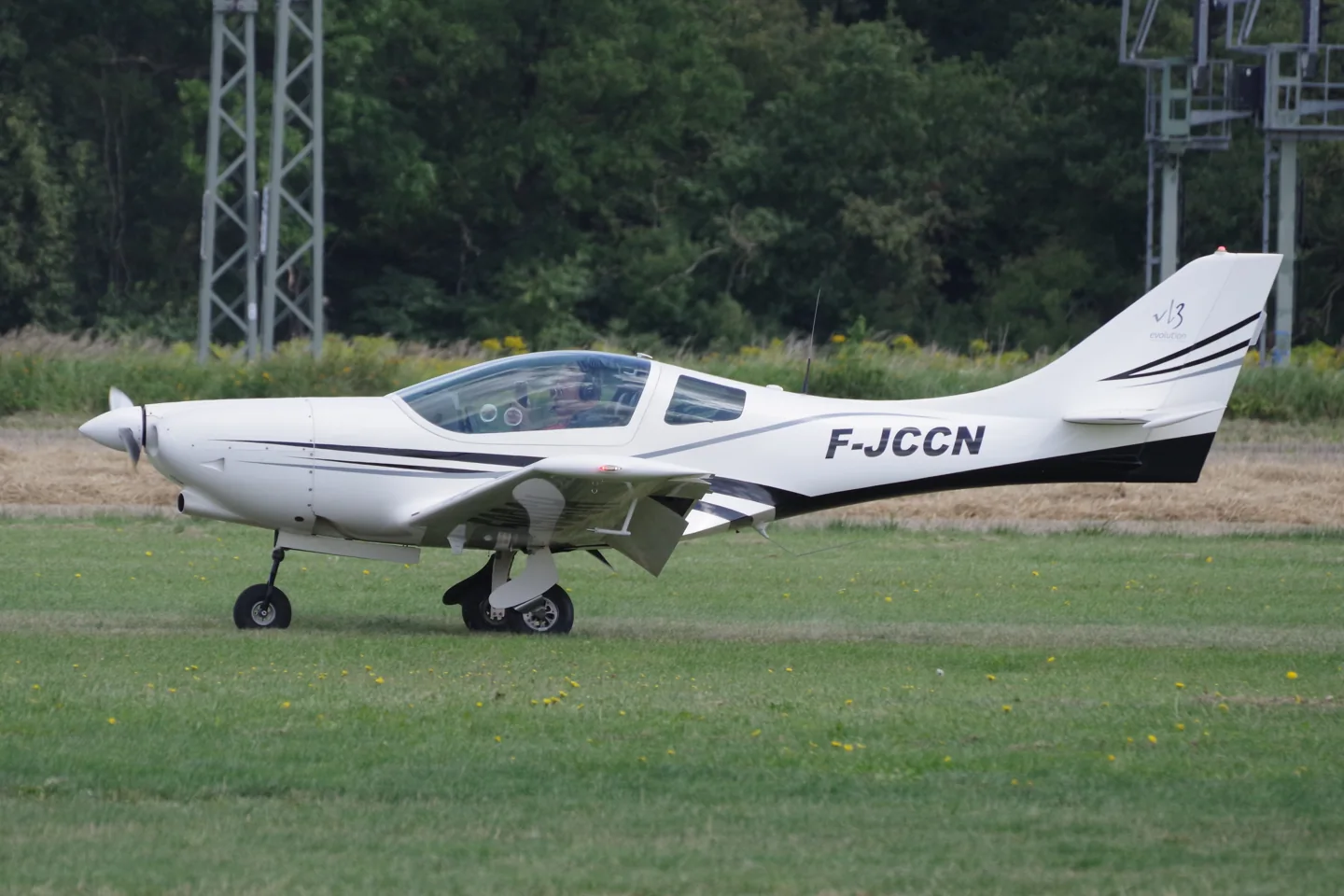
The VL-3 originated with Aveko and continued under JMB Aircraft. Its composite low-wing airframe and enclosed side-by-side two-seat cabin belong to the European ultralight and light-aircraft market.
Aircraft background
Wikipedia contributors · Read more ↗A camera offers a different view of retracting the wheels
Hirschman settled into a reclined seat with the controls comfortably within reach, finding a surprisingly accommodating cockpit inside the small VL3. One unusual detail entertained him after departure: a belly-mounted camera let him watch the wheels retract. The aircraft’s equipment and arrangement gave the flight some of the character of a much larger travelling machine.
AOPA · January 2022. Actual flight narrative identifies a 115-hp Rotax 914 UL aircraft; the accompanying specification box describes a 915 model.
AOPA · Read more ↗Into the cockpit
 YouTube
Twin.G.Thrust · 73 min ·
So entsteht die JMB VL3: Vom Carbon bis zum Abnahmeflug | DOKU | 4k | JMB Aircraft | Cockpit
A German-language documentary follows VL3 construction through its acceptance flight.
Real aircraft · JMB VL-3 Evolution
Watch on YouTube ↗Preview images are served by AirframeDB. Videos open on YouTube only when you choose to watch.
Meet JMB VL-3 Evolution
The VL-3 originated with Aveko and continued under JMB Aircraft. Its composite low-wing airframe and enclosed side-by-side two-seat cabin belong to the European ultralight and light-aircraft market.
The Evolution programme has offered different engines, landing gear and cockpit equipment over time. Simulator product descriptions identify the configuration represented by each package.
JMB VL-3 Evolution
Aircraft type designators
Use the code for the model you are flying. The linked authority lists the applicable aircraft.
History & design
A touring community finds things to do when the weather intervenes
JMB’s German dealer recalled a 2022 Sardinia trip involving fifteen VL3s. Strong Mistral winds curtailed much of the flying, leaving time for exploring by car, food and beaches; a day trip to Elba and an evening flight still featured in the group’s memories.
JMB Aircraft Germany · Ein Jahr VL3: 2022 ↗Dealer’s collective retrospective; not counted as an additional individual pilot account
Pilot accounts
A camera offers a different view of retracting the wheels
Hirschman settled into a reclined seat with the controls comfortably within reach, finding a surprisingly accommodating cockpit inside the small VL3. One unusual detail entertained him after departure: a belly-mounted camera let him watch the wheels retract. The aircraft’s equipment and arrangement gave the flight some of the character of a much larger travelling machine.
Later, the arrival at Mansfield brought gusty wind and a chance to learn how the aircraft slowed and landed. Hirschman liked the balance of the controls and the way the undercarriage absorbed the touchdown. His account combines that enjoyment with attention to managing a slippery aircraft on approach. The experience concerns the 914-powered example he actually flew, rather than the different engine configuration described elsewhere in the article.
AOPA · January 2022. Actual flight narrative identifies a 115-hp Rotax 914 UL aircraft; the accompanying specification box describes a 915 model.
Read the full account · AOPA ↗The importer keeps bringing the conversation back to touring
Returning to the VL3 after an earlier fixed-gear flight, Wolter was curious about what retractable wheels would do for its performance. Importer Roland Pfeiffer repeatedly steered the conversation towards travelling rather than chasing a maximum speed. The flight gave Wolter time to consider that emphasis while learning the particular aircraft’s controls and configuration.
Low cloud limited what they could assess, and Wolter explicitly left stalls out of this flight. As they slowed for the return, a speed that would seem brisk in another light aircraft felt unexpectedly sedate after the cruise. The arrival left him appreciating the VL3 as a touring machine. His report distinguishes the aircraft he flew from later propeller options and from the earlier fixed-gear version he remembered.
fliegermagazin · April 2014. Retractable VL-3 Evolution D-MRII, serial 121, with a 100-hp Rotax 912 S and fixed-pitch DUC propeller; flight with Roland Pfeiffer at Mengen.
Read the full account · fliegermagazin ↗A familiar airframe feels different with a turbine
Davidson spent time on the ground learning the turbine’s indications and warnings before taking the prototype out alone. A winter sun had softened the grass runway, adding a practical concern to the departure. Once airborne, the quick acceleration and climb required his attention, but the absence of familiar piston-engine vibration soon became the dominant impression.
The controls also felt different from the standard VL3 he knew: more even in their forces and somewhat heavier. Returning to the nearby strip exposed another side of the aircraft, as losing height while keeping speed under control took planning. A manageable crosswind arrival completed the flight. Davidson’s enthusiasm is grounded in this particular prototype encounter, with development changes and projected production performance kept separate from what he experienced.
AOPA republication of an Aviation et Pilote report · June 2025. Solo evaluation of the Turbotech-powered VL3 prototype on a private French microlight strip; not the stock Rotax aircraft.
Read the full account · AOPA / Aviation et Pilote ↗In your simulator
Systems, equipment and documentation for each developer’s aircraft.
Compare simulator versions →MSFS 2024VL-3
Microsoft Flight Simulator · Released
VL-3
Microsoft Flight Simulator · Released
MSFS 2020VL-3
Microsoft Flight Simulator · Released
VL-3
Microsoft Flight Simulator · Released
Manuals & resources
Find your next read
Choose a topic for a short introduction and a link to the original source. Simulator references identify the developer and edition they cover.
Pilot account
A camera offers a different view of retracting the wheelsAOPA · January 2022. Actual flight narrative identifies a 115-hp Rotax 914 UL aircraft; the accompanying specification box describes a 915 model.
Hirschman settled into a reclined seat with the controls comfortably within reach, finding a surprisingly accommodating cockpit inside the small VL3. One unusual detail entertained him after departure: a belly-mounted camera let him watch the wheels retract. The aircraft’s equipment and arrangement gave the flight some of the character of a much larger travelling machine. Later, the arrival at Mansfield brought gusty wind and a chance to learn how the aircraft slowed and landed.
Dave Hirschman
AOPA · Read the source ↗The importer keeps bringing the conversation back to touringfliegermagazin · April 2014. Retractable VL-3 Evolution D-MRII, serial 121, with a 100-hp Rotax 912 S and fixed-pitch DUC propeller; flight with Roland Pfeiffer at Mengen.
Returning to the VL3 after an earlier fixed-gear flight, Wolter was curious about what retractable wheels would do for its performance. Importer Roland Pfeiffer repeatedly steered the conversation towards travelling rather than chasing a maximum speed. The flight gave Wolter time to consider that emphasis while learning the particular aircraft’s controls and configuration. Low cloud limited what they could assess, and Wolter explicitly left stalls out of this flight.
Peter Wolter
fliegermagazin · Read the source ↗Read the original documentation from the people who created it. Manuals open on their publisher’s website.
Manual
Microsoft Flight Simulator aircraft manualsMicrosoft / aircraft developersAircraft background
JMB VL-3 SprintWikipedia contributors · Research background · Wikipedia revision 1102426560 · retrieved 2026-09-12 Ein Jahr VL3: 2022JMB Aircraft Germany · Dealer’s retrospective of 2022 touring activitiesResource
MSFS 2024 FAQ and edition aircraft inventoryMicrosoft MSFS 2020 FAQ and edition aircraft inventoryMicrosoftType designator
ICAO Doc 8643 — aircraft type designatorsInternational Civil Aviation Organization · Public search data retrieved 2026-09-14; authority update 2026-09-03Built-in force-feedback profiles
Read the documentary basis, editable starting settings and remaining questions for the aircraft you fly. Each explanation refers to the exact profile revision shown.
Catalogue programme-20261022-v1 · 1 profile choice
JMB VL-3 Evolution
Free and Pro · Revision 1 · Partial review
MSFS 2024 · MSFS 2020
JMB VL-3 Evolution: The profile supplies the chosen light-aircraft stick resistance.
JMB VL-3 Evolution
JMB VL-3 Evolution: The profile supplies the chosen light-aircraft stick resistance.
Aircraft and simulator scope
- JMB VL-3 Evolution · MSFS 2024 · family starting point
- JMB VL-3 Evolution · MSFS 2020 · family starting point
JMB VL-3 Evolution · The 2022 annual review concerns the VL3 family and explicitly distinguishes delivered 915iS aircraft from turbine development.
The simulator model and controls
The VL-3 originated with Aveko and continued under JMB Aircraft. Its composite low-wing airframe and enclosed side-by-side two-seat cabin belong to the European ultralight and light-aircraft market.
This starting point selects JMB VL-3 Evolution. Its aircraft-level settings do not select a particular developer’s custom systems.
How this profile feels
The profile supplies the chosen light-aircraft stick resistance. Spring resistance builds with the selected airspeed response. A separate aerodynamic term adds speed-dependent control load.
Configured pitch relief stays with the selected VL-3 equipment context. Valid trim provides the configured pressure relief. Autopilot following is off.
Controls and trim
The VL-3 originated with Aveko and continued with JMB as a composite two-seat light aircraft. Successive Evolution configurations use different engines, landing gear and avionics. The selected developer’s model identifies those equipment choices.
About the values
The gains are normalized profile settings. They describe the chosen effect balance; hand force depends on the device and its output limits. IAS references are tuning values rather than operating limits. Physical acceptance of this revision remains pending.
What the documentation establishes
The 2022 annual review concerns the VL3 family and explicitly distinguishes delivered 915iS aircraft from turbine development.
Documentary review and sources
These decisions describe the documentary basis and remaining gaps for this revision. Aircraft documentation and a starting setting describe different kinds of evidence.
Aircraft and variant
ReviewedThis starting point selects JMB VL-3 Evolution. Its aircraft-level settings do not select a particular developer’s custom systems.
Flight controls
Not yet reviewedThe VL-3 originated with Aveko and continued with JMB as a composite two-seat light aircraft. Successive Evolution configurations use different engines, landing gear and avionics. The selected developer’s model identifies those equipment choices.
Trim
Not yet reviewedConfigured pitch relief stays with the selected VL-3 equipment context. Pitch authority 0.3 provides load relief and permitted centre movement; roll authority is 0.
Autopilot and stability
Not yet reviewedAutopilot following is off; the configured spring and load retain the hardware feel.
Equipment
Not yet reviewedGear, flap and ground cues follow the selected settings and available simulator-reported states.
Speeds and limits
Not yet reviewedThe indicated-speed references set the profile response scale; they are separate from aircraft operating limits.
Simulator integration
Not yet reviewedThe profile targets msfs2024, msfs2020. Add-on-specific controls use only the supported references configured by this profile.
Force-feedback settings
Not yet reviewedThe settings define the profile’s effect balance. Device output limits affect physical hand force.
Starting settings and their rationale
These configured values are starting estimates. The explanations describe what each setting controls; physical validation appears separately below.
| Setting | Starting value | What it controls and why |
|---|---|---|
| Spring strength | Starting value0.74 | What it controls and whyThe profile supplies the chosen light-aircraft stick resistance. The baseline spring is 0.74. Its low-speed blend reaches baseline strength at 72.5 KIAS. |
| Master force gain | Starting value0.85 | What it controls and whyScales overall profile strength while preserving effect balance, subject to device and output limits. |
| Profile force gain | Starting value0.8 | What it controls and whyThe aerodynamic-load gain is 0.8 with an indicated-speed reference of 145 KIAS. This supplies speed-dependent loading alongside the spring. |
| Force tuning speed/reference | Starting value145.0 kt | What it controls and whySets the IAS reference for aerodynamic loading. It is an estimate, not published cruise TAS or a flight limit. |
| Spring response reference speed | Starting value72.5 kt | What it controls and whySets the IAS where the low-speed blend reaches baseline strength; high-speed stiffening also uses it. |
| Aileron force scale | Starting value0.72 | What it controls and whyRoll and pitch aerodynamic scales are 0.72 and 1, respectively. They set the aerodynamic axis balance. No custom spring-travel curve is enabled. |
| Elevator force scale | Starting value1.0 | What it controls and whyScales pitch aerodynamic loading; pitch spring travel and trim responses are separate settings. |
| Trim feel | Starting valueEnabled | What it controls and whyRetained for compatibility and group membership. Trim relief, rather than this flag, controls centre movement. |
| Trim relief | Starting valueEnabled | What it controls and whyAllows trim relief with supported control law and valid telemetry. Axis authorities set its amount. |
| Autopilot follow | Starting valueDisabled | What it controls and whyAutopilot following is off; the configured spring and load retain the hardware feel. |
| Autopilot neutral hold | Starting valueDisabled | What it controls and whyPermits centering hold during a supported AP state, separate from following a moving target. |
| Output force limit | Starting value0.55 | What it controls and whyCaps directed-force output. Native spring effects and device limits remain separate. |
All 44 starting settings and their rationale
The settings define the profile’s effect balance. Device output limits affect physical hand force.
| Setting | Starting value | What it controls and why |
|---|---|---|
| Spring strength | Starting value0.74 | What it controls and whyThe profile supplies the chosen light-aircraft stick resistance. The baseline spring is 0.74. Its low-speed blend reaches baseline strength at 72.5 KIAS. |
| Spring deadband | Starting value0.045 | What it controls and whySets travel around the centre before the baseline spring resists. Smaller values engage it sooner. |
| Profile force gain | Starting value0.8 | What it controls and whyThe aerodynamic-load gain is 0.8 with an indicated-speed reference of 145 KIAS. This supplies speed-dependent loading alongside the spring. |
| Master force gain | Starting value0.85 | What it controls and whyScales overall profile strength while preserving effect balance, subject to device and output limits. |
| QBlend Enabled | Starting valueEnabled | What it controls and whyAllows baseline spring strength to rise with indicated airspeed where the control law permits it. |
| QSpring Minimum Factor | Starting value0.5 | What it controls and whySets low-speed spring strength as a fraction of baseline when blending is enabled. One keeps full strength. |
| QSpring Start Knots | Starting value20 kt | What it controls and whySets the IAS where the low-speed spring blend starts rising. This is a feel threshold, not a flight limit. |
| Spring response reference speed | Starting value72.5 kt | What it controls and whySets the IAS where the low-speed blend reaches baseline strength; high-speed stiffening also uses it. |
| Force tuning speed/reference | Starting value145.0 kt | What it controls and whySets the IAS reference for aerodynamic loading. It is an estimate, not published cruise TAS or a flight limit. |
| Airspeed spring stiffening gain | Starting value0.15 | What it controls and whyThe high-speed spring-stiffening gain is 0.15. It strengthens the permitted spring response above 72.5 KIAS, with the squared-speed ratio capped at 5. |
| Airspeed spring stiffening limit | Starting value5 | What it controls and whyLimits the squared airspeed ratio used for high-speed spring stiffening; it is not a device-force cap. |
| Aileron force scale | Starting value0.72 | What it controls and whyRoll and pitch aerodynamic scales are 0.72 and 1, respectively. They set the aerodynamic axis balance. No custom spring-travel curve is enabled. |
| Elevator force scale | Starting value1.0 | What it controls and whyScales pitch aerodynamic loading; pitch spring travel and trim responses are separate settings. |
| Output force limit | Starting value0.55 | What it controls and whyCaps directed-force output. Native spring effects and device limits remain separate. |
| Trim feel | Starting valueEnabled | What it controls and whyRetained for compatibility and group membership. Trim relief, rather than this flag, controls centre movement. |
| Trim relief | Starting valueEnabled | What it controls and whyAllows trim relief with supported control law and valid telemetry. Axis authorities set its amount. |
| Elevator Authority | Starting value0.3 | What it controls and whyConfigured pitch relief stays with the selected VL-3 equipment context. Pitch authority 0.3 provides load relief and permitted centre movement; roll authority is 0. |
| Aileron Authority | Starting value0 | What it controls and whyScales supported roll-trim relief and permitted centre movement. Zero removes roll response. |
| Force Trim Enabled | Starting valueDisabled | What it controls and whyEnables local force trim, separate from aircraft-owned trim and add-on integration qualification. |
| GLoad Enabled | Starting valueEnabled | What it controls and whyAllows load-factor changes to modify permitted spring laws. Passive fly-by-wire feel can suppress it. |
| Rate Damping Enabled | Starting valueEnabled | What it controls and whyEnables rate damping with the configured coefficients and control law. |
| Autopilot follow | Starting valueDisabled | What it controls and whyAutopilot following is off; the configured spring and load retain the hardware feel. |
| Autopilot follow authority | Starting value0.1 | What it controls and whySets admitted AP-follow gain, not a percentage of travel. Runtime ownership and input limits still apply. |
| Autopilot neutral hold | Starting valueDisabled | What it controls and whyPermits centering hold during a supported AP state, separate from following a moving target. |
| Autopilot neutral hold strength | Starting value0.6 | What it controls and whySets admitted AP neutral-hold strength; inactive while neutral hold is disabled. |
| Enabled | Starting valueEnabled | What it controls and whyEnables aerodynamic cues; each still needs nonzero strength and its simulator conditions. |
| Gain | Starting value0.35 | What it controls and whySets stall-buffet strength. Zero removes the cue without changing simulator stalls or warnings. |
| Gain | Starting value0 | What it controls and whySets high-Mach buffet strength; onset and full-strength thresholds are separate. |
| Gain | Starting value0.14 | What it controls and whySets flap buffet at the configured position and speed gates. Flap movement texture is separate. |
| Maximum flap index | Starting value3 | What it controls and whySets the final flap index for detent normalization. UP plus three detents uses maximum index3. |
| Minimum flap index | Starting value2 | What it controls and whySets the first flap detent that admits buffet; this is a handle index, not degrees. |
| Gain | Starting value0.1 | What it controls and whySets gear aerodynamic buffet; movement and ground-contact cues are separate. |
| Shaker Enabled | Starting valueDisabled | What it controls and whyPermits shaker at supported warning conditions; the switch does not establish aircraft equipment. |
| Stick shaker amplitude | Starting value0.5 | What it controls and whySets triggered shaker strength; inactive while the shaker feature is disabled. |
| Enabled | Starting valueEnabled | What it controls and whyEnables ground effects; each still needs its own strength and contact or motion telemetry. |
| Gain | Starting value0.4 | What it controls and whySets rolling texture strength, modified by speed, surface and undercarriage configuration. |
| Gain | Starting value0.25 | What it controls and whySets gear-bump texture during ground motion, separate from touchdown impact. |
| Gain | Starting value0.65 | What it controls and whySets landing-impact strength; landing telemetry and response shape determine the pulse. |
| Gain | Starting value0 | What it controls and whySets reverse-thrust vibration with valid reverser and engine conditions. Zero removes the cue. |
| Enabled | Starting valueEnabled | What it controls and whyEnables engine cues with nonzero settings and valid running-engine telemetry. |
| Gain | Starting value0.12 | What it controls and whySets estimated engine vibration using configured telemetry and response, not measured cockpit vibration. |
| Enabled | Starting valueEnabled | What it controls and whyEnables accessory cues with configured strengths and observed accessory movement. |
| Gain | Starting value0.12 | What it controls and whySets texture from observed flap movement; a command without movement does not establish the cue. |
| Gain | Starting value0.12 | What it controls and whySets texture from observed gear movement, separate from aerodynamic and touchdown effects. |
Limits and open questions
- The annual review does not describe primary linkage or force gearing.
- Trim mechanism is not documented.
- Installed autopilot equipment is not documented.
- Rotax deliveries and separate turbine testing establish propulsion diversity, but do not validate the selected gear/flap schedule.
- Trip winds and flight levels are travel context, not an applicable IAS performance table supporting 145 knots.
- The manufacturer-country report supplies no simulator telemetry definitions.
- Travel experiences do not provide measured stick loads or cockpit vibration data.
- JMB VL-3 Evolution documentary evidence does not establish force-feedback hardware acceptance.
Physical validation
No physical force validation is recorded in this public catalogue for this revision. Documentary review and software checks do not establish how a particular device feels.
Discuss this aircraft (0)
Questions, observations and useful sources from the community.
No published discussions yet. Bring a question or share a useful source.
Open aircraft discussions →Content expanded · What’s new
Something missing or a source that needs attention?
Suggest a correction ↗