

Start here
A few places to begin, from the aircraft’s story to the people who fly it.
Meet the aircraft
The Super Cub joined Piper's range in 1949, developing earlier Cub designs with more power and equipment. It retained the braced high wing, tandem cabin and tailwheel layout. Its working roles include glider towing, banner towing and remote-area transport.
Aircraft background
Wikipedia contributors · Read more ↗A factory-fresh working Cub in 1975
Garvey borrowed a new 150-horsepower Super Cub at the factory before its owner, Piper dealer Jim Porter, took it home. His report places it in an interesting period: Piper was promoting its newer designs while customers who needed a Cub already knew where to find one.
AOPA Pilot, July 1975; republished in AOPA’s Super Cub fact sheet. New PA-18-150 loaned by Jim Porter.
AOPA Pilot · Read more ↗Finding the controls in Laminar’s PA-18-150
Laminar identifies its model as a PA-18-150. The cockpit guide places the throttle, carburettor-heat control and rotary trim handle on the left side, with a separate three-position flap lever. It describes brake pedals distinct from the rudder pedals, overhead fuel sight gauges and an electrical switch panel. The sight gauges provide approximate indications, with reduced accuracy at low fuel levels.
Piper PA-18 Super Cub · Laminar Research · X-Plane 12
Laminar Research · Read more ↗Into the cockpit
 YouTube
Fishing Flying & Outdoor Adventures! · 1 min ·
✈️ Desert Takeoffs & Landings | PA-18 Super Cub Bush Flying 🏜️
A Super Cub pilot practices desert takeoffs and landings.
Real aircraft · Piper PA-18 Super Cub
Watch on YouTube ↗Preview images are served by AirframeDB. Videos open on YouTube only when you choose to watch.
Meet Piper PA-18 Super Cub
The Super Cub joined Piper's range in 1949, developing earlier Cub designs with more power and equipment. It retained the braced high wing, tandem cabin and tailwheel layout. Its working roles include glider towing, banner towing and remote-area transport.
Many individual aircraft are modified with different engines, wheels and equipment. Each simulator package identifies its represented variant and cockpit.
Piper PA-18 Super Cub
Piper → · Explore the family →
Piper PA-18 Super Cub
Wikipedia contributors · Piper PA-18 Super Cub ↗Laminar Research · X-Plane 12 →SimCoders · X-Plane 12 →Aircraft type designators
Use the code for the model you are flying. The linked authority lists the applicable aircraft.
History & design
Development milestones
First flight: 1949
Developed from: Piper PA-11 Cub Special
Wikipedia contributors · Piper PA-18 Super Cub ↗Piper PA-18 Super Cub · family/variant named by the source · Wikipedia revision 1331579518
Systems & details
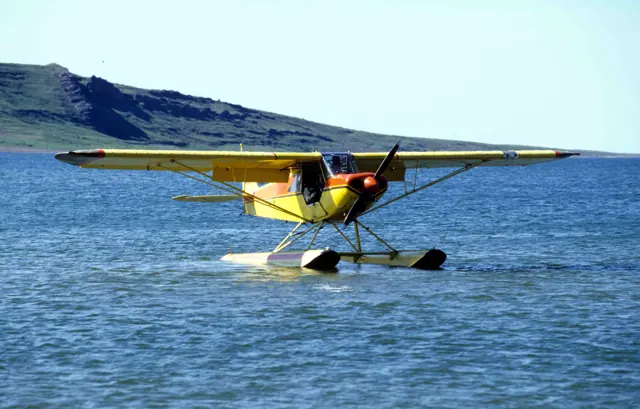
A Cub adapted to working from rough ground
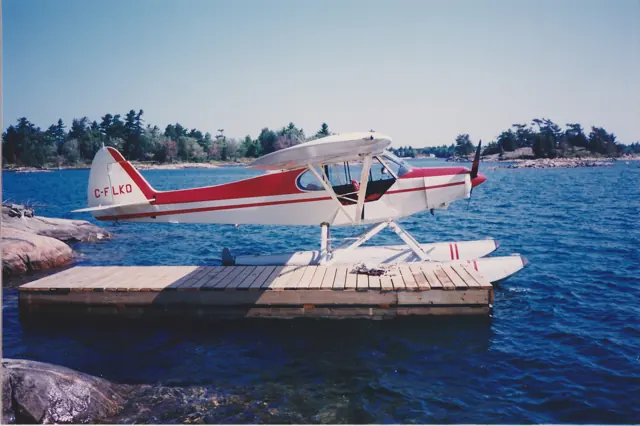
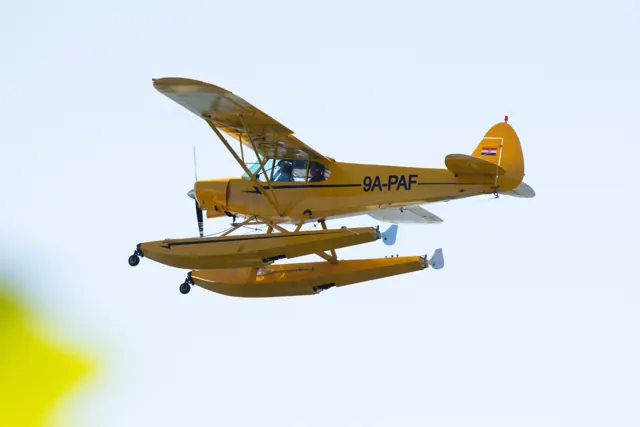
Laminar’s background chapter describes a fabric-covered steel-tube fuselage, a braced high wing and the extra power, flaps and wing tanks that distinguish the Super Cub from the earliest Cub designs. It also describes the broad modification culture around the type, including large low-pressure tyres, cargo racks and additional storage. Those visible changes help explain why two PA-18 photographs can show quite different working equipment.
Pilot accounts
A factory-fresh working Cub in 1975
Garvey borrowed a new 150-horsepower Super Cub at the factory before its owner, Piper dealer Jim Porter, took it home. His report places it in an interesting period: Piper was promoting its newer designs while customers who needed a Cub already knew where to find one. The aeroplane's fabric covering, tandem seats and simple starting controls made its older lineage immediately apparent, even with the extra power and flaps of the Super Cub.
For the flight, two people and full tanks left the aircraft below its permitted maximum weight. Garvey reported a strong climb that continued at 4,000 feet. He tried stalls with and without power and flap, describing mild breaks and prompt recovery in each case. A half-flap arrival then showed the compact landing performance that helped explain the aircraft's working reputation. His brief evaluation conveys a practical, capable machine encountered during production, with the results tied to that flight's loading rather than an assumed performance standard for today's many modified Cubs.
AOPA Pilot, July 1975; republished in AOPA’s Super Cub fact sheet. New PA-18-150 loaned by Jim Porter.
Read the full account · AOPA Pilot ↗Rediscovering the Super Cub, one landing at a time
Davisson returned to the PA-18 after roughly fifteen years away, flying Tom Hampton's restored 150-horsepower Super Cub on the same afternoon as an older J-2. Its larger tyres, comfortable seats and stronger climb made the family resemblance feel distinctly more capable. He liked the control response and could see ahead well enough on the ground without the weaving taxi he might have expected from a tailwheel aircraft. His comparison concerns these particular Cubs, not every version carrying the name.
The landings provided a candid account of relearning the aeroplane. His first clean approach floated and ended with a bounce on the large tyres. Half flap made the next descent easier to manage and reduced the float. For the final attempt, he used full flap but let the speed decay too early, leaving little elevator authority for the flare and another untidy arrival. He did not perform stalls on this flight.
Budd Davisson flight report, reproduced by Pilotfriend with Airbum credit; undated. Restored PA-18 flown alongside a J-2 comparison.
Read the full account · Pilotfriend / Budd Davisson ↗From a Cessna 210 to an Alaskan float Cub
Worthy first flew a Super Cub in 2013 at Alaska Float Ratings in Moose Pass. Most of her previous experience had been in a Cessna 210, so she expected the stick and left-hand throttle to require adjustment. Instead, both felt natural almost immediately. She flew two 160-horsepower examples with different floats and panels, learning the unfamiliar work of manoeuvring on water and choosing a takeoff direction without a marked runway.
From the front seat, the view to either side became a large part of the attraction: the flights passed turquoise lakes and glacier-covered mountains. She found the float Cub much more responsive than the heavier Cessna she knew, while still feeling steady in the canyon winds she encountered. Simulated power-loss exercises also made the extra drag of the floats memorable. Her account is a recollection of supervised seaplane training, and her strongest impression was the simple pleasure of it; she remembers finishing flights with her face aching from smiling.
22 January 2016 article by R. K. Dick Williams with Crista Worthy, republished by High Sierra Pilots. Worthy’s separate first-person section recalls 2013 float training.
Read the full account · High Sierra Pilots / Disciples of Flight ↗In your simulator
Systems, equipment and documentation for each developer’s aircraft.
Compare simulator versions →X-Plane 12Piper PA-18 Super Cub
Laminar Research · Released
Piper PA-18 Super Cub
Laminar Research · Released
X-Plane 12 Enhancement Piper PA-18 Super Cub
SimCoders · Released
Piper PA-18 Super Cub
SimCoders · Released
Aircraft specifications
Published figures for the named real-aircraft variant. Simulator equipment and performance can differ.
| Specification | Published value |
|---|---|
| Length | 22 ft 7 in (6.88 m) |
| Wingspan | 35 ft 2 + 1 ⁄ 2 in (10.732 m) |
| Height | 6 ft 8 + 1 ⁄ 2 in (2.045 m) |
| Wing area | 178.5 sq ft (16.58 m² ) |
| Empty weight | 930 lb (422 kg) |
| Max takeoff weight | 1,750 lb (794 kg) |
| Powerplant | 1 × Lycoming O-320 air-cooled flat four engine, 150 hp (110 kW) |
| Maximum speed | 130 mph (209 km/h, 113 kn) |
| Cruise speed | 115 mph (185 km/h, 100 kn) (75% power) |
| Stall speed | 43 mph (69 km/h, 37 kn) (flaps down) |
| Range | 460 mi (740 km, 400 nmi) |
| Service ceiling | 19,000 ft (5,800 m) |
| Rate of climb | 960 ft/min (4.9 m/s) |
Manuals & resources
Find your next read
Choose a topic for a short introduction and a link to the original source. Simulator references identify the developer and edition they cover.
Simulator documentation
Finding the controls in Laminar’s PA-18-150Piper PA-18 Super Cub · Laminar Research · X-Plane 12
Laminar identifies its model as a PA-18-150. The cockpit guide places the throttle, carburettor-heat control and rotary trim handle on the left side, with a separate three-position flap lever. It describes brake pedals distinct from the rudder pedals, overhead fuel sight gauges and an electrical switch panel. The sight gauges provide approximate indications, with reduced accuracy at low fuel levels. The guide maps this particular simulated cockpit, including its installed equipment.
Laminar Research PA-18 manual · PDF pp.6,15–18 · simulator cockpit guide
Laminar Research · Read the source ↗The represented Super Cub cockpitPiper PA-18 Super Cub · Laminar Research · X-Plane 12
Laminar's Super Cub guide identifies pitch trim, stick controls and the installed instruments. It documents this particular aircraft's panel rather than proving that every Super Cub has the same navigation or automatic-flight equipment.
Archived simulator manual; installed package revision not observed · PDF pp.7-8,20
Laminar Research · Read the source ↗Pilot account
A factory-fresh working Cub in 1975AOPA Pilot, July 1975; republished in AOPA’s Super Cub fact sheet. New PA-18-150 loaned by Jim Porter.
Garvey borrowed a new 150-horsepower Super Cub at the factory before its owner, Piper dealer Jim Porter, took it home. His report places it in an interesting period: Piper was promoting its newer designs while customers who needed a Cub already knew where to find one. The aeroplane's fabric covering, tandem seats and simple starting controls made its older lineage immediately apparent, even with the extra power and flaps of the Super Cub.
William Garvey
AOPA Pilot · Read the source ↗Rediscovering the Super Cub, one landing at a timeBudd Davisson flight report, reproduced by Pilotfriend with Airbum credit; undated. Restored PA-18 flown alongside a J-2 comparison.
Davisson returned to the PA-18 after roughly fifteen years away, flying Tom Hampton's restored 150-horsepower Super Cub on the same afternoon as an older J-2. Its larger tyres, comfortable seats and stronger climb made the family resemblance feel distinctly more capable. He liked the control response and could see ahead well enough on the ground without the weaving taxi he might have expected from a tailwheel aircraft.
Budd Davisson
Pilotfriend / Budd Davisson · Read the source ↗Read the original documentation from the people who created it. Manuals open on their publisher’s website.
Manual
Piper PA-18 Super Cub POHLaminar Research X-Plane 12 Desktop ManualLaminar Research X-Plane aircraft and avionics manualsLaminar ResearchAircraft background
Piper PA-18 Super CubWikipedia contributors · Research background · Wikipedia revision 1331579518 · retrieved 2026-09-12Product
Reality Expansion Pack · Default XP12 Piper Super CubSimCoders · Official developer / designated store catalogue · checked 2026-09-12Type designator
ICAO Doc 8643 — aircraft type designatorsInternational Civil Aviation Organization · Public search data retrieved 2026-09-14; authority update 2026-09-03Built-in force-feedback profiles
Read the documentary basis, editable starting settings and remaining questions for the aircraft you fly. Each explanation refers to the exact profile revision shown.
Catalogue programme-20261022-v1 · 4 profile choices
SimCoders REP Super Cub
SimCoders · Free and Pro · Revision 3 · Inherited starting point
X-Plane 12
SimCoders REP Super Cub: Manual stick control motivates aerodynamic resistance.
SimCoders REP Super Cub Floats
SimCoders · Free and Pro · Revision 2 · Inherited starting point
X-Plane 12
SimCoders REP Super Cub Floats: Manual stick control motivates aerodynamic resistance.
Piper PA-18 Super Cub
Free and Pro · Revision 1 · Partial review
X-Plane 12
Piper PA-18 Super Cub: Manual stick control motivates aerodynamic resistance.
Piper PA-18 Super Cub Straight Floats
Free and Pro · Revision 1 · Partial review
MSFS 2020 · MSFS 2024 · X-Plane 12
A tandem-seat utility aircraft whose light structure and high wing suit bush, towing and recreational work.
Discuss this aircraft (0)
Questions, observations and useful sources from the community.
No published discussions yet. Bring a question or share a useful source.
Open aircraft discussions →Content expanded · What’s new
Something missing or a source that needs attention?
Suggest a correction ↗