
Start here
A few places to begin, from the aircraft’s story to the people who fly it.
Meet the aircraft
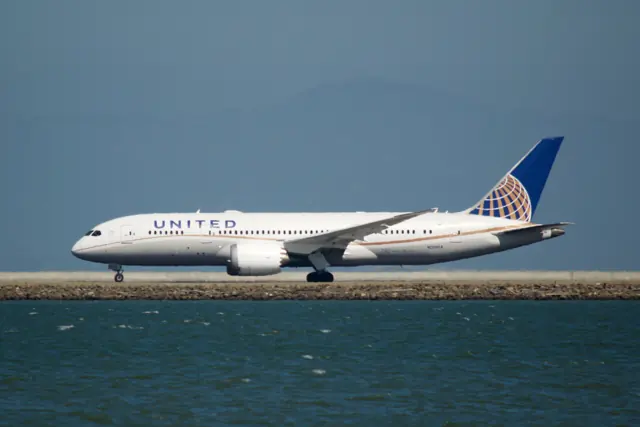
The 787 grew from Boeing's 7E7 programme and first flew in 2009. Airline service began in 2011. The family uses a composite-intensive airframe, a swept flexible wing and two large turbofans, with -8, -9 and -10 versions serving different capacity and range needs. The 787-10 is the longest of those three variants. Its cabin size and mission figures should not be borrowed from the smaller -8.
Aircraft background
Wikipedia contributors · Read more ↗Letting the launch customer take the controls
Carriker describes the first 787 flight as the beginning of a deliberately gradual process. The team initially stayed within a small, well-understood part of the predicted operating envelope, then expanded the testing to different weights, speeds, altitudes and system failures.
Air & Space · November 2010 interview about the original 787 flight-test programme. Family background predating the 787-10.
Air & Space / Smithsonian · Read more ↗The Dreamliner's own cockpit preparation
The linked June 2023 guide predates MSFS 2024. It introduces the 787-10’s display layout and gate-to-gate preparation, but it does not document which workflows or systems changed in the later simulator.
787-10 Dreamliner · Microsoft Flight Simulator · MSFS 2024
Microsoft / aircraft developers · Read more ↗Into the cockpit
 YouTube
RobT Cockpit Videos · 11 min ·
✈️ Boeing 787 Dreamliner cockpit tour ✈️
A close tour of a Dreamliner flight deck; the title does not identify the fuselage variant.
Family reference · Boeing 787; exact fuselage variant not identified
Watch on YouTube ↗Preview images are served by AirframeDB. Videos open on YouTube only when you choose to watch.
Meet Boeing 787-10 Dreamliner
The 787 grew from Boeing's 7E7 programme and first flew in 2009. Airline service began in 2011. The family uses a composite-intensive airframe, a swept flexible wing and two large turbofans, with -8, -9 and -10 versions serving different capacity and range needs.
The 787-10 is the longest of those three variants. Its cabin size and mission figures differ from the smaller -8. Simulator avionics and automation depend on the product and update.
Boeing 787-10 Dreamliner
Aircraft type designators
Use the code for the model you are flying. The linked authority lists the applicable aircraft.
History & design
The stretched -10 makes its first flight
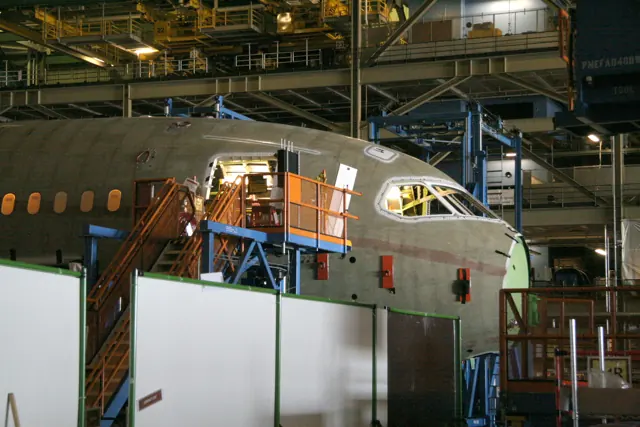
The 787-10 first flew from Boeing South Carolina on 31 March 2017. Tim Berg and Mike Bryan flew the aircraft for four hours and fifty-eight minutes while evaluating controls, systems and handling. Boeing described the new version as an 18-foot stretch of the 787-9, making it the longest member of the family. The flight began the test programme for that version, several years after the original Dreamliner entered airline service.
Boeing · Boeing 787-10 Dreamliner Completes First Flight ↗Boeing manufacturer announcement · 31 March 2017
Development milestones
First flight: December 15, 2009 ( 2009-12-15 )
Wikipedia contributors · Boeing 787 Dreamliner ↗Boeing 787 Dreamliner · family/variant named by the source · Wikipedia revision 1373985842
Pilot accounts
Letting the launch customer take the controls
Carriker describes the first 787 flight as the beginning of a deliberately gradual process. The team initially stayed within a small, well-understood part of the predicted operating envelope, then expanded the testing to different weights, speeds, altitudes and system failures. Some choices had been prepared in advance so the pilots and engineers could compare alternatives in flight rather than invent a solution after a problem appeared.
His favourite moment after the excitement of the first flight was taking ANA’s lead pilots aboard. He had spent years discussing the aircraft and their training programme with them; now they could sit in the seats and use the machine themselves. While they flew, he handled the radio and ordinary supporting duties without needing to take the controls. For him, that flight connected years of laboratory work and discussion with the airline crews who would use the finished aircraft.
Air & Space · November 2010 interview about the original 787 flight-test programme. Family background predating the 787-10.
Read the full account · Air & Space / Smithsonian ↗An airline captain inside the development team
Tsukamoto was an ANA 747-400 captain working in training when a 2007 assignment took him to Boeing in Seattle. He joined development discussions as a Boeing employee and contributed the perspective of someone who would eventually operate the aircraft. His recollection includes practical cockpit details, such as the seat-adjustment switch and oxygen-mask shape, alongside broader questions about flight operations and training.
Repeated testing and delays made the wait difficult. He felt responsible for helping deliver the aircraft while wondering when he would finally be able to fly it. Seeing the completed 787 brought a particular sense of achievement after so many discussions between manufacturer and airline viewpoints. He later commanded ANA’s anniversary flight on 31 October 2021 and looked back on a decade of learning alongside the aircraft, including the difficulties encountered after it entered service.
ANA tenth-anniversary interview · 14 January 2022. Original 787 development and subsequent family service; no 787-10-specific flight claimed.
Read the full account · ANA ↗Building an ordinary life around long-haul flying
Schofield describes moving from an A320 first-officer position to the 787 as a second officer and discovering the variety of long-haul destinations. One week could bring a stop in Houston, another in Shanghai. Reaching that cockpit had involved instructing, flying Cessnas and an Islander in Vanuatu, and operating Chieftains on mining-support work in Australia before joining the jet airlines.
The attraction came with a different rhythm at home. Trips lasting several days were followed by blocks of time off, and early-morning returns often made the first day a recovery day. Social plans moved to weekdays because many friends were also shift-working pilots. She was studying for a business degree as well, setting aside a study day when each roster arrived and reading in hotels. Her interview describes the everyday organisation behind the destinations visible on a long-haul flight plan.
KiwiFlyer issue 58 · 2018 #3, printed pp.52–55. Air New Zealand 787 second officer; family experience rather than a 787-10 evaluation.
Read the full account · KiwiFlyer ↗In your simulator
Systems, equipment and documentation for each developer’s aircraft.
Compare simulator versions →MSFS 2024787-10 Dreamliner
Microsoft Flight Simulator · Released
787-10 Dreamliner
Microsoft Flight Simulator · Released
MSFS 2020787-10 Dreamliner
Microsoft Flight Simulator · Released
787-10 Dreamliner
Microsoft Flight Simulator · Released
Manuals & resources
Find your next read
Choose a topic for a short introduction and a link to the original source. Simulator references identify the developer and edition they cover.
Simulator documentation
The Dreamliner's own cockpit preparation787-10 Dreamliner · Microsoft Flight Simulator · MSFS 2024
The linked June 2023 guide predates MSFS 2024. It introduces the 787-10’s display layout and gate-to-gate preparation, but it does not document which workflows or systems changed in the later simulator.
787-10 tutorial V1 · June 2023 · historical guide; 2024 differences not established
Microsoft / aircraft developers · Read the source ↗The Dreamliner's own cockpit preparation787-10 Dreamliner · Microsoft Flight Simulator · MSFS 2020
The June 2023 tutorial explains how the MFD controls assign systems, CDU, checklist and navigation views to individual display panes. Selecting the navigation display in both panes expands the map across the screen; EICAS can move between the upper displays but remains visible.
787-10 tutorial V1 · June 2023 · MSFS 2020 · PDF pp.8–9
Microsoft / aircraft developers · Read the source ↗Assisted checklists locate the cockpit controls787-10 Dreamliner · Microsoft Flight Simulator · MSFS 2020
The tutorial points to the simulator’s ASSISTED CHECKLIST option. Evaluation mode highlights the next control and adjusts the camera, while separate buttons complete an item or a whole page. Its abbreviated tutorial checklists are not identical to every checklist available in the simulator.
787-10 tutorial V1 · June 2023 · MSFS 2020 · PDF p.11
Microsoft / aircraft developers · Read the source ↗AAU2 changes specific to the Dreamliner787-10 Dreamliner · Microsoft Flight Simulator · MSFS 2020
The June 2023 AAU2 release documents a revised 787-10 head-up display, including runway-edge and flight-path indications, plus a Boeing C*U fly-by-wire implementation and flap load-relief and auto-gap functions. These are Microsoft’s published software changes, scoped to that MSFS 2020 release.
MSFS 2020 · AAU2 version 1.33.8.0 · 22 June 2023
Microsoft Flight Simulator · Read the source ↗Pilot account
Letting the launch customer take the controlsAir & Space · November 2010 interview about the original 787 flight-test programme. Family background predating the 787-10.
Carriker describes the first 787 flight as the beginning of a deliberately gradual process. The team initially stayed within a small, well-understood part of the predicted operating envelope, then expanded the testing to different weights, speeds, altitudes and system failures. Some choices had been prepared in advance so the pilots and engineers could compare alternatives in flight rather than invent a solution after a problem appeared.
Mike Carriker
Air & Space / Smithsonian · Read the source ↗An airline captain inside the development teamANA tenth-anniversary interview · 14 January 2022. Original 787 development and subsequent family service; no 787-10-specific flight claimed.
Tsukamoto was an ANA 747-400 captain working in training when a 2007 assignment took him to Boeing in Seattle. He joined development discussions as a Boeing employee and contributed the perspective of someone who would eventually operate the aircraft. His recollection includes practical cockpit details, such as the seat-adjustment switch and oxygen-mask shape, alongside broader questions about flight operations and training. Repeated testing and delays made the wait difficult.
Masami Tsukamoto
ANA · Read the source ↗Read the original documentation from the people who created it. Manuals open on their publisher’s website.
Manual
Boeing 787-10 ManualMicrosoft / aircraft developers Microsoft Flight Simulator aircraft manualsMicrosoft / aircraft developersAircraft background
Boeing 787 DreamlinerWikipedia contributors · Research background · Wikipedia revision 1373985842 · retrieved 2026-09-12Resource
MSFS 2024 FAQ and edition aircraft inventoryMicrosoft MSFS 2020 FAQ and edition aircraft inventoryMicrosoftAircraft history
Boeing 787-10 Dreamliner Completes First FlightBoeing · Manufacturer announcement · 31 March 2017Developer documentation
Aircraft & Avionics Update 02 release notesMicrosoft Flight Simulator · MSFS 2020 · version 1.33.8.0 · 22 June 2023Type designator
ICAO Doc 8643 — aircraft type designatorsInternational Civil Aviation Organization · Public search data retrieved 2026-09-14; authority update 2026-09-03Built-in force-feedback profiles
Read the documentary basis, editable starting settings and remaining questions for the aircraft you fly. Each explanation refers to the exact profile revision shown.
Catalogue programme-20261022-v1 · 7 profile choices
Magknight Boeing 787-10
Magknight · Free and Pro · Revision 3 · Inherited starting point
X-Plane 12
Magknight Boeing 787-10: The selected electronic-control law supplies the configured centre.
Boeing 787-10 Dreamliner
Free and Pro · Revision 3 · Partial review
MSFS 2024 · MSFS 2020
Boeing 787-10 Dreamliner: The selected electronic-control law supplies the configured centre.
Horizon Simulations Boeing 787-9 GE / Rolls-Royce
Horizon Simulations · Free and Pro · Revision 2 · Inherited starting point
MSFS 2020 · MSFS 2024
A long-range twin whose programme emphasised composite construction and more electrically powered systems.
Magknight Boeing 787-8
Magknight · Free and Pro · Revision 2 · Inherited starting point
X-Plane 12
A long-range twin whose programme emphasised composite construction and more electrically powered systems.
Magknight Boeing 787-9
Magknight · Free and Pro · Revision 2 · Inherited starting point
X-Plane 12
A long-range twin whose programme emphasised composite construction and more electrically powered systems.
Boeing 787-8
Free and Pro · Revision 1 · Partial review
MSFS 2020 · MSFS 2024 · X-Plane 12
A long-range twin whose programme emphasised composite construction and more electrically powered systems.
Boeing 787-9
Free and Pro · Revision 1 · Partial review
MSFS 2020 · MSFS 2024 · X-Plane 12
A long-range twin whose programme emphasised composite construction and more electrically powered systems.
Magknight Boeing 787-9
A long-range twin whose programme emphasised composite construction and more electrically powered systems.
Aircraft and simulator scope
- Magknight Boeing 787-9 · Magknight · X-Plane 12 · Add-on starting point
The simulator model and controls
Magknight Boeing 787-9 is the selected Magknight configuration.
How this profile feels
Spring resistance builds with the selected airspeed response. Directed aerodynamic loading is omitted.
Pitch-trim relief is off. Autopilot following is off.
Aircraft and configuration
The 787 grew from Boeing's 7E7 programme and first flew in 2009. Airline service began in 2011. The family uses a composite-intensive airframe, a swept flexible wing and two large turbofans, with -8, -9 and -10 versions serving different capacity and range needs.
About the values
Strengths are normalized hardware-feel settings. They set the effect balance; hand force depends on the device and its limits. The IAS reference is a tuning value.
Documentary review and sources
These decisions describe the documentary basis and remaining gaps for this revision. Aircraft documentation and a starting setting describe different kinds of evidence.
Aircraft and variant
InheritedMagknight Boeing 787-9 is the selected Magknight configuration.
Flight controls
InheritedA long-range twin whose programme emphasised composite construction and more electrically powered systems.
Trim
InheritedThe profile uses the trim behaviour configured below. Pitch relief is off, with stored authority 0; roll authority is 0.
Autopilot and stability
InheritedAutopilot following is off; the configured spring and load retain the hardware feel.
Equipment
InheritedThe 787 grew from Boeing's 7E7 programme and first flew in 2009. Airline service began in 2011. The family uses a composite-intensive airframe, a swept flexible wing and two large turbofans, with -8, -9 and -10 versions serving different capacity and range needs.
Speeds and limits
InheritedThe indicated-speed references set the profile response scale; they are separate from aircraft operating limits.
Simulator integration
InheritedThe profile targets xplane12. Add-on-specific controls use only the supported references configured by this profile.
Force-feedback settings
InheritedThe settings define the profile’s effect balance. Device output limits affect physical hand force.
Starting settings and their rationale
These configured values are starting estimates. The explanations describe what each setting controls; physical validation appears separately below.
| Setting | Starting value | What it controls and why |
|---|---|---|
| Spring strength | Starting value0.2 | What it controls and whyThis profile uses powered-control feel for Boeing 787-10 Dreamliner. The baseline spring is 0.2. Low-speed spring blending is off. |
| Master force gain | Starting value0.85 | What it controls and whyScales overall profile strength while preserving effect balance, subject to device and output limits. |
| Profile force gain | Starting value0 | What it controls and whyThe 0 gain omits sustained directed airspeed loading. Spring resistance remains independent. |
| Force tuning speed/reference | Starting value250 kt | What it controls and whySets the IAS reference for aerodynamic loading. It is an estimate, not published cruise TAS or a flight limit. |
| Spring response reference speed | Starting value122 kt | What it controls and whySets the IAS where the low-speed blend reaches baseline strength; high-speed stiffening also uses it. |
| Aileron force scale | Starting value0.78 | What it controls and whyRoll and pitch aerodynamic scales are 0.78 and 1, respectively. These stored weights do not create directed aerodynamic loading while that term is inactive. No custom spring-travel curve is enabled. |
| Elevator force scale | Starting value1 | What it controls and whyScales pitch aerodynamic loading; pitch spring travel and trim responses are separate settings. |
| Trim feel | Starting valueDisabled | What it controls and whyRetained for compatibility and group membership. Trim relief, rather than this flag, controls centre movement. |
| Trim relief | Starting valueDisabled | What it controls and whyAllows trim relief with supported control law and valid telemetry. Axis authorities set its amount. |
| Autopilot follow | Starting valueDisabled | What it controls and whyAutopilot following is off; the configured spring and load retain the hardware feel. |
| Autopilot neutral hold | Starting valueDisabled | What it controls and whyPermits centering hold during a supported AP state, separate from following a moving target. |
| Output force limit | Starting value0.55 | What it controls and whyCaps directed-force output. Native spring effects and device limits remain separate. |
All 46 starting settings and their rationale
The settings define the profile’s effect balance. Device output limits affect physical hand force.
| Setting | Starting value | What it controls and why |
|---|---|---|
| Spring strength | Starting value0.2 | What it controls and whyThis profile uses powered-control feel for Boeing 787-10 Dreamliner. The baseline spring is 0.2. Low-speed spring blending is off. |
| Spring deadband | Starting value0.0 | What it controls and whySets travel around the centre before the baseline spring resists. Smaller values engage it sooner. |
| Starting centering force | Starting value0.04 | What it controls and whyAdds smoothly ramped resistance outside the centre deadband. Zero removes this preload. |
| Center Starting Force Transition | Starting value0.05 | What it controls and whySets the travel used to ramp in centre preload. Wider intervals make its onset more gradual. |
| Profile force gain | Starting value0 | What it controls and whyThe 0 gain omits sustained directed airspeed loading. Spring resistance remains independent. |
| Master force gain | Starting value0.85 | What it controls and whyScales overall profile strength while preserving effect balance, subject to device and output limits. |
| QBlend Enabled | Starting valueDisabled | What it controls and whyAllows baseline spring strength to rise with indicated airspeed where the control law permits it. |
| QSpring Minimum Factor | Starting value0.55 | What it controls and whySets low-speed spring strength as a fraction of baseline when blending is enabled. One keeps full strength. |
| QSpring Start Knots | Starting value8 kt | What it controls and whySets the IAS where the low-speed spring blend starts rising. This is a feel threshold, not a flight limit. |
| Spring response reference speed | Starting value122 kt | What it controls and whySets the IAS where the low-speed blend reaches baseline strength; high-speed stiffening also uses it. |
| Force tuning speed/reference | Starting value250 kt | What it controls and whySets the IAS reference for aerodynamic loading. It is an estimate, not published cruise TAS or a flight limit. |
| Airspeed spring stiffening gain | Starting value1.0 | What it controls and whyThe high-speed spring-stiffening gain is 1. It strengthens the permitted spring response above 122 KIAS, with the squared-speed ratio capped at 7.8. |
| Airspeed spring stiffening limit | Starting value7.8 | What it controls and whyLimits the squared airspeed ratio used for high-speed spring stiffening; it is not a device-force cap. |
| Aileron force scale | Starting value0.78 | What it controls and whyRoll and pitch aerodynamic scales are 0.78 and 1, respectively. These stored weights do not create directed aerodynamic loading while that term is inactive. No custom spring-travel curve is enabled. |
| Elevator force scale | Starting value1 | What it controls and whyScales pitch aerodynamic loading; pitch spring travel and trim responses are separate settings. |
| Output force limit | Starting value0.55 | What it controls and whyCaps directed-force output. Native spring effects and device limits remain separate. |
| Trim feel | Starting valueDisabled | What it controls and whyRetained for compatibility and group membership. Trim relief, rather than this flag, controls centre movement. |
| Trim relief | Starting valueDisabled | What it controls and whyAllows trim relief with supported control law and valid telemetry. Axis authorities set its amount. |
| Elevator Authority | Starting value0 | What it controls and whyThe profile uses the trim behaviour configured below. Pitch relief is off, with stored authority 0; roll authority is 0. |
| Aileron Authority | Starting value0 | What it controls and whyScales supported roll-trim relief and permitted centre movement. Zero removes roll response. |
| Force Trim Enabled | Starting valueDisabled | What it controls and whyEnables local force trim, separate from aircraft-owned trim and add-on integration qualification. |
| GLoad Enabled | Starting valueDisabled | What it controls and whyAllows load-factor changes to modify permitted spring laws. Passive fly-by-wire feel can suppress it. |
| Rate Damping Enabled | Starting valueDisabled | What it controls and whyEnables rate damping with the configured coefficients and control law. |
| Autopilot follow | Starting valueDisabled | What it controls and whyAutopilot following is off; the configured spring and load retain the hardware feel. |
| Autopilot follow authority | Starting value0.1 | What it controls and whySets admitted AP-follow gain, not a percentage of travel. Runtime ownership and input limits still apply. |
| Autopilot neutral hold | Starting valueDisabled | What it controls and whyPermits centering hold during a supported AP state, separate from following a moving target. |
| Autopilot neutral hold strength | Starting value0.6 | What it controls and whySets admitted AP neutral-hold strength; inactive while neutral hold is disabled. |
| Enabled | Starting valueEnabled | What it controls and whyEnables aerodynamic cues; each still needs nonzero strength and its simulator conditions. |
| Gain | Starting value0 | What it controls and whySets stall-buffet strength. Zero removes the cue without changing simulator stalls or warnings. |
| Gain | Starting value0 | What it controls and whySets high-Mach buffet strength; onset and full-strength thresholds are separate. |
| Gain | Starting value0 | What it controls and whySets flap buffet at the configured position and speed gates. Flap movement texture is separate. |
| Maximum flap index | Starting value3 | What it controls and whySets the final flap index for detent normalization. UP plus three detents uses maximum index3. |
| Minimum flap index | Starting value2 | What it controls and whySets the first flap detent that admits buffet; this is a handle index, not degrees. |
| Gain | Starting value0 | What it controls and whySets gear aerodynamic buffet; movement and ground-contact cues are separate. |
| Shaker Enabled | Starting valueEnabled | What it controls and whyPermits shaker at supported warning conditions; the switch does not establish aircraft equipment. |
| Stick shaker amplitude | Starting value0.9 | What it controls and whySets triggered shaker strength; inactive while the shaker feature is disabled. |
| Enabled | Starting valueEnabled | What it controls and whyEnables ground effects; each still needs its own strength and contact or motion telemetry. |
| Gain | Starting value0.4 | What it controls and whySets rolling texture strength, modified by speed, surface and undercarriage configuration. |
| Gain | Starting value0.25 | What it controls and whySets gear-bump texture during ground motion, separate from touchdown impact. |
| Gain | Starting value0.65 | What it controls and whySets landing-impact strength; landing telemetry and response shape determine the pulse. |
| Gain | Starting value0 | What it controls and whySets reverse-thrust vibration with valid reverser and engine conditions. Zero removes the cue. |
| Enabled | Starting valueDisabled | What it controls and whyEnables engine cues with nonzero settings and valid running-engine telemetry. |
| Gain | Starting value0 | What it controls and whySets estimated engine vibration using configured telemetry and response, not measured cockpit vibration. |
| Enabled | Starting valueEnabled | What it controls and whyEnables accessory cues with configured strengths and observed accessory movement. |
| Gain | Starting value0.12 | What it controls and whySets texture from observed flap movement; a command without movement does not establish the cue. |
| Gain | Starting value0.025 | What it controls and whySets texture from observed gear movement, separate from aerodynamic and touchdown effects. |
Limits and open questions
- Powered FBW transport yoke with conservative fixed artificial feel. Surface droop/fadeout are not pilot-force demands; no hydraulic-loss force law inferred.
- No public calibrated trim-to-inceptor relationship was established. Automatic trim-neutral movement is disabled.
- No calibrated AP servo target is published. AP-follow and neutral hold remain disabled; mode indicators are not servo demand.
- Read-only motion and accessory telemetry. No guessed custom servo outputs, input compensation or hardware writes outside the production Armed force path. Installed identity remains unobserved. No force feature is enabled merely because the developer describes a custom flight control.
- 250 KIAS is an estimated control-feel reference, not cruise TAS, V-speeds or an operating limit.
- Spring 0.2 at the feel floor, lateral scale 0.78, trim relief 0/0; editable estimates, not measured hand forces.
- Physical and installed-aircraft checks are deferred. Save this profile as the aircraft default if telemetry omits its developer or configuration.
- Only actual accessory-position changes drive movement textures. No pressure-dependent failures, guessed servo outputs or input compensation.
- 2026-10-01, Boeing artificial feel (docs/poh/b737800-feel-spec.md, docs/research/05-transport-airliner-fbw.md, PMDG 737 introduction 0.00.30): spring 0.2 at the feel-pressure floor up to 122 kt, rising with dynamic pressure above it (737 feel pressure 180 to 1,400 psi, cap 7.8) and reaching the device's full spring at about 273 kt; a 0.04 centre starting force with no spring deadband for the about 3 lbf, as the 777 breakout, so a released column returns to neutral (PMDG reverted CMD to CWS with the stick resting 1.4-1.7 % off centre inside a 0.01 deadband); no directed aerodynamic load, trim relief or G spring (the feel computer takes airspeed and stabilizer position, and trim moves the stabilizer, not the column neutral); stick shaker 0.90; autopilot follow at full authority where a qualified reference exists. Roll firms with airspeed as pitch does, while the real roll feel is a constant spring cam. The stabilizer-position feel term, Elevator Feel Shift and forces calibrated in pounds are not modelled. The 737 feel-pressure range is applied; the 787 breakout is the published type figure.
Physical validation
No physical force validation is recorded in this public catalogue for this revision. Documentary review and software checks do not establish how a particular device feels.
Discuss this aircraft (0)
Questions, observations and useful sources from the community.
No published discussions yet. Bring a question or share a useful source.
Open aircraft discussions →Content expanded · What’s new
Something missing or a source that needs attention?
Suggest a correction ↗