



Start here
A few places to begin, from the aircraft’s story to the people who fly it.
Meet the aircraft
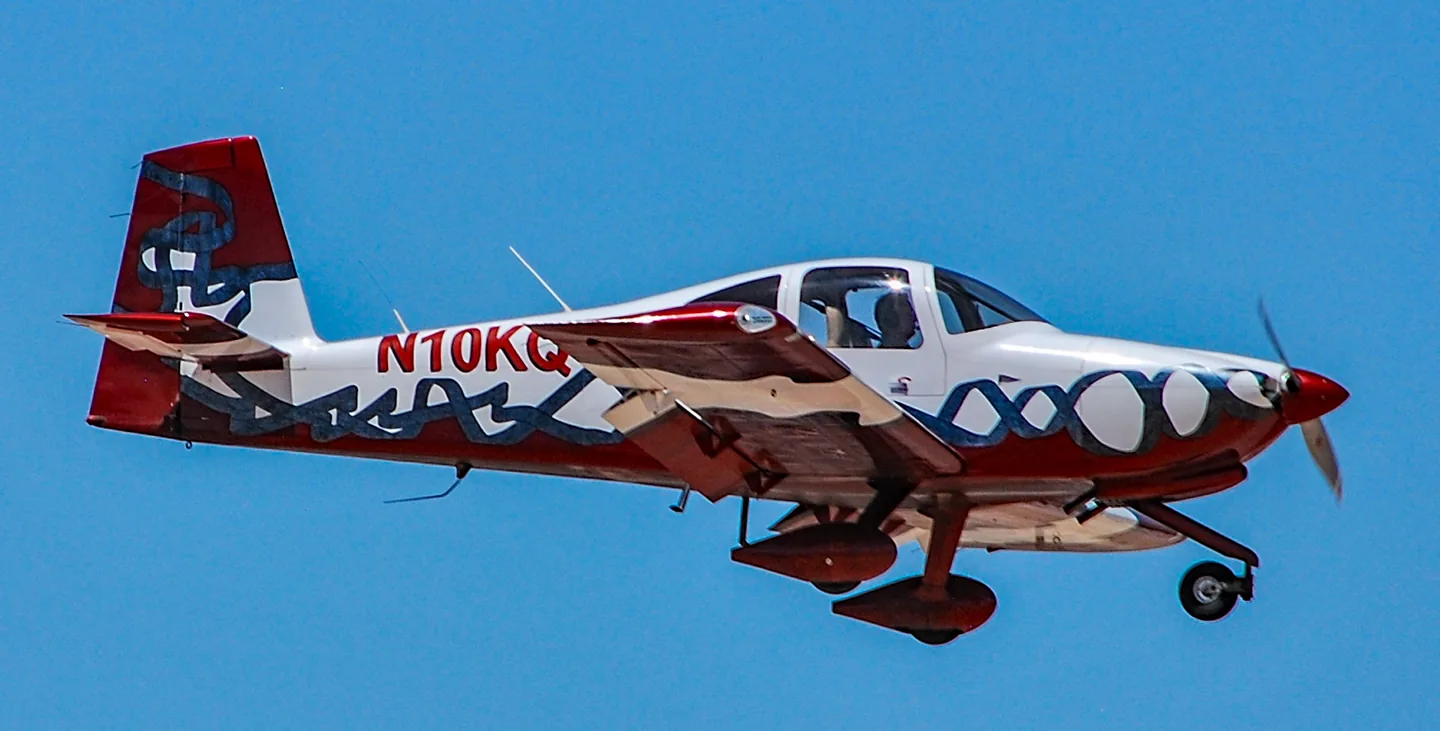
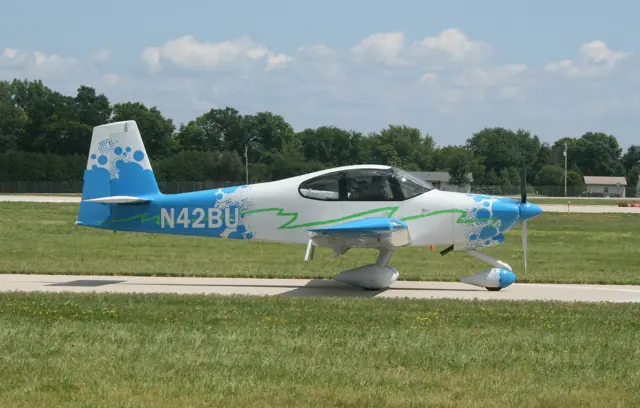
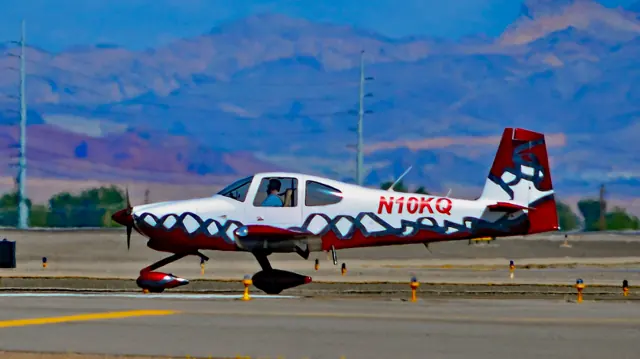
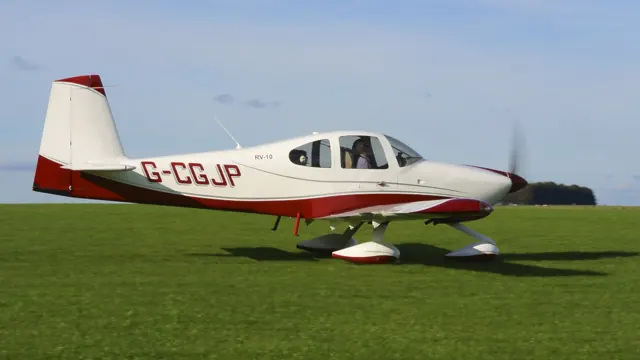
The RV-10 first flew in 2003 as Van's first four-seat design in the established RV range. Its low wing, fixed tricycle gear and enclosed cabin are supplied as a kit for amateur construction.
Aircraft background
Wikipedia contributors · Read more ↗A winter flight begins the journey to a new owner
Hirschman met the RV-10 on a clear winter morning in Saskatchewan, pushing it outside over crunching snow. He had brought a heated jacket for the flight, but the cabin heater soon left him too warm. After the owner flew the departure, Hirschman took the controls for slow flight, stalls and steep turns, getting acquainted with the aircraft before its journey south.
AOPA Flight Training · September 2019. Flying the Canadian RV-10 acquired for AOPA’s sweepstakes; the subsequent journey to Maryland benefited from a tailwind.
AOPA Flight Training · Read more ↗Printed mode labels do not prove the autopilot is engaged
The manual says TRK and ALT remain visible on the LCD even when their modes are off. AP couples or disables the autopilot; EXT is not modelled.
Vans Aircraft RV-10 · Laminar Research · X-Plane 12
Laminar Research · Read more ↗Into the cockpit
 YouTube
Randy Vanstory · 3 min ·
RV 10 N783V Video Tour of Plane HD 1080p
An RV-10 builder gives a detailed tour of his completed aircraft.
Real aircraft · Vans Aircraft RV-10
Watch on YouTube ↗ YouTube
AOPA: Your Freedom to Fly · 4 min ·
Fly-off: Cirrus SR22 vs. Vans RV-10
AOPA compares the RV-10 and Cirrus SR22 through a flying contest.
Comparison · Van’s RV-10 and Cirrus SR22
Watch on YouTube ↗Preview images are served by AirframeDB. Videos open on YouTube only when you choose to watch.
Meet Vans Aircraft RV-10
The RV-10 first flew in 2003 as Van's first four-seat design in the established RV range. Its low wing, fixed tricycle gear and enclosed cabin are supplied as a kit for amateur construction.
Builders can choose different engines, avionics and interiors. Laminar's X-Plane model represents the cockpit, avionics and trim controls documented in its manual.
Vans Aircraft RV-10
Van’s Aircraft → · Explore the family →
Vans Aircraft RV-10
Wikipedia contributors · Van's Aircraft RV-10 ↗Laminar Research · X-Plane 12 →Aircraft type designators
Use the code for the model you are flying. The linked authority lists the applicable aircraft.
History & design
Van’s tests the four-seat market
Chief engineer Ken Krueger recalled that a four-seat RV was a significant new direction for Van’s. The company investigated the market before committing to the design; Cook’s retrospective dates the RV-10’s initial offering to 2003.
KITPLANES · Flight Review: Seven Into Ten ↗Development recollection published in 2010
Development milestones
Designer: Richard VanGrunsven
First flight: 29 May 2003
Developed from: Van's Aircraft RV-7
Wikipedia contributors · Van's Aircraft RV-10 ↗Van's Aircraft RV-10 · family/variant named by the source · Wikipedia revision 1317728107
Pilot accounts
A winter flight begins the journey to a new owner
Hirschman met the RV-10 on a clear winter morning in Saskatchewan, pushing it outside over crunching snow. He had brought a heated jacket for the flight, but the cabin heater soon left him too warm. After the owner flew the departure, Hirschman took the controls for slow flight, stalls and steep turns, getting acquainted with the aircraft before its journey south.
The next day they flew to Maryland through Minot, with a helpful wind shortening the trip. At Frederick, the farewell was personal: the owner patted the cowling and thanked the aircraft for the family journeys and flying experience it had given him.
AOPA Flight Training · September 2019. Flying the Canadian RV-10 acquired for AOPA’s sweepstakes; the subsequent journey to Maryland benefited from a tailwind.
Read the full account · AOPA Flight Training ↗Ten years of trips become a record of shared experiences
Nelson’s ten-year review of his RV-10 is full of people and destinations. The aircraft had carried family and friends, introduced young passengers to flying, and made repeated journeys to Mexico with the Flying Samaritans. His logbook recorded those volunteer trips alongside camping visits to Oshkosh and flights to watch two solar eclipses.
It also changed the scale of ordinary travel between Mesa and the Mogollon Airpark, turning a long drive into a much shorter flight. Nelson had mechanical problems to deal with during the decade, so the retrospective is also an ownership record.
KITPLANES · September 2024. Nelson looks back on the decade following N24EV’s first flight on 14 May 2014.
Read the full account · KITPLANES ↗The larger RV asks for a different touch
Cook arrived with experience of smaller RVs and initially expected the four-seater to respond in much the same way. During takeoff, the pitch force caught him out: it needed a more deliberate pull than the RV-9A he knew. Hickman’s glance from the other seat made the moment mildly embarrassing, but Cook soon adjusted and began to appreciate the larger aircraft’s balance and stability.
His first landing followed a straight-in GPS approach, leaving little opportunity to become familiar with the circuit beforehand. It was soft, although farther along the runway than he intended. Small cockpit details, including the flap control’s lack of position markings, also attracted his attention.
KITPLANES · April 2010. Flight in Rob Hickman’s RV-10, used for family travel and Advanced Flight Systems equipment evaluation.
Read the full account · KITPLANES ↗In your simulator
Systems, equipment and documentation for each developer’s aircraft.
Compare simulator versions →X-Plane 12Vans Aircraft RV-10
Laminar Research · Released
Vans Aircraft RV-10
Laminar Research · Released
MSFS 2020 · MSFS 2024Van's RV-10
SimWorks Studios · Released
Van's RV-10
SimWorks Studios · Released
X-Plane 12 Enhancement Vans RV-10 EFM
X-Aerodynamics · Released
Vans RV-10 EFM
X-Aerodynamics · Released
Aircraft specifications
Published figures for the named real-aircraft variant. Simulator equipment and performance can differ.
| Specification | Published value |
|---|---|
| Length | 24 ft 5 in (7.44 m) |
| Wingspan | 31 ft 9 in (9.68 m) |
| Height | 8 ft 8 in (2.64 m) |
| Wing area | 148 sq ft (13.7 m² ) |
| Empty weight | 1,630 lb (739 kg) |
| Gross weight | 2,700 lb (1,225 kg) |
| Powerplant | 1 × Lycoming O-540 six-cylinder, air-cooled aircraft engine , 260 hp (190 kW) |
| Propellers | 2-bladed constant speed Hartzell Propeller |
| Maximum speed | 208 mph (335 km/h, 181 kn) |
| Cruise speed | 197 mph (317 km/h, 171 kn) 75% power at 8,000 ft (2,438 m) |
| Stall speed | 63 mph (101 km/h, 55 kn) |
| Range | 825 mi (1,328 km, 717 nmi) 75% power at 8,000 ft (2,438 m) |
| Service ceiling | 20,000 ft (6,100 m) |
| Rate of climb | 1,450 ft/min (7.4 m/s) |
Manuals & resources
Find your next read
Choose a topic for a short introduction and a link to the original source. Simulator references identify the developer and edition they cover.
Simulator documentation
Printed mode labels do not prove the autopilot is engagedVans Aircraft RV-10 · Laminar Research · X-Plane 12
The manual says TRK and ALT remain visible on the LCD even when their modes are off. AP couples or disables the autopilot; EXT is not modelled.
Laminar RV-10 manual, PDF pp.25–26
Laminar Research · Read the source ↗A G1000-equipped homebuilt in X-PlaneVans Aircraft RV-10 · Laminar Research · X-Plane 12
Laminar's RV-10 guide documents stick controls, electric pitch-trim commands and a G1000/autopilot panel. That avionics choice identifies the represented homebuilt aircraft. A later special livery does not, by itself, establish a new control interface or different underlying aircraft systems.
Archived simulator manual; installed package revision not observed · PDF pp.11,17,21
Laminar Research · Read the source ↗Overhead lights can be aimed and recolouredVans Aircraft RV-10 · Laminar Research · X-Plane 12
The overhead buttons select white, red, green or blue light. Each LED can be repositioned by clicking and dragging.
Laminar RV-10 manual, PDF p.18
Laminar Research · Read the source ↗The backup display has a separate electrical supplyVans Aircraft RV-10 · Laminar Research · X-Plane 12
The backup PFD operates independently of the avionics electrical bus. The main X1000 arrangement places the PFD left and MFD right.
Laminar RV-10 manual, PDF pp.22–24
Laminar Research · Read the source ↗The parking brake has a documented limitVans Aircraft RV-10 · Laminar Research · X-Plane 12
Pulling the lever sets the parking brake and pushing releases it. The manual warns that it will not hold the simulated aircraft above idle throttle.
Laminar RV-10 manual, PDF p.20; simulator-specific documentation
Laminar Research · Read the source ↗Pilot account
A winter flight begins the journey to a new ownerAOPA Flight Training · September 2019. Flying the Canadian RV-10 acquired for AOPA’s sweepstakes; the subsequent journey to Maryland benefited from a tailwind.
Hirschman met the RV-10 on a clear winter morning in Saskatchewan, pushing it outside over crunching snow. He had brought a heated jacket for the flight, but the cabin heater soon left him too warm. After the owner flew the departure, Hirschman took the controls for slow flight, stalls and steep turns, getting acquainted with the aircraft before its journey south. The next day they flew to Maryland through Minot, with a helpful wind shortening the trip.
Dave Hirschman
AOPA Flight Training · Read the source ↗Ten years of trips become a record of shared experiencesKITPLANES · September 2024. Nelson looks back on the decade following N24EV’s first flight on 14 May 2014.
Nelson’s ten-year review of his RV-10 is full of people and destinations. The aircraft had carried family and friends, introduced young passengers to flying, and made repeated journeys to Mexico with the Flying Samaritans. His logbook recorded those volunteer trips alongside camping visits to Oshkosh and flights to watch two solar eclipses. It also changed the scale of ordinary travel between Mesa and the Mogollon Airpark, turning a long drive into a much shorter flight.
Myron Nelson
KITPLANES · Read the source ↗Developer documentation
Van's RV-10 — product listingVan's RV-10 · MSFS 2020 · MSFS 2024
Product listing captured 2026-09-30; edition scope from the reviewed catalogue
Contrail · Read the source ↗Van's RV-10 — product listingVan's RV-10 · MSFS 2020 · MSFS 2024
Product listing captured 2026-09-30; edition scope from the reviewed catalogue
iniBuilds Store · Read the source ↗Vans RV-10 EFM — product listingVans RV-10 EFM · X-Plane 12
Product listing captured 2026-09-24; edition scope from the reviewed catalogue
X-Plane.org authorized store · Read the source ↗Read the original documentation from the people who created it. Manuals open on their publisher’s website.
Manual
Van’s Aircraft RV-10 POHLaminar Research X-Plane 12 Desktop ManualLaminar Research X-Plane aircraft and avionics manualsLaminar ResearchAircraft background
Van's Aircraft RV-10Wikipedia contributors · Research background · Wikipedia revision 1317728107 · retrieved 2026-09-12Type designator
ICAO Doc 8643 — aircraft type designatorsInternational Civil Aviation Organization · Public search data retrieved 2026-09-14; authority update 2026-09-03Product
Van's RV-10 MSFS by SimWorks Studios | Contrail ShopContrail · Product listing captured 2026-09-30; edition scope from the reviewed catalogue SimWorks Studios Van's Aircraft RV-10 for MSFS-2020 – iniBuilds StoreiniBuilds Store · Product listing captured 2026-09-30; edition scope from the reviewed catalogue Laminar VANs RV-10 Enhanced Flight Model exact product classificationX-Plane.org authorized store · Product listing captured 2026-09-24; edition scope from the reviewed catalogueBuilt-in force-feedback profiles
Read the documentary basis, editable starting settings and remaining questions for the aircraft you fly. Each explanation refers to the exact profile revision shown.
Catalogue programme-20261022-v1 · 6 profile choices
SimWorks Studios RV-10
SimWorks Studios · Free and Pro · Revision 4 · Inherited starting point
MSFS 2020 · MSFS 2024
SimWorks Studios RV-10: The chosen response supplies the kit-aircraft control resistance.
X-Aerodynamics RV-10 EFM Continental IO-360 210hp
X-Aerodynamics · Free and Pro · Revision 3 · Inherited starting point
X-Plane 12
X-Aerodynamics RV-10 EFM Continental IO-360 210hp: The chosen response supplies the kit-aircraft control resistance.
X-Aerodynamics RV-10 EFM IO-540 260hp
X-Aerodynamics · Free and Pro · Revision 3 · Inherited starting point
X-Plane 12
X-Aerodynamics RV-10 EFM IO-540 260hp: The chosen response supplies the kit-aircraft control resistance.
X-Aerodynamics RV-10 EFM IO-540 300hp
X-Aerodynamics · Free and Pro · Revision 3 · Inherited starting point
X-Plane 12
X-Aerodynamics RV-10 EFM IO-540 300hp: The chosen response supplies the kit-aircraft control resistance.
X-Aerodynamics RV-10 EFM Subaru Turbo 275hp
X-Aerodynamics · Free and Pro · Revision 3 · Inherited starting point
X-Plane 12
X-Aerodynamics RV-10 EFM Subaru Turbo 275hp: The chosen response supplies the kit-aircraft control resistance.
Vans Aircraft RV-10
Free and Pro · Revision 1 · Partial review
X-Plane 12
Vans Aircraft RV-10: The chosen response supplies the kit-aircraft control resistance.
SimWorks Studios RV-10
SimWorks Studios RV-10: The chosen response supplies the kit-aircraft control resistance.
Aircraft and simulator scope
- SimWorks Studios RV-10 · SimWorks Studios · MSFS 2020 · Add-on starting point
- SimWorks Studios RV-10 · SimWorks Studios · MSFS 2024 · Add-on starting point
The simulator model and controls
The RV-10 first flew in 2003 as Van's first four-seat design in the established RV range. Its low wing, fixed tricycle gear and enclosed cabin are supplied as a kit for amateur construction.
This profile selects SimWorks Studios RV-10 for MSFS 2020, MSFS 2024.
How this profile feels
The chosen response supplies the kit-aircraft control resistance. Spring resistance builds with the selected airspeed response. A separate aerodynamic term adds speed-dependent control load.
Pitch relief is separate from navigation equipment and builder powerplant choices. Valid trim provides the configured pressure relief. Autopilot following is off.
Controls and trim
The RV10 is a four-seat kit aircraft with configurable engine, interior and avionics installations. SWS and X-Plane derivatives retain their named cockpit and powerplant choices, with navigation integration separately affecting automatic-flight modes.
The selected implementation
SWS lists its RV-10 as MSFS 2020 native and MSFS 2024 compatible. This edition retains its own cockpit implementation.
About the values
The gains are normalized profile settings. They describe the chosen effect balance; hand force depends on the device and its output limits. IAS references are tuning values rather than operating limits. Physical acceptance of this revision remains pending.
Documentary review and sources
These decisions describe the documentary basis and remaining gaps for this revision. Aircraft documentation and a starting setting describe different kinds of evidence.
Aircraft and variant
InheritedThis profile selects SimWorks Studios RV-10 for MSFS 2020, MSFS 2024.
Flight controls
InheritedThe RV10 is a four-seat kit aircraft with configurable engine, interior and avionics installations. SWS and X-Plane derivatives retain their named cockpit and powerplant choices, with navigation integration separately affecting automatic-flight modes.
Trim
InheritedPitch relief is separate from navigation equipment and builder powerplant choices. Pitch authority 0.3 provides load relief and permitted centre movement; roll authority is 0.
Autopilot and stability
InheritedAutopilot following is off; the configured spring and load retain the hardware feel.
Equipment
InheritedSWS lists its RV-10 as MSFS 2020 native and MSFS 2024 compatible. This edition retains its own cockpit implementation.
Speeds and limits
InheritedThe indicated-speed references set the profile response scale; they are separate from aircraft operating limits.
Simulator integration
InheritedThe profile targets msfs2020, msfs2024. Add-on-specific controls use only the supported references configured by this profile.
Force-feedback settings
InheritedThe settings define the profile’s effect balance. Device output limits affect physical hand force.
Starting settings and their rationale
These configured values are starting estimates. The explanations describe what each setting controls; physical validation appears separately below.
| Setting | Starting value | What it controls and why |
|---|---|---|
| Spring strength | Starting value0.74 | What it controls and whyThe chosen response supplies the kit-aircraft control resistance. The baseline spring is 0.74. Its low-speed blend reaches baseline strength at 65 KIAS. |
| Master force gain | Starting value0.85 | What it controls and whyScales overall profile strength while preserving effect balance, subject to device and output limits. |
| Profile force gain | Starting value0.8 | What it controls and whyThe aerodynamic-load gain is 0.8 with an indicated-speed reference of 145 KIAS. This supplies speed-dependent loading alongside the spring. |
| Force tuning speed/reference | Starting value145 kt | What it controls and whySets the IAS reference for aerodynamic loading. It is an estimate, not published cruise TAS or a flight limit. |
| Spring response reference speed | Starting value65 kt | What it controls and whySets the IAS where the low-speed blend reaches baseline strength; high-speed stiffening also uses it. |
| Aileron force scale | Starting value0.72 | What it controls and whyRoll and pitch aerodynamic scales are 0.72 and 1, respectively. They set the aerodynamic axis balance. No custom spring-travel curve is enabled. |
| Elevator force scale | Starting value1 | What it controls and whyScales pitch aerodynamic loading; pitch spring travel and trim responses are separate settings. |
| Trim feel | Starting valueDisabled | What it controls and whyRetained for compatibility and group membership. Trim relief, rather than this flag, controls centre movement. |
| Trim relief | Starting valueEnabled | What it controls and whyAllows trim relief with supported control law and valid telemetry. Axis authorities set its amount. |
| Autopilot follow | Starting valueDisabled | What it controls and whyAutopilot following is off; the configured spring and load retain the hardware feel. |
| Autopilot neutral hold | Starting valueDisabled | What it controls and whyPermits centering hold during a supported AP state, separate from following a moving target. |
| Output force limit | Starting value0.55 | What it controls and whyCaps directed-force output. Native spring effects and device limits remain separate. |
All 44 starting settings and their rationale
The settings define the profile’s effect balance. Device output limits affect physical hand force.
| Setting | Starting value | What it controls and why |
|---|---|---|
| Spring strength | Starting value0.74 | What it controls and whyThe chosen response supplies the kit-aircraft control resistance. The baseline spring is 0.74. Its low-speed blend reaches baseline strength at 65 KIAS. |
| Spring deadband | Starting value0.045 | What it controls and whySets travel around the centre before the baseline spring resists. Smaller values engage it sooner. |
| Profile force gain | Starting value0.8 | What it controls and whyThe aerodynamic-load gain is 0.8 with an indicated-speed reference of 145 KIAS. This supplies speed-dependent loading alongside the spring. |
| Master force gain | Starting value0.85 | What it controls and whyScales overall profile strength while preserving effect balance, subject to device and output limits. |
| QBlend Enabled | Starting valueEnabled | What it controls and whyAllows baseline spring strength to rise with indicated airspeed where the control law permits it. |
| QSpring Minimum Factor | Starting value0.5 | What it controls and whySets low-speed spring strength as a fraction of baseline when blending is enabled. One keeps full strength. |
| QSpring Start Knots | Starting value8 kt | What it controls and whySets the IAS where the low-speed spring blend starts rising. This is a feel threshold, not a flight limit. |
| Spring response reference speed | Starting value65 kt | What it controls and whySets the IAS where the low-speed blend reaches baseline strength; high-speed stiffening also uses it. |
| Force tuning speed/reference | Starting value145 kt | What it controls and whySets the IAS reference for aerodynamic loading. It is an estimate, not published cruise TAS or a flight limit. |
| Airspeed spring stiffening gain | Starting value0.15 | What it controls and whyThe high-speed spring-stiffening gain is 0.15. It strengthens the permitted spring response above 65 KIAS, with the squared-speed ratio capped at 5. |
| Airspeed spring stiffening limit | Starting value5 | What it controls and whyLimits the squared airspeed ratio used for high-speed spring stiffening; it is not a device-force cap. |
| Aileron force scale | Starting value0.72 | What it controls and whyRoll and pitch aerodynamic scales are 0.72 and 1, respectively. They set the aerodynamic axis balance. No custom spring-travel curve is enabled. |
| Elevator force scale | Starting value1 | What it controls and whyScales pitch aerodynamic loading; pitch spring travel and trim responses are separate settings. |
| Output force limit | Starting value0.55 | What it controls and whyCaps directed-force output. Native spring effects and device limits remain separate. |
| Trim feel | Starting valueDisabled | What it controls and whyRetained for compatibility and group membership. Trim relief, rather than this flag, controls centre movement. |
| Trim relief | Starting valueEnabled | What it controls and whyAllows trim relief with supported control law and valid telemetry. Axis authorities set its amount. |
| Elevator Authority | Starting value0.3 | What it controls and whyPitch relief is separate from navigation equipment and builder powerplant choices. Pitch authority 0.3 provides load relief and permitted centre movement; roll authority is 0. |
| Aileron Authority | Starting value0 | What it controls and whyScales supported roll-trim relief and permitted centre movement. Zero removes roll response. |
| Force Trim Enabled | Starting valueDisabled | What it controls and whyEnables local force trim, separate from aircraft-owned trim and add-on integration qualification. |
| GLoad Enabled | Starting valueEnabled | What it controls and whyAllows load-factor changes to modify permitted spring laws. Passive fly-by-wire feel can suppress it. |
| Rate Damping Enabled | Starting valueEnabled | What it controls and whyEnables rate damping with the configured coefficients and control law. |
| Autopilot follow | Starting valueDisabled | What it controls and whyAutopilot following is off; the configured spring and load retain the hardware feel. |
| Autopilot follow authority | Starting value0.1 | What it controls and whySets admitted AP-follow gain, not a percentage of travel. Runtime ownership and input limits still apply. |
| Autopilot neutral hold | Starting valueDisabled | What it controls and whyPermits centering hold during a supported AP state, separate from following a moving target. |
| Autopilot neutral hold strength | Starting value0.6 | What it controls and whySets admitted AP neutral-hold strength; inactive while neutral hold is disabled. |
| Enabled | Starting valueEnabled | What it controls and whyEnables aerodynamic cues; each still needs nonzero strength and its simulator conditions. |
| Gain | Starting value0.35 | What it controls and whySets stall-buffet strength. Zero removes the cue without changing simulator stalls or warnings. |
| Gain | Starting value0 | What it controls and whySets high-Mach buffet strength; onset and full-strength thresholds are separate. |
| Gain | Starting value0 | What it controls and whySets flap buffet at the configured position and speed gates. Flap movement texture is separate. |
| Maximum flap index | Starting value3 | What it controls and whySets the final flap index for detent normalization. UP plus three detents uses maximum index3. |
| Minimum flap index | Starting value2 | What it controls and whySets the first flap detent that admits buffet; this is a handle index, not degrees. |
| Gain | Starting value0 | What it controls and whySets gear aerodynamic buffet; movement and ground-contact cues are separate. |
| Shaker Enabled | Starting valueDisabled | What it controls and whyPermits shaker at supported warning conditions; the switch does not establish aircraft equipment. |
| Stick shaker amplitude | Starting value0.5 | What it controls and whySets triggered shaker strength; inactive while the shaker feature is disabled. |
| Enabled | Starting valueEnabled | What it controls and whyEnables ground effects; each still needs its own strength and contact or motion telemetry. |
| Gain | Starting value0.4 | What it controls and whySets rolling texture strength, modified by speed, surface and undercarriage configuration. |
| Gain | Starting value0.25 | What it controls and whySets gear-bump texture during ground motion, separate from touchdown impact. |
| Gain | Starting value0.65 | What it controls and whySets landing-impact strength; landing telemetry and response shape determine the pulse. |
| Gain | Starting value0 | What it controls and whySets reverse-thrust vibration with valid reverser and engine conditions. Zero removes the cue. |
| Enabled | Starting valueEnabled | What it controls and whyEnables engine cues with nonzero settings and valid running-engine telemetry. |
| Gain | Starting value0.12 | What it controls and whySets estimated engine vibration using configured telemetry and response, not measured cockpit vibration. |
| Enabled | Starting valueEnabled | What it controls and whyEnables accessory cues with configured strengths and observed accessory movement. |
| Gain | Starting value0.12 | What it controls and whySets texture from observed flap movement; a command without movement does not establish the cue. |
| Gain | Starting value0 | What it controls and whySets texture from observed gear movement, separate from aerodynamic and touchdown effects. |
Limits and open questions
- SimWorks Studios RV-10; msfs2020, msfs2024. Previously observed titles and implementation identifiers are retained; installed matching remains deferred.
- Manual touring-aircraft stick with light IAS-dependent feel. No load factor/body-rate torque or automatic pitch acceleration coupling.
- Estimated pitch relief; no unverified roll-trim spring-to-neutral calibration or custom command interception.
- Native/custom GPS navigation limitations remain documented. Mode labels and third-party navigator installation do not prove calibrated servo demand. AP servo-follow and neutral hold remain disabled; engagement indicators are not force-demand signals.
- Single piston, fixed tricycle wheels and electric flaps. Four-seat cabin and optional navigator do not imply heavier primary-control gradients.
- 145 KIAS is an estimated feel reference, not cruise TAS or a certified limit. No invented Mach, VNE or weight scheduling.
- Read-only native telemetry for aircraft motion and accessory positions. Custom switches, display animations and mode lamps are not calibrated servo targets. No unverified LVars/datarefs or simulator writes.
- Spring 0.74; lateral scale 0.67; trim authorities 0.3/0; per-axis output cap 0.55. Editable engineering estimates, not measured hand forces. No body-rate torque, surface following or fabricated hydraulic-failure loads.
- New physical and installed-product checks deferred by owner. Existing separately recorded acceptance retains its original device, simulator, add-on and version limits. Source review does not broaden custom telemetry acceptance.
- Only actual accessory position changes drive movement texture; static drag and command-triggered kicks are disabled. Select and save an aircraft default when telemetry lacks a discriminating developer/configuration identity.
Physical validation
No physical force validation is recorded in this public catalogue for this revision. Documentary review and software checks do not establish how a particular device feels.
Discuss this aircraft (0)
Questions, observations and useful sources from the community.
No published discussions yet. Bring a question or share a useful source.
Open aircraft discussions →Content expanded · What’s new
Something missing or a source that needs attention?
Suggest a correction ↗