X-Plane
Boeing B-17 Flying Fortress ↗
The four-engine Flying Fortress, a major American bomber of the Second World War.
1 implementations+ Compare
Explore the aircraft. Find your simulator. Follow the sources.
The four-engine Flying Fortress, a major American bomber of the Second World War.
A regional jet family with four small engines, a high wing and a large split tail airbrake.
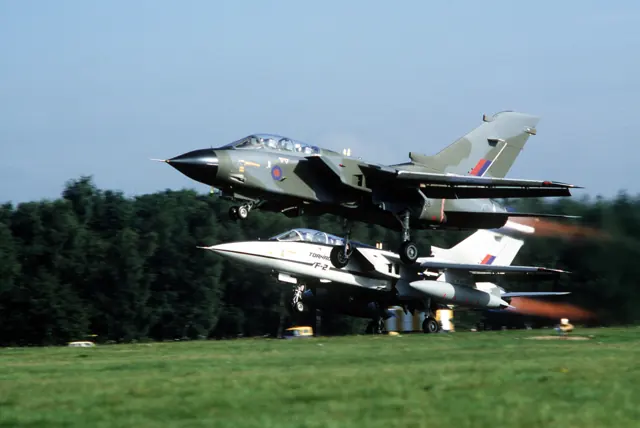
A European variable-sweep combat-aircraft family with distinct strike and interceptor versions.
A light business jet with a swept wing, rear-mounted engines and an integrated flight deck.
An Italian light aircraft known for military training and aerobatic use.
A two-seat naval fighter with variable-sweep wings and a cockpit built around pilot and radar-intercept officer roles.
Cessna's retractable-gear Centurion, a high-wing touring aircraft.
A four-abreast regional-jet family spanning the E170, E175, E190 and E195.
A radial-engine trainer that also served in combat and civilian warbird roles.
A four-engine Airbus wide-body developed in parallel with the A330.
A specialised reconnaissance aircraft designed for very high altitude and sustained supersonic flight.
A large long-haul twin that introduced Boeing's first commercial fly-by-wire airliner flight controls.
An open-cockpit biplane trainer that found a second life in civilian flying.
Piper's PA-31 utility twin, used in commuter, cargo and corporate transport.
An advanced trainer known around the world as the Texan, Harvard and SNJ.
A twin-aisle Boeing designed alongside the 757's generation of two-pilot flight decks.
A short-haul jet family that evolved through several generations of engines, wings and flight decks.
A medium commercial helicopter designed for passenger and utility transport.
A four-seat high-wing single that spans generations of conventional instruments and glass cockpits.
A two-seat, twin-engine fighter that served naval and land-based air forces in many roles.
A regional turboprop family whose short early versions and larger Q400 have different proportions and systems.
A family of single-aisle airliners built around sidesticks, electronic flight controls and a shared cockpit.
A composite touring single with a whole-aircraft parachute and several generations of avionics.
The second-generation Harrier, designed around vectored thrust and short-field operation.
This is AirframeDB’s first release. More features and aircraft research are planned. Leave your email if you’d like occasional updates.