


Start here
A few places to begin, from the aircraft’s story to the people who fly it.
Meet the aircraft
Lockheed developed the SR-71 for strategic reconnaissance at very high altitude and sustained supersonic speed. Long chines blend into the fuselage and wing; two large nacelles house the engines and carry inward-canted fins. The airframe reflects the thermal and aerodynamic demands of that mission.
Aircraft background
Wikipedia contributors · Read more ↗A few seconds of starlight stay with the pilot for decades
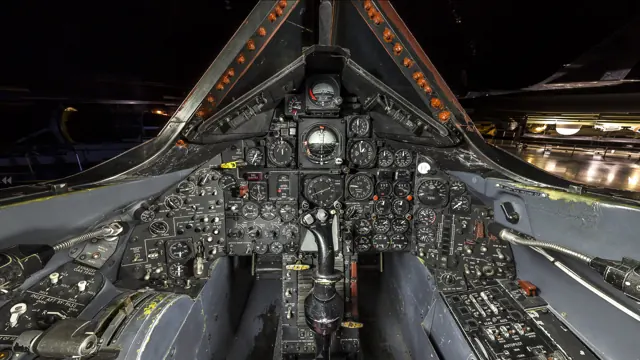
Among the facts and stories people asked him about, Shul most vividly remembered a brief view of the night sky. After turning off the cockpit lights, he saw the Milky Way and shooting stars with unusual clarity. He recalled being surprised that the instruments were still visible in the starlight. The beauty of that moment sat alongside work he never considered routine.
Hodinkee interview · July 2021. SR-71 recollection; other passages about A-7 and T-38 flights are separate experiences.
Hodinkee · Read more ↗Released product and variants
The current XR-71-TB is an experimental simulation inspired by the SR-71, with Mach 3 propulsion and inlet systems. The developer explicitly describes it as a research testbed rather than the operational military aircraft.
XR-71-TB testbed · VSKYLABS · X-Plane 12
VSKYLABS · Read more ↗Into the cockpit
 YouTube
Animagraffs · 56 min ·
How the Lockheed SR-71 Blackbird Works
An animated explanation of the SR-71, with contributions credited to museum staff and former crew.
Real aircraft · Lockheed SR-71
Watch on YouTube ↗Preview images are served by AirframeDB. Videos open on YouTube only when you choose to watch.
Meet Lockheed SR-71
Lockheed developed the SR-71 for strategic reconnaissance at very high altitude and sustained supersonic speed. Long chines blend into the fuselage and wing; two large nacelles house the engines and carry inward-canted fins. The airframe reflects the thermal and aerodynamic demands of that mission.
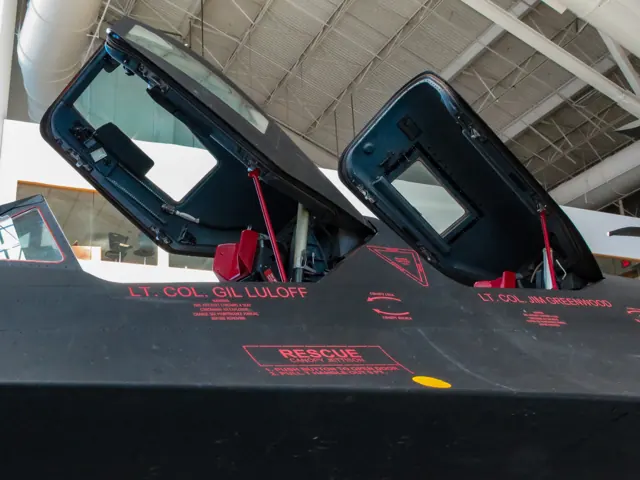
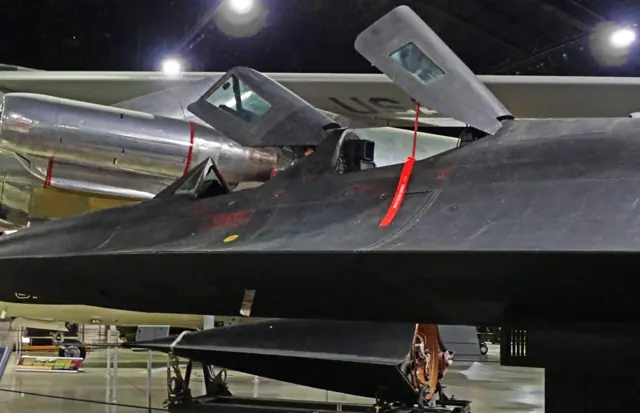
The operational SR-71A and two-seat SR-71B trainer differ visibly: the trainer has a raised rear cockpit. Simulator systems are documented for the particular model represented.
Lockheed SR-71
Aircraft type designators
A model-specific ICAO or FAA designator has not been confirmed in the references reviewed for this aircraft.
History & design
The museum aircraft had a long career before its delivery
The museum traces its Blackbird through operational flying from Kadena in 1969 and later test work at Palmdale. Its final delivery in March 1990 brought an aircraft with hundreds of earlier flights into preservation, connecting the display with a specific service history.
National Air and Space Museum · Coming in hot ↗National Air and Space Museum’s history of its own airframe
Development milestones
Designer: Lockheed Skunk Works Clarence "Kelly" Johnson (Designer)
First flight: 22 December 1964, 10:00 PST
Developed from: Lockheed A-12
Wikipedia contributors · Lockheed SR-71 Blackbird ↗Lockheed SR-71 Blackbird · family/variant named by the source · Wikipedia revision 1373387970
Pilot accounts
A few seconds of starlight stay with the pilot for decades
Among the facts and stories people asked him about, Shul most vividly remembered a brief view of the night sky. After turning off the cockpit lights, he saw the Milky Way and shooting stars with unusual clarity. He recalled being surprised that the instruments were still visible in the starlight.
The beauty of that moment sat alongside work he never considered routine. Refuelling required prolonged concentration close to another large aircraft, sometimes through cloud, turbulence or darkness. Shul described the Blackbird as an aircraft that always deserved respect, even after a pilot became experienced in it.
Hodinkee interview · July 2021. SR-71 recollection; other passages about A-7 and T-38 flights are separate experiences.
Read the full account · Hodinkee ↗An unplanned meeting opens the door to the Blackbird
Graham had admired Blackbirds flying around Okinawa but assumed that his chances of joining the programme were remote. A stop at base operations on the way to lunch changed that. The SR-71 squadron commander explained that existing crews had backgrounds much like his, encouraging him to apply for an interview and flying evaluation.
In the small squadron, getting along with colleagues mattered alongside flying qualifications. Graham later shared detachment-command duties at Mildenhall with Don Emmons, who had been his reconnaissance systems officer for seven years. Repeated tours overseas brought management work and interruptions as well as flying.
COMBATSIM.COM interview dated December 1997. SR-71 pilot and later commander; the page’s 2005 archive-creation date is separate from the interview date.
Read the full account · COMBATSIM.COM ↗A museum delivery begins with a worrying fuel indication
The flight taking the Smithsonian’s Blackbird to its new home nearly began with an abort. Yeilding recalled an unexpected fuel indication and the concern that the aircraft might not have the fuel expected in one tank. Once the problem had been dealt with, he and Joseph Vida continued east.
The delivery became a record-setting journey before ending at Washington Dulles. For Yeilding, the calm early-morning view from the cockpit had briefly given way to the work of resolving a problem in a very fast aircraft. The museum’s account connects that recollection with the aeroplane visitors now see at the Udvar-Hazy Center. It describes this airframe’s final flight, rather than the end of every SR-71 operation.
National Air and Space Museum account · March 2024, using Yeilding’s recollections of the 6 March 1990 delivery flight with reconnaissance systems officer Joseph Vida.
Read the full account · National Air and Space Museum ↗In your simulator
Systems, equipment and documentation for each developer’s aircraft.
Compare simulator versions →X-Plane 11Lockheed SR-71
Laminar Research · Released
Lockheed SR-71
Laminar Research · Released
X-Plane 12XR-71-TB testbed
VSKYLABS · Released
XR-71-TB testbed
VSKYLABS · Released
MSFS 2024SR-71A
Blackbird Simulations · Released
SR-71A
Blackbird Simulations · Released
Aircraft specifications
Published figures for the named real-aircraft variant. Simulator equipment and performance can differ.
| Specification | Published value |
|---|---|
| Length | 107 ft 5 in (32.74 m) |
| Wingspan | 55 ft 7 in (16.94 m) |
| Height | 18 ft 6 in (5.64 m) |
| Wing area | 1,800 sq ft (170 m² ) |
| Empty weight | 67,500 lb (30,617 kg) |
| Gross weight | 152,000 lb (68,946 kg) |
| Max takeoff weight | 172,000 lb (78,018 kg) |
| Powerplant | 2 × Pratt & Whitney J58 (JT11D-20J or JT11D-20K) afterburning turbojets, 25,000 lbf (110 kN) thrust each |
| Maximum speed | 1,910 kn (2,200 mph, 3,540 km/h) at 80,000 ft (24,000 m) |
| Maximum speed | Mach 3.3 |
| Service ceiling | 85,000 ft (26,000 m) |
| Rate of climb | 11,820 ft/min (60.0 m/s) |
Manuals & resources
Find your next read
Choose a topic for a short introduction and a link to the original source. Simulator references identify the developer and edition they cover.
Simulator documentation
Released product and variantsXR-71-TB testbed · VSKYLABS · X-Plane 12
The current XR-71-TB is an experimental simulation inspired by the SR-71, with Mach 3 propulsion and inlet systems. The developer explicitly describes it as a research testbed rather than the operational military aircraft.
Official developer / designated-store reference · checked 2026-09-14
VSKYLABS · Read the source ↗Pilot account
A few seconds of starlight stay with the pilot for decadesHodinkee interview · July 2021. SR-71 recollection; other passages about A-7 and T-38 flights are separate experiences.
Among the facts and stories people asked him about, Shul most vividly remembered a brief view of the night sky. After turning off the cockpit lights, he saw the Milky Way and shooting stars with unusual clarity. He recalled being surprised that the instruments were still visible in the starlight. The beauty of that moment sat alongside work he never considered routine. Refuelling required prolonged concentration close to another large aircraft, sometimes through cloud, turbulence or darkness.
Brian Shul
Hodinkee · Read the source ↗An unplanned meeting opens the door to the BlackbirdCOMBATSIM.COM interview dated December 1997. SR-71 pilot and later commander; the page’s 2005 archive-creation date is separate from the interview date.
Graham had admired Blackbirds flying around Okinawa but assumed that his chances of joining the programme were remote. A stop at base operations on the way to lunch changed that. The SR-71 squadron commander explained that existing crews had backgrounds much like his, encouraging him to apply for an interview and flying evaluation. In the small squadron, getting along with colleagues mattered alongside flying qualifications.
Richard H. Graham
COMBATSIM.COM · Read the source ↗Developer documentation
SR-71A — product listingSR-71A · MSFS 2024
Product listing captured 2026-09-23; edition scope from the reviewed catalogue
blackbirdsims.com · Read the source ↗Read the original documentation from the people who created it. Manuals open on their publisher’s website.
Manual
X-Plane 11 Desktop ManualLaminar Research X-Plane aircraft and avionics manualsLaminar ResearchAircraft background
Lockheed SR-71 BlackbirdWikipedia contributors · Research background · Wikipedia revision 1373387970 · retrieved 2026-09-12Developer documentation
VSKYLABS Test-Pilot: SR-71-TB. Mach 3 Simulation & D-21 Drone for X-Plane.VSKYLABS · Official developer / designated-store reference · checked 2026-09-14 VSKYLABS Aerospace Simulations Aircraft Center: VSKYLABS 'Test-Pilot': SR-71-TB BlackbirdVSKYLABS · Official developer / designated-store reference · checked 2026-09-14Product
SR-71A for MSFS2024 - Early Accessblackbirdsims.com · Product listing captured 2026-09-23; edition scope from the reviewed catalogueBuilt-in force-feedback profiles
Read the documentary basis, editable starting settings and remaining questions for the aircraft you fly. Each explanation refers to the exact profile revision shown.
Catalogue programme-20261022-v1 · 2 profile choices
Blackbird Simulations SR71A
Blackbird Simulations · Free and Pro · Revision 3 · Inherited starting point
MSFS 2024
Blackbird Simulations SR71A: Artificial feel motivates a fixed supported stick response.
Lockheed SR-71
Free and Pro · Revision 1 · Partial review
X-Plane 11 · X-Plane 12
Lockheed SR-71: Artificial feel motivates a fixed supported stick response.
Discuss this aircraft (0)
Questions, observations and useful sources from the community.
No published discussions yet. Bring a question or share a useful source.
Open aircraft discussions →Content expanded · What’s new
Something missing or a source that needs attention?
Suggest a correction ↗