MSFS
Boeing F/A-18E ↗
A carrier-capable multirole fighter, larger than the earlier Hornet from which it developed.
2 implementations+ Compare
Explore the aircraft. Find your simulator. Follow the sources.
A carrier-capable multirole fighter, larger than the earlier Hornet from which it developed.
A twin-turbine Huey descendant with a four-blade main rotor.
A corrugated-metal, three-engine transport from the formative years of airline travel.
A 1920s transport family that developed from a single-engine airliner into a trimotor.
A five-seat turbine helicopter developed from Robinson's smaller piston-helicopter line.
A heavy transport helicopter whose two large rotors remove the need for a tail rotor.
A long-range strategic bomber with a swept wing and eight jet engines in paired pods.
A compact utility helicopter distinguished by its enclosed Fenestron tail rotor.
A military transport developed from the DC-3, used for cargo, troops, parachuting and glider towing.
A four-bladed utility helicopter developed from the LongRanger lineage.
Beechcraft's Model 76, designed to introduce pilots to twin-engine flying.
A three-engine airliner that became a mainstay of Soviet and Russian passenger transport.
A twin-aisle Boeing designed alongside the 757's generation of two-pilot flight decks.
The four-engine wide-body whose raised flight deck created one of aviation's most recognisable profiles.
Ted Smith's piston twin, later produced by Piper as the Aerostar.
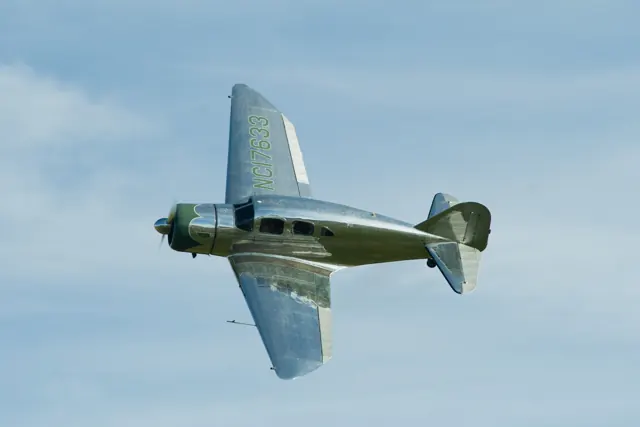
A late-1930s cabin aircraft with metal construction and retractable landing gear.
A composite, low-wing touring single with fixed gear and a turbocharged engine.
A large twin-engine helicopter from the Super Puma line, used for offshore and public-service work.
A self-launching sailplane family with its engine inside the fuselage and a folding nose propeller.
A turbine-powered utility helicopter with a broad cabin and a long international service history.
A twin-radial military transport with a rear ramp and short-field design priorities.
A compact two-seat light aircraft with a high wing and a wide range of development variants.
Cirrus's first type-certified aircraft, a composite piston single.
A two-seat composite trainer with a low wing and a large canopy.
This is AirframeDB’s first release. More features and aircraft research are planned. Leave your email if you’d like occasional updates.