
Start here
A few places to begin, from the aircraft’s story to the people who fly it.
Meet the aircraft
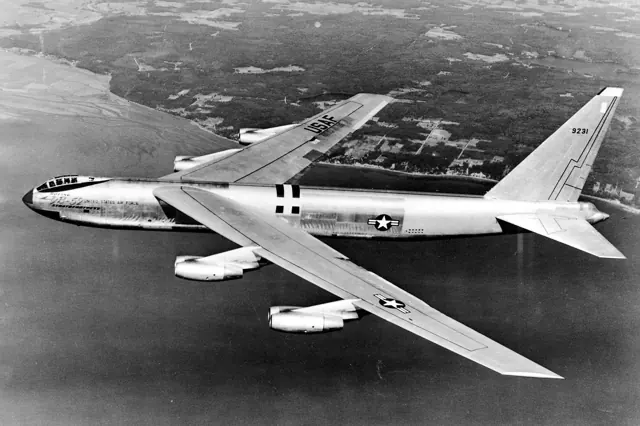
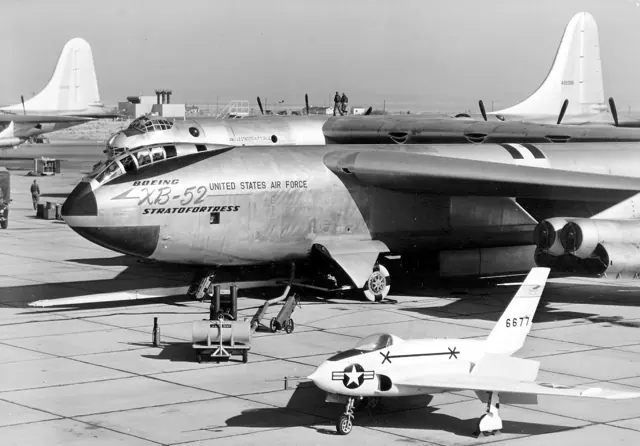
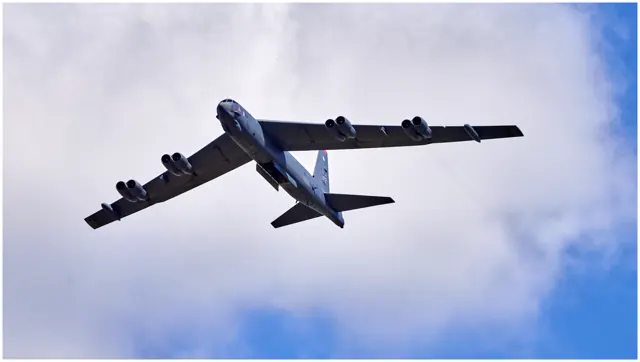
The B-52 entered US Air Force service in 1955 and became a central aircraft of the Cold War bomber force. Its large wing, paired engine nacelles and bicycle-style main landing gear give it a distinctive shape. Later upgrades changed its missions and equipment over a long operational life. The B-52G represented in this catalogue is a particular historical version.
Aircraft background
Wikipedia contributors · Read more ↗Learning to manage the bomber’s inertia and its crew
Coming from instructing in the T-38, Shiban found the B-52’s size and inertia a major adjustment. The aircraft responded more slowly than the trainer he knew, and after his first training flight he was astonished to look back at the bomber and realise he had landed it. Aerial refuelling took several sorties before it began to feel manageable. Command also meant listening to a much larger crew.
Hush-Kit interview · June 2016. B-52G experience, including the 1991 Gulf War; handling comparisons are the pilot’s recollections.
Hush-Kit · Read more ↗Into the cockpit
 YouTube
Eric Gattenby · 18 min ·
B-52G "Osiris" 4K Cockpit Tour
A detailed tour of the B-52G cockpit section displayed at Tillamook Air Museum.
Real aircraft · Boeing B-52G Stratofortress
Watch on YouTube ↗Preview images are served by AirframeDB. Videos open on YouTube only when you choose to watch.
Meet Boeing B-52G Stratofortress
The B-52 entered US Air Force service in 1955 and became a central aircraft of the Cold War bomber force. Its large wing, paired engine nacelles and bicycle-style main landing gear give it a distinctive shape. Later upgrades changed its missions and equipment over a long operational life.
The simulator product represents the historical B-52G. The B-52H and its later upgrades have different equipment.
Boeing B-52G Stratofortress
Boeing → · Explore the family →
Boeing B-52G Stratofortress
Wikipedia contributors · Boeing B-52 Stratofortress ↗Laminar Research · X-Plane 11 →Aircraft type designators
Use the code for the model you are flying. The linked authority lists the applicable aircraft.
History & design
A navigator’s milestone belongs to the whole crew story
A congressional announcement identifies Steve “Thirsty” Smith as a 93rd Bomb Squadron navigator when he reached 10,000 B-52 flying hours in March 2017.
Office of U.S. Representative Mike Johnson · Steve Smith reaches 10,000 B-52 flying hours ↗Role checked against the contemporary announcement; other reports use pilot terminology inconsistently
Development milestones
First flight: 15 April 1952 ( 1952-04-15 )
Wikipedia contributors · Boeing B-52 Stratofortress ↗Boeing B-52 Stratofortress · family/variant named by the source · Wikipedia revision 1374248432
Pilot accounts
Learning to manage the bomber’s inertia and its crew
Coming from instructing in the T-38, Shiban found the B-52’s size and inertia a major adjustment. The aircraft responded more slowly than the trainer he knew, and after his first training flight he was astonished to look back at the bomber and realise he had landed it. Aerial refuelling took several sorties before it began to feel manageable.
Command also meant listening to a much larger crew. Navigators and electronic-warfare specialists could have different immediate concerns, leaving the aircraft commander to weigh their advice while keeping the aircraft flying. Shiban was clear that success belonged to the whole crew. His account makes learning the bomber a combination of physical coordination, patience and trust in the people at the other stations.
Hush-Kit interview · June 2016. B-52G experience, including the 1991 Gulf War; handling comparisons are the pilot’s recollections.
Read the full account · Hush-Kit ↗Watching aircraft outside the laboratory leads to a cockpit career
Jensen already held a private pilot’s licence when she began work as a project engineer at Edwards. Watching the aircraft outside the laboratory helped turn flying from a hobby into a career ambition. Pilot training and a period instructing on the T-37 eventually led to B-52 conversion and command qualification in 2004.
By the interview, she had about two years on the bomber and was flying over Afghanistan. She valued the connection with controllers on the ground, whose calm voices helped the crew understand situations that looked very different from high above. Jensen also reflected on the women whose earlier service had made her own path possible.
U.S. Air Force interview · March 2006. B-52 pilot with the 40th Air Expeditionary Group; her later-era experience is not presented as a B-52G-specific account.
Read the full account · U.S. Air Force ↗Jet power changes a bomber pilot’s working day
Of the large bombers Potter had flown, the B-52 was his favourite. He appreciated the reduction in engine-management tasks compared with the B-36, where descent preparation involved several systems and a carefully ordered sequence. The jet still kept the crew busy with checklists, but he remembered its quicker pace as enjoyable.
A Pacific assignment also left a vivid memory of flying over Manila with crowds below and a senior officer in the jumpseat. Potter recalled the visitor’s enthusiasm at a first ride in the bomber. His later interview mixes that public occasion with the demands of Strategic Air Command life, including long working hours and separation from family. The dates of some recalled events are uncertain.
March 1990 interview preserved by the pilot’s family. B-52 family experience following piston bombers; exact variant is not identified in the selected passages.
Read the full account · Francis Harold Potter family archive ↗In your simulator
Systems, equipment and documentation for each developer’s aircraft.
X-Plane 11Boeing B-52G Stratofortress
Laminar Research · Released
Boeing B-52G Stratofortress
Laminar Research · Released
Aircraft specifications
Published figures for the named real-aircraft variant. Simulator equipment and performance can differ.
| Specification | Published value |
|---|---|
| Length | 159 ft 4 in (48.5 m) |
| Wingspan | 185 ft 0 in (56.4 m) |
| Height | 40 ft 8 in (12.4 m) |
| Wing area | 4,000 sq ft (370 m² ) |
| Empty weight | 185,000 lb (83,250 kg) |
| Gross weight | 265,000 lb (120,000 kg) |
| Max takeoff weight | 488,000 lb (221,323 kg) |
| Powerplant | 8 × Pratt & Whitney TF33 -P-3/103 turbofans , 17,000 lbf (76 kN) thrust each |
| Maximum speed | 650 mph (1,050 km/h, 560 kn) |
| Cruise speed | 509 mph (819 km/h, 442 kn) |
| Service ceiling | 50,000 ft (15,000 m) |
| Rate of climb | 6,270 ft/min (31.85 m/s) |
Manuals & resources
Find your next read
Choose a topic for a short introduction and a link to the original source. Simulator references identify the developer and edition they cover.
Pilot account
Learning to manage the bomber’s inertia and its crewHush-Kit interview · June 2016. B-52G experience, including the 1991 Gulf War; handling comparisons are the pilot’s recollections.
Coming from instructing in the T-38, Shiban found the B-52’s size and inertia a major adjustment. The aircraft responded more slowly than the trainer he knew, and after his first training flight he was astonished to look back at the bomber and realise he had landed it. Aerial refuelling took several sorties before it began to feel manageable. Command also meant listening to a much larger crew.
Keith Shiban
Hush-Kit · Read the source ↗Watching aircraft outside the laboratory leads to a cockpit careerU.S. Air Force interview · March 2006. B-52 pilot with the 40th Air Expeditionary Group; her later-era experience is not presented as a B-52G-specific account.
Jensen already held a private pilot’s licence when she began work as a project engineer at Edwards. Watching the aircraft outside the laboratory helped turn flying from a hobby into a career ambition. Pilot training and a period instructing on the T-37 eventually led to B-52 conversion and command qualification in 2004. By the interview, she had about two years on the bomber and was flying over Afghanistan.
Andrea Jensen
U.S. Air Force · Read the source ↗Read the original documentation from the people who created it. Manuals open on their publisher’s website.
Manual
X-Plane 11 Desktop ManualLaminar Research X-Plane aircraft and avionics manualsLaminar ResearchAircraft background
Boeing B-52 StratofortressWikipedia contributors · Research background · Wikipedia revision 1374248432 · retrieved 2026-09-12 Steve Smith reaches 10,000 B-52 flying hoursOffice of U.S. Representative Mike Johnson · 3 March 2017 · explicitly identifies Smith as a navigatorType designator
ICAO Doc 8643 — aircraft type designatorsInternational Civil Aviation Organization · Public search data retrieved 2026-09-14; authority update 2026-09-03Built-in force-feedback profiles
Read the documentary basis, editable starting settings and remaining questions for the aircraft you fly. Each explanation refers to the exact profile revision shown.
Catalogue programme-20261022-v1 · 1 profile choice
Boeing B-52G Stratofortress
Free and Pro · Revision 1 · Review pending
X-Plane 11
Boeing B-52G Stratofortress: The configured control response is a nominal B-52G starting estimate; its size and engine count do not establish a cockpit force schedule.
Discuss this aircraft (0)
Questions, observations and useful sources from the community.
No published discussions yet. Bring a question or share a useful source.
Open aircraft discussions →Content expanded · What’s new
Something missing or a source that needs attention?
Suggest a correction ↗