MSFS
Junkers JU 52 ↗
A corrugated-metal transport best known in its three-engine form.
1 implementations+ Compare
Explore the aircraft. Find your simulator. Follow the sources.
A corrugated-metal transport best known in its three-engine form.
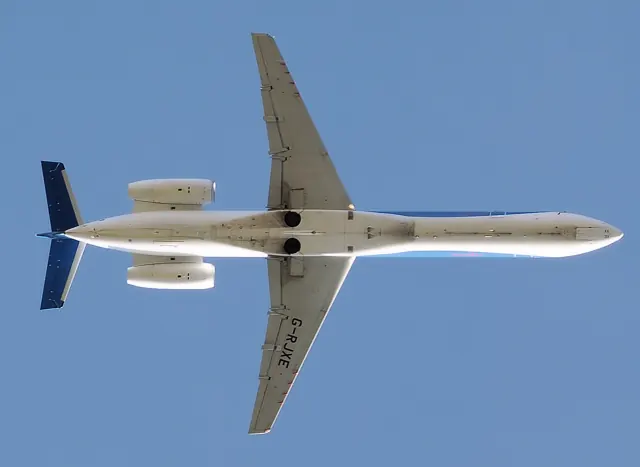
Embraer's regional-jet family, from the ERJ 135 to the longer ERJ 145.
A small three-engine demonstrator created to explore technologies for a future supersonic airliner.
The Stationair utility family, combining a high wing with fixed landing gear.
A composite, low-wing touring single with fixed gear and a turbocharged engine.
A pressurised four-engine piston transport from the last major generation before the jet airliner.
A Brazilian light trainer with a high wing, tandem seats and a simple utility layout.
A single-engine turboprop workhorse for passenger services, freight and remote-area transport.
A four-abreast regional-jet family spanning the E170, E175, E190 and E195.
Airbus's first production aircraft, built around a twin-engine wide-body layout.
A two-seat Tecnam high-wing aircraft combining composite and metal construction.
A pressurised twin turboprop with a canard, composite airframe and rear-facing propellers.
A tandem two-seat sailplane designed for instruction and broader soaring use.
A hybrid-electric regional-airliner concept represented in the simulator while the real programme develops.
A single-seat competition sailplane offered in Standard and 18-metre configurations.
A medium commercial helicopter designed for passenger and utility transport.
The Model 525 CitationJet, the starting point of Cessna's CJ and M2 lineage.
Beechcraft's Model 76, designed to introduce pilots to twin-engine flying.
A four-seat touring family whose Commander 114 added a larger engine and further refinements.
Piper's PA-31 utility twin, used in commuter, cargo and corporate transport.
A long-range fighter whose different engine and canopy developments produced several distinct forms.
A short-haul jet family that evolved through several generations of engines, wings and flight decks.
A pressurised touring twin whose piston and turbine-conversion versions make a particularly interesting comparison.
This is AirframeDB’s first release. More features and aircraft research are planned. Leave your email if you’d like occasional updates.