X-Plane
North American T-28 Trojan ↗
A radial-engine trainer that also served in combat and civilian warbird roles.
1 implementations+ Compare
Explore the aircraft. Find your simulator. Follow the sources.
A radial-engine trainer that also served in combat and civilian warbird roles.
A long-range trijet developed from the DC-10 with a stretched fuselage and revised wing and cockpit.
A stretched development of the DC-9 with rear-mounted engines and a five-abreast cabin.
A personal jet with one engine above the rear fuselage and a distinctive V-tail.
A twin-turbine Huey descendant with a four-blade main rotor.
A compact Italian light twin with a shoulder wing and metal airframe.
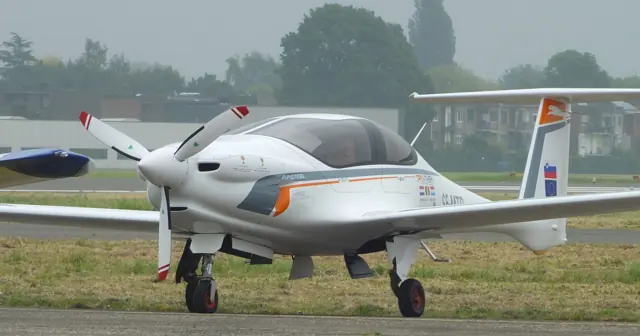
Pipistrel's streamlined four-seat composite-aircraft design.
A twin-turboprop family whose smaller conventional-tail and larger T-tail branches have distinct identities.
Piper's two-seat trainer with fixed tricycle landing gear.
A four-engine Airbus wide-body developed in parallel with the A330.
Avro's delta-wing bomber, developed for Britain's postwar strategic force.
A British utility twin built around short regional and practical transport work.
A wooden touring-aircraft family recognisable by the upward-angled outer wing panels.
The Stationair utility family, combining a high wing with fixed landing gear.
A long-range fighter whose different engine and canopy developments produced several distinct forms.
A low-wing piston twin that carries the Beechcraft touring-aircraft lineage into two-engine flying.
A tandem-seat utility aircraft whose light structure and high wing suit bush, towing and recreational work.
A four-engine tactical transport built around a rear loading ramp and access to austere airfields.
An Italian light aircraft known for military training and aerobatic use.
Dassault's long-range Falcon 8X, developed from the three-engine 7X.
A DC-10-derived tanker that combined aerial refuelling with passenger and cargo transport.
The JetRanger and LongRanger family: a familiar turbine-helicopter shape with distinct cabin lengths.
A two-seat composite trainer with a low wing and a large canopy.
The second-generation Harrier, designed around vectored thrust and short-field operation.
This is AirframeDB’s first release. More features and aircraft research are planned. Leave your email if you’d like occasional updates.