MSFS
Ryan NYP “Spirit of St. Louis” ↗
The purpose-built Ryan monoplane used by Charles Lindbergh for his 1927 solo Atlantic crossing.
2 implementations+ Compare
Explore the aircraft. Find your simulator. Follow the sources.
The purpose-built Ryan monoplane used by Charles Lindbergh for his 1927 solo Atlantic crossing.
The fixed-gear, six-cylinder touring branch of Piper's PA-28 family.
The Wilga is the real-aircraft starting point for Mike Patey's DRACO and the simulator's DRACO X.
A midsize business jet developed by Bombardier’s Learjet division.
A four-seat touring family whose Commander 114 added a larger engine and further refinements.
A 1920s flying boat with two engines arranged in tandem above the wing.
A six-engine flying boat created for long-distance passenger travel over water.
A high-wing utility turboprop designed for short-field passenger and cargo work.
A twin-hull flying boat with its engines mounted together above the wing.
A tandem-seat homebuilt jet with composite construction and retractable landing gear.
A First World War trainer that became a familiar sight in the barnstorming era.
A long-range fighter whose different engine and canopy developments produced several distinct forms.
A British utility twin built around short regional and practical transport work.
A two-seat training single with a high wing and fixed tricycle landing gear.
A pioneering light helicopter whose bubble cabin and exposed structure became widely recognisable.
The CJ4 belongs to Cessna's light-jet line, with two rear-mounted engines and a T-tail.
A long-range trijet developed from the DC-10 with a stretched fuselage and revised wing and cockpit.
A purpose-built agricultural aircraft that also became a single-engine air tanker.
A compact Italian light twin with a shoulder wing and metal airframe.
A compact twin-engine transport helicopter with retractable gear and a long development history.
A regional turboprop family whose short early versions and larger Q400 have different proportions and systems.
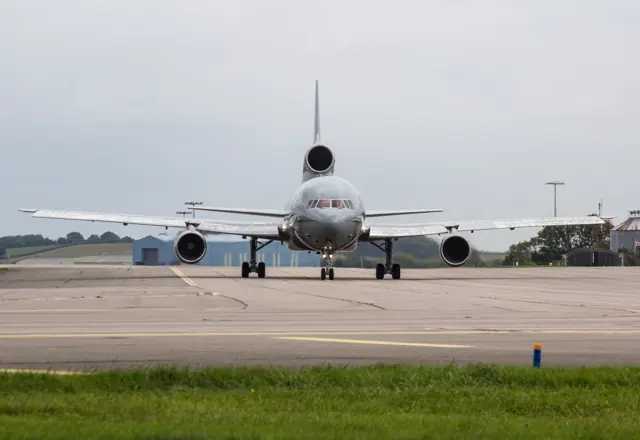
Lockheed's wide-body TriStar, with three RB211 engines and a distinctive tail intake.
A single-engine turboprop workhorse for passenger services, freight and remote-area transport.
A box-shaped utility twin whose cabin and rear access are central to its design.
This is AirframeDB’s first release. More features and aircraft research are planned. Leave your email if you’d like occasional updates.