MSFS
Aérospatiale Gazelle ↗
A compact utility helicopter distinguished by its enclosed Fenestron tail rotor.
1 implementations+ Compare
Explore the aircraft. Find your simulator. Follow the sources.
A compact utility helicopter distinguished by its enclosed Fenestron tail rotor.
Tecnam's two-seat, low-wing Sierra, introduced in the early 2000s.
A twin-radial military transport with a rear ramp and short-field design priorities.
Piper's PA-31 utility twin, used in commuter, cargo and corporate transport.
A long-range fighter whose different engine and canopy developments produced several distinct forms.
A 1920s transport family that developed from a single-engine airliner into a trimotor.
A high-wing utility turboprop designed for short-field passenger and cargo work.
Diamond's four-seat light twin, developed with diesel-powered versions.
A post-war Businessliner with a radial engine, cabin transport ambitions and tailwheel gear.
A cabin-class piston twin designed for commuter, cargo and utility work.
A four-engine military turboprop designed to combine tactical access with long-distance transport.
A single-seat competition sailplane offered in Standard and 18-metre configurations.
A stretched development of the DC-9 with rear-mounted engines and a five-abreast cabin.
Ted Smith's piston twin, later produced by Piper as the Aerostar.
A purpose-built agricultural aircraft that also became a single-engine air tanker.
A single-engine utility helicopter known as the Écureuil, Squirrel and AStar.
A wooden touring-aircraft family recognisable by the upward-angled outer wing panels.
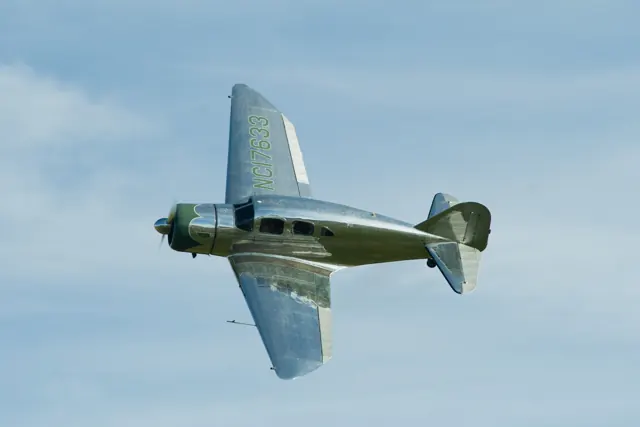
A late-1930s cabin aircraft with metal construction and retractable landing gear.
A side-by-side two-seat sailplane with a retractable powerplant for self-launching.
A corrugated-metal transport best known in its three-engine form.
A streamlined twin-engine helicopter with a Fenestron tail rotor and retractable landing gear.
A pressurised touring twin whose piston and turbine-conversion versions make a particularly interesting comparison.
The purpose-built Ryan monoplane used by Charles Lindbergh for his 1927 solo Atlantic crossing.
A small three-engine demonstrator created to explore technologies for a future supersonic airliner.
This is AirframeDB’s first release. More features and aircraft research are planned. Leave your email if you’d like occasional updates.