MSFS X-Plane
Aérospatiale SA 315B Lama ↗
A light turbine helicopter combining an Alouette II airframe with more powerful Alouette III components.
2 implementations+ Compare
Explore the aircraft. Find your simulator. Follow the sources.
A light turbine helicopter combining an Alouette II airframe with more powerful Alouette III components.
Dassault's long-range Falcon 8X, developed from the three-engine 7X.
A pioneering all-metal transport with an enclosed passenger cabin and corrugated skin.
A four-engine military turboprop designed to combine tactical access with long-distance transport.
A regional turboprop family whose short early versions and larger Q400 have different proportions and systems.
A full-length double-deck airliner built for very high passenger capacity.
The purpose-built Ryan monoplane used by Charles Lindbergh for his 1927 solo Atlantic crossing.
A corrugated-metal transport best known in its three-engine form.
A two-seat composite trainer with a low wing and a large canopy.
A rear-engined trijet built to bring jet service to shorter routes and smaller airports.
Regional flying built around a high wing, two turboprops and short sectors.
A twin-hull flying boat with its engines mounted together above the wing.
A large twin-engine helicopter from the Super Puma line, used for offshore and public-service work.
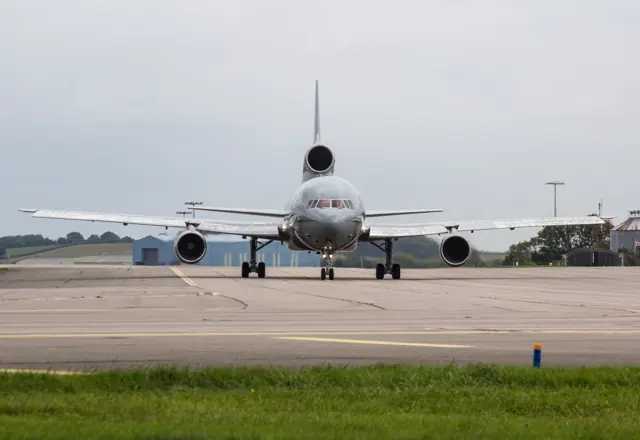
Lockheed's wide-body TriStar, with three RB211 engines and a distinctive tail intake.
A two-seat, twin-engine fighter that served naval and land-based air forces in many roles.
A low-wing piston twin that carries the Beechcraft touring-aircraft lineage into two-engine flying.
A long-running touring single, familiar in both V-tail and conventional-tail forms.
A two-seat training single with a high wing and fixed tricycle landing gear.
A compact racing aeroplane built around a large radial engine and very short fuselage.
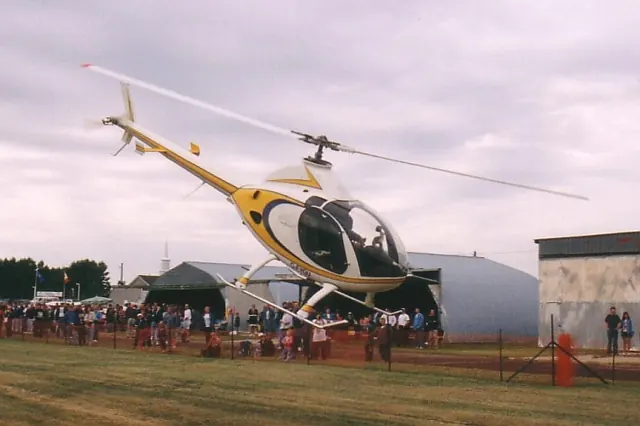
RotorWay's two-seat kit-helicopter family, with piston and turbine simulator interpretations.
Ted Smith's piston twin, later produced by Piper as the Aerostar.
A long-range trijet developed from the DC-10 with a stretched fuselage and revised wing and cockpit.
A twin-engine business jet designed to retain some of the utility flexibility associated with the PC-12.
The second-generation Harrier, designed around vectored thrust and short-field operation.
This is AirframeDB’s first release. More features and aircraft research are planned. Leave your email if you’d like occasional updates.