MSFS
Grumman G-21A Goose ↗
A small twin-engine amphibian that moved from business transport into military and utility service.
2 implementations+ Compare
Explore the aircraft. Find your simulator. Follow the sources.
A small twin-engine amphibian that moved from business transport into military and utility service.
A twin-turboprop family whose smaller conventional-tail and larger T-tail branches have distinct identities.
An enclosed, two-seat autogyro with side-by-side seating and a pusher propeller.
A utility piston twin designed for commuter and specialist transport missions.
A purpose-built aerobatic monoplane family developed by pilot and designer Walter Extra.
The CJ4 belongs to Cessna's light-jet line, with two rear-mounted engines and a T-tail.
A British utility twin built around short regional and practical transport work.
A French two-seat aerobatic trainer with side-by-side seating and a distinctive curved wing outline.
A modern two-seat piston helicopter designed around the training role.
A close-air-support aircraft with a straight wing, twin tail and two widely separated jet engines.
A heavy transport helicopter whose two large rotors remove the need for a tail rotor.
A very large single-engine biplane designed for practical work from modest airfields.
The four-engine wide-body whose raised flight deck created one of aviation's most recognisable profiles.
A huge wooden flying-boat prototype that made one brief flight in 1947.
A pioneering light helicopter whose bubble cabin and exposed structure became widely recognisable.
An open-cockpit biplane trainer that found a second life in civilian flying.
The H130 utility helicopter, descended from the AS350 and fitted with a Fenestron.
A high-wing utility aircraft known for short-field work and a broad choice of working configurations.
A compact utility helicopter distinguished by its enclosed Fenestron tail rotor.
A fixed-wing observation aircraft with a helicopter-like view from its glazed nose.
A compact racing aeroplane built around a large radial engine and very short fuselage.
A composite amphibian that carries Dornier's centreline engine arrangement into the turboprop era.
A single-seat competition sailplane offered in Standard and 18-metre configurations.
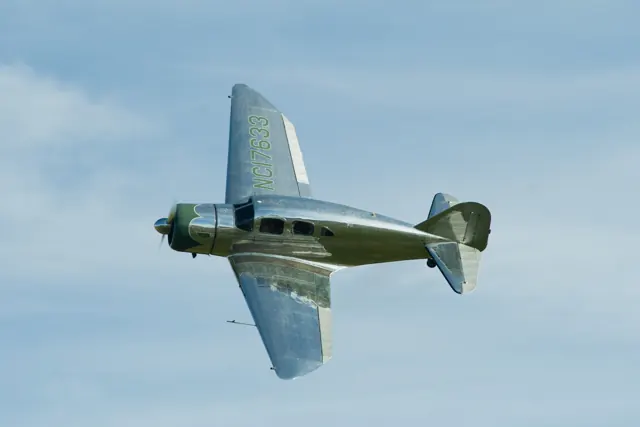
A late-1930s cabin aircraft with metal construction and retractable landing gear.
This is AirframeDB’s first release. More features and aircraft research are planned. Leave your email if you’d like occasional updates.