MSFS
Savoia-Marchetti S.55 ↗
A twin-hull flying boat with its engines mounted together above the wing.
1 implementations+ Compare
Explore the aircraft. Find your simulator. Follow the sources.
A twin-hull flying boat with its engines mounted together above the wing.
A five-seat turbine helicopter developed from Robinson's smaller piston-helicopter line.
A heavy-lift helicopter built around an open frame and an external working load.
A personal jet with one engine above the rear fuselage and a distinctive V-tail.
Two related Dutch regional jets developed from the F28 lineage.
A single-seat competition sailplane offered in Standard and 18-metre configurations.
A short-field Savage with leading-edge slats and a distinct Got Friends simulator implementation.
A compact aerobatic biplane family with both single-seat and tandem-seat branches.
A corrugated-metal, three-engine transport from the formative years of airline travel.
A stretched development of the DC-9 with rear-mounted engines and a five-abreast cabin.
A rear-engined trijet built to bring jet service to shorter routes and smaller airports.
A tandem-seat utility aircraft whose light structure and high wing suit bush, towing and recreational work.
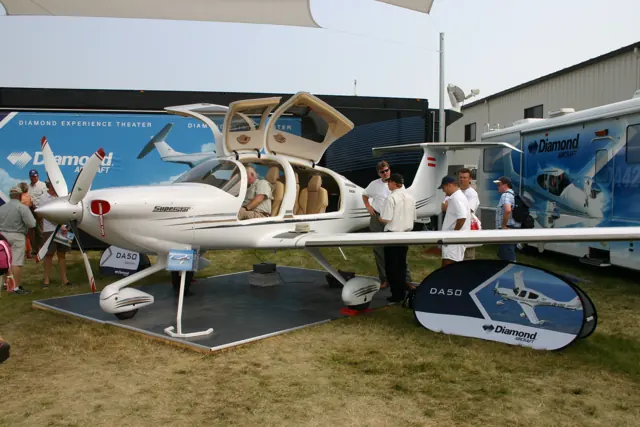
A five-seat composite single whose development led to the diesel DA50 RG.
A compact Japanese twin turboprop with a high wing and pressurised cabin.
Ted Smith's piston twin, later produced by Piper as the Aerostar.
A two-seat light amphibian with a compact boat hull and a pusher propeller.
A pressurised touring twin whose piston and turbine-conversion versions make a particularly interesting comparison.
A long-range trijet developed from the DC-10 with a stretched fuselage and revised wing and cockpit.
The purpose-built Ryan monoplane used by Charles Lindbergh for his 1927 solo Atlantic crossing.
A two-seat training single with a high wing and fixed tricycle landing gear.
A light business jet with a swept wing, rear-mounted engines and an integrated flight deck.
A twin-turbine Huey descendant with a four-blade main rotor.
A two-seat composite kit aircraft developed from the Lancair 320.
A long-range twin whose programme emphasised composite construction and more electrically powered systems.
This is AirframeDB’s first release. More features and aircraft research are planned. Leave your email if you’d like occasional updates.