X-Plane
Diamond DA50 ↗
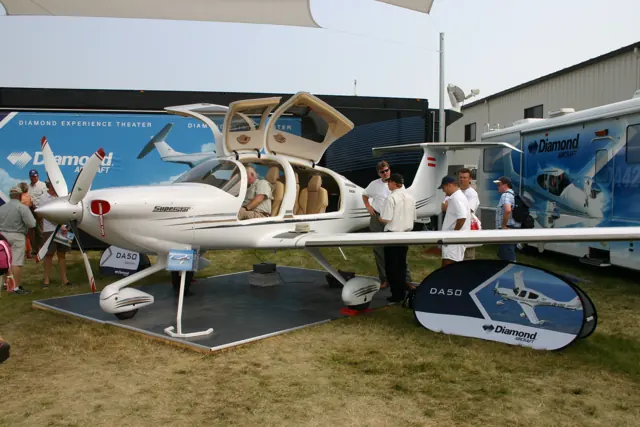
A five-seat composite single whose development led to the diesel DA50 RG.
1 implementations+ Compare
Explore the aircraft. Find your simulator. Follow the sources.
A five-seat composite single whose development led to the diesel DA50 RG.
Beechcraft's Model 76, designed to introduce pilots to twin-engine flying.
SOCATA's touring-aircraft family, including the Tobago and Trinidad.
An enclosed, two-seat autogyro with side-by-side seating and a pusher propeller.
A tailwheel utility single built around a high wing and a substantial working cabin.
A First World War trainer that became a familiar sight in the barnstorming era.
A pressurised twin turboprop with a canard, composite airframe and rear-facing propellers.
The CJ4 belongs to Cessna's light-jet line, with two rear-mounted engines and a T-tail.
A late-1930s cabin aircraft with metal construction and retractable landing gear.
A light turbine helicopter whose land-based Scout and naval Wasp branches served different jobs.
A composite touring single with a whole-aircraft parachute and several generations of avionics.
A six-engine heavy transport created for exceptionally large external and internal loads.
A twin-engine utility helicopter with roots in the BK 117 and EC145 families.
A wartime fighter developed from the earlier Curtiss P-36.
A single-engine utility helicopter known as the Écureuil, Squirrel and AStar.
Tecnam's four-seat high-wing single, built with metal and carbon-fibre components.
A compact twin-engine helicopter widely used for medical, police and training work.
A two-seat Tecnam high-wing aircraft combining composite and metal construction.
A tandem two-seat sailplane family used for training and cross-country soaring.
The fixed-gear, six-cylinder touring branch of Piper's PA-28 family.
Cessna's retractable-gear Centurion, a high-wing touring aircraft.
A twin-aisle Boeing designed alongside the 757's generation of two-pilot flight decks.
A long-running touring single, familiar in both V-tail and conventional-tail forms.
A heavy transport helicopter whose two large rotors remove the need for a tail rotor.
This is AirframeDB’s first release. More features and aircraft research are planned. Leave your email if you’d like occasional updates.