MSFS X-Plane
De Havilland Canada DHC-2 Beaver ↗
A radial-engined utility aircraft closely associated with bush flying and float operations.
4 implementations+ Compare
Explore the aircraft. Find your simulator. Follow the sources.
A radial-engined utility aircraft closely associated with bush flying and float operations.
A narrow-body twin developed as a new generation of medium-range airliner.
A short-field Savage with leading-edge slats and a distinct Got Friends simulator implementation.
A very large single-engine biplane designed for practical work from modest airfields.
A high-wing utility aircraft known for short-field work and a broad choice of working configurations.
A compact twin-engine helicopter widely used for medical, police and training work.
A four-abreast regional-jet family spanning the E170, E175, E190 and E195.
The Huey: a turbine-powered utility helicopter with a broad cabin and an unmistakable two-bladed rotor.
A long-range twin designed around a new wide-body airframe and extensive composite construction.
A large twin-engine helicopter from the Super Puma line, used for offshore and public-service work.
A personal jet with one engine above the rear fuselage and a distinctive V-tail.
A light turbine helicopter combining an Alouette II airframe with more powerful Alouette III components.
A shorter wide-body Airbus from the transition to two-pilot, electronic-instrument cockpits.
A four-engine military turboprop designed to combine tactical access with long-distance transport.
A wartime fighter developed from the earlier Curtiss P-36.
An advanced trainer known around the world as the Texan, Harvard and SNJ.
Cirrus's first type-certified aircraft, a composite piston single.
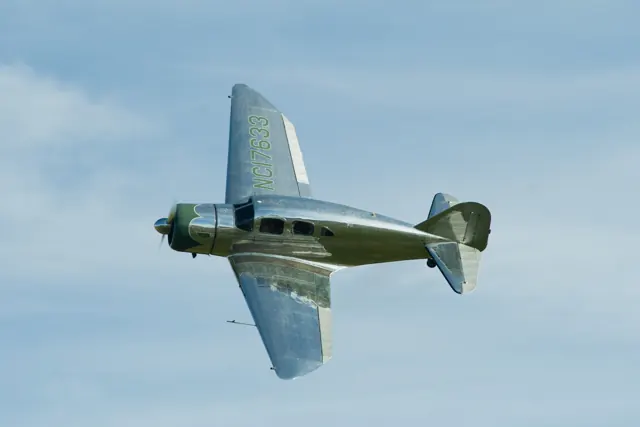
A late-1930s cabin aircraft with metal construction and retractable landing gear.
A pioneering all-metal transport with an enclosed passenger cabin and corrugated skin.
The purpose-built Ryan monoplane used by Charles Lindbergh for his 1927 solo Atlantic crossing.
Cessna's retractable-gear Centurion, a high-wing touring aircraft.
A 1920s transport family that developed from a single-engine airliner into a trimotor.
The second-generation Harrier, designed around vectored thrust and short-field operation.
A self-launching sailplane family with its engine inside the fuselage and a folding nose propeller.
This is AirframeDB’s first release. More features and aircraft research are planned. Leave your email if you’d like occasional updates.