Find aircraft background, systems descriptions and manuals for the aircraft you are researching. Each note keeps its source and version context close by.
Simulator manuals describe the developer’s implementation. Aircraft background is research-based; pilot accounts describe an individual’s experience. Coverage here is limited to the selected notes and linked resources, not the full contents of every manual.
Boom XB-1 · Microsoft Flight Simulator · MSFS 2024
Pitch feel and roll response are different mechanisms
The XB-1 guide explicitly states that the aircraft has neither an autopilot nor fly-by-wire. It distinguishes pitch Q-feel scheduling from a roll-ratio changer: the latter changes control-surface response without changing feel. That is a useful technical distinction in a modern-looking experimental aircraft.
MSFS2024 XB1 manual1.0 · PDF pp.6,27-28
Boom XB-1
Boom's XB-1 is an experimental aircraft, not a passenger-carrying version of Overture. Its slender fuselage and highly swept wing are paired with three General Electric J85 engines. The demonstrator first flew in March 2024 and reached supersonic flight during its 2025 test programme.
Its value in a simulator is the chance to examine a specialised experimental cockpit and an unusual flight envelope. The developer's guide describes conventional flight controls and specific pitch-feel and roll mechanisms; the aircraft should not be described as fly-by-wire simply because it is modern.
Aircraft / family
Bristell B23
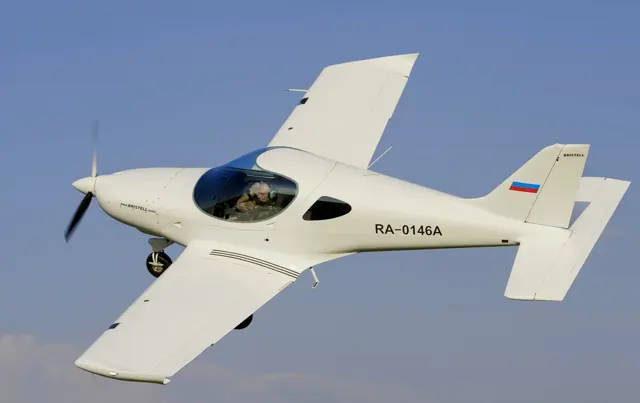
The Bristell name covers related light aircraft from BRM Aero, including the B23 represented by Airfoillabs. The collected family reference describes Milan Bristela's low-wing, side-by-side design lineage. Specifications and photographs need their own model labels: the Bristell Classic and B23 should not silently inherit each other's weights or certification details.
Britten-Norman Islander
Britten-Norman designed the Islander in the 1960s as a light transport. Its roles span regional passenger services, utility work and military operations. Piston and turbine implementations appear in the simulator catalogue, with their own package names and documentation. The long production history makes variant and equipment context especially useful when comparing examples.
CAP 4 Paulistinha · Microsoft Flight Simulator · MSFS 2024
Microsoft Flight Simulator aircraft manuals
CAP 4 Paulistinha
The Paulistinha belongs to the history of Brazilian flying clubs and basic aviation training. Its braced high wing, enclosed tandem cabin and tailwheel undercarriage follow the practical light-aircraft pattern of the period.
The CAP-4 name identifies a particular development within that history. In a catalogue full of large jets and elaborate glass cockpits, it offers a different scale of aircraft: a compact trainer whose structure and controls are comparatively easy to understand from the cockpit and exterior.
Aircraft / family
Hawk Arrow II · Microsoft Flight Simulator · MSFS 2024
Trim on the stick, brakes by hand
The Arrow II manual's cockpit diagram identifies trim buttons on the control stick and separate hand-operated left and right brake levers. Those details distinguish its controls from the pedal-brake arrangement familiar in many larger light aircraft.
Archived simulator manual; installed package revision not observed · PDF p.5
CGS Hawk Arrow II
Chuck Slusarczyk developed the Hawk from his experience with hang gliders and early powered ultralights. The engine and propeller sit behind the cabin, leaving the view ahead unobstructed. The family includes both single-seat and tandem two-seat aircraft.
The Arrow II in MSFS is the two-seat development described by its own manual. Its cockpit includes stick-mounted trim controls and separate hand-operated brake levers. A photograph of a single-seat Hawk illustrates the family but should not be presented as the Arrow II itself.
Aircraft / family
152 · Microsoft Flight Simulator · MSFS 2024
Microsoft Flight Simulator aircraft manuals
152 Aerobat · Microsoft Flight Simulator · MSFS 2024
Microsoft Flight Simulator aircraft manuals
Cessna 152 · Microsoft Flight Simulator · MSFS 2020
Microsoft Flight Simulator aircraft manuals
Cessna 152 Aerobat · Microsoft Flight Simulator · MSFS 2020
Microsoft Flight Simulator aircraft manuals