Find aircraft background, systems descriptions and manuals for the aircraft you are researching. Each note keeps its source and version context close by.
Simulator manuals describe the developer’s implementation. Aircraft background is research-based; pilot accounts describe an individual’s experience. Coverage here is limited to the selected notes and linked resources, not the full contents of every manual.
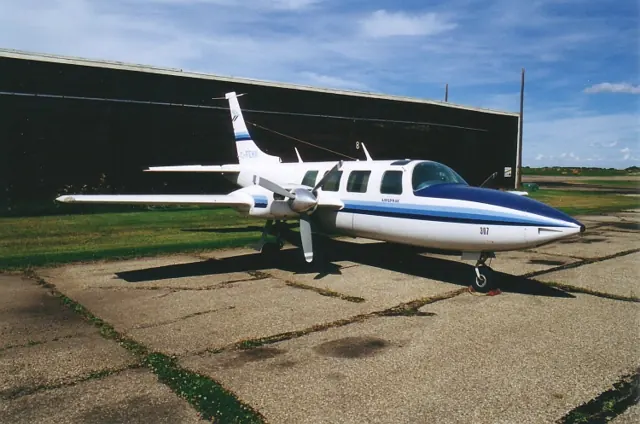
Aerostar 600 · A2A Simulations · MSFS 2020 · MSFS 2024
Aircraft condition and inspection
A2A documents persistent condition by livery, adjustable wear and failure rates, and an interactive walkaround. The tablet controls fuel and payload and provides maintenance, engine-analysis and electrical-system views.
A2A official Aerostar 600 product page, checked 12 September 2026; developer-documented features.
Airbus H145 · Hype Performance Group · Hype Performance Group · MSFS 2020 · MSFS 2024
Failures and maintenance are controlled through the tablet
The guide separates active failures from accumulated damage and degradation. Aircraft Damage can be disabled, while Do All Maintenance resets damage. Mission triggers can introduce failures, giving the package a configurable systems layer beyond its normal cockpit operation.
HPG H145 guide v1.0 · PDF pp.63–65
Airbus H145 · Hype Performance Group · Hype Performance Group · MSFS 2020 · MSFS 2024
Helionix displays and mission equipment
HPG's archived H145 guide identifies the BK-117 D2 and separates Base Pack from Action Pack features. It documents Helionix display pages, GTN750 integration options, failures and maintenance, and the tablet interface. The Action Pack adds equipment such as a hoist, cargo hook and water bucket. The October 2022 PDF covers MSFS 2020; later changes are recorded in the online documentation.
HPG H145 · PDF v1.0, October 2022 · MSFS 2020 · PDF pp.1–8; contents and package scope
727 Series Professional · FlyJSim · X-Plane 11
Wear that continues into the next flight
The optional maintenance system carries equipment wear between flights, including engines, the APU, generators and airframe. The developer also describes annunciator bulbs that can burn out, making condition checks part of the simulated operation.
727 v3 · Maintenance System; Study Level Systems
Boeing 757 · FlightFactor · FlightFactor · X-Plane 11 · X-Plane 12
Failures and maintenance can persist
The published description says wear and misuse carry over to the next flight. A tablet-style menu provides maintenance and failure monitoring alongside fuel, passenger and cargo loading, so a saved aircraft need not begin every flight in fresh condition.
757 v2 · Custom Systems and Failure model; On Screen menus
Boeing 767 · FlightFactor · FlightFactor · X-Plane 11 · X-Plane 12
Aircraft condition follows the aircraft
The product’s persistent maintenance system carries wear and misuse into subsequent flights. Its loading and maintenance pages sit alongside door and ground-equipment controls, while the cabin interaction can report configuration or passenger-comfort problems.
767-300ER Professional · Custom Systems and Failure model; On Screen menus; Custom Sounds
How affordable is maintenance on ultralights?
Wagondriver / 375Taylor · post 6, 17 August 2025
Cessna 172 SP · Laminar Research · X-Plane 12
The bundled X-Plane Skyhawk has its own cockpit reference
Laminar's manual documents the C172's primary controls, trim console, instruments and autopilot. Its illustrated cockpit guide and configuration checks describe the bundled aircraft. Independent C172 developers document their own maintenance systems and avionics.
Archived simulator manual; installed package revision not observed · PDF pp.7-8,45; center console and preflight
Cessna 172 SP · Laminar Research · X-Plane 11
The bundled X-Plane Skyhawk has its own cockpit reference
Laminar's manual documents the C172's primary controls, trim console, instruments and autopilot. Its illustrated cockpit guide and configuration checks describe the bundled aircraft. Independent C172 developers document their own maintenance systems and avionics.
Archived simulator manual; installed package revision not observed · PDF pp.7-8,45; center console and preflight
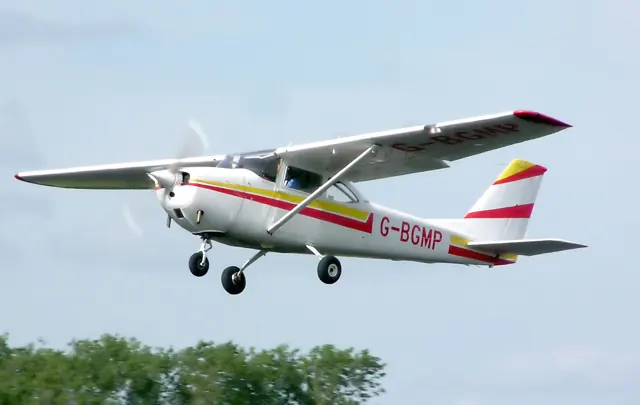
Cessna 172 Skyhawk
The Skyhawk developed from the tailwheel Cessna 170, adopting tricycle landing gear. The first 172 flew in 1955. Its combination of a practical cabin, fixed undercarriage and straightforward layout helped make it a familiar aircraft for personal flying and instruction.
The 172's long history includes different engines, panels and equipment. That variety is especially visible in simulation: a conventional-instrument aircraft, a G1000-equipped version and an add-on with persistent maintenance systems offer different experiences despite sharing the same basic silhouette.
Aircraft / family
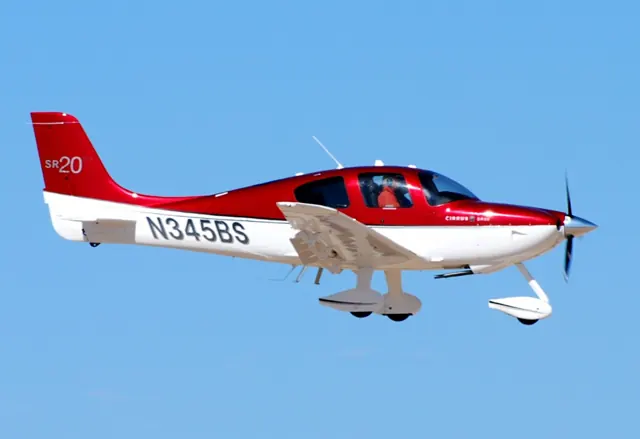
Cirrus SR20 · TorqueSim · TorqueSim · X-Plane 12
Wear and condition remain part of ownership
The package describes a Continental IO-360-ES engine model, individual electrical buses and breakers, and fuel behaviour that includes sloshing and vapour formation. Maintenance and wear cover components such as tyres, brakes and the propeller. Persistent state means returning to an aircraft whose condition reflects earlier sessions.
Developer feature description; no real-aircraft qualification inferred
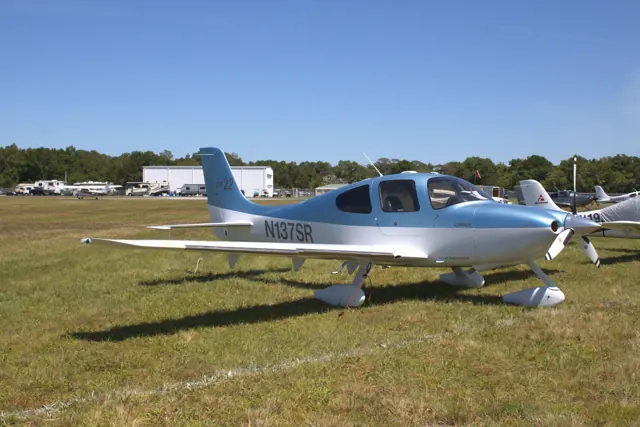
Cirrus SR22
The SR22 entered production in 2001 as a more powerful development of Cirrus's SR20. A low wing, fixed tricycle gear and side-yoke controls define the basic layout. The Cirrus Airframe Parachute System is a prominent part of the aircraft's design.
The SR22 family spans normally aspirated and turbocharged versions as well as different panel generations. The side controls use mechanical connections. Simulator implementations range from bundled aircraft to detailed add-ons with their own engine, maintenance and avionics models.
Aircraft / family