Find aircraft background, systems descriptions and manuals for the aircraft you are researching. Each note keeps its source and version context close by.
Simulator manuals describe the developer’s implementation. Aircraft background is research-based; pilot accounts describe an individual’s experience. Coverage here is limited to the selected notes and linked resources, not the full contents of every manual.
Piper PA-30 Twin Comanche
The Piper PA-30 Twin Comanche is a twin-engine light aircraft.
Standard 1963 PA-30 figures, distinguished from the modified Bailey Bullet flown in the article.
Piper PA-31 Navajo · SimCoders · X-Plane 11 · X-Plane 12
An expansion for the Carenado Navajo
SimCoders identifies Carenado’s X-Plane 11 PA-31 as the required base aircraft. The developer documents X-Plane 12 support from REP 4.7.0, including rain effects. Added features cover a custom piston-engine model, turbocharger behaviour, oxygen and vacuum systems, with an option for small differences between the two engines.
Gathered SimCoders page · compatibility milestone, not an observed installed revision
Piper PA-31 Navajo · SimCoders · X-Plane 11 · X-Plane 12
A twin whose condition carries into the next session
REP adds a walkaround, towing, a mass-and-balance tool and maintenance reporting. Its description says battery state and engine temperatures continue across sessions, with elapsed time affecting the next start. An optional economy system attaches virtual costs to fuel and repairs, and the preheater can remain active while the simulator is closed.
Developer-documented ownership and systems features
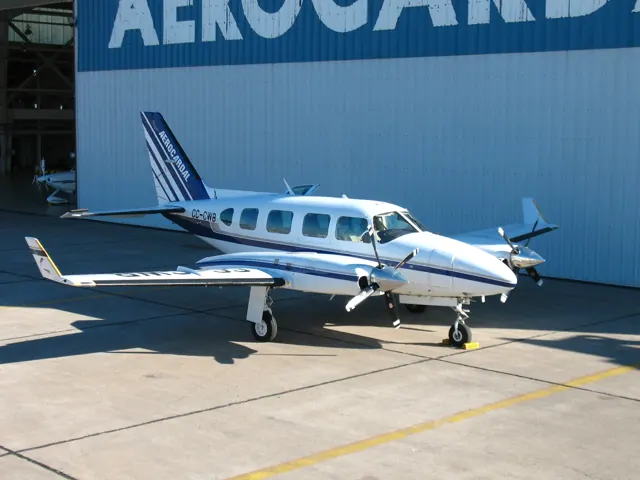
Piper PA-31 Navajo
Piper built the PA-31 Navajo for commuter, cargo and corporate transport, using a low wing, twin engines and tricycle gear. Production ran from 1967 to 1984, including licensed manufacture in Latin America. Versions differed in cabin layout and capability. Simulator enhancement packages identify the base aircraft they require.
Flying the PA-31
Michael Leighton · article dated November 2005; web publication 23 April 2014
The Piper Navajo: The Last of the Lock Haven Planes
Kristin Winter · 20 February 2017
Owner’s Perspective: Navajo
Ronnie Hughes · 9 April 2020; February 2020 cover aircraft
Flight Test: Piper PA-31 Navajo Chieftain
Bob Davy · flight in a 1979 Chieftain
Piper PA-31T Cheyenne II
The Cheyenne II’s pitch system includes a stability augmentation system that varies the elevator force. Piper’s information manual describes an AoA vane feeding a computer, which operates a servo to alter tension in the elevator downspring. The spring supplies an additional longitudinal force as the aircraft’s condition changes.
Early PA-31T / Cheyenne II reference; excludes Cheyenne I and PA-42 III.
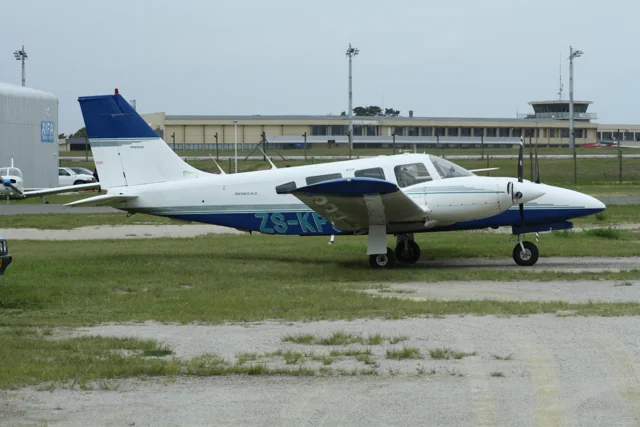
Piper PA-34 Seneca
AOPA traces the Seneca from the original Lycoming-powered aircraft through the turbocharged Seneca II and later versions. Its 1994 pilot report describes the II's longer ailerons, rudder anti-servo tab and removal of the aileron-rudder interconnect. These handling changes distinguish the Seneca II from its predecessor.
Piper PA-34 Seneca
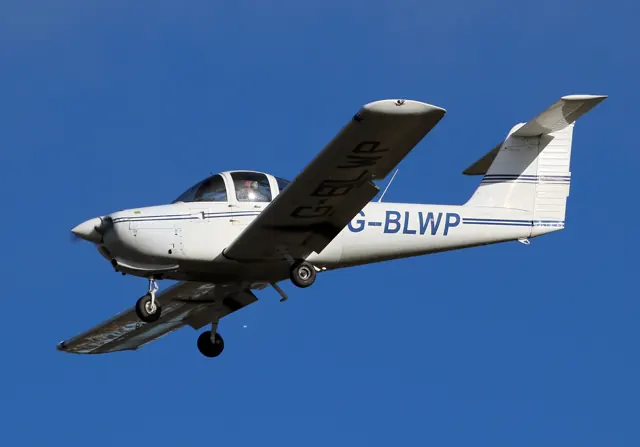
Piper PA-38 Tomahawk · Just Flight · MSFS 2020 · MSFS 2024
A walkaround and persistent wear in MSFS
Just Flight’s MSFS Tomahawk is based on research with G-BNKH at Goodwood. The interactive exterior includes tyre-pressure and fuel-condition checks, while wear affects more than fifteen components and persists between flights. The EFB can repair or randomise the aircraft’s condition as well as select starting states.
Gathered listing names MSFS 2020 and 2024 · revision not stated
Piper PA-38 Tomahawk · Just Flight · MSFS 2020 · MSFS 2024
Choose the cockpit equipment and inspect the systems
The MSFS package lists GNS 430/530 equipment, optional separately supplied GTN integrations, Navigraph charts and SimBrief support. Its documented fuel and electrical models include working breakers, carburettor heat and primer effects, with selectable failures such as plug fouling and vapour lock. Automatic tank switching is offered as a convenience option.
Just Flight’s published feature description