
Start here
A few places to begin, from the aircraft’s story to the people who fly it.
Meet the aircraft
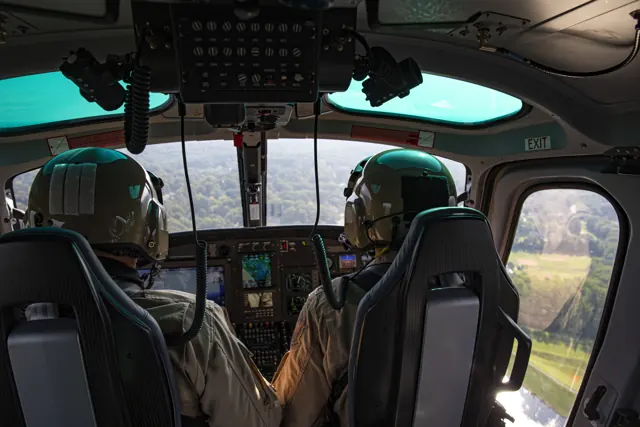
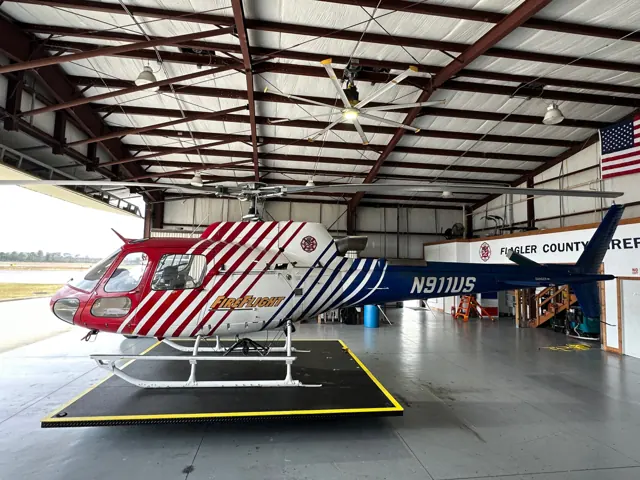
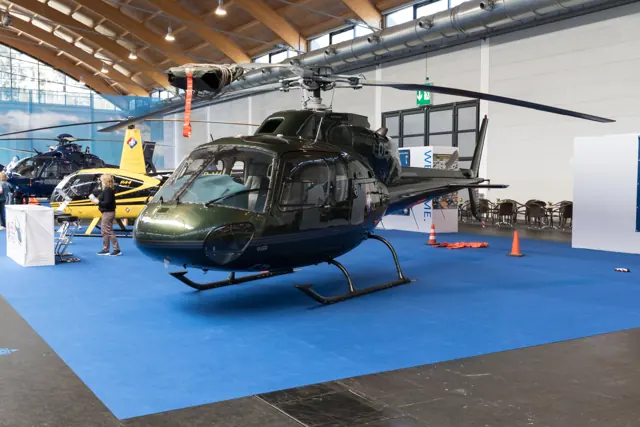
The H125 belongs to the AS350 lineage developed by Aérospatiale and continued through Eurocopter into Airbus Helicopters. Its broad cabin and single turbine support work ranging from passenger transport to observation and external-load operations. The names reflect both the aircraft's history and its markets: Écureuil means squirrel, while AStar is familiar in North America. Older AS350 versions and the modern H125 should not be assumed to have identical equipment.
Aircraft background
Wikipedia contributors · Read more ↗An injured climber and weather closing over the glacier
Dulal recalled a rescue that remained particularly vivid among his mountain flying. A climber at Lobuche had a broken leg and altitude sickness, while poor weather complicated reaching the glacier. Bringing the patient aboard took time, and the clouds continued to close around the landing area as the crew worked. The departure required a difficult judgement between worsening conditions and the patient’s need for help.
Airbus Rotor interview, November 2018. Air Dynasty rescue at Lobuche; the exact flight date and airframe registration are not stated.
Airbus / Rotor · Read more ↗The flight bag reflects the selected mission variant
Sim Update 3 removed the cargo tab from the mass-and-balance interface for the Rescue and Rescue Hoist versions. Microsoft also records clearer EFB wording, increased cockpit lighting and corrected rain effects. Those changes are specific to the bundled H125 at the August 2025 release.
H125 · MSFS 2024
Microsoft Flight Simulator · Read more ↗Into the cockpit
 YouTube
The Nerdy Heli Simmer
Cowansim H125 As350b3 - First Flight and Quick Review
A first-flight review of the original X-Plane 11 release. The creator notes that helicopter audio was added in editing.
CowanSim H125; X-Plane 11; 2022 review
Watch on YouTube ↗Preview images are served by AirframeDB. Videos open on YouTube only when you choose to watch.
Meet Airbus H125
The H125 belongs to the AS350 lineage developed by Aérospatiale and continued through Eurocopter into Airbus Helicopters. Its broad cabin and single turbine support work ranging from passenger transport to observation and external-load operations.
The names reflect both the aircraft's history and its markets: Écureuil means squirrel, while AStar is familiar in North America. Equipment changed through the AS350 and H125 generations. Bundled simulator aircraft and independent add-ons have separate systems descriptions.
Airbus H125
Aircraft type designators
Use the code for the model you are flying. The linked authority lists the applicable aircraft.
History & design
The AS350 family reaches the summit of Everest
The FAI records Delsalle’s 14 May 2005 takeoff from Everest in an AS350 B3. The achievement belongs to a specially prepared test mission in that earlier family variant, rather than establishing ordinary passenger or rescue capability at the summit.
FAI · Didier Delsalle’s twentieth-anniversary Everest interview ↗FAI retrospective and record context
Mountain transport makes the aircraft part of daily life
Airbus’s 2018 operator interviews describe helicopters moving climbers and evacuating people affected by illness or injury in Nepal.
Airbus / Rotor · The H125 at the top of the world ↗Manufacturer-hosted operator interviews
Development milestones
First flight: 27 June 1974
Wikipedia contributors · Eurocopter AS350 Écureuil ↗Eurocopter AS350 Écureuil · family/variant named by the source · Wikipedia revision 1373884153
Pilot accounts
An injured climber and weather closing over the glacier
Dulal recalled a rescue that remained particularly vivid among his mountain flying. A climber at Lobuche had a broken leg and altitude sickness, while poor weather complicated reaching the glacier. Bringing the patient aboard took time, and the clouds continued to close around the landing area as the crew worked.
The departure required a difficult judgement between worsening conditions and the patient’s need for help. Dulal described the flight back through Lukla to Kathmandu as one of his most challenging missions. Dulal also expressed confidence in the H125.
Airbus Rotor interview, November 2018. Air Dynasty rescue at Lobuche; the exact flight date and airframe registration are not stated.
Read the full account · Airbus / Rotor ↗Looking back at Everest and the people behind the flight
Twenty years after Everest, Delsalle’s strongest memories included much more than handling the helicopter. Obtaining permission, arranging supplies and preparing a distant mission on a tight budget had been major obstacles. Engineers and technicians contributed extra time to the project, forming friendships that lasted long after the record flight.
In Nepal, the power of the mountain environment made an equally lasting impression. Delsalle described air movements unlike anything he had expected, reinforcing the respect for terrain he had learned during military training in the Alps. He gave substantial credit for the achievement to the people who designed and prepared the aircraft.
FAI interview · May 2025, recalling the 14 May 2005 Everest landing and takeoff. The record aircraft was an AS350 B3, an earlier family variant; this was an experimental test mission.
Read the full account · FAI ↗Testing a modification against the work he already knew
As a working mountain and rescue pilot, Bourke wanted to understand what the FastFin modification would change in familiar conditions. At Gunnison, the team loaded the test aircraft to resemble his usual missions. The cockpit carried additional instruments and recording equipment, giving the demonstration a different atmosphere from an ordinary working flight.
Bourke noticed smoother heading control during hovering and liked the response as they tried approaches. Dan Smith later demonstrated measured control margins while the displays showed pedal movement. Bourke had not witnessed the unmodified comparison flights, so his own assessment combined this demonstration with experience in other H125s. He came away enthusiastic about the modified aircraft, with his interest rooted in the precision and comfort required when carrying out difficult jobs in the mountains.
Vertical · March 2017. Gunnison evaluation with BLR test pilot Dan Smith in an H125 fitted with the FastFin modification; not an unmodified aircraft.
Read the full account · Vertical ↗In your simulator
Systems, equipment and documentation for each developer’s aircraft.
Compare simulator versions →MSFS 2024H125
Microsoft Flight Simulator · Released
H125
Microsoft Flight Simulator · Released
MSFS 2020 · MSFS 2024H125
CowanSim · Released
H125
CowanSim · Released
X-Plane 11 · X-Plane 12H125
CowanSim · Released
H125
CowanSim · Released
Aircraft specifications
Published figures for the named real-aircraft variant. Simulator equipment and performance can differ.
| Specification | Published value |
|---|---|
| Length | 10.93 m (35 ft 10 in) (fuselage) |
| Height | 3.145 m (10 ft 4 in) |
| Empty weight | 1,174 kg (2,588 lb) |
| Max takeoff weight | 2,250 kg (4,960 lb) |
| Powerplant | 1 × Turbomeca Arriel 2B turboshaft engine, 632 kW (848 hp) |
| Main rotor diameter | 10.7 m (35 ft 1 in) |
| Main rotor area | 89.75 m² (966.1 sq ft) |
| Cruise speed | 245 km/h (152 mph, 132 kn) |
| Range | 662 km (411 mi, 357 nmi) |
| Service ceiling | 4,600 m (15,100 ft) |
| Rate of climb | 8.5 m/s (1,670 ft/min) |
Manuals & resources
Find your next read
Choose a topic for a short introduction and a link to the original source. Simulator references identify the developer and edition they cover.
Simulator documentation
The flight bag reflects the selected mission variantH125 · Microsoft Flight Simulator · MSFS 2024
Sim Update 3 removed the cargo tab from the mass-and-balance interface for the Rescue and Rescue Hoist versions. Microsoft also records clearer EFB wording, increased cockpit lighting and corrected rain effects. Those changes are specific to the bundled H125 at the August 2025 release.
MSFS 2024 Sim Update 3 · 1.5.27.0, 20 August 2025
Microsoft Flight Simulator · Read the source ↗Stability assistance and upper modes do different jobsH125 · CowanSim · MSFS 2020 · MSFS 2024
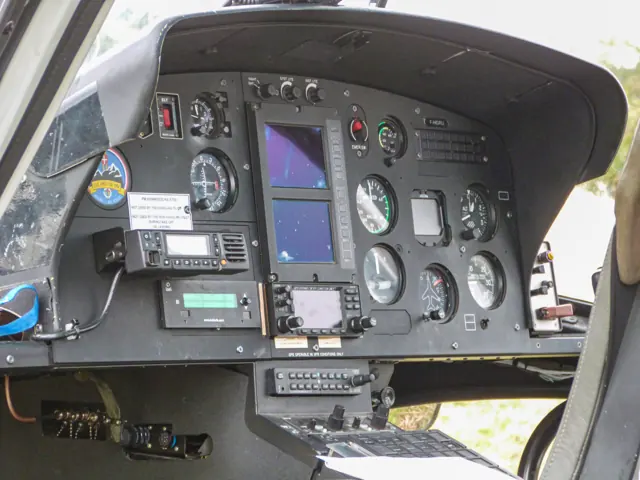
Cowan's HeloSAS uses small cyclic corrections to stabilise the helicopter. The manual distinguishes force-trim behaviour with SAS engaged and disengaged, and explains the difference between spring-centred and non-centring controls. Its upper autopilot modes become selectable above 44 knots in the documented implementation. Stability assistance, rotor-speed governing and route-following modes are separate systems.
Archived document; installed package version not observed · PDF pp.1-2
CowanSim · Read the source ↗Disconnecting an upper mode can leave SAS activeH125 · CowanSim · X-Plane 11 · X-Plane 12
The X-Plane SAS guide distinguishes trim release, upper-mode disconnection and the underlying stability system. Its published force-trim-release and autopilot-disconnect commands have different effects: disconnecting the upper modes can preserve SAS. The documented 44-knot threshold applies to mode availability, not to a universal helicopter operating limit.
Archived X-Plane SAS/AP manual · PDF pp.1-4
CowanSim · Read the source ↗Separate controls for trim, hydraulics and mission equipmentH125 · CowanSim · X-Plane 11 · X-Plane 12
The X-Plane H125 manual identifies cyclic trim, force-trim release and autopilot-off controls. It also describes the collective-mounted hydraulic switch and separate sling-load and servo-test controls. These functions have distinct purposes even when a desktop setup assigns several of them to buttons on the same device.
Cowan H125 guide copyright 2022 · PDF pp.8,21-24
CowanSim · Read the source ↗The VEMD guide includes a significant version limitationH125 · CowanSim · X-Plane 11 · X-Plane 12
The 2022 guide illustrates engine checks and performance pages, but explicitly says the IGE and OGE performance calculations were unfinished in that version. The archived manual leaves the implementation status of later versions open.
Gathered Cowan X-Plane H125 guide · PDF pp.13–19
CowanSim · Read the source ↗Display popups and a post-flight report extend the panelH125 · CowanSim · X-Plane 11 · X-Plane 12
The guide allows either VEMD screen to be popped out onto another monitor. Its flight-report description includes flight duration, engine-cycle information and recorded limitations or failures. The manual describes the engine-cycle counters as partial records.
Gathered Cowan X-Plane H125 guide · PDF pp.18–19
CowanSim · Read the source ↗Pilot account
An injured climber and weather closing over the glacierAirbus Rotor interview, November 2018. Air Dynasty rescue at Lobuche; the exact flight date and airframe registration are not stated.
Dulal recalled a rescue that remained particularly vivid among his mountain flying. A climber at Lobuche had a broken leg and altitude sickness, while poor weather complicated reaching the glacier. Bringing the patient aboard took time, and the clouds continued to close around the landing area as the crew worked. The departure required a difficult judgement between worsening conditions and the patient’s need for help.
Shashwot Dulal
Airbus / Rotor · Read the source ↗Looking back at Everest and the people behind the flightFAI interview · May 2025, recalling the 14 May 2005 Everest landing and takeoff. The record aircraft was an AS350 B3, an earlier family variant; this was an experimental test mission.
Twenty years after Everest, Delsalle’s strongest memories included much more than handling the helicopter. Obtaining permission, arranging supplies and preparing a distant mission on a tight budget had been major obstacles. Engineers and technicians contributed extra time to the project, forming friendships that lasted long after the record flight. In Nepal, the power of the mountain environment made an equally lasting impression.
Didier Delsalle
FAI · Read the source ↗Read the original documentation from the people who created it. Manuals open on their publisher’s website.
Manual
Microsoft Flight Simulator aircraft manualsMicrosoft / aircraft developers CowanSim H125 user manual · MSFSCowanSim CowanSim manualsCowanSim SAS Autopilot ManualCowanSim SAS ManualCowanSim User ManualCowanSim X-Plane aircraft and avionics manualsLaminar ResearchAircraft background
Eurocopter AS350 ÉcureuilWikipedia contributors · Research background · Wikipedia revision 1373884153 · retrieved 2026-09-12Resource
MSFS 2024 FAQ and edition aircraft inventoryMicrosoftProduct
H125 (AS350B3e) for MSFSCowanSim · Official developer / designated store catalogue · checked 2026-09-12 H125 (AS350B3e) for X-PlaneCowanSim · Official developer / designated store catalogue · checked 2026-09-12Type designator
ICAO Doc 8643 — aircraft type designatorsInternational Civil Aviation Organization · Public search data retrieved 2026-09-14; authority update 2026-09-03Developer documentation
MSFS 2024 Sim Update 3 release notesMicrosoft Flight Simulator · Publisher announcement or release notesBuilt-in force-feedback profiles
Read the documentary basis, editable starting settings and remaining questions for the aircraft you fly. Each explanation refers to the exact profile revision shown.
Catalogue programme-20261022-v1 · 7 profile choices
CowanSim H125 / AS350B3e
CowanSim · Free and Pro · Revision 6 · Inherited starting point
MSFS 2020 · MSFS 2024
CowanSim H125 / AS350B3e: Nominal cyclic centering represents the boosted control arrangement without adding an unmodeled servo-transparency force.
CowanSim H125 / AS350B3e
CowanSim · Free and Pro · Revision 2 · Inherited starting point
X-Plane 12
CowanSim H125 / AS350B3e: Nominal cyclic centering represents the boosted control arrangement without adding an unmodeled servo-transparency force.
Airbus H125
Free and Pro · Revision 2 · Partial review
MSFS 2024 · MSFS 2020 · X-Plane 12 · X-Plane 11
Airbus H125: Nominal cyclic centering represents the boosted control arrangement without adding an unmodeled servo-transparency force.
Airbus H125
Free and Pro · Revision 5 · Partial review
MSFS 2024 · MSFS 2020 · X-Plane 12 · X-Plane 11
Hydraulically assisted cyclic controls and mechanical mixing, with three-blade Starflex rotor cues.
AlpineStudio AS350 B1
AlpineStudio · Free and Pro · Revision 1 · Inherited starting point
X-Plane 12
A single-engine utility helicopter known as the Écureuil, Squirrel and AStar.
AlpineStudio AS350 B2 / B2+ VEMD
AlpineStudio · Free and Pro · Revision 1 · Inherited starting point
X-Plane 12
A single-engine utility helicopter known as the Écureuil, Squirrel and AStar.
AlpineStudio AS350 BA
AlpineStudio · Free and Pro · Revision 1 · Inherited starting point
X-Plane 12
A single-engine utility helicopter known as the Écureuil, Squirrel and AStar.
Airbus H125
Airbus H125: Nominal cyclic centering represents the boosted control arrangement without adding an unmodeled servo-transparency force.
Aircraft and simulator scope
- Airbus H125 · MSFS 2024 · family starting point
- Airbus H125 · MSFS 2020 · family starting point
- Airbus H125 · X-Plane 12 · family starting point
- Airbus H125 · X-Plane 11 · family starting point
CowanSim H125 MSFS manual and optional HeliSAS manual; these simulator-specific bindings do not apply automatically to every H125. · Selected choice: Airbus H125. Documentary scope does not establish every variant, add-on revision or simulator binding.
The simulator model and controls
The H125 belongs to the AS350 lineage developed by Aérospatiale and continued through Eurocopter into Airbus Helicopters. Its broad cabin and single turbine support work ranging from passenger transport to observation and external-load operations.
This starting point selects Airbus H125. Its aircraft-level settings do not select a particular developer’s custom systems.
How this profile feels
Spring resistance builds with the selected airspeed response. A separate aerodynamic term adds speed-dependent control load.
Local force trim is off. Autopilot following is off.
Cyclic damping is on. Its configured gain is 0.35; it resists hardware motion separately from the spring and aircraft stabilization.
Controls and trim
The H125/AS350 has hydraulically assisted cyclic controls. The cited AS350 retrofit account describes very little aerodynamic feedback and quick linkage response; servo transparency under high loads is a separate documented phenomenon that this profile does not reproduce. CowanSim's optional HeliSAS distinguishes force-trim procedures for spring-centred and noncentering controls. Its trim-release and reset commands are not continuously readable hardware-neutral positions.
About the values
The gains are normalized profile settings. They describe the chosen effect balance; hand force depends on the device and its output limits. IAS references are tuning values rather than operating limits. Physical acceptance of this revision remains pending.
What the documentation establishes
The CowanSim manual identifies the H125 implementation and distinguishes collective from engine throttle control.
Longitudinal/lateral rotor trim and trim reset are documented; disabled local force trim must not imply the add-on has no trim.
Optional HeliSAS provides attitude stabilization and autopilot modes, with different force-trim behavior for spring and noncentering controls.
The manual documents governor/throttle behavior and hydraulic controls; force-cue magnitudes remain unknown.
HeliSAS states an autopilot operating threshold above 44 knots; this is a mode threshold, not a cyclic force-reference speed.
Documentary review and sources
These decisions describe the documentary basis and remaining gaps for this revision. Aircraft documentation and a starting setting describe different kinds of evidence.
Aircraft and variant
ReviewedThis starting point selects Airbus H125. Its aircraft-level settings do not select a particular developer’s custom systems.
Flight controls
Not yet reviewedThe H125/AS350 has hydraulically assisted cyclic controls. The cited AS350 retrofit account describes very little aerodynamic feedback and quick linkage response; servo transparency under high loads is a separate documented phenomenon that this profile does not reproduce. CowanSim's optional HeliSAS distinguishes force-trim procedures for spring-centred and noncentering controls. Its trim-release and reset commands are not continuously readable hardware-neutral positions.
Trim
ReviewedCyclic damping is on. Its configured gain is 0.35; it resists hardware motion separately from the spring and aircraft stabilization.
Autopilot and stability
ReviewedAutopilot following is off; the configured spring and load retain the hardware feel.
Equipment
ReviewedGear, flap and ground cues follow the selected settings and available simulator-reported states.
Speeds and limits
ReviewedThe indicated-speed references set the profile response scale; they are separate from aircraft operating limits.
Simulator integration
ReviewedThe profile targets msfs2024, msfs2020, xplane12, xplane11. Add-on-specific controls use only the supported references configured by this profile.
Force-feedback settings
Not yet reviewedThe settings define the profile’s effect balance. Device output limits affect physical hand force.
Starting settings and their rationale
These configured values are starting estimates. The explanations describe what each setting controls; physical validation appears separately below.
| Setting | Starting value | What it controls and why |
|---|---|---|
| Spring strength | Starting value0 | What it controls and whyNominal cyclic centering represents the boosted control arrangement without adding an unmodeled servo-transparency force. The baseline spring is 0. Its low-speed blend reaches baseline strength at 60 KIAS. |
| Master force gain | Starting value0.85 | What it controls and whyScales overall profile strength while preserving effect balance, subject to device and output limits. |
| Profile force gain | Starting value0.35 | What it controls and whyThe aerodynamic-load gain is 0.35 with an indicated-speed reference of 120 KIAS. This supplies speed-dependent loading alongside the spring. |
| Force tuning speed/reference | Starting value120.0 kt | What it controls and whySets the IAS reference for aerodynamic loading. It is an estimate, not published cruise TAS or a flight limit. |
| Spring response reference speed | Starting value60.0 kt | What it controls and whySets the IAS where the low-speed blend reaches baseline strength; high-speed stiffening also uses it. |
| Aileron force scale | Starting value1 | What it controls and whyRoll and pitch aerodynamic scales are 1 and 1, respectively. They set the aerodynamic axis balance. No custom spring-travel curve is enabled. |
| Elevator force scale | Starting value1 | What it controls and whyScales pitch aerodynamic loading; pitch spring travel and trim responses are separate settings. |
| Trim feel | Starting valueDisabled | What it controls and whyRetained for compatibility and group membership. Trim relief, rather than this flag, controls centre movement. |
| Trim relief | Starting valueDisabled | What it controls and whyAllows trim relief with supported control law and valid telemetry. Axis authorities set its amount. |
| Autopilot follow | Starting valueDisabled | What it controls and whyAutopilot following is off; the configured spring and load retain the hardware feel. |
| Autopilot neutral hold | Starting valueDisabled | What it controls and whyPermits centering hold during a supported AP state, separate from following a moving target. |
| Output force limit | Starting value0.55 | What it controls and whyCaps directed-force output. Native spring effects and device limits remain separate. |
All 44 starting settings and their rationale
The settings define the profile’s effect balance. Device output limits affect physical hand force.
| Setting | Starting value | What it controls and why |
|---|---|---|
| Spring strength | Starting value0 | What it controls and whyNominal cyclic centering represents the boosted control arrangement without adding an unmodeled servo-transparency force. The baseline spring is 0. Its low-speed blend reaches baseline strength at 60 KIAS. |
| Spring deadband | Starting value0.02 | What it controls and whySets travel around the centre before the baseline spring resists. Smaller values engage it sooner. |
| Profile force gain | Starting value0.35 | What it controls and whyThe aerodynamic-load gain is 0.35 with an indicated-speed reference of 120 KIAS. This supplies speed-dependent loading alongside the spring. |
| Master force gain | Starting value0.85 | What it controls and whyScales overall profile strength while preserving effect balance, subject to device and output limits. |
| QBlend Enabled | Starting valueEnabled | What it controls and whyAllows baseline spring strength to rise with indicated airspeed where the control law permits it. |
| QSpring Minimum Factor | Starting value1 | What it controls and whySets low-speed spring strength as a fraction of baseline when blending is enabled. One keeps full strength. |
| QSpring Start Knots | Starting value16.8 kt | What it controls and whySets the IAS where the low-speed spring blend starts rising. This is a feel threshold, not a flight limit. |
| Spring response reference speed | Starting value60.0 kt | What it controls and whySets the IAS where the low-speed blend reaches baseline strength; high-speed stiffening also uses it. |
| Force tuning speed/reference | Starting value120.0 kt | What it controls and whySets the IAS reference for aerodynamic loading. It is an estimate, not published cruise TAS or a flight limit. |
| Airspeed spring stiffening gain | Starting value0 | What it controls and whyAdds permitted spring resistance above the full-blend speed. Zero removes this high-speed increase. |
| Airspeed spring stiffening limit | Starting value5 | What it controls and whyLimits the squared airspeed ratio used for high-speed spring stiffening; it is not a device-force cap. |
| Aileron force scale | Starting value1 | What it controls and whyRoll and pitch aerodynamic scales are 1 and 1, respectively. They set the aerodynamic axis balance. No custom spring-travel curve is enabled. |
| Elevator force scale | Starting value1 | What it controls and whyScales pitch aerodynamic loading; pitch spring travel and trim responses are separate settings. |
| Output force limit | Starting value0.55 | What it controls and whyCaps directed-force output. Native spring effects and device limits remain separate. |
| Trim feel | Starting valueDisabled | What it controls and whyRetained for compatibility and group membership. Trim relief, rather than this flag, controls centre movement. |
| Trim relief | Starting valueDisabled | What it controls and whyAllows trim relief with supported control law and valid telemetry. Axis authorities set its amount. |
| Elevator Authority | Starting value0.3 | What it controls and whyScales supported pitch-trim relief and permitted centre movement. Zero removes pitch response. |
| Aileron Authority | Starting value0.3 | What it controls and whyScales supported roll-trim relief and permitted centre movement. Zero removes roll response. |
| Force Trim Enabled | Starting valueDisabled | What it controls and whyLocal force trim is distinct from CowanSim's rotor trim and optional HeliSAS procedures; a reset command does not itself provide a physical neutral target. Local force trim is off. The stored latch parameters are inactive; the profile does not supply a local hold-where-left neutral. |
| GLoad Enabled | Starting valueDisabled | What it controls and whyAllows load-factor changes to modify permitted spring laws. Passive fly-by-wire feel can suppress it. |
| Rate Damping Enabled | Starting valueEnabled | What it controls and whyEnables rate damping with the configured coefficients and control law. |
| Autopilot follow | Starting valueDisabled | What it controls and whyAutopilot following is off; the configured spring and load retain the hardware feel. |
| Autopilot follow authority | Starting value0.05 | What it controls and whySets admitted AP-follow gain, not a percentage of travel. Runtime ownership and input limits still apply. |
| Autopilot neutral hold | Starting valueDisabled | What it controls and whyPermits centering hold during a supported AP state, separate from following a moving target. |
| Autopilot neutral hold strength | Starting value0.6 | What it controls and whySets admitted AP neutral-hold strength; inactive while neutral hold is disabled. |
| Enabled | Starting valueEnabled | What it controls and whyEnables aerodynamic cues; each still needs nonzero strength and its simulator conditions. |
| Gain | Starting value0 | What it controls and whySets stall-buffet strength. Zero removes the cue without changing simulator stalls or warnings. |
| Gain | Starting value0 | What it controls and whySets high-Mach buffet strength; onset and full-strength thresholds are separate. |
| Gain | Starting value0 | What it controls and whySets flap buffet at the configured position and speed gates. Flap movement texture is separate. |
| Maximum flap index | Starting value1 | What it controls and whySets the final flap index for detent normalization. UP plus three detents uses maximum index3. |
| Minimum flap index | Starting value1 | What it controls and whySets the first flap detent that admits buffet; this is a handle index, not degrees. |
| Gain | Starting value0 | What it controls and whySets gear aerodynamic buffet; movement and ground-contact cues are separate. |
| Shaker Enabled | Starting valueDisabled | What it controls and whyPermits shaker at supported warning conditions; the switch does not establish aircraft equipment. |
| Stick shaker amplitude | Starting value0.5 | What it controls and whySets triggered shaker strength; inactive while the shaker feature is disabled. |
| Enabled | Starting valueEnabled | What it controls and whyEnables ground effects; each still needs its own strength and contact or motion telemetry. |
| Gain | Starting value0 | What it controls and whySets rolling texture strength, modified by speed, surface and undercarriage configuration. |
| Gain | Starting value0 | What it controls and whySets gear-bump texture during ground motion, separate from touchdown impact. |
| Gain | Starting value0.5 | What it controls and whySets landing-impact strength; landing telemetry and response shape determine the pulse. |
| Gain | Starting value0 | What it controls and whySets reverse-thrust vibration with valid reverser and engine conditions. Zero removes the cue. |
| Enabled | Starting valueEnabled | What it controls and whyEnables engine cues with nonzero settings and valid running-engine telemetry. |
| Gain | Starting value0.06 | What it controls and whySets estimated engine vibration using configured telemetry and response, not measured cockpit vibration. |
| Enabled | Starting valueEnabled | What it controls and whyEnables accessory cues with configured strengths and observed accessory movement. |
| Gain | Starting value0 | What it controls and whySets texture from observed flap movement; a command without movement does not establish the cue. |
| Gain | Starting value0 | What it controls and whySets texture from observed gear movement, separate from aerodynamic and touchdown effects. |
Limits and open questions
- Cyclic longitudinal/lateral bindings and a hydraulic-system switch are documented; this does not quantify cyclic force.
- Spring/noncentering controller instructions do not calibrate the preset's cyclic force, damping or rotor-vibration amplitudes.
Physical validation
No physical force validation is recorded in this public catalogue for this revision. Documentary review and software checks do not establish how a particular device feels.
Documented interfaces
Source-documented identifiers. Documentation does not prove that every add-on populates a value correctly.
SAS/force_trim_release
Hold/release FTR; SAS engagement gesture described separately.
- Units
- none
- Access
- execute command
shared Cowan XP SAS manual; installed package must supply command
CowanSim · PDF p4; shared SAS command list ↗SAS/autopilot_disconnect
Disconnect upper modes; SAS behavior follows the manual.
- Units
- none
- Access
- execute command
shared Cowan XP SAS manual; installed package must supply command
CowanSim · PDF p4; shared SAS command list ↗Discuss this aircraft (0)
Questions, observations and useful sources from the community.
No published discussions yet. Bring a question or share a useful source.
Open aircraft discussions →Content expanded · What’s new
Something missing or a source that needs attention?
Suggest a correction ↗