
Start here
A few places to begin, from the aircraft’s story to the people who fly it.
Meet the aircraft
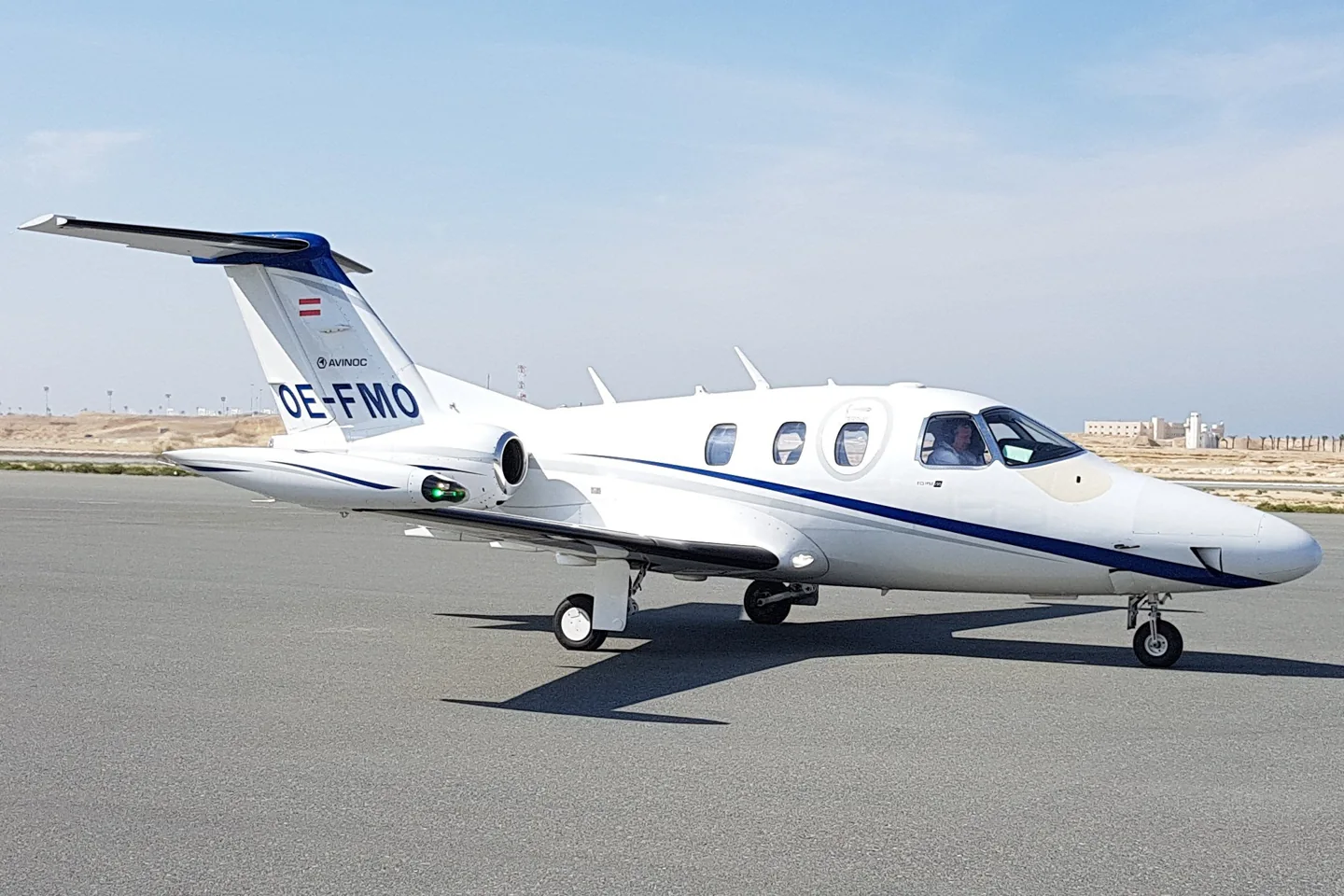
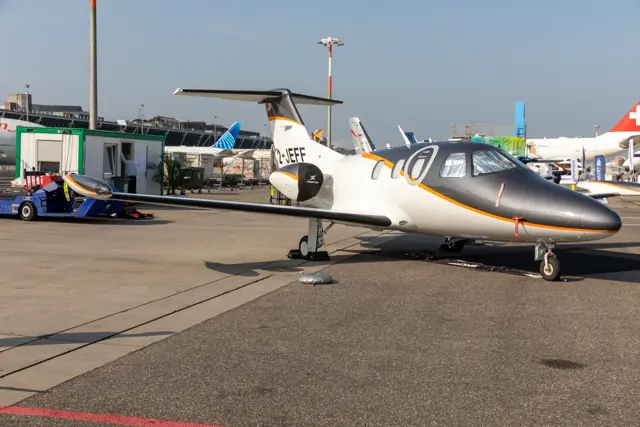
The 550 continued the Eclipse 500 design under Eclipse Aerospace and later One Aviation. It retains the compact, low-wing, twin-engine configuration and six-seat cabin arrangement of that lineage. The real aircraft was certified for single-pilot operation. The simulator listings identify each developer's avionics and supported versions.
Aircraft background
Wikipedia contributors · Read more ↗Returning to an Eclipse with more complete systems
Haines returned to the Eclipse with experience of its much earlier cockpit. In the 550 he found the systems closer to what he expected in a business jet, with the autothrottle particularly useful during descent. Smith also demonstrated the way it responded at the low-speed end of the envelope, giving Haines a chance to see an unfamiliar feature in a controlled setting.
AOPA Pilot · August 2014. Eclipse 550 flight at Charleston with Andy Smith; Haines had previously trained in the earlier 500.
AOPA Pilot · Read more ↗The 550 NG uses Aerobask’s chosen avionics
Aerobask explicitly describes equipping its Eclipse 550 NG with custom Dynon SkyView and Garmin GTN750/650 simulations. This is the developer’s selected cockpit arrangement. The documented package targets X-Plane 11 and includes separate manuals for the aircraft and its avionics.
Eclipse 550 · Aerobask · X-Plane 11
Aerobask · Read more ↗Into the cockpit
 YouTube
KFEAvia · 14 min ·
CAN THE ECLIPSE 550 REALLY DO THIS?! (Full Test Flight)
An Eclipse 550 flight demonstration by an aircraft sales and charter presenter.
Real aircraft · Eclipse 550
Watch on YouTube ↗Preview images are served by AirframeDB. Videos open on YouTube only when you choose to watch.
Meet Eclipse 550
The 550 continued the Eclipse 500 design under Eclipse Aerospace and later One Aviation. It retains the compact, low-wing, twin-engine configuration and six-seat cabin arrangement of that lineage. The real aircraft was certified for single-pilot operation. The simulator listings identify each developer's avionics and supported versions.
Eclipse 550
Eclipse Aerospace → · Explore the family →
Eclipse 550
Wikipedia contributors · Eclipse 550 ↗Aerobask · X-Plane 11 →Aircraft type designators
Use the code for the model you are flying. The linked authority lists the applicable aircraft.
History & design
From the early 500 to the renewed 550
Haines recalls the incomplete avionics capabilities of the early aircraft and describes the later return to production with the 550. The newer model brought autothrottles, revised windshields and backup displays, while antiskid braking addressed a notable earlier omission.
AOPA Pilot · Crossing the threshold ↗Contemporary comparison based on the author’s experience of both generations
Earlier aircraft continued through refurbishment
Feingold’s Total Eclipse was a refurbished 500 rather than a newly built 550. His 2013 ownership account shows an earlier aircraft serving the same personal-travel role, with equipment differences that are important when comparing experiences across the family.
Plane & Pilot · Owners’ Analysis: Eclipse, Mustang, And Phenom ↗Owner’s configuration at the time of the interview
Development milestones
Developed from: Eclipse 500
Wikipedia contributors · Eclipse 550 ↗Eclipse 550 · family/variant named by the source · Wikipedia revision 1346505788
Pilot accounts
Returning to an Eclipse with more complete systems
Haines returned to the Eclipse with experience of its much earlier cockpit. In the 550 he found the systems closer to what he expected in a business jet, with the autothrottle particularly useful during descent. Smith also demonstrated the way it responded at the low-speed end of the envelope, giving Haines a chance to see an unfamiliar feature in a controlled setting.
The last part of the landing still required manual power management after the autothrottle disconnected with the landing configuration. Haines did not regard his approach as perfect, but the touchdown went well. He also welcomed the antiskid braking improvement. His account traces a practical change from his earlier Eclipse experience while acknowledging that software refinements remained part of the aircraft’s development.
AOPA Pilot · August 2014. Eclipse 550 flight at Charleston with Andy Smith; Haines had previously trained in the earlier 500.
Read the full account · AOPA Pilot ↗A first Eclipse flight ends in a gusty Arizona landing
Hayes had seen the Eclipse before, but this invitation finally put him in the cockpit. He found more useful space than its compact exterior suggested, liked the sidestick and appreciated the organised systems displays. The navigation keyboard was less immediately comfortable because its layout differed from the familiar computer keyboard. Initial doubts about the autothrottle softened as he saw how much work it removed during the flight.
Back at Ryan Field, gusty wind made the first landing a more demanding introduction than a calm demonstration might have been. Oden nevertheless let Hayes continue, and he brought the aircraft down successfully. Hayes’s enthusiasm comes through clearly, alongside his reservations about the early vertical-navigation interface. It is a report of an enjoyable first encounter with the 550, including the adjustments that its equipment and the weather demanded.
Plane & Pilot · September 2014. Eclipse 550 demonstration from Ryan Field near Tucson with Ken Oden and Iggy Burkhardt.
Read the full account · Plane & Pilot ↗Photographing a solar eclipse from an Eclipse
The morning began with breakfast planning and uncertainty about cloud cover. Whyte’s Eclipse and the Bonanza photography aircraft needed a clear patch of sky for a picture during totality. The team also discussed the jet’s bright lights, with Whyte asking for warning before they were flashed so that his vision would be protected during the formation flight.
As darkness arrived, streetlights appeared below and the horizon took on an unusual glow. Maintaining the photograph required close coordination between the aircraft. After a prolonged turning orbit, Whyte experienced vertigo and changed the formation arrangement, taking the lead for the journey home.
21 August 2017 mission, reported by Dave Hirschman for AOPA. Whyte flew the 550 with safety pilot Chris Collins; Hirschman piloted the separate Bonanza camera aircraft.
Read the full account · AOPA ↗A retirement plan with room for luggage
Feingold’s aircraft was part of a retirement plan shared with his wife: more time to travel after a career that had included professional flying and running a software company. He chose a Total Eclipse 500 and removed the two aft seats to make more room for baggage. After about 140 hours, the aircraft had become a way to turn those travel ambitions into regular journeys.
He particularly valued pressurisation and arriving with less fatigue. Ownership also exposed equipment he would have liked to improve, including the absence of antiskid braking and a wish for synthetic vision. His account therefore records an earlier stage of the Eclipse family than the 550 reviews. It combines a clear personal reason for owning the aircraft with limitations that mattered in his own use.
Owner interviewed by Bill Cox · Plane & Pilot, July 2013. Total Eclipse 500 family account, preceding the 550; equipment differences are retained.
Read the full account · Plane & Pilot ↗In your simulator
Systems, equipment and documentation for each developer’s aircraft.
X-Plane 11Eclipse 550
Aerobask · Released
Eclipse 550
Aerobask · Released
Aircraft specifications
Published figures for the named real-aircraft variant. Simulator equipment and performance can differ.
| Specification | Published value |
|---|---|
| Length | 33.5 ft (10.2 m) |
| Wingspan | 37.9 ft (11.6 m) |
| Height | 11 ft (3.4 m) |
| Empty weight | 3,634 lb (1,648 kg) |
| Gross weight | 6,034 lb (2,737 kg) |
| Max takeoff weight | 6,000 lb (2,722 kg) |
| Powerplant | 2 × Pratt & Whitney Canada PW610F turbofan , 900 lbf (4.0 kN) thrust each |
| Maximum speed | 432 mph (694 km/h, 375 kn) |
| Range | 1,295 mi (2,084 km, 1,125 nmi) |
| Service ceiling | 41,000 ft (12,000 m) |
| Rate of climb | 3,456 ft/min (17.56 m/s) |
Manuals & resources
Find your next read
Choose a topic for a short introduction and a link to the original source. Simulator references identify the developer and edition they cover.
Simulator documentation
The 550 NG uses Aerobask’s chosen avionicsEclipse 550 · Aerobask · X-Plane 11
Aerobask explicitly describes equipping its Eclipse 550 NG with custom Dynon SkyView and Garmin GTN750/650 simulations. This is the developer’s selected cockpit arrangement. The documented package targets X-Plane 11 and includes separate manuals for the aircraft and its avionics.
Gathered Aerobask Eclipse page
Aerobask · Read the source ↗Cabin controls and loading accompany the flight deckEclipse 550 · Aerobask · X-Plane 11
The VIP touchscreen controller operates in the cabin and as a popup, while passengers and luggage can be configured. Cockpit instruments also have popup displays and mouse-scroll support. Aerobask lists FMOD sound from version 1.1.0, weather effects on the windshield and interiors that vary with the chosen livery.
Published XP11 feature list; no XP12 compatibility inferred
Aerobask · Read the source ↗Pilot account
Returning to an Eclipse with more complete systemsAOPA Pilot · August 2014. Eclipse 550 flight at Charleston with Andy Smith; Haines had previously trained in the earlier 500.
Haines returned to the Eclipse with experience of its much earlier cockpit. In the 550 he found the systems closer to what he expected in a business jet, with the autothrottle particularly useful during descent. Smith also demonstrated the way it responded at the low-speed end of the envelope, giving Haines a chance to see an unfamiliar feature in a controlled setting.
Thomas B. Haines
AOPA Pilot · Read the source ↗A first Eclipse flight ends in a gusty Arizona landingPlane & Pilot · September 2014. Eclipse 550 demonstration from Ryan Field near Tucson with Ken Oden and Iggy Burkhardt.
Hayes had seen the Eclipse before, but this invitation finally put him in the cockpit. He found more useful space than its compact exterior suggested, liked the sidestick and appreciated the organised systems displays. The navigation keyboard was less immediately comfortable because its layout differed from the familiar computer keyboard. Initial doubts about the autothrottle softened as he saw how much work it removed during the flight.
John Hayes
Plane & Pilot · Read the source ↗Read the original documentation from the people who created it. Manuals open on their publisher’s website.
Aircraft background
Eclipse 550Wikipedia contributors · Research background · retrieved 2026-09-12Product
Eclipse 550 NGAerobask · Official developer / designated store catalogue · checked 2026-09-12Type designator
ICAO Doc 8643 — aircraft type designatorsInternational Civil Aviation Organization · Public search data retrieved 2026-09-14; authority update 2026-09-03Built-in force-feedback profiles
Read the documentary basis, editable starting settings and remaining questions for the aircraft you fly. Each explanation refers to the exact profile revision shown.
Catalogue programme-20261022-v1 · 1 profile choice
Eclipse 550
Free and Pro · Revision 2 · Partial review
X-Plane 11
Eclipse 550: The profile supplies its selected jet-cockpit resistance.
Discuss this aircraft (0)
Questions, observations and useful sources from the community.
No published discussions yet. Bring a question or share a useful source.
Open aircraft discussions →Content expanded · What’s new
Something missing or a source that needs attention?
Suggest a correction ↗