


Start here
A few places to begin, from the aircraft’s story to the people who fly it.
Meet the aircraft
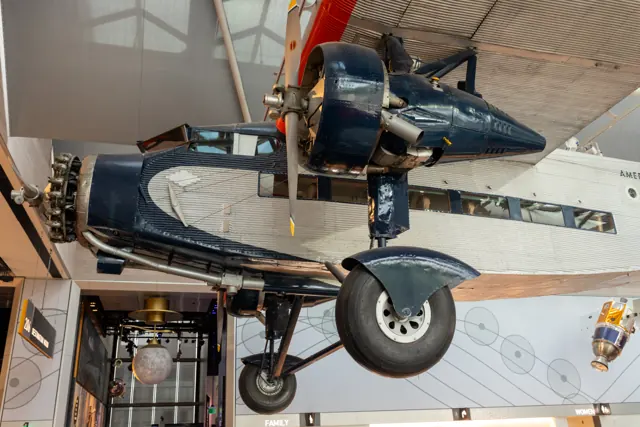
The Trimotor combined a high wing and fixed landing gear with an engine in the nose and one beneath each wing. Ford's industrial name entered the growing air-transport market through a design used by airlines, government operators and military customers.
Aircraft background
Wikipedia contributors · Read more ↗A cold-weather course shared by vintage-aircraft enthusiasts
An invitation from young pilot Jake Libby brought Schiff into a small group determined to fly the Ford. Cold weather at Valle, Arizona, formed the background to a course shared by enthusiasts of different ages. Their common interest made the training a social experience as well as an opportunity to learn an unusual aircraft. The cockpit required Schiff to adjust habits formed in more modern machines.
AOPA Pilot · May 2010. December 2009 training with Bryan Godlove in N414H, a larger 5-AT-C family variant, rather than the 4-AT represented by this page’s main profile.
AOPA Pilot · Read more ↗Switch between the package’s panel arrangements
The manual describes a period-inspired standard panel, an alternate arrangement with a Sperry autopilot, and a modern configuration with GNS530 and GNS430 navigation. A knob beside the chronometer changes the panel. The standard arrangement also includes navigation aids beyond the earliest historical installation.
4AT Trimotor · Microsoft Flight Simulator · MSFS 2024
Microsoft / aircraft developers · Read more ↗Into the cockpit
 YouTube
Erik Johnston · 23 min ·
Ford Trimotor Walkaround Tour Mid America Flight Museum
Mid America Flight Museum's founder tours its Ford Trimotor.
Real aircraft · Ford 4AT Trimotor
Watch on YouTube ↗Preview images are served by AirframeDB. Videos open on YouTube only when you choose to watch.
Meet Ford 4AT Trimotor
The Trimotor combined a high wing and fixed landing gear with an engine in the nose and one beneath each wing. Ford's industrial name entered the growing air-transport market through a design used by airlines, government operators and military customers.
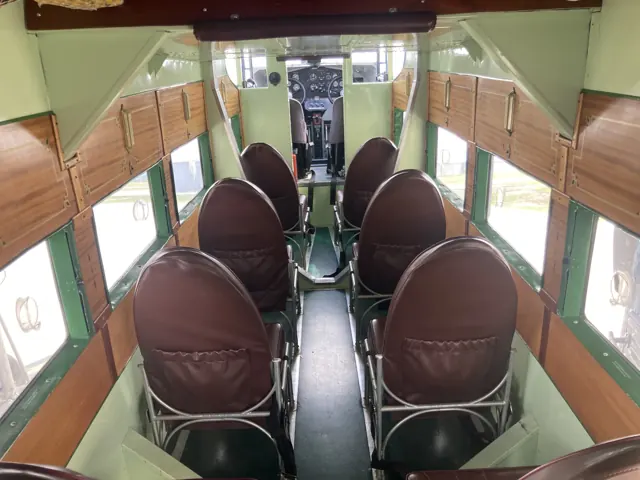
The cabin and cockpit date from the transition between open-cockpit flying and pressurised airliners. The simulator offers optional modern navigation equipment alongside the period installation.
Ford 4AT Trimotor
Aircraft type designators
Use the code for the model you are flying. The linked authority lists the applicable aircraft.
History & design
An island transport enters a new phase of life
Kermit Weeks describes buying his Ford in the late 1980s after its work for Island Airways, serving Lake Erie communities from Port Clinton. He flew it from California to Florida over several days, beginning its transition from practical local transport to his collection.
Fantasy of Flight · Built Ford Tough ↗Owner’s 2009 retrospective
Storm damage leads to a lengthy restoration
Weeks recounts severe damage during Hurricane Andrew after a fuel truck was blown into the aircraft inside its hangar. By 2009, restoration included rebuilding the wing centre section and choosing original-style round-head rivets. Features he described as future plans are not treated as completed work.
Fantasy of Flight · Built Ford Tough ↗Restoration status as described in August 2009
Development milestones
Designer: William Bushnell Stout
First flight: June 11, 1926
Wikipedia contributors · Ford Trimotor ↗Ford Trimotor · family/variant named by the source · Wikipedia revision 1371739290
Pilot accounts
A cold-weather course shared by vintage-aircraft enthusiasts
An invitation from young pilot Jake Libby brought Schiff into a small group determined to fly the Ford. Cold weather at Valle, Arizona, formed the background to a course shared by enthusiasts of different ages. Their common interest made the training a social experience as well as an opportunity to learn an unusual aircraft.
The cockpit required Schiff to adjust habits formed in more modern machines. Engine gauges sat outside on the struts, the trim control was in an unfamiliar position, and substantial control forces made parts of the flying physically demanding. Working through those differences deepened his appreciation of early airline crews.
AOPA Pilot · May 2010. December 2009 training with Bryan Godlove in N414H, a larger 5-AT-C family variant, rather than the 4-AT represented by this page’s main profile.
Read the full account · AOPA Pilot ↗Two short flights become a logbook entry to treasure
Herron’s opportunity began with an invitation from Ed Kornfield, but weather and work made it uncertain whether an AirVenture flight would happen. When a space finally appeared, she joined the Ford’s flying day and took a turn at the controls. The first circuit revealed how much more deliberate rudder use it required than she had initially expected.
On the second flight the coordination began to feel more natural. The view through the open side window, the crowd below and the unusual engine-gauge positions added to the sense of participating in another era of aviation. Kornfield handled the takeoffs and landings, then recorded the brief experience in her logbook before the aircraft passed to its next crew.
AOPA · July 2024. AirVenture flight with instructor Ed Kornfield. Herron flew in the air; Kornfield made the takeoffs and landings. Exact Trimotor variant is not stated.
Read the full account · AOPA ↗The missing engine that became a keepsake
Kimm recalls an apparently ordinary Chicago-bound flight changing abruptly when an engine broke away from its mounting. The crew had talked about emergencies before; now Captain Mal Freeburg had to manage a real one with passengers aboard. Damage around the left wheel added another difficulty as they prepared to land away from their intended destination.
The landing ended without injuries, and another aircraft eventually collected the passengers to continue their journey. Kimm’s later recollection gives the story an unexpectedly domestic ending. After the detached engine was recovered, a mechanic made one of its pistons into an ashtray for him. He kept it as a reminder of the day, turning part of the failed machinery into a personal object associated with the crew’s escape and the people who helped afterwards.
Contrails, November 2009, PDF p.14. Kimm recalls a 12 April 1932 Ford Trimotor flight as first officer with Captain Mal Freeburg; exact variant is not stated.
Read the full account · Retired Northwest Airline Pilots Association ↗In your simulator
Systems, equipment and documentation for each developer’s aircraft.
Compare simulator versions →MSFS 20244AT Trimotor
Microsoft Flight Simulator · Released
4AT Trimotor
Microsoft Flight Simulator · Released
MSFS 20204-AT Trimotor
Microsoft Flight Simulator · Released
4-AT Trimotor
Microsoft Flight Simulator · Released
X-Plane 12Ford Tri-Motor 4-AT XP12
Ted Cook · Released
Ford Tri-Motor 4-AT XP12
Ted Cook · Released
Aircraft specifications
Published figures for the named real-aircraft variant. Simulator equipment and performance can differ.
| Specification | Published value |
|---|---|
| Length | 49 ft 10 in (15.19 m) |
| Wingspan | 74 ft 0 in (22.56 m) |
| Height | 11 ft 9 in (3.58 m) |
| Empty weight | 6,500 lb (2,948 kg) |
| Gross weight | 10,130 lb (4,595 kg) |
| Powerplant | 3 × Wright J-6-9 Whirlwind 9-cylinder air-cooled radial piston engines, 300 hp (220 kW) each for take-off |
| Propellers | 2-bladed fixed-pitch propellers |
| Maximum speed | 132 mph (212 km/h, 115 kn) |
| Cruise speed | 107 mph (172 km/h, 93 kn) at 1,700 rpm |
| Stall speed | 57 mph (92 km/h, 50 kn) |
| Range | 570 mi (920 km, 500 nmi) |
| Service ceiling | 16,500 ft (5,000 m) |
| Rate of climb | 920 ft/min (4.7 m/s) |
Manuals & resources
Find your next read
Choose a topic for a short introduction and a link to the original source. Simulator references identify the developer and edition they cover.
Simulator documentation
Switch between the package’s panel arrangements4AT Trimotor · Microsoft Flight Simulator · MSFS 2024
The manual describes a period-inspired standard panel, an alternate arrangement with a Sperry autopilot, and a modern configuration with GNS530 and GNS430 navigation. A knob beside the chronometer changes the panel. The standard arrangement also includes navigation aids beyond the earliest historical installation.
Gathered TriMotor manual · PDF p.3
Microsoft / aircraft developers · Read the source ↗Period instruments with an optional modern navigation installation4AT Trimotor · Microsoft Flight Simulator · MSFS 2024
The Ford Trimotor package offers modern navigation and autopilot equipment alongside its period instruments. Braking uses the documented lever arrangement rather than conventional toe brakes.
Archived simulator manual; installed package revision not observed · PDF pp.3-4,6
Microsoft / aircraft developers · Read the source ↗The original MSFS 2020 release4-AT Trimotor · Microsoft Flight Simulator · MSFS 2020
Famous Flyer 6 includes wheeled, float and ski configurations with five liveries. Its June 2023 launch had a one-week free offer, followed by paid Marketplace availability; that promotion is historical.
2023-06-23 · release and package scope
Microsoft Flight Simulator Team · Read the source ↗Pilot account
A cold-weather course shared by vintage-aircraft enthusiastsAOPA Pilot · May 2010. December 2009 training with Bryan Godlove in N414H, a larger 5-AT-C family variant, rather than the 4-AT represented by this page’s main profile.
An invitation from young pilot Jake Libby brought Schiff into a small group determined to fly the Ford. Cold weather at Valle, Arizona, formed the background to a course shared by enthusiasts of different ages. Their common interest made the training a social experience as well as an opportunity to learn an unusual aircraft. The cockpit required Schiff to adjust habits formed in more modern machines.
Barry Schiff
AOPA Pilot · Read the source ↗Two short flights become a logbook entry to treasureAOPA · July 2024. AirVenture flight with instructor Ed Kornfield. Herron flew in the air; Kornfield made the takeoffs and landings. Exact Trimotor variant is not stated.
Herron’s opportunity began with an invitation from Ed Kornfield, but weather and work made it uncertain whether an AirVenture flight would happen. When a space finally appeared, she joined the Ford’s flying day and took a turn at the controls. The first circuit revealed how much more deliberate rudder use it required than she had initially expected. On the second flight the coordination began to feel more natural.
Alicia Herron
AOPA · Read the source ↗Developer documentation
Ford Tri-Motor 4-AT XP12 — product listingFord Tri-Motor 4-AT XP12 · X-Plane 12
Product listing captured 2026-09-24; edition scope from the reviewed catalogue
X-Plane.org authorized store · Read the source ↗Read the original documentation from the people who created it. Manuals open on their publisher’s website.
Manual
Ford 4-AT Trimotor ManualMicrosoft / aircraft developers Microsoft Flight Simulator aircraft manualsMicrosoft / aircraft developersAircraft background
Ford TrimotorWikipedia contributors · Research background · Wikipedia revision 1371739290 · retrieved 2026-09-12 Built Ford ToughFantasy of Flight · Kermit Weeks · 15 August 2009Resource
MSFS 2024 FAQ and edition aircraft inventoryMicrosoftDeveloper documentation
Famous Flyer #6 Ford 4-AT Trimotor - Available Now!Microsoft Flight Simulator Team · 2023-06-23 · release and package scopeType designator
ICAO Doc 8643 — aircraft type designatorsInternational Civil Aviation Organization · Public search data retrieved 2026-09-14; authority update 2026-09-03Product
Ford Tri-Motor Model 4-AT XP12 exact product classificationX-Plane.org authorized store · Product listing captured 2026-09-24; edition scope from the reviewed catalogueBuilt-in force-feedback profiles
Read the documentary basis, editable starting settings and remaining questions for the aircraft you fly. Each explanation refers to the exact profile revision shown.
Catalogue programme-20261022-v1 · 6 profile choices
Ted Cook Ford 4-AT Wheels
Ted Cook · Free and Pro · Revision 3 · Inherited starting point
X-Plane 12
Ted Cook Ford 4-AT Wheels: The profile supplies selected three-engine transport resistance.
Ted Cook Ford 4-AT Floats
Ted Cook · Free and Pro · Revision 3 · Inherited starting point
X-Plane 12
Ted Cook Ford 4-AT Floats: The profile supplies selected three-engine transport resistance.
Ted Cook Ford 4-AT-E Wheels
Ted Cook · Free and Pro · Revision 3 · Inherited starting point
X-Plane 12
Ted Cook Ford 4-AT-E Wheels: The profile supplies selected three-engine transport resistance.
Ted Cook Ford Byrd 4-AT Wheels
Ted Cook · Free and Pro · Revision 3 · Inherited starting point
X-Plane 12
Ted Cook Ford Byrd 4-AT Wheels: The profile supplies selected three-engine transport resistance.
Ted Cook Ford Byrd 4-AT Skis
Ted Cook · Free and Pro · Revision 3 · Inherited starting point
X-Plane 12
Ted Cook Ford Byrd 4-AT Skis: The profile supplies selected three-engine transport resistance.
Ford 4AT Trimotor
Free and Pro · Revision 2 · Partial review
MSFS 2024 · MSFS 2020
Ford 4AT Trimotor: The profile supplies selected three-engine transport resistance.
Ted Cook Ford 4-AT Wheels
Ted Cook Ford 4-AT Wheels: The profile supplies selected three-engine transport resistance.
Aircraft and simulator scope
- Ted Cook Ford 4-AT Wheels · Ted Cook · X-Plane 12 · Add-on starting point
The simulator model and controls
The Trimotor combined a high wing and fixed landing gear with an engine in the nose and one beneath each wing. Ford's industrial name entered the growing air-transport market through a design used by airlines, government operators and military customers.
This profile selects Ted Cook Ford 4-AT Wheels for X-Plane 12.
How this profile feels
The profile supplies selected three-engine transport resistance. Spring resistance builds with the selected airspeed response. A separate aerodynamic term adds speed-dependent control load.
Pitch relief is configured separately from the unequal-engine or surface-kit choice. Pitch-trim relief is off. Autopilot following is off.
Controls and trim
The Ford 4AT packages separate ordinary and more powerful engine configurations, wheel and float fits, and a Byrd aircraft with a stronger centre engine. Optional portable GPS equipment is a later cockpit convenience around the period trimotor.
The selected implementation
Ted Cook separates Basic4AT, 4ATE and unequal-engine Byrd aircraft, with wheel/float/ski equipment as named.
About the values
The gains are normalized profile settings. They describe the chosen effect balance; hand force depends on the device and its output limits. IAS references are tuning values rather than operating limits. Physical acceptance of this revision remains pending.
Documentary review and sources
These decisions describe the documentary basis and remaining gaps for this revision. Aircraft documentation and a starting setting describe different kinds of evidence.
Aircraft and variant
InheritedThis profile selects Ted Cook Ford 4-AT Wheels for X-Plane 12.
Flight controls
InheritedThe Ford 4AT packages separate ordinary and more powerful engine configurations, wheel and float fits, and a Byrd aircraft with a stronger centre engine. Optional portable GPS equipment is a later cockpit convenience around the period trimotor.
Trim
InheritedPitch relief is configured separately from the unequal-engine or surface-kit choice. Pitch relief is off, with stored authority 0; roll authority is 0.
Autopilot and stability
InheritedAutopilot following is off; the configured spring and load retain the hardware feel.
Equipment
InheritedTed Cook separates Basic4AT, 4ATE and unequal-engine Byrd aircraft, with wheel/float/ski equipment as named.
Speeds and limits
InheritedThe indicated-speed references set the profile response scale; they are separate from aircraft operating limits.
Simulator integration
InheritedThe profile targets xplane12. Add-on-specific controls use only the supported references configured by this profile.
Force-feedback settings
InheritedThe settings define the profile’s effect balance. Device output limits affect physical hand force.
Starting settings and their rationale
These configured values are starting estimates. The explanations describe what each setting controls; physical validation appears separately below.
| Setting | Starting value | What it controls and why |
|---|---|---|
| Spring strength | Starting value0.74 | What it controls and whyThe profile supplies selected three-engine transport resistance. The baseline spring is 0.74. Its low-speed blend reaches baseline strength at 45 KIAS. |
| Master force gain | Starting value0.85 | What it controls and whyScales overall profile strength while preserving effect balance, subject to device and output limits. |
| Profile force gain | Starting value0.8 | What it controls and whyThe aerodynamic-load gain is 0.8 with an indicated-speed reference of 90 KIAS. This supplies speed-dependent loading alongside the spring. |
| Force tuning speed/reference | Starting value90 kt | What it controls and whySets the IAS reference for aerodynamic loading. It is an estimate, not published cruise TAS or a flight limit. |
| Spring response reference speed | Starting value45.0 kt | What it controls and whySets the IAS where the low-speed blend reaches baseline strength; high-speed stiffening also uses it. |
| Aileron force scale | Starting value0.8 | What it controls and whyRoll and pitch aerodynamic scales are 0.8 and 1, respectively. They set the aerodynamic axis balance. No custom spring-travel curve is enabled. |
| Elevator force scale | Starting value1 | What it controls and whyScales pitch aerodynamic loading; pitch spring travel and trim responses are separate settings. |
| Trim feel | Starting valueDisabled | What it controls and whyRetained for compatibility and group membership. Trim relief, rather than this flag, controls centre movement. |
| Trim relief | Starting valueDisabled | What it controls and whyAllows trim relief with supported control law and valid telemetry. Axis authorities set its amount. |
| Autopilot follow | Starting valueDisabled | What it controls and whyAutopilot following is off; the configured spring and load retain the hardware feel. |
| Autopilot neutral hold | Starting valueDisabled | What it controls and whyPermits centering hold during a supported AP state, separate from following a moving target. |
| Output force limit | Starting value0.55 | What it controls and whyCaps directed-force output. Native spring effects and device limits remain separate. |
All 44 starting settings and their rationale
The settings define the profile’s effect balance. Device output limits affect physical hand force.
| Setting | Starting value | What it controls and why |
|---|---|---|
| Spring strength | Starting value0.74 | What it controls and whyThe profile supplies selected three-engine transport resistance. The baseline spring is 0.74. Its low-speed blend reaches baseline strength at 45 KIAS. |
| Spring deadband | Starting value0.04 | What it controls and whySets travel around the centre before the baseline spring resists. Smaller values engage it sooner. |
| Profile force gain | Starting value0.8 | What it controls and whyThe aerodynamic-load gain is 0.8 with an indicated-speed reference of 90 KIAS. This supplies speed-dependent loading alongside the spring. |
| Master force gain | Starting value0.85 | What it controls and whyScales overall profile strength while preserving effect balance, subject to device and output limits. |
| QBlend Enabled | Starting valueEnabled | What it controls and whyAllows baseline spring strength to rise with indicated airspeed where the control law permits it. |
| QSpring Minimum Factor | Starting value0.55 | What it controls and whySets low-speed spring strength as a fraction of baseline when blending is enabled. One keeps full strength. |
| QSpring Start Knots | Starting value8 kt | What it controls and whySets the IAS where the low-speed spring blend starts rising. This is a feel threshold, not a flight limit. |
| Spring response reference speed | Starting value45.0 kt | What it controls and whySets the IAS where the low-speed blend reaches baseline strength; high-speed stiffening also uses it. |
| Force tuning speed/reference | Starting value90 kt | What it controls and whySets the IAS reference for aerodynamic loading. It is an estimate, not published cruise TAS or a flight limit. |
| Airspeed spring stiffening gain | Starting value0.15 | What it controls and whyThe high-speed spring-stiffening gain is 0.15. It strengthens the permitted spring response above 45 KIAS, with the squared-speed ratio capped at 5. |
| Airspeed spring stiffening limit | Starting value5 | What it controls and whyLimits the squared airspeed ratio used for high-speed spring stiffening; it is not a device-force cap. |
| Aileron force scale | Starting value0.8 | What it controls and whyRoll and pitch aerodynamic scales are 0.8 and 1, respectively. They set the aerodynamic axis balance. No custom spring-travel curve is enabled. |
| Elevator force scale | Starting value1 | What it controls and whyScales pitch aerodynamic loading; pitch spring travel and trim responses are separate settings. |
| Output force limit | Starting value0.55 | What it controls and whyCaps directed-force output. Native spring effects and device limits remain separate. |
| Trim feel | Starting valueDisabled | What it controls and whyRetained for compatibility and group membership. Trim relief, rather than this flag, controls centre movement. |
| Trim relief | Starting valueDisabled | What it controls and whyAllows trim relief with supported control law and valid telemetry. Axis authorities set its amount. |
| Elevator Authority | Starting value0 | What it controls and whyPitch relief is configured separately from the unequal-engine or surface-kit choice. Pitch relief is off, with stored authority 0; roll authority is 0. |
| Aileron Authority | Starting value0 | What it controls and whyScales supported roll-trim relief and permitted centre movement. Zero removes roll response. |
| Force Trim Enabled | Starting valueDisabled | What it controls and whyEnables local force trim, separate from aircraft-owned trim and add-on integration qualification. |
| GLoad Enabled | Starting valueEnabled | What it controls and whyAllows load-factor changes to modify permitted spring laws. Passive fly-by-wire feel can suppress it. |
| Rate Damping Enabled | Starting valueEnabled | What it controls and whyEnables rate damping with the configured coefficients and control law. |
| Autopilot follow | Starting valueDisabled | What it controls and whyAutopilot following is off; the configured spring and load retain the hardware feel. |
| Autopilot follow authority | Starting value0.1 | What it controls and whySets admitted AP-follow gain, not a percentage of travel. Runtime ownership and input limits still apply. |
| Autopilot neutral hold | Starting valueDisabled | What it controls and whyPermits centering hold during a supported AP state, separate from following a moving target. |
| Autopilot neutral hold strength | Starting value0.6 | What it controls and whySets admitted AP neutral-hold strength; inactive while neutral hold is disabled. |
| Enabled | Starting valueEnabled | What it controls and whyEnables aerodynamic cues; each still needs nonzero strength and its simulator conditions. |
| Gain | Starting value0.35 | What it controls and whySets stall-buffet strength. Zero removes the cue without changing simulator stalls or warnings. |
| Gain | Starting value0 | What it controls and whySets high-Mach buffet strength; onset and full-strength thresholds are separate. |
| Gain | Starting value0 | What it controls and whySets flap buffet at the configured position and speed gates. Flap movement texture is separate. |
| Maximum flap index | Starting value3 | What it controls and whySets the final flap index for detent normalization. UP plus three detents uses maximum index3. |
| Minimum flap index | Starting value2 | What it controls and whySets the first flap detent that admits buffet; this is a handle index, not degrees. |
| Gain | Starting value0 | What it controls and whySets gear aerodynamic buffet; movement and ground-contact cues are separate. |
| Shaker Enabled | Starting valueDisabled | What it controls and whyPermits shaker at supported warning conditions; the switch does not establish aircraft equipment. |
| Stick shaker amplitude | Starting value0.5 | What it controls and whySets triggered shaker strength; inactive while the shaker feature is disabled. |
| Enabled | Starting valueEnabled | What it controls and whyEnables ground effects; each still needs its own strength and contact or motion telemetry. |
| Gain | Starting value0.4 | What it controls and whySets rolling texture strength, modified by speed, surface and undercarriage configuration. |
| Gain | Starting value0.25 | What it controls and whySets gear-bump texture during ground motion, separate from touchdown impact. |
| Gain | Starting value0.65 | What it controls and whySets landing-impact strength; landing telemetry and response shape determine the pulse. |
| Gain | Starting value0 | What it controls and whySets reverse-thrust vibration with valid reverser and engine conditions. Zero removes the cue. |
| Enabled | Starting valueEnabled | What it controls and whyEnables engine cues with nonzero settings and valid running-engine telemetry. |
| Gain | Starting value0.12 | What it controls and whySets estimated engine vibration using configured telemetry and response, not measured cockpit vibration. |
| Enabled | Starting valueEnabled | What it controls and whyEnables accessory cues with configured strengths and observed accessory movement. |
| Gain | Starting value0 | What it controls and whySets texture from observed flap movement; a command without movement does not establish the cue. |
| Gain | Starting value0 | What it controls and whySets texture from observed gear movement, separate from aerodynamic and touchdown effects. |
Limits and open questions
- Manual flight controls with conservative IAS-dependent loading; no measured breakout force or travel ratio is available. Mechanical transport-yoke approximation; unequal engines do not create unequal spring strength.
- No public calibrated trim-to-inceptor relationship was established. Automatic trim-neutral movement is disabled.
- PortableG430 supplies navigation, not proof of an autopilot. All AP force modes disabled.
- Read-only motion and accessory telemetry. No guessed custom servo outputs, input compensation or hardware writes outside the production Armed force path. Installed identity remains unobserved. Exact configuration may require saved manual binding when titles omit it.
- 90 KIAS is an estimated control-feel reference, not cruise TAS, V-speeds or an operating limit.
- Spring 0.74, lateral scale 0.8, trim relief 0/0; editable estimates, not measured hand forces.
- Physical and installed-aircraft checks are deferred. Save this profile as the aircraft default if telemetry omits its developer or configuration.
- Only actual accessory-position changes drive movement textures. No pressure-dependent failures, guessed servo outputs or input compensation.
Physical validation
No physical force validation is recorded in this public catalogue for this revision. Documentary review and software checks do not establish how a particular device feels.
Discuss this aircraft (0)
Questions, observations and useful sources from the community.
No published discussions yet. Bring a question or share a useful source.
Open aircraft discussions →Content expanded · What’s new
Something missing or a source that needs attention?
Suggest a correction ↗

