



Start here
A few places to begin, from the aircraft’s story to the people who fly it.
Meet the aircraft
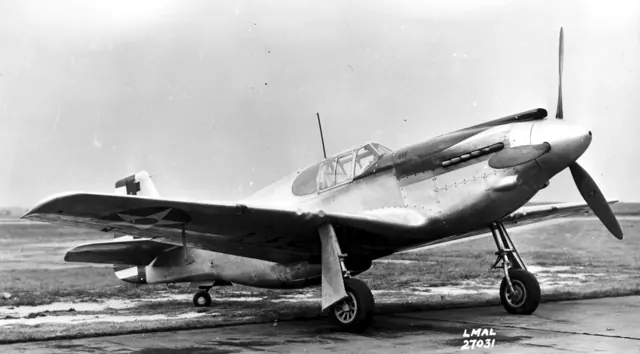
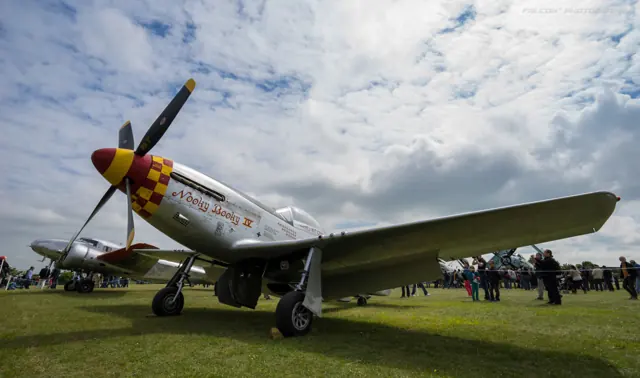
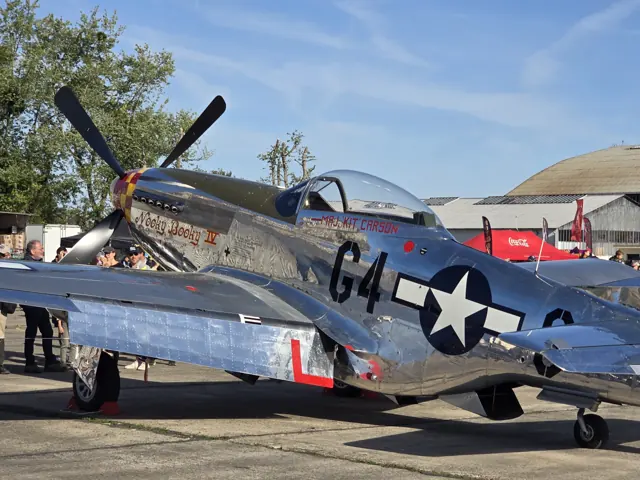
North American designed the Mustang for a British requirement in 1940. Early aircraft used Allison engines; Merlin-powered developments became associated with long-range escort missions. The P-51D introduced the familiar bubble-canopy configuration.
Aircraft background
Wikipedia contributors · Read more ↗A first Mustang solo at sixty-nine
Schiff had wanted to fly a Mustang for years before finally asking owner David Price. The invitation was immediate, but the preparation took more work: T-6 practice was followed by the insurer’s requirement for a Mustang instructor’s endorsement. At Stallion 51, Lee Lauderback provided extensive ground instruction and flight exercises. Schiff compared the seriousness of the course with his airline transition training.
AOPA Pilot · August 2007. Training with Lee Lauderback followed by a solo in David Price’s P-51D Cottonmouth at Camarillo.
AOPA Pilot · Read more ↗Separate X-Plane editions and documented contributors
Khamsin’s page provides separate purchase links for X-Plane 11 and 12 and records “12.0r4 - 1.0” dated 3 May 2024. It credits Skunkcrafts for project management and the SASL plugin, Khamsin for the model and textures, X-Aerodynamics for the flight model, and Daniela Rodriguez Careri for the FMOD sound pack. A paintkit is also linked.
North American P-51 Mustang · X-Plane 11 · X-Plane 12
Khamsin · Read more ↗Into the cockpit
 YouTube
Kermit Weeks Channel - Over 490 Videos to See!
NORTH AMERICAN P-51C MUSTANG - Part 1 - Kermie Cam
Kermit Weeks takes the viewer into an earlier Mustang cockpit.
Real P-51C; related Mustang variant, not a P-51D
Watch on YouTube ↗Preview images are served by AirframeDB. Videos open on YouTube only when you choose to watch.
Meet North American P-51 Mustang
North American designed the Mustang for a British requirement in 1940. Early aircraft used Allison engines; Merlin-powered developments became associated with long-range escort missions. The P-51D introduced the familiar bubble-canopy configuration.
Postwar service was followed by civilian display and racing. Racing Mustangs can carry extensive modifications, with equipment and handling that differ from wartime or restored warbird configurations.
North American P-51 Mustang
North American → · Explore the family →
North American P-51 Mustang
Wikipedia contributors · North American P-51 Mustang ↗Microsoft Flight Simulator · MSFS 2024 →Khamsin · X-Plane 11 · X-Plane 12 →Aircraft type designators
Use the code for the model you are flying. The linked authority lists the applicable aircraft.
History & design
British origins and the Merlin transformation
North American proposed a new fighter when Britain approached it about manufacturing P-40s. The resulting NA-73X flew in October 1940. Later experimental installations of the Merlin engine led to the P-51B and C, giving the Mustang a major role in long-range escort over Europe. Those two designations reflected production at Inglewood and Dallas respectively.
National Museum of the U.S. Air Force · North American P-51D Mustang ↗National Museum of the U.S. Air Force · family development
The bubble canopy and a postwar return
The P-51D’s bubble canopy improved the pilot’s view, while revised armament and ammunition feeds were among its other changes. After the war, jets displaced many Mustangs from frontline service. Redesignated F-51s returned to combat in Korea, where their range supported missions from Japan and they subsequently served in close-support and interdiction roles.
National Museum of the U.S. Air Force · North American P-51D Mustang ↗National Museum of the U.S. Air Force · D-model and postwar context
Development milestones
First flight: 26 October 1940
Wikipedia contributors · North American P-51 Mustang ↗North American P-51 Mustang · family/variant named by the source · Wikipedia revision 1373879916
Pilot accounts
A first Mustang solo at sixty-nine
Schiff had wanted to fly a Mustang for years before finally asking owner David Price. The invitation was immediate, but the preparation took more work: T-6 practice was followed by the insurer’s requirement for a Mustang instructor’s endorsement. At Stallion 51, Lee Lauderback provided extensive ground instruction and flight exercises. Schiff compared the seriousness of the course with his airline transition training.
Waiting to take off alone in Cottonmouth, he felt as anxious as he had on his first solo decades earlier. Once airborne, the acceleration and view were memorable, along with the need to keep adjusting rudder and elevator trim as speed and power changed. He found the aircraft manageable when flown with care.
AOPA Pilot · August 2007. Training with Lee Lauderback followed by a solo in David Price’s P-51D Cottonmouth at Camarillo.
Read the full account · AOPA Pilot ↗A wartime encounter he remembered for decades
Anderson’s chapter opens with a mission that continued returning to his thoughts long after the war. Escorting bombers in a P-51B, he became engaged with German fighters and found himself in a close encounter with an opponent whose ability he respected. He remembers being occupied with the immediate work of flying, watching the other aircraft and protecting his wingman; the fear became easier to recognise afterwards.
The recollection also describes the less visible effort behind the manoeuvring. His hands and feet continually adjusted power, trim and control inputs as the Mustang changed speed. Experience had made much of that coordination automatic. He credited the aircraft with helping him survive, while acknowledging luck as well as skill. The episode remains his personal memory of combat, including the sensations and judgments he carried away from it.
To Fly and Fight · chapter-one memoir excerpt. P-51B escort mission on 27 May 1944; the author’s retrospective account.
Read the full account · Bud Anderson: To Fly and Fight ↗Meeting an aircraft from childhood
Rankin had especially looked forward to the Mustang during his effort to fly fifty-two aircraft in a year. He remembered having a toy Mustang as a child and seeing that interest repeated in his son. Approaching the real aircraft felt like meeting someone famous: he wanted to do it justice. The Collings Foundation flight with Cliff Atkins gave him the chance to use the controls in a two-seat TF-51.
The impression that surprised him most was its smoothness. In the interview, he describes how comfortably it held a straight course once trimmed and how little vibration he noticed. The flight included aerobatics, with Atkins demonstrating an eight-point roll, and Rankin stayed airborne longer than he usually did for the project. His enthusiasm reflects this short introduction to a dual-control Mustang, alongside an experienced instructor.
SRQ Daily interview · December 2017. Approximately forty minutes in a dual-control TF-51 with Cliff Atkins, flying from Pensacola during Rankin’s 52-aircraft project.
Read the full account · SRQ Daily ↗In your simulator
Systems, equipment and documentation for each developer’s aircraft.
Compare simulator versions →MSFS 2024P-51 Mustang
Microsoft Flight Simulator · Released
P-51 Mustang
Microsoft Flight Simulator · Released
X-Plane 11 · X-Plane 12North American P-51 Mustang
Khamsin · Released
North American P-51 Mustang
Khamsin · Released
MSFS 2020P-51D Mustang
Aeroplane Heaven · Released
P-51D Mustang
Aeroplane Heaven · Released
X-Plane 12P-51 XP12 HD
Skunkcrafts · Released
P-51 XP12 HD
Skunkcrafts · Released
Aircraft specifications
Published figures for the named real-aircraft variant. Simulator equipment and performance can differ.
| Specification | Published value |
|---|---|
| Length | 32 ft 3 in (9.83 m) |
| Wingspan | 37 ft 0 in (11.28 m) |
| Height | 13 ft 4.5 in (4.077 m) tail wheel on ground, vertical propeller blade |
| Wing area | 235 sq ft (21.8 m² ) |
| Empty weight | 7,635 lb (3,463 kg) |
| Gross weight | 9,200 lb (4,173 kg) |
| Max takeoff weight | 12,100 lb (5,490 kg) |
| Powerplant | 1 × Packard (Rolls-Royce) V-1650-7 Merlin 12-cylinder liquid cooled engine, 1,490 hp (1,110 kW) at 3,000 rpm; 1,720 hp (1,280 kW) at WEP |
| Propellers | 4-bladed Hamilton Standard constant-speed , variable-pitch , 11 ft 2 in (3.40 m) diameter |
| Maximum speed | 440 mph (710 km/h, 383 kn) |
| Cruise speed | 362 mph (583 km/h, 315 kn) |
| Stall speed | 100 mph (160 km/h, 87 kn) |
| Range | 1,650 mi (2,660 km, 1,434 nmi) with external tanks |
| Service ceiling | 41,900 ft (12,800 m) |
| Rate of climb | 3,200 ft/min (16 m/s) |
Manuals & resources
Find your next read
Choose a topic for a short introduction and a link to the original source. Simulator references identify the developer and edition they cover.
Simulator documentation
Separate X-Plane editions and documented contributorsNorth American P-51 Mustang · Khamsin · X-Plane 11 · X-Plane 12
Khamsin’s page provides separate purchase links for X-Plane 11 and 12 and records “12.0r4 - 1.0” dated 3 May 2024. It credits Skunkcrafts for project management and the SASL plugin, Khamsin for the model and textures, X-Aerodynamics for the flight model, and Daniela Rodriguez Careri for the FMOD sound pack. A paintkit is also linked.
Official developer page · version label reproduced as published; gathered 12 September 2026
Khamsin · Read the source ↗Pilot account
A first Mustang solo at sixty-nineAOPA Pilot · August 2007. Training with Lee Lauderback followed by a solo in David Price’s P-51D Cottonmouth at Camarillo.
Schiff had wanted to fly a Mustang for years before finally asking owner David Price. The invitation was immediate, but the preparation took more work: T-6 practice was followed by the insurer’s requirement for a Mustang instructor’s endorsement. At Stallion 51, Lee Lauderback provided extensive ground instruction and flight exercises. Schiff compared the seriousness of the course with his airline transition training.
Barry Schiff
AOPA Pilot · Read the source ↗A wartime encounter he remembered for decadesTo Fly and Fight · chapter-one memoir excerpt. P-51B escort mission on 27 May 1944; the author’s retrospective account.
Anderson’s chapter opens with a mission that continued returning to his thoughts long after the war. Escorting bombers in a P-51B, he became engaged with German fighters and found himself in a close encounter with an opponent whose ability he respected. He remembers being occupied with the immediate work of flying, watching the other aircraft and protecting his wingman; the fear became easier to recognise afterwards. The recollection also describes the less visible effort behind the manoeuvring.
C. E. “Bud” Anderson, with Joseph P. Hamelin
Bud Anderson: To Fly and Fight · Read the source ↗Developer documentation
P-51D Mustang — product listingP-51D Mustang · MSFS 2020
Product listing captured 2026-09-30; edition scope from the reviewed catalogue
www.aeroplaneheaven.com · Read the source ↗P-51 XP12 HD — product listingP-51 XP12 HD · X-Plane 12
Product listing captured 2026-09-24; edition scope from the reviewed catalogue
X-Plane.org authorized store · Read the source ↗Read the original documentation from the people who created it. Manuals open on their publisher’s website.
Manual
Microsoft Flight Simulator aircraft manualsMicrosoft / aircraft developersAircraft background
North American P-51 MustangWikipedia contributors · Research background · Wikipedia revision 1373879916 · retrieved 2026-09-12 North American P-51D MustangNational Museum of the U.S. Air Force · Family development, escort and postwar rolesResource
MSFS 2024 FAQ and edition aircraft inventoryMicrosoftProduct
P-51D MustangKhamsin · Official developer / designated store catalogue · checked 2026-09-12 Aeroplane Heaven - You're virtually there.™ North American P-51D for MSFS2020www.aeroplaneheaven.com · Product listing captured 2026-09-30; edition scope from the reviewed catalogue Mustang P-51 XP12 HD exact product classificationX-Plane.org authorized store · Product listing captured 2026-09-24; edition scope from the reviewed catalogueType designator
ICAO Doc 8643 — aircraft type designatorsInternational Civil Aviation Organization · Public search data retrieved 2026-09-14; authority update 2026-09-03Built-in force-feedback profiles
Read the documentary basis, editable starting settings and remaining questions for the aircraft you fly. Each explanation refers to the exact profile revision shown.
Catalogue programme-20261022-v1 · 4 profile choices
Aeroplane Heaven P-51D Mustang
Aeroplane Heaven · Free and Pro · Revision 3 · Inherited starting point
MSFS 2020
Aeroplane Heaven P-51D Mustang: Reversible fighter controls motivate aerodynamic stick loading.
Skunkcrafts P-51 Mustang XP12 HD
Skunkcrafts · Free and Pro · Revision 3 · Inherited starting point
X-Plane 12
Skunkcrafts P-51 Mustang XP12 HD: Reversible fighter controls motivate aerodynamic stick loading.
North American P-51 Mustang
Free and Pro · Revision 1 · Partial review
MSFS 2024 · X-Plane 12 · X-Plane 11
North American P-51 Mustang: Reversible fighter controls motivate aerodynamic stick loading.
North American P-51D Mustang
Free and Pro · Revision 3 · Partial review
MSFS 2024 · X-Plane 12 · X-Plane 11
Mechanical warbird controls with speed-dependent stick loading, elevator-trim relief and separate piston-engine cues.
North American P-51 Mustang
North American P-51 Mustang: Reversible fighter controls motivate aerodynamic stick loading.
Aircraft and simulator scope
- North American P-51 Mustang · MSFS 2024 · family starting point
- North American P-51 Mustang · X-Plane 12 · family starting point
- North American P-51 Mustang · X-Plane 11 · family starting point
North American P-51 Mustang · Family sources identify only the variants and product versions described above.
The simulator model and controls
North American designed the Mustang for a British requirement in 1940. Early aircraft used Allison engines; Merlin-powered developments became associated with long-range escort missions. The P-51D introduced the familiar bubble-canopy configuration.
This starting point selects North American P-51 Mustang. Its aircraft-level settings do not select a particular developer’s custom systems.
How this profile feels
Reversible fighter controls motivate aerodynamic stick loading. Spring resistance builds with the selected airspeed response. A separate aerodynamic term adds speed-dependent control load.
Elevator and aileron trim independently relieve their axes. Valid trim provides the configured pressure relief. Autopilot following is off.
Controls and trim
The Mustang manual documents separate elevator and aileron trim with hydraulic gear and flaps. Its accessory emergency release belongs to those hydraulic services. Developer engine and avionics fits retain their own implementation scope.
About the values
The gains are normalized profile settings. They describe the chosen effect balance; hand force depends on the device and its output limits. IAS references are tuning values rather than operating limits. Physical acceptance of this revision remains pending.
What the documentation establishes
Khamsin identifies its XP12 P-51D Mustang product.
Documentary review and sources
These decisions describe the documentary basis and remaining gaps for this revision. Aircraft documentation and a starting setting describe different kinds of evidence.
Aircraft and variant
ReviewedThis starting point selects North American P-51 Mustang. Its aircraft-level settings do not select a particular developer’s custom systems.
Flight controls
Not yet reviewedThe Mustang manual documents separate elevator and aileron trim with hydraulic gear and flaps. Its accessory emergency release belongs to those hydraulic services. Developer engine and avionics fits retain their own implementation scope.
Trim
Not yet reviewedElevator and aileron trim independently relieve their axes. Pitch authority 0.3 provides load relief and permitted centre movement; roll authority is 0.12.
Autopilot and stability
Not yet reviewedAutopilot following is off; the configured spring and load retain the hardware feel.
Equipment
Not yet reviewedGear, flap and ground cues follow the selected settings and available simulator-reported states.
Speeds and limits
Not yet reviewedThe indicated-speed references set the profile response scale; they are separate from aircraft operating limits.
Simulator integration
Not yet reviewedThe profile targets msfs2024, xplane12, xplane11. Add-on-specific controls use only the supported references configured by this profile.
Force-feedback settings
Not yet reviewedThe settings define the profile’s effect balance. Device output limits affect physical hand force.
Starting settings and their rationale
These configured values are starting estimates. The explanations describe what each setting controls; physical validation appears separately below.
| Setting | Starting value | What it controls and why |
|---|---|---|
| Spring strength | Starting value0.74 | What it controls and whyReversible fighter controls motivate aerodynamic stick loading. The baseline spring is 0.74. Its low-speed blend reaches baseline strength at 90 KIAS. |
| Master force gain | Starting value0.85 | What it controls and whyScales overall profile strength while preserving effect balance, subject to device and output limits. |
| Profile force gain | Starting value0.95 | What it controls and whyThe aerodynamic-load gain is 0.95 with an indicated-speed reference of 240 KIAS. This supplies speed-dependent loading alongside the spring. |
| Force tuning speed/reference | Starting value240.0 kt | What it controls and whySets the IAS reference for aerodynamic loading. It is an estimate, not published cruise TAS or a flight limit. |
| Spring response reference speed | Starting value90 kt | What it controls and whySets the IAS where the low-speed blend reaches baseline strength; high-speed stiffening also uses it. |
| Aileron force scale | Starting value0.72 | What it controls and whyRoll and pitch aerodynamic scales are 0.72 and 1, respectively. They set the aerodynamic axis balance. No custom spring-travel curve is enabled. |
| Elevator force scale | Starting value1.0 | What it controls and whyScales pitch aerodynamic loading; pitch spring travel and trim responses are separate settings. |
| Trim feel | Starting valueEnabled | What it controls and whyRetained for compatibility and group membership. Trim relief, rather than this flag, controls centre movement. |
| Trim relief | Starting valueEnabled | What it controls and whyAllows trim relief with supported control law and valid telemetry. Axis authorities set its amount. |
| Autopilot follow | Starting valueDisabled | What it controls and whyAutopilot following is off; the configured spring and load retain the hardware feel. |
| Autopilot neutral hold | Starting valueDisabled | What it controls and whyPermits centering hold during a supported AP state, separate from following a moving target. |
| Output force limit | Starting value0.55 | What it controls and whyCaps directed-force output. Native spring effects and device limits remain separate. |
All 44 starting settings and their rationale
The settings define the profile’s effect balance. Device output limits affect physical hand force.
| Setting | Starting value | What it controls and why |
|---|---|---|
| Spring strength | Starting value0.74 | What it controls and whyReversible fighter controls motivate aerodynamic stick loading. The baseline spring is 0.74. Its low-speed blend reaches baseline strength at 90 KIAS. |
| Spring deadband | Starting value0.045 | What it controls and whySets travel around the centre before the baseline spring resists. Smaller values engage it sooner. |
| Profile force gain | Starting value0.95 | What it controls and whyThe aerodynamic-load gain is 0.95 with an indicated-speed reference of 240 KIAS. This supplies speed-dependent loading alongside the spring. |
| Master force gain | Starting value0.85 | What it controls and whyScales overall profile strength while preserving effect balance, subject to device and output limits. |
| QBlend Enabled | Starting valueEnabled | What it controls and whyAllows baseline spring strength to rise with indicated airspeed where the control law permits it. |
| QSpring Minimum Factor | Starting value0.5 | What it controls and whySets low-speed spring strength as a fraction of baseline when blending is enabled. One keeps full strength. |
| QSpring Start Knots | Starting value20 kt | What it controls and whySets the IAS where the low-speed spring blend starts rising. This is a feel threshold, not a flight limit. |
| Spring response reference speed | Starting value90 kt | What it controls and whySets the IAS where the low-speed blend reaches baseline strength; high-speed stiffening also uses it. |
| Force tuning speed/reference | Starting value240.0 kt | What it controls and whySets the IAS reference for aerodynamic loading. It is an estimate, not published cruise TAS or a flight limit. |
| Airspeed spring stiffening gain | Starting value0.1 | What it controls and whyThe high-speed spring-stiffening gain is 0.1. It strengthens the permitted spring response above 90 KIAS, with the squared-speed ratio capped at 5. |
| Airspeed spring stiffening limit | Starting value5 | What it controls and whyLimits the squared airspeed ratio used for high-speed spring stiffening; it is not a device-force cap. |
| Aileron force scale | Starting value0.72 | What it controls and whyRoll and pitch aerodynamic scales are 0.72 and 1, respectively. They set the aerodynamic axis balance. No custom spring-travel curve is enabled. |
| Elevator force scale | Starting value1.0 | What it controls and whyScales pitch aerodynamic loading; pitch spring travel and trim responses are separate settings. |
| Output force limit | Starting value0.55 | What it controls and whyCaps directed-force output. Native spring effects and device limits remain separate. |
| Trim feel | Starting valueEnabled | What it controls and whyRetained for compatibility and group membership. Trim relief, rather than this flag, controls centre movement. |
| Trim relief | Starting valueEnabled | What it controls and whyAllows trim relief with supported control law and valid telemetry. Axis authorities set its amount. |
| Elevator Authority | Starting value0.3 | What it controls and whyElevator and aileron trim independently relieve their axes. Pitch authority 0.3 provides load relief and permitted centre movement; roll authority is 0.12. |
| Aileron Authority | Starting value0.12 | What it controls and whyScales supported roll-trim relief and permitted centre movement. Zero removes roll response. |
| Force Trim Enabled | Starting valueDisabled | What it controls and whyEnables local force trim, separate from aircraft-owned trim and add-on integration qualification. |
| GLoad Enabled | Starting valueEnabled | What it controls and whyAllows load-factor changes to modify permitted spring laws. Passive fly-by-wire feel can suppress it. |
| Rate Damping Enabled | Starting valueEnabled | What it controls and whyEnables rate damping with the configured coefficients and control law. |
| Autopilot follow | Starting valueDisabled | What it controls and whyAutopilot following is off; the configured spring and load retain the hardware feel. |
| Autopilot follow authority | Starting value0.05 | What it controls and whySets admitted AP-follow gain, not a percentage of travel. Runtime ownership and input limits still apply. |
| Autopilot neutral hold | Starting valueDisabled | What it controls and whyPermits centering hold during a supported AP state, separate from following a moving target. |
| Autopilot neutral hold strength | Starting value0.6 | What it controls and whySets admitted AP neutral-hold strength; inactive while neutral hold is disabled. |
| Enabled | Starting valueEnabled | What it controls and whyEnables aerodynamic cues; each still needs nonzero strength and its simulator conditions. |
| Gain | Starting value0.35 | What it controls and whySets stall-buffet strength. Zero removes the cue without changing simulator stalls or warnings. |
| Gain | Starting value0 | What it controls and whySets high-Mach buffet strength; onset and full-strength thresholds are separate. |
| Gain | Starting value0.14 | What it controls and whySets flap buffet at the configured position and speed gates. Flap movement texture is separate. |
| Maximum flap index | Starting value5 | What it controls and whySets the final flap index for detent normalization. UP plus three detents uses maximum index3. |
| Minimum flap index | Starting value2 | What it controls and whySets the first flap detent that admits buffet; this is a handle index, not degrees. |
| Gain | Starting value0.1 | What it controls and whySets gear aerodynamic buffet; movement and ground-contact cues are separate. |
| Shaker Enabled | Starting valueDisabled | What it controls and whyPermits shaker at supported warning conditions; the switch does not establish aircraft equipment. |
| Stick shaker amplitude | Starting value0.5 | What it controls and whySets triggered shaker strength; inactive while the shaker feature is disabled. |
| Enabled | Starting valueEnabled | What it controls and whyEnables ground effects; each still needs its own strength and contact or motion telemetry. |
| Gain | Starting value0.42 | What it controls and whySets rolling texture strength, modified by speed, surface and undercarriage configuration. |
| Gain | Starting value0.3 | What it controls and whySets gear-bump texture during ground motion, separate from touchdown impact. |
| Gain | Starting value0.75 | What it controls and whySets landing-impact strength; landing telemetry and response shape determine the pulse. |
| Gain | Starting value0 | What it controls and whySets reverse-thrust vibration with valid reverser and engine conditions. Zero removes the cue. |
| Enabled | Starting valueEnabled | What it controls and whyEnables engine cues with nonzero settings and valid running-engine telemetry. |
| Gain | Starting value0.12 | What it controls and whySets estimated engine vibration using configured telemetry and response, not measured cockpit vibration. |
| Enabled | Starting valueEnabled | What it controls and whyEnables accessory cues with configured strengths and observed accessory movement. |
| Gain | Starting value0.12 | What it controls and whySets texture from observed flap movement; a command without movement does not establish the cue. |
| Gain | Starting value0.12 | What it controls and whySets texture from observed gear movement, separate from aerodynamic and touchdown effects. |
Limits and open questions
- The product page gives no cable gearing or force gradient.
- Tab gearing and relief were not calibrated in this generic record.
- Follow is off; no fitted system was established.
- Five nonzero flap indexes require a matched P-51D equipment section.
- The 240-knot loading anchor is not a published force schedule.
- XP12 identity does not verify trim/surface telemetry.
- NACA material exists in starter research; it was not applied as a generic quantitative force calibration.
Physical validation
No physical force validation is recorded in this public catalogue for this revision. Documentary review and software checks do not establish how a particular device feels.
Discuss this aircraft (0)
Questions, observations and useful sources from the community.
No published discussions yet. Bring a question or share a useful source.
Open aircraft discussions →Content expanded · What’s new
Something missing or a source that needs attention?
Suggest a correction ↗