X-Plane
Lockheed C-130 Hercules ↗
A four-engine tactical transport built around a rear loading ramp and access to austere airfields.
1 implementations+ Compare
Explore the aircraft. Find your simulator. Follow the sources.
A four-engine tactical transport built around a rear loading ramp and access to austere airfields.
A push-pull twin with one engine at each end of the central fuselage.
The second-generation Harrier, designed around vectored thrust and short-field operation.
A modern composite twin with a roomy cabin and two wing-mounted piston engines.
A four-seat kit-built touring aircraft that expanded the RV family beyond two-seat designs.
A long-haul twin whose family spans passenger, freight and specialist transport roles.
A four-seat, pressurised kit aircraft with a composite airframe and retractable landing gear.
A Polish utility aircraft designed for short takeoffs and landings.
A two-seat composite trainer with a low wing and a large canopy.
The four-engine wide-body whose raised flight deck created one of aviation's most recognisable profiles.
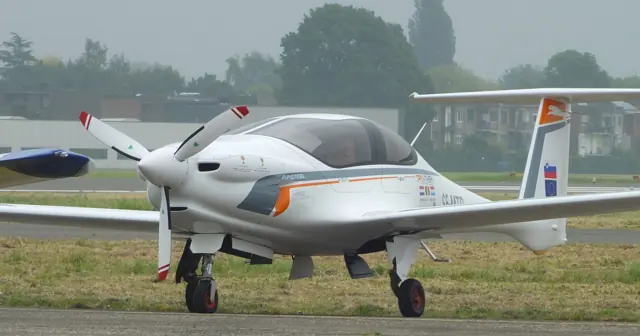
Pipistrel's streamlined four-seat composite-aircraft design.
The Model 525 CitationJet, the starting point of Cessna's CJ and M2 lineage.
A military liaison aircraft built around a high wing, tandem cabin and short-field utility work.
A heavy transport helicopter whose two large rotors remove the need for a tail rotor.
A stretched development of the DC-9 with rear-mounted engines and a five-abreast cabin.
Piper's PA-31 utility twin, used in commuter, cargo and corporate transport.
A very light twin jet developed from the Eclipse 500.
Cirrus's first type-certified aircraft, a composite piston single.
A wooden touring-aircraft family recognisable by the upward-angled outer wing panels.
Epic's experimental light-jet project, represented in simulation by Aerobask.
A streamlined light twin helicopter, with the later Bell 230 in the same family.
SOCATA's touring-aircraft family, including the Tobago and Trinidad.
A four-engine Airbus wide-body developed in parallel with the A330.
A twin-turboprop family whose smaller conventional-tail and larger T-tail branches have distinct identities.
This is AirframeDB’s first release. More features and aircraft research are planned. Leave your email if you’d like occasional updates.