MSFS
Westland Scout / Wasp ↗
A light turbine helicopter whose land-based Scout and naval Wasp branches served different jobs.
1 implementations+ Compare
Explore the aircraft. Find your simulator. Follow the sources.
A light turbine helicopter whose land-based Scout and naval Wasp branches served different jobs.
A light tandem-seat taildragger built around the familiar braced high-wing layout.
A twin-engine utility helicopter with roots in the BK 117 and EC145 families.
An enlarged Velocity kit aircraft with a canard and rear-mounted pusher propeller.
A lightweight short-field aircraft with a specialised wing and tall, shock-absorbing landing gear.
A high-wing twin turboprop developed for regional freight and passenger transport.
A push-pull twin with one engine at each end of the central fuselage.
A utility-aircraft family whose stretched 207 branch trades compact proportions for more cabin space.
An open-cockpit biplane trainer that found a second life in civilian flying.
A small twin-engine amphibian that moved from business transport into military and utility service.
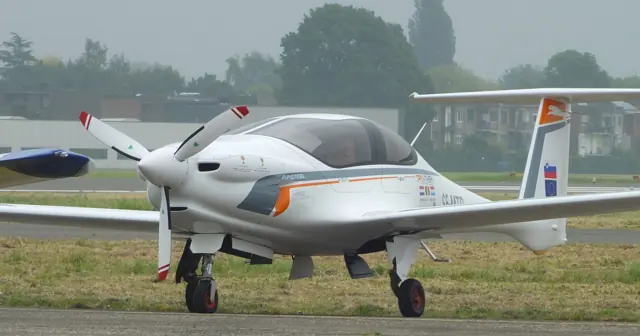
Pipistrel's streamlined four-seat composite-aircraft design.
A compact aerobatic biplane family with both single-seat and tandem-seat branches.
A four-engine airliner that brought pressurised-cabin travel into scheduled service.
Lockheed's tandem-seat Shooting Star jet trainer.
A long-running touring single, familiar in both V-tail and conventional-tail forms.
A twin-aisle Boeing designed alongside the 757's generation of two-pilot flight decks.
A two-seat Tecnam high-wing aircraft combining composite and metal construction.
A compact Japanese twin turboprop with a high wing and pressurised cabin.
A very large single-engine biplane designed for practical work from modest airfields.
A wide-cabin business-jet family that developed from Canadair's original Challenger programme.
A pioneering all-metal transport with an enclosed passenger cabin and corrugated skin.
Cessna's unusual piston-powered helicopter, marketed as the Skyhook.
A modern medium twin-engine helicopter developed as a successor to the Dauphin line.
The CJ4 belongs to Cessna's light-jet line, with two rear-mounted engines and a T-tail.
This is AirframeDB’s first release. More features and aircraft research are planned. Leave your email if you’d like occasional updates.