X-Plane
Embraer Phenom 300 ↗
A light business jet with a swept wing, rear-mounted engines and an integrated flight deck.
1 implementations+ Compare
Explore the aircraft. Find your simulator. Follow the sources.
A light business jet with a swept wing, rear-mounted engines and an integrated flight deck.
A wide-cabin business-jet family that developed from Canadair's original Challenger programme.
A carrier-capable multirole fighter, larger than the earlier Hornet from which it developed.
A heavy-lift helicopter built around an open frame and an external working load.
Regional flying built around a high wing, two turboprops and short sectors.
A very light twin jet developed from the Eclipse 500.
A stretched development of the DC-9 with rear-mounted engines and a five-abreast cabin.
A large amphibious flying boat built around maritime rescue and utility transport.
A two-seat, twin-engine fighter that served naval and land-based air forces in many roles.
A large long-haul twin that introduced Boeing's first commercial fly-by-wire airliner flight controls.
A twin-radial military transport with a rear ramp and short-field design priorities.
The Model 525 CitationJet, the starting point of Cessna's CJ and M2 lineage.
A modern medium twin-engine helicopter developed as a successor to the Dauphin line.
A short-field Savage with leading-edge slats and a distinct Got Friends simulator implementation.
A composite, low-wing touring single with fixed gear and a turbocharged engine.
A small twin-engine amphibian that moved from business transport into military and utility service.
A pressurised single-engine turboprop family that combines a compact cabin with retractable gear.
Lockheed's tandem-seat Shooting Star jet trainer.
A four-seat composite touring and training aircraft developed from Diamond's smaller two-seater.
A compact Japanese twin turboprop with a high wing and pressurised cabin.
A low-wing agricultural Cessna with a cockpit and hopper arranged around the job.
Airbus's first production aircraft, built around a twin-engine wide-body layout.
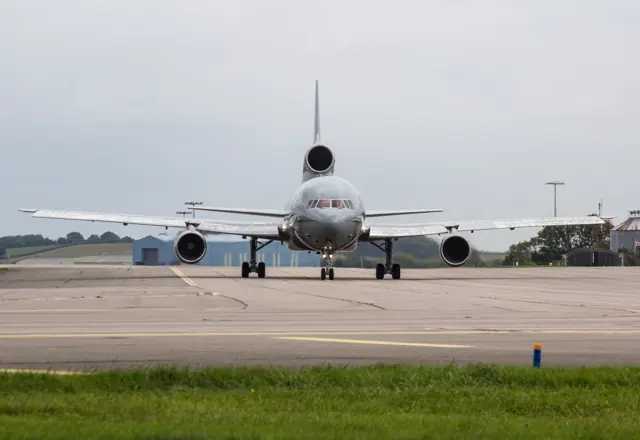
Lockheed's wide-body TriStar, with three RB211 engines and a distinctive tail intake.
A twin-turboprop family whose smaller conventional-tail and larger T-tail branches have distinct identities.
This is AirframeDB’s first release. More features and aircraft research are planned. Leave your email if you’d like occasional updates.