MSFS X-Plane
Piper PA-28 family ↗
A low-wing piston family that spans simple trainers, touring aircraft and retractable-gear Arrows.
3 implementations+ Compare
Explore the aircraft. Find your simulator. Follow the sources.
A low-wing piston family that spans simple trainers, touring aircraft and retractable-gear Arrows.
A twin-engine business jet designed to retain some of the utility flexibility associated with the PC-12.
A Swedish reconnaissance and dive-bombing aircraft from the early 1940s.
An open-cockpit biplane trainer that found a second life in civilian flying.
A two-seat light amphibian with a compact boat hull and a pusher propeller.
A two-seat training single with a high wing and fixed tricycle landing gear.
A close-air-support aircraft with a straight wing, twin tail and two widely separated jet engines.
Beechcraft's Model 76, designed to introduce pilots to twin-engine flying.
A short-field Savage with leading-edge slats and a distinct Got Friends simulator implementation.
A four-engine tactical transport built around a rear loading ramp and access to austere airfields.
A radial-engined utility aircraft closely associated with bush flying and float operations.
A light tandem-seat taildragger built around the familiar braced high-wing layout.
A corrugated-metal transport best known in its three-engine form.
The Stationair utility family, combining a high wing with fixed landing gear.
Lockheed's tandem-seat Shooting Star jet trainer.
Regional flying built around a high wing, two turboprops and short sectors.
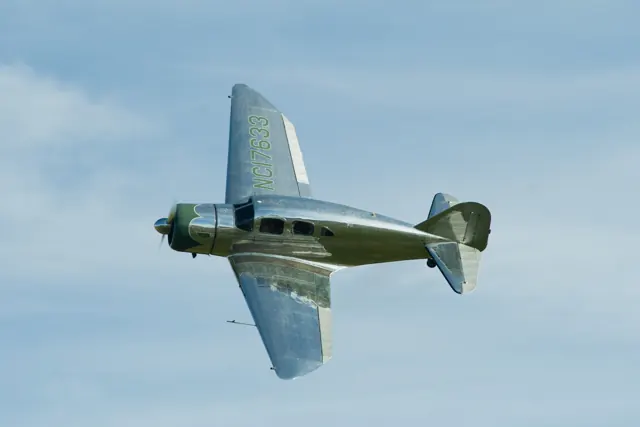
A late-1930s cabin aircraft with metal construction and retractable landing gear.
The Wilga is the real-aircraft starting point for Mike Patey's DRACO and the simulator's DRACO X.
A huge wooden flying-boat prototype that made one brief flight in 1947.
An enclosed, two-seat autogyro with side-by-side seating and a pusher propeller.
A box-shaped utility twin whose cabin and rear access are central to its design.
A corrugated-metal, three-engine transport from the formative years of airline travel.
A shorter wide-body Airbus from the transition to two-pilot, electronic-instrument cockpits.
A four-engine Airbus wide-body developed in parallel with the A330.
This is AirframeDB’s first release. More features and aircraft research are planned. Leave your email if you’d like occasional updates.