MSFS
Fairchild Republic A-10 Thunderbolt II ↗
A close-air-support aircraft with a straight wing, twin tail and two widely separated jet engines.
1 implementations+ Compare
Explore the aircraft. Find your simulator. Follow the sources.
A close-air-support aircraft with a straight wing, twin tail and two widely separated jet engines.
A family of single-aisle airliners built around sidesticks, electronic flight controls and a shared cockpit.
A military transport developed from the DC-3, used for cargo, troops, parachuting and glider towing.
A post-war Businessliner with a radial engine, cabin transport ambitions and tailwheel gear.
The JetRanger and LongRanger family: a familiar turbine-helicopter shape with distinct cabin lengths.
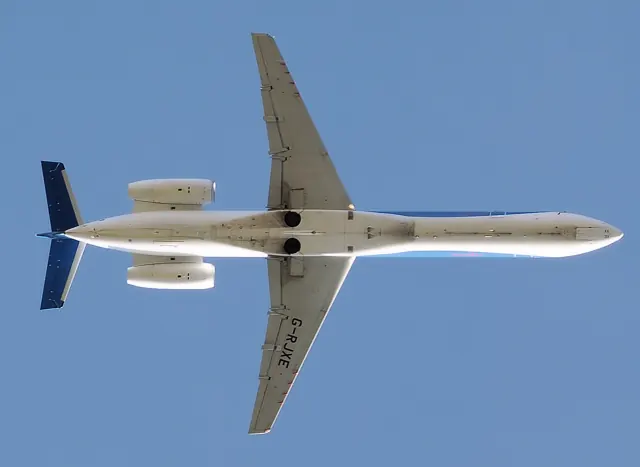
Embraer's regional-jet family, from the ERJ 135 to the longer ERJ 145.
The purpose-built Ryan monoplane used by Charles Lindbergh for his 1927 solo Atlantic crossing.
A two-seat composite trainer with a low wing and a large canopy.
An Italian light aircraft known for military training and aerobatic use.
A 1920s transport family that developed from a single-engine airliner into a trimotor.
A tandem-seat utility aircraft whose light structure and high wing suit bush, towing and recreational work.
TorqueSim's Pocket Rocket, a simulated PT6-powered light aircraft with two gear layouts.
A small three-engine demonstrator created to explore technologies for a future supersonic airliner.
The Mitchell medium bomber, named for aviation advocate Billy Mitchell.
A compact Japanese twin turboprop with a high wing and pressurised cabin.
Beechcraft's Model 76, designed to introduce pilots to twin-engine flying.
A jet-powered military transport designed for both strategic loads and tactical airfield access.
A light turbine helicopter whose land-based Scout and naval Wasp branches served different jobs.
The Huey: a turbine-powered utility helicopter with a broad cabin and an unmistakable two-bladed rotor.
A tandem two-seat sailplane family used for training and cross-country soaring.
The second-generation Harrier, designed around vectored thrust and short-field operation.
A Canadian tandem-seat trainer developed after the Second World War.
The four-engine Flying Fortress, a major American bomber of the Second World War.
A light business jet with a swept wing, rear-mounted engines and an integrated flight deck.
This is AirframeDB’s first release. More features and aircraft research are planned. Leave your email if you’d like occasional updates.