MSFS X-Plane
Beechcraft King Air family ↗
A twin-turboprop family whose smaller conventional-tail and larger T-tail branches have distinct identities.
7 implementations+ Compare
Explore the aircraft. Find your simulator. Follow the sources.
A twin-turboprop family whose smaller conventional-tail and larger T-tail branches have distinct identities.
A military transport developed from the DC-3, used for cargo, troops, parachuting and glider towing.
A close-air-support aircraft with a straight wing, twin tail and two widely separated jet engines.
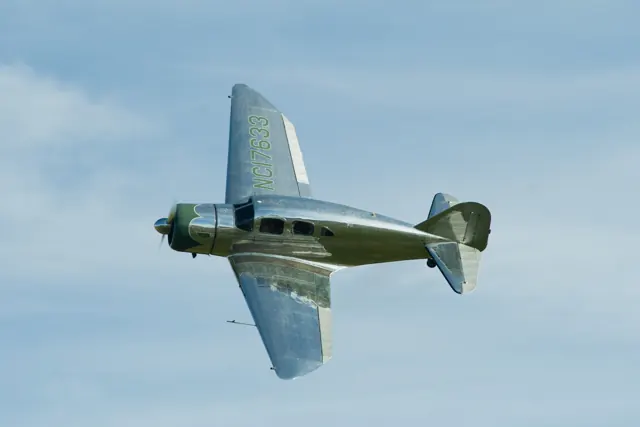
A late-1930s cabin aircraft with metal construction and retractable landing gear.
A wide-cabin business-jet family that developed from Canadair's original Challenger programme.
A streamlined light twin helicopter, with the later Bell 230 in the same family.
The Model 525 CitationJet, the starting point of Cessna's CJ and M2 lineage.
A midsize business jet developed by Bombardier’s Learjet division.
A rear-engined trijet built to bring jet service to shorter routes and smaller airports.
A two-seat composite kit aircraft developed from the Lancair 320.
Avro's delta-wing bomber, developed for Britain's postwar strategic force.
A twin-aisle Boeing designed alongside the 757's generation of two-pilot flight decks.
A four-engine tactical transport built around a rear loading ramp and access to austere airfields.
Piper's PA-31 utility twin, used in commuter, cargo and corporate transport.
Ted Smith's piston twin, later produced by Piper as the Aerostar.
A compact Japanese twin turboprop with a high wing and pressurised cabin.
A carrier-capable multirole fighter, larger than the earlier Hornet from which it developed.
A shorter wide-body Airbus from the transition to two-pilot, electronic-instrument cockpits.
A twin-turboprop regional airliner developed through Swedish and American industrial cooperation.
The second-generation Harrier, designed around vectored thrust and short-field operation.
A twin-engine utility helicopter with roots in the BK 117 and EC145 families.
A tandem-seat light aircraft with a streamlined low-wing layout.
The CJ4 belongs to Cessna's light-jet line, with two rear-mounted engines and a T-tail.
A heavy transport helicopter whose two large rotors remove the need for a tail rotor.
This is AirframeDB’s first release. More features and aircraft research are planned. Leave your email if you’d like occasional updates.