MSFS
Boom XB-1 ↗
A small three-engine demonstrator created to explore technologies for a future supersonic airliner.
1 implementations+ Compare
Explore the aircraft. Find your simulator. Follow the sources.
A small three-engine demonstrator created to explore technologies for a future supersonic airliner.
Two related Dutch regional jets developed from the F28 lineage.
A swept-wing business jet designed around high subsonic cruise speed.
A low-wing agricultural Cessna with a cockpit and hopper arranged around the job.
A military transport developed from the DC-3, used for cargo, troops, parachuting and glider towing.
A four-engine airliner that brought pressurised-cabin travel into scheduled service.
A tailwheel utility single built around a high wing and a substantial working cabin.
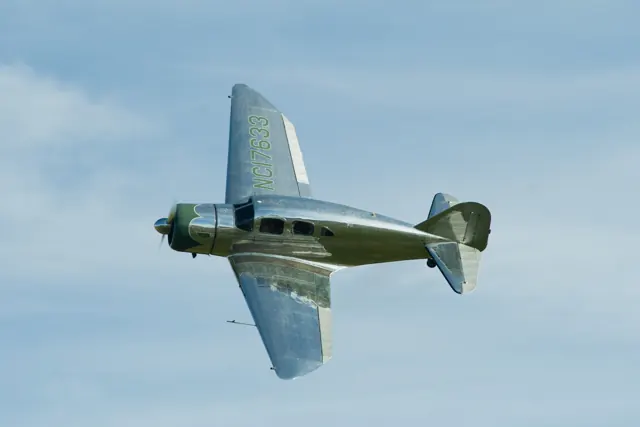
A late-1930s cabin aircraft with metal construction and retractable landing gear.
The Wilga is the real-aircraft starting point for Mike Patey's DRACO and the simulator's DRACO X.
A British jet trainer with tandem seating and a long military training career.
A heavy transport helicopter whose two large rotors remove the need for a tail rotor.
A regional jet family with four small engines, a high wing and a large split tail airbrake.
A long-range trijet developed from the DC-10 with a stretched fuselage and revised wing and cockpit.
A four-abreast regional-jet family spanning the E170, E175, E190 and E195.
A DC-10-derived tanker that combined aerial refuelling with passenger and cargo transport.
A personal jet with one engine above the rear fuselage and a distinctive V-tail.
A four-seat high-wing single that spans generations of conventional instruments and glass cockpits.
A carrier-capable multirole fighter, larger than the earlier Hornet from which it developed.
A modern two-seat piston helicopter designed around the training role.
A single-seat aerobatic monoplane that also became a familiar air-racing aircraft.
A narrow-body twin developed as a new generation of medium-range airliner.
A stretched development of the DC-9 with rear-mounted engines and a five-abreast cabin.
A wooden touring-aircraft family recognisable by the upward-angled outer wing panels.
A cabin-class piston twin designed for commuter, cargo and utility work.
This is AirframeDB’s first release. More features and aircraft research are planned. Leave your email if you’d like occasional updates.