X-Plane
Bombardier Challenger 650 ↗
A wide-cabin business-jet family that developed from Canadair's original Challenger programme.
1 implementations+ Compare
Explore the aircraft. Find your simulator. Follow the sources.
A wide-cabin business-jet family that developed from Canadair's original Challenger programme.
The second-generation Harrier, designed around vectored thrust and short-field operation.
A large long-haul twin that introduced Boeing's first commercial fly-by-wire airliner flight controls.
A high-wing utility turboprop designed for short-field passenger and cargo work.
An all-metal sport and touring aircraft from Bayerische Flugzeugwerke.
A self-launching sailplane family with its engine inside the fuselage and a folding nose propeller.
An advanced trainer known around the world as the Texan, Harvard and SNJ.
A post-war Businessliner with a radial engine, cabin transport ambitions and tailwheel gear.
A compact Italian light twin with a shoulder wing and metal airframe.
A two-seat, twin-engine fighter that served naval and land-based air forces in many roles.
A composite amphibian that carries Dornier's centreline engine arrangement into the turboprop era.
A Swedish reconnaissance and dive-bombing aircraft from the early 1940s.
A long-range twin whose programme emphasised composite construction and more electrically powered systems.
An amphibious turboprop designed around scooping water and delivering it to fires.
A military transport developed from the DC-3, used for cargo, troops, parachuting and glider towing.
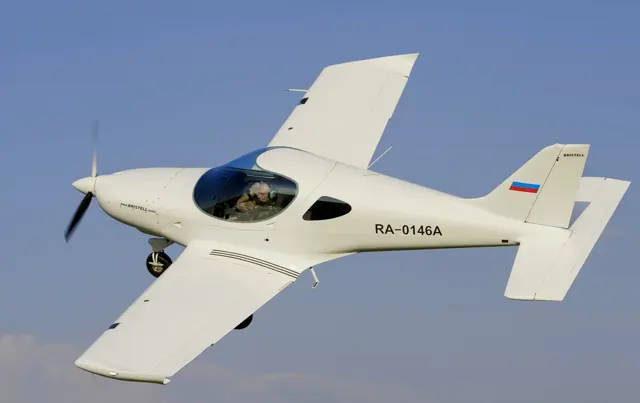
BRM Aero's two-seat B23, represented in MSFS by Airfoillabs.
A long-range strategic bomber with a swept wing and eight jet engines in paired pods.
A utility piston twin designed for commuter and specialist transport missions.
The JetRanger and LongRanger family: a familiar turbine-helicopter shape with distinct cabin lengths.
A box-shaped utility twin whose cabin and rear access are central to its design.
A composite touring single with a whole-aircraft parachute and several generations of avionics.
The purpose-built Ryan monoplane used by Charles Lindbergh for his 1927 solo Atlantic crossing.
A modern utility single whose family includes both tailwheel and nosewheel configurations.
A two-seat naval fighter with variable-sweep wings and a cockpit built around pilot and radar-intercept officer roles.
This is AirframeDB’s first release. More features and aircraft research are planned. Leave your email if you’d like occasional updates.