MSFS X-Plane
Boeing CH-47D Chinook ↗
A heavy transport helicopter whose two large rotors remove the need for a tail rotor.
2 implementations+ Compare
Explore the aircraft. Find your simulator. Follow the sources.
A heavy transport helicopter whose two large rotors remove the need for a tail rotor.
A light tandem-seat taildragger built around the familiar braced high-wing layout.
A compact racing aeroplane built around a large radial engine and very short fuselage.
A long-range twin whose programme emphasised composite construction and more electrically powered systems.
A pressurised single turboprop with a large cargo door and a broad range of working roles.
A twin-turbine Huey descendant with a four-blade main rotor.
Mooney's four-seat piston family, developed through many touring-aircraft variants.
A utility piston twin designed for commuter and specialist transport missions.
Two related Dutch regional jets developed from the F28 lineage.
A high-wing utility turboprop designed for short-field passenger and cargo work.
A modern composite twin with a roomy cabin and two wing-mounted piston engines.
A four-abreast regional-jet family spanning the E170, E175, E190 and E195.
A compact utility helicopter distinguished by its enclosed Fenestron tail rotor.
A streamlined light twin helicopter, with the later Bell 230 in the same family.
The purpose-built Ryan monoplane used by Charles Lindbergh for his 1927 solo Atlantic crossing.
A high-wing utility aircraft known for short-field work and a broad choice of working configurations.
A long-range fighter whose different engine and canopy developments produced several distinct forms.
A lightweight pusher family with an enclosed cabin and a high, braced wing.
A shorter wide-body Airbus from the transition to two-pilot, electronic-instrument cockpits.
A tandem two-seat sailplane designed for instruction and broader soaring use.
The Stationair utility family, combining a high wing with fixed landing gear.
A long-running touring single, familiar in both V-tail and conventional-tail forms.
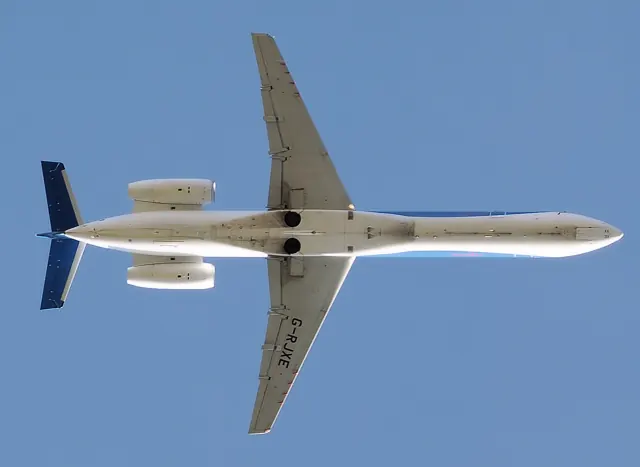
Embraer's regional-jet family, from the ERJ 135 to the longer ERJ 145.
A close-air-support aircraft with a straight wing, twin tail and two widely separated jet engines.
This is AirframeDB’s first release. More features and aircraft research are planned. Leave your email if you’d like occasional updates.