MSFS
Stemme S12G ↗
A self-launching sailplane family with its engine inside the fuselage and a folding nose propeller.
1 implementations+ Compare
Explore the aircraft. Find your simulator. Follow the sources.
A self-launching sailplane family with its engine inside the fuselage and a folding nose propeller.
SOCATA's touring-aircraft family, including the Tobago and Trinidad.
Tecnam's four-seat high-wing single, built with metal and carbon-fibre components.
A four-seat kit-built touring aircraft that expanded the RV family beyond two-seat designs.
An amphibious turboprop designed around scooping water and delivering it to fires.
A low-wing agricultural Cessna with a cockpit and hopper arranged around the job.
A compact Czech touring aircraft with side-by-side seats and a streamlined low-wing airframe.
A French two-seat aerobatic trainer with side-by-side seating and a distinctive curved wing outline.
A utility piston twin designed for commuter and specialist transport missions.
A four-seat, pressurised kit aircraft with a composite airframe and retractable landing gear.
A light business jet with a swept wing, rear-mounted engines and an integrated flight deck.
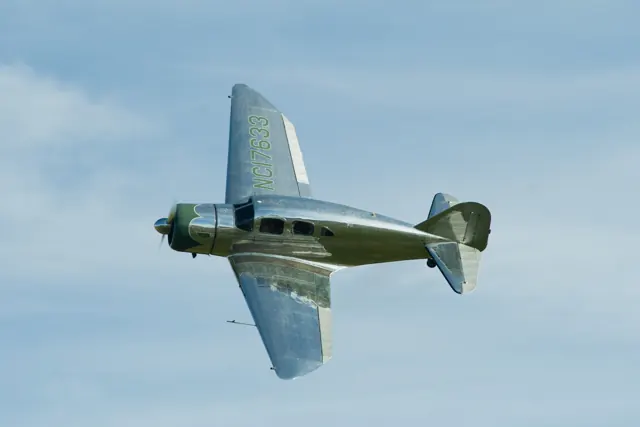
A late-1930s cabin aircraft with metal construction and retractable landing gear.
A corrugated-metal transport best known in its three-engine form.
A compact Italian light twin with a shoulder wing and metal airframe.
A tandem two-seat sailplane designed for instruction and broader soaring use.
An all-metal sport and touring aircraft from Bayerische Flugzeugwerke.
An advanced trainer known around the world as the Texan, Harvard and SNJ.
A four-seat composite touring and training aircraft developed from Diamond's smaller two-seater.
A wartime fighter developed from the earlier Curtiss P-36.
Beechcraft's Model 76, designed to introduce pilots to twin-engine flying.
The four-engine wide-body whose raised flight deck created one of aviation's most recognisable profiles.
A four-engine airliner that brought pressurised-cabin travel into scheduled service.
A regional jet family with four small engines, a high wing and a large split tail airbrake.
The purpose-built Ryan monoplane used by Charles Lindbergh for his 1927 solo Atlantic crossing.
This is AirframeDB’s first release. More features and aircraft research are planned. Leave your email if you’d like occasional updates.