MSFS
ICON A5 ↗
A two-seat light amphibian with a compact boat hull and a pusher propeller.
2 implementations+ Compare
Explore the aircraft. Find your simulator. Follow the sources.
A two-seat light amphibian with a compact boat hull and a pusher propeller.
An enlarged Velocity kit aircraft with a canard and rear-mounted pusher propeller.
A large amphibious flying boat built around maritime rescue and utility transport.
The Model 525 CitationJet, the starting point of Cessna's CJ and M2 lineage.
A First World War trainer that became a familiar sight in the barnstorming era.
A compact racing aeroplane built around a large radial engine and very short fuselage.
A two-seat composite kit aircraft developed from the Lancair 320.
A Polish utility aircraft designed for short takeoffs and landings.
A four-engine military turboprop designed to combine tactical access with long-distance transport.
A single-seat aerobatic monoplane that also became a familiar air-racing aircraft.
Regional flying built around a high wing, two turboprops and short sectors.
A fixed-gear twin turboprop with a long history in regional and remote-area transport.
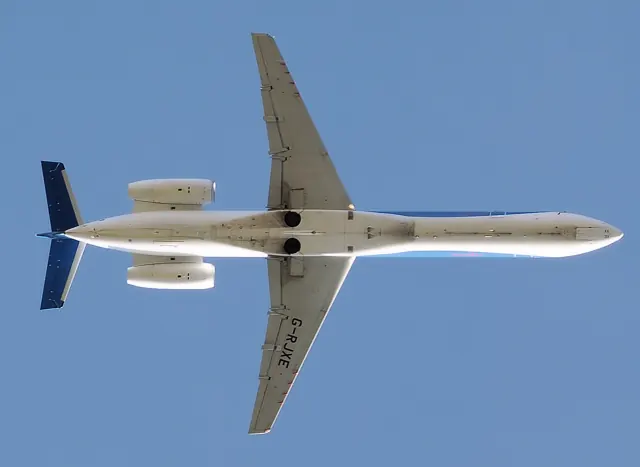
Embraer's regional-jet family, from the ERJ 135 to the longer ERJ 145.
TorqueSim's Pocket Rocket, a simulated PT6-powered light aircraft with two gear layouts.
A six-engine heavy transport created for exceptionally large external and internal loads.
A Swedish reconnaissance and dive-bombing aircraft from the early 1940s.
A two-seat, twin-engine fighter that served naval and land-based air forces in many roles.
Piper's PA-31 utility twin, used in commuter, cargo and corporate transport.
The purpose-built Ryan monoplane used by Charles Lindbergh for his 1927 solo Atlantic crossing.
A corrugated-metal transport best known in its three-engine form.
A small twin-engine amphibian that moved from business transport into military and utility service.
A four-engine Airbus wide-body developed in parallel with the A330.
A Canadian tandem-seat trainer developed after the Second World War.
The CJ4 belongs to Cessna's light-jet line, with two rear-mounted engines and a T-tail.
This is AirframeDB’s first release. More features and aircraft research are planned. Leave your email if you’d like occasional updates.