Find aircraft background, systems descriptions and manuals for the aircraft you are researching. Each note keeps its source and version context close by.
Simulator manuals describe the developer’s implementation. Aircraft background is research-based; pilot accounts describe an individual’s experience. Coverage here is limited to the selected notes and linked resources, not the full contents of every manual.
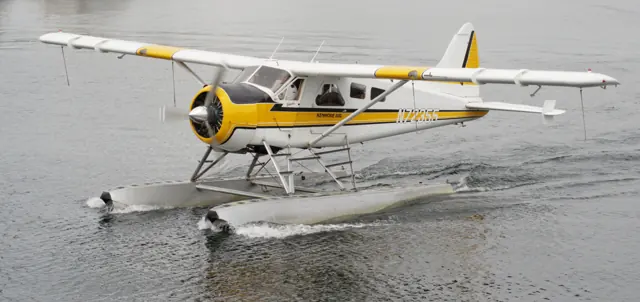
De Havilland Canada DHC-2 Beaver · SimCoders · X-Plane 12
Explore the engine and inspect the aircraft
REP describes a replacement engine model with selectable conventional or pressure carburettors, oil-system detail, priming and a booster coil. Its interactive walkaround includes surfaces, tyres, tie-downs and pitot checks. The kneeboard and maintenance tools are also available in VR, with optional in-flight tips.
SimCoders’ documented feature scope; no real-world training or fidelity guarantee inferred
De Havilland Canada DHC-2 Beaver
The Beaver was developed around carrying practical loads into places with limited infrastructure. Its high wing and substantial doors suit passenger and cargo work, while wheels, skis and floats allow different operating environments. The familiar DHC-2 uses a nose-mounted radial engine.
Floatplane, wheeled and turbine-conversion Beavers have different equipment. Simulator documentation identifies the included configurations and any modern navigation or assistance systems.
Aircraft / family
Four Friends Cross the Atlantic in a Single-engine DHC-2
Jvan Aeberli, with Anna Maag · August 2022 publication of their 1990 journey
De Havilland Canada DHC-4 Caribou
The Caribou first flew in 1958. It was built to move personnel and cargo using relatively short airfields, pairing a high wing with a large loading ramp and rugged landing gear. Military operators formed a major part of its service history.
It is larger and more specialised than the Beaver, yet belongs to the same Canadian utility-aircraft tradition. Two piston engines and a large cargo cabin supported transport work beyond the capacity of lighter bush aircraft.
Aircraft / family
De Havilland Canada DHC-6 Twin Otter
The Twin Otter was developed in the 1960s around short-field utility work. Two turboprops, a high wing and a substantial cabin support passenger and freight operations. Its fixed gear can be replaced or supplemented by specialist wheel, ski and float configurations.
Production resumed under Viking before the programme returned to the De Havilland Canada name. Different series and later developments have their own engines and avionics. The simulator packages identify their series and cockpit generation.
Aircraft / family
Q4XP · FlyJSim · X-Plane 11 · X-Plane 12
More than engines and a flight-management computer
FlyJSim lists geared control tabs, pitch and roll disconnects, a gust lock, hydraulic distribution and stall protection among the Q4XP's modelled systems. Its UNS-1Ew flight-management system and PW150A engine simulation sit within that wider aircraft model. The reviewed requirements specify X-Plane 12.09 or later.
Current product requirements retrieved 2026-09-10 · Flight Controls/Hydraulics; specifications
De Havilland Dash 8 Q400
The Dash 8 entered service in 1984, developing regional-airline work around two turboprops rather than the Dash 7's four. The programme expanded through several fuselage lengths and engine developments. Later Q-series aircraft incorporated active cabin noise and vibration reduction.
The Q400 is a substantially larger and faster member of that family. FlyJSim's Q4XP represents this version, with its flight-management system and controls described in the developer manual.
Aircraft / family
DV20 · Microsoft Flight Simulator · MSFS 2024
The DV20’s Sim Update 2 revision
The May 2025 release notes identify iniBuilds’ DV20 package version 0.0.11. Its changes address engine-cover interaction, propeller animation, electrical indications and missing EFB takeoff/landing performance data. These changes apply to the documented 0.0.11 revision.
Official MSFS 2024 SU2 notes · 1.4.20.0
Diamond DA20 / DV20
The Katana began as an Austrian Diamond design and developed into the DV20 and DA20 families. The compact side-by-side cockpit, fixed landing gear and T-tail make a recognisable training-aircraft layout. Different developments use different engines and associated equipment.
The DA20 differs from the four-seat DA40 and earlier Katana variants. Model suffixes identify the engine installations described in the manuals.
Aircraft / family
Diamond DA40
The DA40 took the DA20's general concept into a larger cabin. Its low wing, fixed tricycle undercarriage and extensive canopy glazing give it a distinctive appearance. Production has taken place in Austria and Canada, with several engine and equipment developments.
Petrol-engined and diesel-family DA40s differ in engine management and cockpit equipment. The simulator products identify their represented model.
Aircraft / family
Diamond DA42 Twin Star · Aerobask · X-Plane 12
An NG with customised engine and avionics displays
Aerobask identifies its DA42 as the Austro-powered NG for X-Plane 12. The package enhances Laminar’s G1000 with engine indications, annunciations, touchscreen functions and OscarPilote’s synthetic vision. It also includes a custom MD302 standby attitude module.
Gathered Aerobask DA42 page · package revision not stated
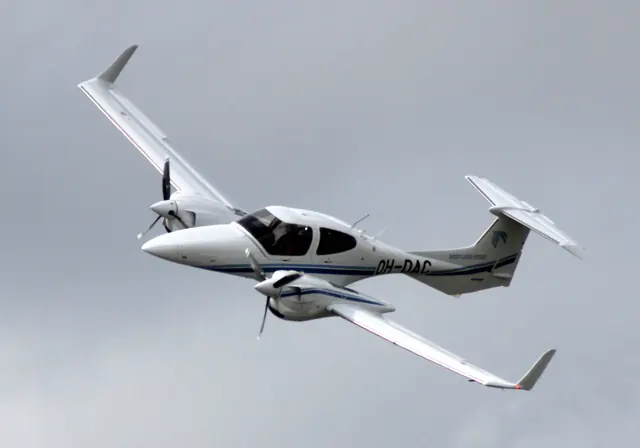
Diamond DA42 Twin Star
The DA42 was Diamond's first twin-engine aircraft design. It introduced a new European light twin to a class that had seen few new designs for decades. A diesel-powered example crossed the North Atlantic without a stop in 2004. Engine and avionics configurations vary; the specification table identifies its model.