Find aircraft background, systems descriptions and manuals for the aircraft you are researching. Each note keeps its source and version context close by.
Simulator manuals describe the developer’s implementation. Aircraft background is research-based; pilot accounts describe an individual’s experience. Coverage here is limited to the selected notes and linked resources, not the full contents of every manual.
Gee Bee Model Z / R-2 · Microsoft Flight Simulator · MSFS 2020
The announced Z uses a fixed-pitch propeller
The release describes the Z with a Wasp Junior radial and a fixed-pitch two-blade propeller. The larger engine used in later historical record attempts is a different configuration.
April 2022 description; no undocumented propeller control inferred
Granville Gee Bee R2 / Z
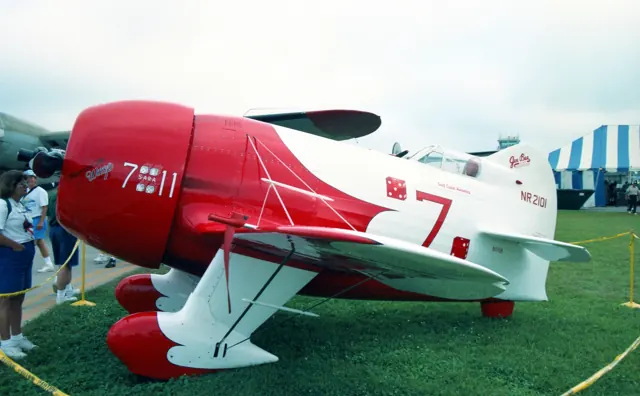
Granville Brothers built the Gee Bee racers for speed competition. The Model R placed a large radial engine ahead of small wings and a cockpit set far aft in a short fuselage. Gee Bee takes its name from the initials of Granville Brothers.
The Model Z, R-1 and R-2 were separate racing designs. Modern replicas also differ from original racers; the photographs and simulator model labels identify the aircraft represented.
Aircraft / family
Albatross G111/HU16 · Microsoft Flight Simulator · MSFS 2024
The MSFS 2024 hydraulic model separates two systems
The guide describes an engine-pump-powered main system for gear and flaps, plus an accumulator-equipped brake subsystem. Falling main pressure can slow or stop gear and flap movement.
Albatross guide v2.3.6, PDF pages 34–35; MSFS 2024-specific behaviour
Grumman Albatross HU-16 / G-111
The Albatross combines a flying-boat hull with retractable landing gear for operations from water and runways. Its two radial engines sit high on the wing, clear of much of the spray. Military versions served under several designations before the HU-16 name was standardised.
The G-111 is a civilian development with its own cabin arrangement and equipment. The simulator package includes both military and civilian aircraft, with water operation and wheeled ground handling among its features.
Aircraft / family
Grumman F-14 Tomcat
The Tomcat was developed for the US Navy after the F-111B programme ended. Twin engines, widely spaced tails and variable-sweep wings supported fleet defence and, later, strike missions.
Pilot and radar-intercept officer divided the work between two cockpits. Engines, avionics and other systems changed between F-14 versions; the X-Plane documentation describes the model included in that simulation.
Aircraft / family
Grumman G-21A Goose
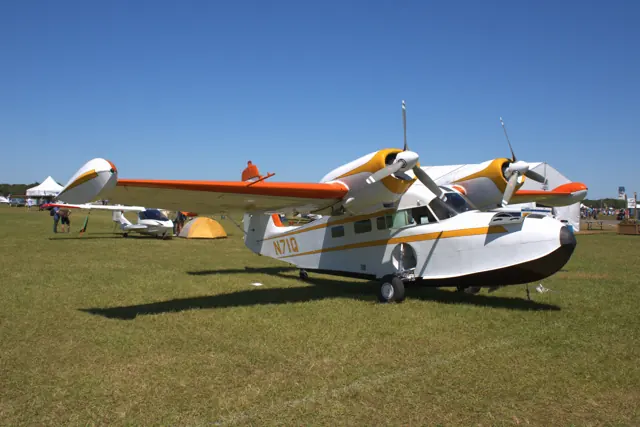
Grumman conceived the Goose as transport for businessmen around Long Island. A boat hull, retractable landing gear and two engines mounted high on the wing allowed travel between water and conventional airfields. Military service followed during the Second World War.
The G-21 is smaller than Grumman's Albatross, with a different cabin and service history. Civilian survivors and military JRF versions can carry different equipment.
Aircraft / family
Grumman G-44A Widgeon · Flysimware · MSFS 2020 · MSFS 2024
An amphibian with a conventional instrument panel
Flysimware represents the postwar G-44A. Its listed equipment includes a GNS 530, GTX327 transponder, GMA 340 audio panel, ADF and DME. The developer also describes an interactive copilot checklist, rain and icing effects, and parked-aircraft equipment such as chocks, tie-downs and engine plugs.
Official MSFS product description
Grumman G-44A Widgeon · Flysimware · MSFS 2020 · MSFS 2024
Hydraulic levers and hardware assignments
The manual describes an optional realistic hydraulic mode on the copilot-seat clipboard. In this mode, the gear and flap levers must be held while the mechanism moves; releasing a lever closes its valve. Flysimware warns that a persistent hardware gear assignment conflicts with this option and recommends a separate control profile. The documented manual pump and lever-lock tabs provide a simulated alternative when the left-engine hydraulic supply is unavailable.
Flysimware manual v1.2, MSFS 2020: clipboard settings and hydraulic operation; developer documentation, not a runtime hardware test.
Grumman G-44 Widgeon
The Widgeon was Grumman's smaller counterpart to the Goose. High-mounted twin engines kept the propellers above the water, and retractable landing gear allowed it to use runways as well as sheltered waterways.
Military versions served as the J4F and Gosling. The postwar G-44A revised the hull. Many surviving aircraft have replacement engines or propellers, including Super Widgeon conversions that differ from the original Ranger-powered configuration.
Hawker Fury Mk I
The Fury Mk I is a single-engine biplane fighter with an open cockpit and fixed tailwheel undercarriage. Aeroplane Heaven presents it alongside the naval Nimrod, retaining separate aircraft identities while explaining their related cockpit and control arrangements. The two-plane wing structure, conventional tail and absence of a flap system put the Fury’s configuration firmly within its biplane fighter generation.
The manual documents an elevator trim wheel. Pitch trim lets the pilot reduce a continuous stick load as power and speed change, while the main stick continues to command the flight surfaces. The land-based Fury should be read in its own scope; the Nimrod’s naval fittings belong to the other member of the package.
Fury rendition described in the combined developer manual; Nimrod dimensions are not used.
Hawker Nimrod Mk II
The Nimrod Mk II is the naval biplane fighter in Aeroplane Heaven’s Fury/Nimrod package. Its documented configuration combines a single piston engine, open cockpit, fixed tailwheel gear and elevator trim wheel. The related land-based Fury is listed separately in the package.
Nimrod II configuration described by the developer; not the Fury airframe.
He 162 · VSKYLABS · X-Plane 11 · X-Plane 12
Early jet handling in the VSKYLABS He 162
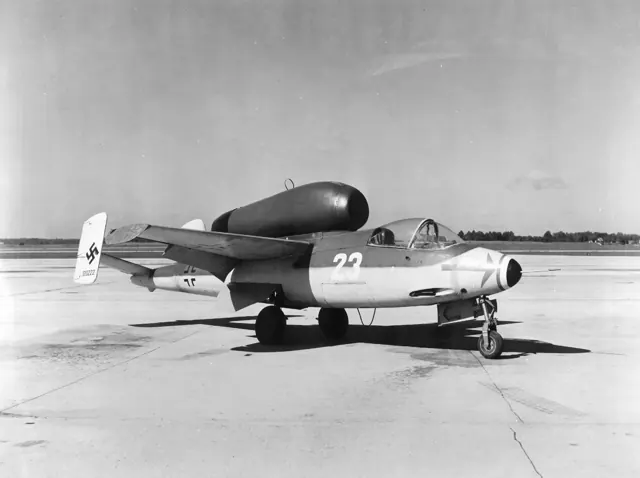
The released He 162 simulation explores first-generation jet handling, including engine and airframe failures from mishandling. The project’s documented behaviours are specific to the simulation.
Official developer / designated-store reference · checked 2026-09-14