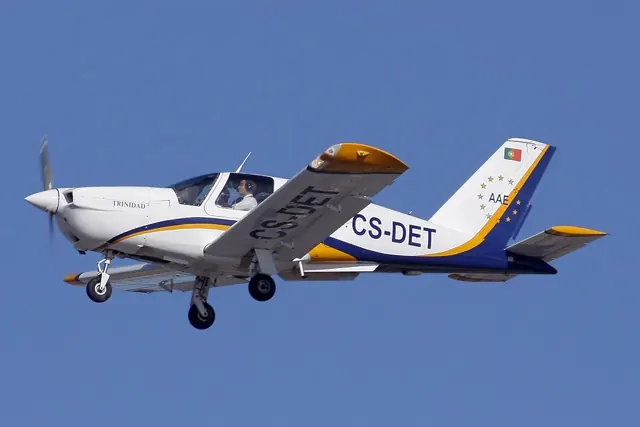
Find aircraft background, systems descriptions and manuals for the aircraft you are researching. Each note keeps its source and version context close by.
Simulator manuals describe the developer’s implementation. Aircraft background is research-based; pilot accounts describe an individual’s experience. Coverage here is limited to the selected notes and linked resources, not the full contents of every manual.
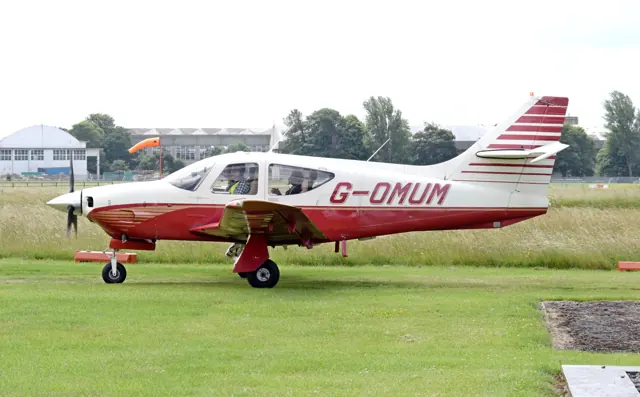
Rockwell Commander 114
Rockwell introduced the four-seat 112 in the early 1970s and followed it with the Commander 114 in 1976. A roomy cabin, retractable landing gear and cruciform tail formed the layout. The 114 added a more powerful engine and other refinements.
Black Square represents a 1977 Commander 114 and a turbonormalised, air-conditioned version, with several radio and navigation installations.
Aircraft / family
RotorWay Exec / JetExec · FlyInside · FlyInside · MSFS 2020
The turbine edition also offers assistance and failures
Its HeliManager provides control configuration and artificial-stability settings. The listed failures include overtorque, engine failure and rotor overspeed.
JetExec developer description; features scoped to this product
RotorWay Exec / JetExec · FlyInside · FlyInside · MSFS 2020
Adjust the RW162F controls in HeliManager
FlyInside describes joystick configuration and artificial-stability sliders in HeliManager. Its piston RW162F uses the developer’s own flight-dynamics engine.
RW162F product page · MSFS; documented options
RotorWay Exec / JetExec · FlyInside · FlyInside · MSFS 2020
Inspect the piston helicopter as well as its cockpit
The product lists opening inspection hatches with engine and transmission models, interactive circuit breakers, and simulated failures including engine and rotor overspeed.
RW162F developer description; no runtime-fidelity claim
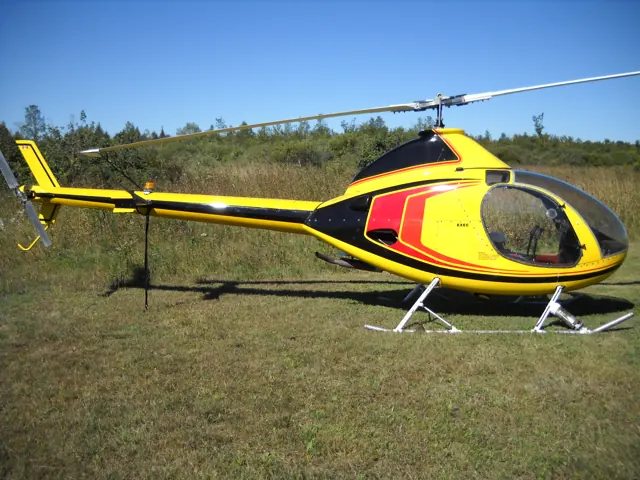
RotorWay Exec / JetExec
RotorWay supplied the two-seat Exec family for amateur construction from Arizona. Skids and a two-blade main rotor form the basic layout. FlyInside represents the piston-powered RW162F and turbine JetExec as separate aircraft with different engine and systems descriptions.
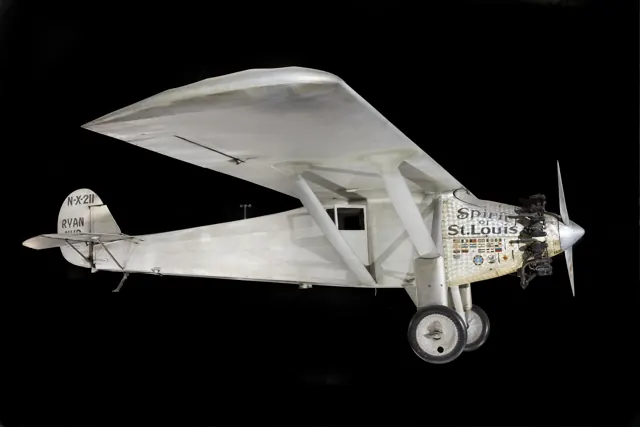
Ryan NYP “Spirit of St. Louis”
Ryan built the Spirit of St. Louis to carry fuel for Charles Lindbergh's solo Atlantic crossing. A high wing and single radial engine surrounded a one-seat cockpit whose fuel tanks blocked the forward view. Lindbergh flew from New York to Paris in May 1927.
The restricted visibility and sparse cockpit reflect this purpose-built aircraft's long-distance mission. The simulator represents that customised layout.
Aircraft / family
Ryan Navion
The Navion configurations described by Hangar Studios 713 include hydraulic landing gear and flaps, with an emergency hand pump in the cockpit. A pitch-trim wheel, flap selector and gear handle give each system its own control.
The Super 260 rendition uses a 260 hp Continental IO-520 and KAP140 autopilot. The L-17B uses the 205 hp O-470-7; its included L-17D ski version has an inoperative gear system. These engine and undercarriage differences distinguish the package's represented variants.
Ryan Navion
Ryan SC-W
The Ryan SC-W is a three-seat low-wing personal aircraft from the late 1930s, with a Warner radial engine and fixed tailwheel landing gear. Its enclosed cabin and metal monoplane shape belong to a different role from Ryan’s open-cockpit ST trainers. A perforated drag flap under the fuselage is one of the features that makes the SC-W’s configuration distinctive.
Warner-powered SC-W described by owner Russell Williams.
Ryan ST-A / STM family
The Ryan ST family brought a streamlined metal fuselage together with open tandem cockpits and braced wings. A1R’s aircraft background describes the STM series as a military adaptation of the civilian ST-A Special, with wider cockpits for occupants wearing parachutes. The ST-A Special and STM-2 share a family origin, while military, float and long-range configurations give them different equipment and operating contexts.
Civil Ryan ST-A in the transcribed 1940 manual; excludes ST-A Special and STM engine upgrades.
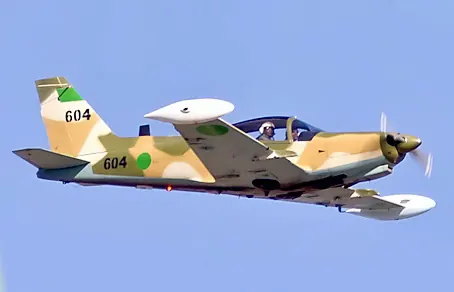
SIAI-Marchetti SF.260 with REP · JRollon / SimCoders · X-Plane 11 · X-Plane 12
Three models pair different cockpits and engines
The package lists civilian analogue and G1000 models with a carburetted O-540, plus a military analogue model with a fuel-injected IO-540.
JRollon / SimCoders SF.260 product documentation
SOCATA TB10 Tobago / TB20 Trinidad · Just Flight · X-Plane 11
Interactive checklists respond to the simulator
The engine-start checklist responds to user inputs and simulator variables. Ground configuration offers cold-and-dark or ready-for-takeoff states while the aircraft is stationary.
Just Flight X-Plane 11 product documentation
SOCATA TB10 Tobago / TB20 Trinidad · Just Flight · X-Plane 11
A diagnostic window explains engine and fuel conditions
The engine popup shows fuel weights and imbalance, pressures, temperatures, battery charge, spark-plug fouling and vapour lock. A quick-charge option is included.
Just Flight X-Plane 11 product documentation