Find aircraft background, systems descriptions and manuals for the aircraft you are researching. Each note keeps its source and version context close by.
Simulator manuals describe the developer’s implementation. Aircraft background is research-based; pilot accounts describe an individual’s experience. Coverage here is limited to the selected notes and linked resources, not the full contents of every manual.
Bell UH-1 Huey
The UH-1 brought turbine power to US military helicopter service and became the foundation of a large Huey family. Its cabin, sliding side doors and utility layout supported troop transport, medical evacuation and many other roles.
The Iroquois name covers a development history with different engines, fuselage lengths and equipment. The simulator catalogue includes independently developed aircraft as well as a themed first-party package. Each product has its own systems documentation.
Aircraft / family
The Bell UH-1B Huey: a flying symbol
Barry Schiff · 20 February 2014
Chuck Perriguey
Charles Perriguey interview · 4 November 2000
Bruce Peterson, Army helicopter pilot
Holt oral-history programme · recorded 3 April 2018
Lionheart Creations Bellanca Super Viking 17-300A · Lionheart Creations · MSFS 2020 · MSFS 2024
The represented Super Viking
The seller identifies Lionheart's rendition as a 17-300A with a turbocharged 300 hp engine and Century III autopilot. The aircraft has retractable landing gear, with different interior and panel presentations.
Product description, configuration and simulator editions
Lionheart Creations Bellanca Super Viking 17-300A · Lionheart Creations · MSFS 2020 · MSFS 2024
Simulator support
The Build 1.5.1 seller page records MSFS 2024 compatibility for the Super Viking product.
Product description, configuration and simulator editions
Bellanca Super Viking
The Bellanca Super Viking combines a wooden wing with a steel-tube fuselage and a four-seat cabin. Retractable landing gear accompanies the touring-aircraft layout.
Lionheart's product describes its own 17-300A rendition with a turbocharged 300 hp installation and Century III autopilot. That engine description belongs to the developer's represented aircraft. Panel and interior options remain configurations within the same product.
Bellanca Super Viking
VSL B-8M · VSKYLABS · X-Plane 11 · X-Plane 12
Released product and variants
This Bensen-inspired simulator variant uses a longer tail boom and a 45 hp half-Volkswagen engine. Those alterations are documented features of the VSL B-8M.
Official developer / designated-store reference · checked 2026-09-14
Bensen B-8M
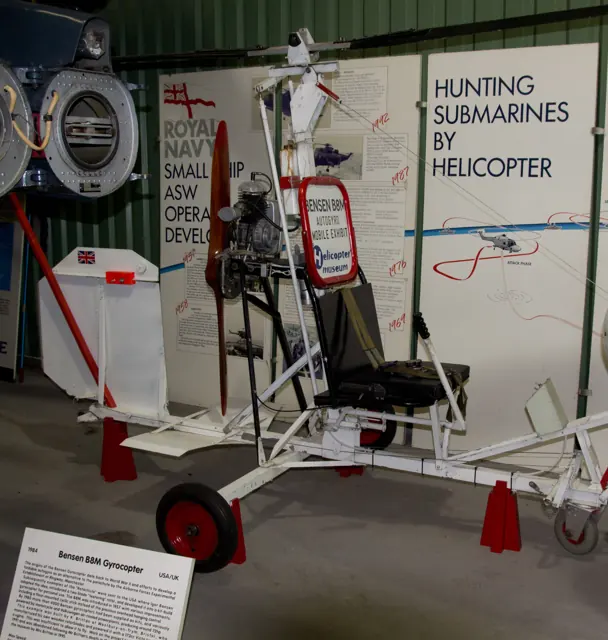
The Bensen B-8M is an open gyroplane design in which the main rotor turns through airflow rather than engine drive. A separate engine and propeller provide forward thrust, while rotor tilt and rudder control the aircraft.
VSKYLABS’ VSL B-8M is a modified interpretation of the design, with a longer tail boom and a 45 hp half-Volkswagen engine. The longer boom and engine installation belong to VSKYLABS' simulated variant.
B-8M museum reference
Flying Fries Blackshape Gabriel · Flying Fries · MSFS 2020 · MSFS 2024
Two substantially different variants
The manual distinguishes the BK160-TR from the fictional BK420-MO, with differences in power and response. Both have retractable gear and pitch trim. KIAS limits and cruise groundspeeds are labelled separately; runway starts can initialise non-neutral trim.
Gabriel manual v2.0; PDF pp.5–7 revision and background; pp.8–11 variants; p.25 speed references
Flying Fries Blackshape Gabriel · Flying Fries · MSFS 2020 · MSFS 2024
The Flying Fries package
The developer lists Gabriel for MSFS 2020 and MSFS 2024.
Gabriel exact product and simulators
Flying Fries Blackshape Gabriel BK420-MO · Flying Fries · MSFS 2020 · MSFS 2024
Two substantially different variants
The manual distinguishes the BK160-TR from the fictional BK420-MO, with differences in power and response. Both have retractable gear and pitch trim. KIAS limits and cruise groundspeeds are labelled separately; runway starts can initialise non-neutral trim.
Gabriel manual v2.0; PDF pp.5–7 revision and background; pp.8–11 variants; p.25 speed references