Find aircraft background, systems descriptions and manuals for the aircraft you are researching. Each note keeps its source and version context close by.
Simulator manuals describe the developer’s implementation. Aircraft background is research-based; pilot accounts describe an individual’s experience. Coverage here is limited to the selected notes and linked resources, not the full contents of every manual.
Cessna Caravan family · Black Square · Black Square · MSFS 2020 · MSFS 2024
Avionics choices persist between flights
The tablet saves avionics selections and allows several radio/GPS arrangements. The manual explains which selected GPS can drive the HSI and autopilot, including a limitation when the Working Title GNS 530 occupies NAV2. Confirming a changed arrangement reconfigures the avionics and disengages the autopilot.
Caravan Professional guide 2026 · PDF p.79
C208 Grand Caravan DGS · Thranda · X-Plane 11 · X-Plane 12
Configuration and flight-model development
Thranda's Caravan development includes configurable avionics and changes to its X-Plane flight model. The published history records trim balance, propeller drag, G1000 pitch-button behaviour, landing-gear springiness and stall-warning calibration changes. The changes are identified by release number.
C208 DGS; XP12 added v1.2 February 2023 · Version history; v1.2 and later XP12 tuning
LivToAir Citation CJ3+ · LivToAir · MSFS 2020 · MSFS 2024
Aircraft pages and warnings
The developer describes custom G3000 and GTC pages with CJ3+ takeoff and landing data. The same product material identifies de-icing functions and a simulated stick shaker.
Custom avionics, deicing and warning features
Cessna Citation CJ3+
LivToAir represents the Citation CJ3+ 525B with a G3000/GTC-based cockpit. Its custom pages include aircraft-specific takeoff and landing data, alongside ice-protection and warning functions.
The product description identifies a simulated stick shaker. These avionics and warning details belong to the named CJ3+ implementation; the broader Citation family is documented across separate aircraft entries.
Cessna Citation CJ3+
Cessna Citation CJ4
The CitationJet programme began with the Model 525, first flown in 1991, and developed through a series of larger and more capable CJ aircraft. The CJ4 is the Model 525C, a later branch of that family with a different wing and a stretched cabin.
Working Title documents the simulated CJ4's avionics, flight guidance and equipment. Its flight deck differs from the earlier CitationJet and M2.
Aircraft / family
Cirrus SR20 · TorqueSim · TorqueSim · X-Plane 12
The Entegra edition has its own avionics
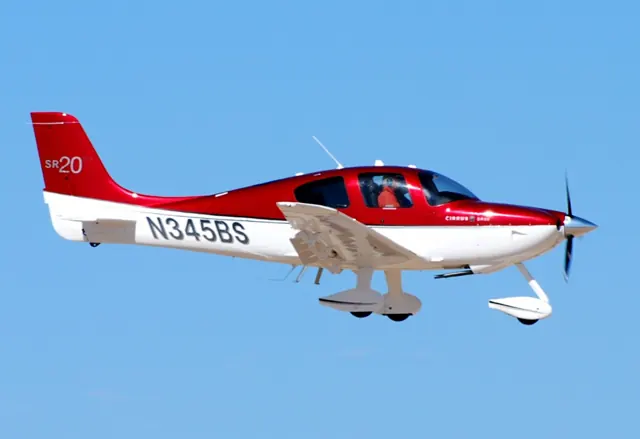
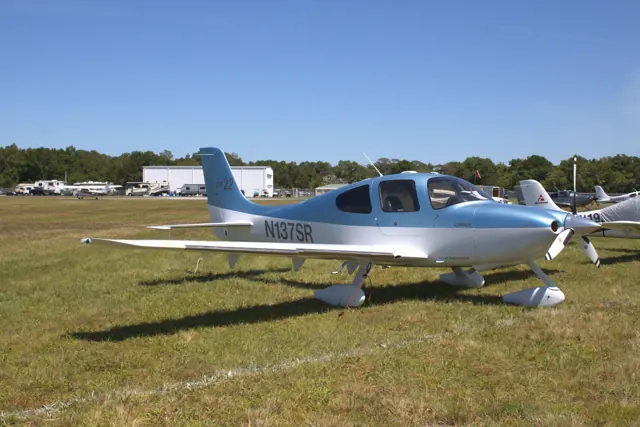
TorqueSim’s Entegra SR20 includes custom Avidyne R8 primary and multifunction displays, an S-TEC 55X autopilot and selectable GPS stacks. Its pages cover terrain, route progress, nearby airports, checklists and engine information. The developer explicitly lists X-Plane 12 support.
Gathered TorqueSim Entegra page · package revision not stated
Cirrus SR20 · TorqueSim · TorqueSim · X-Plane 12
An explicit limit on the default GPS map
The listing says Laminar’s default GNS 430 does not expose approach waypoints to the Entegra MFD. It distinguishes that missing map depiction from the HSI’s ability to follow an approach. Optional RealityXP avionics, sold separately, provide approach-waypoint display according to the developer.
TorqueSim’s documented integration limitation
Cirrus SR22
The SR22 entered production in 2001 as a more powerful development of Cirrus's SR20. A low wing, fixed tricycle gear and side-yoke controls define the basic layout. The Cirrus Airframe Parachute System is a prominent part of the aircraft's design.
The SR22 family spans normally aspirated and turbocharged versions as well as different panel generations. The side controls use mechanical connections. Simulator implementations range from bundled aircraft to detailed add-ons with their own engine, maintenance and avionics models.
Aircraft / family
Cirrus Vision SF50
The Vision Jet applies Cirrus's personal-aircraft approach to a small jet. Its single turbofan is mounted above the fuselage, between the surfaces of the V-tail. The cabin and flight deck are arranged for an owner-pilot market, and the aircraft includes a whole-aircraft parachute system.
Avionics and automation evolved between SF50 generations; the simulator products identify their represented equipment.
Aircraft / family
Columbia 400 · Laminar Research · X-Plane 11
X-Plane aircraft and avionics manuals
C-46 Commando · Microsoft Flight Simulator · MSFS 2024
Panel access and radio power have their own controls
A main-panel switch toggles the yokes for visibility. The Avionics Master powers the documented radio installation, which includes COM1, VOR, ADF and a transponder. The manual’s numbered panel illustrations and custom views help locate these controls within the large flight deck.
Gathered C-46 manual · PDF pp.4–5
Daher TBM family
The TBM programme began as a collaboration between SOCATA and Mooney and continued under Daher. The low-wing airframe carries one nose-mounted turboprop and a pressurised cabin. Successive versions developed the engines, aerodynamics, avionics and pilot interface.
The analogue-panel TBM 850, glass-cockpit TBM 900 and TBM 930 occupy different points in that progression. Simulator developers model these panel generations and different levels of persistent system behaviour, documented for each product.
Aircraft / family