




Start here
A few places to begin, from the aircraft’s story to the people who fly it.
Meet the aircraft
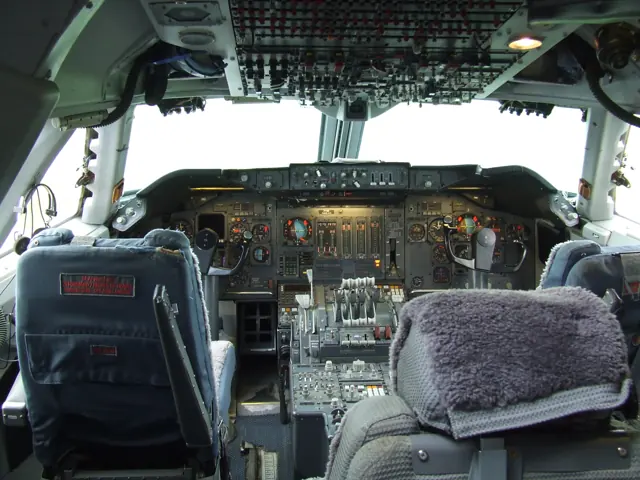
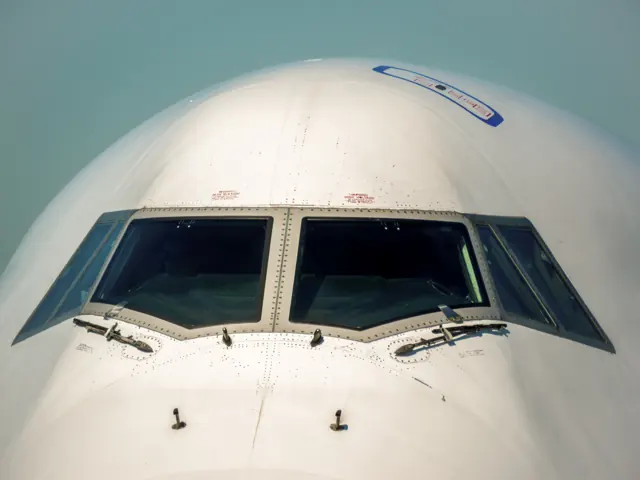
The 747 first flew in 1969 and entered airline service in 1970. Its broad main deck transformed the scale of passenger flying, while the elevated cockpit also suited a freighter with a nose-loading door. Passenger and cargo developments remained important throughout the programme. The flight deck changed dramatically between classic three-crew 747s and later two-pilot aircraft. The 747-8 also brought a further wing and engine development.
Aircraft background
Wikipedia contributors · Read more ↗Sharing the coveted Kai Tak landing
Westerdijk recalls choosing a first-officer position on the 747 over an opportunity to command the DC-9. After earlier F27 and A310 flying, the prospect of long-haul operations appealed to him, and he eventually became a 747 captain. His recollections of the 200 and 300 include six-day rotations through Dubai and Bangkok to Hong Kong, with the return journey retracing those stops. Kai Tak made those trips particularly memorable.
KLM retrospective · interview published 17 December 2022. The Asian rotations described concern the 747-200/300; his final KLM landing was in a 747-400.
Up in the Sky · Read more ↗Passenger and freighter equipment are documented together
The MSFS 2024 guide explains an important fuel-system difference: the passenger 747-8i has a stabiliser tank, while the 8F does not. Its fuel feeds into the centre tank. The manual then follows the changing pump and crossfeed configuration as centre and main-tank fuel is consumed, making fuel management part of the documented long-haul workflow.
747-8i (-8F) · MSFS 2024
Microsoft / aircraft developers · Read more ↗Into the cockpit
 YouTube
Games with Brains
Felis Boeing 747-200 | Complete Beginner Tutorial (inc 2023 Updates)
A simulator walkthrough for the classic 747; systems differ from the 747-8 starter.
Felis 747-200; X-Plane; 2023 tutorial
Watch on YouTube ↗Preview images are served by AirframeDB. Videos open on YouTube only when you choose to watch.
Meet Boeing 747 family
The 747 first flew in 1969 and entered airline service in 1970. Its broad main deck transformed the scale of passenger flying, while the elevated cockpit also suited a freighter with a nose-loading door. Passenger and cargo developments remained important throughout the programme.
The flight deck changed dramatically between classic three-crew 747s and later two-pilot aircraft. The 747-8 also brought a further wing and engine development. The simulator products cover several generations, including the classic 747-200 and modern 747-8.
Boeing 747
Boeing → · Explore the family →
747-100
Wikipedia contributors · Boeing 747 ↗Laminar Research · X-Plane 11 →747-200
Wikipedia contributors · Boeing 747 ↗Felis · X-Plane 11 · X-Plane 12 →747-200F
Wikipedia contributors · Boeing 747 ↗Felis · X-Plane 11 · X-Plane 12 →747-400
Wikipedia contributors · Boeing 747 ↗Laminar Research · X-Plane 11 →747-400 LCF Dreamlifter
Wikipedia contributors · Boeing 747 ↗Microsoft Flight Simulator · MSFS 2024 →747-400 Global SuperTanker
Wikipedia contributors · Boeing 747 ↗Microsoft Flight Simulator · MSFS 2024 →747-8
Wikipedia contributors · Boeing 747 ↗747-8 Intercontinental
Wikipedia contributors · Boeing 747 ↗Microsoft Flight Simulator · MSFS 2024 →Microsoft Flight Simulator · MSFS 2020 →747-8 Freighter
Wikipedia contributors · Boeing 747 ↗Microsoft Flight Simulator · MSFS 2024 →Aircraft type designators
Use the code for the model you are flying. The linked authority lists the applicable aircraft.
History & design
How the upper-deck shape emerged
Boeing’s early concept archive shows that the familiar 747 shape was not the starting point. The development team studied several arrangements with two passenger decks. Problems with those configurations led Joe Sutter’s team toward a wide fuselage with most accommodation on one level. Moving the flight deck upstairs also left room for a cargo door in the nose below it.
Boeing Images · Early 747 Concept Model ↗Boeing historical caption · concept model BI222911
A production story ending with a freighter
The 747 evolved through several generations, including the 747-400 and the later 747-8, while passenger and freight operations gave the family different careers. Boeing marked the final delivery on 31 January 2023 at Everett, handing a 747-8 freighter to Atlas Air. The manufacturer recorded 1,574 aircraft built over more than half a century.
People who had helped design and build the original aircraft returned for the ceremony. Atlas provided another link across generations: the company began with a converted 747-200 freighter and later operated types including the enlarged Dreamlifter, used to transport 787 components.
Boeing · Boeing and Atlas Air celebrate the final 747 delivery ↗Boeing final-delivery announcement · 31 January 2023
Development milestones
First flight: February 9, 1969 ( 1969-02-09 )
Wikipedia contributors · Boeing 747 ↗Boeing 747 · family/variant named by the source · Wikipedia revision 1373946440
Pilot accounts
Sharing the coveted Kai Tak landing
Westerdijk recalls choosing a first-officer position on the 747 over an opportunity to command the DC-9. After earlier F27 and A310 flying, the prospect of long-haul operations appealed to him, and he eventually became a 747 captain. His recollections of the 200 and 300 include six-day rotations through Dubai and Bangkok to Hong Kong, with the return journey retracing those stops.
Kai Tak made those trips particularly memorable. He describes the transition from instrument guidance to the visual turn beside the city, with buildings close by and western winds sometimes adding turbulence. As a first officer, the allocation of flying duties determined whether he received that prized landing. When he later commanded the aircraft, he discussed the division of sectors with his first officer.
KLM retrospective · interview published 17 December 2022. The Asian rotations described concern the 747-200/300; his final KLM landing was in a 747-400.
Read the full account · Up in the Sky ↗A childhood ambition waiting beside the employee car park
Osborne traces his fascination with the 747 to seeing Airport 1975 as a ten-year-old. Years later, as a US Air Force C-141 instructor, he would look across Frankfurt airport at newly arrived 747-400s and imagine flying one. After leaving the Air Force, his airline employer acquired the aircraft used in the film, and he eventually became part of its crew. The machine that had started the ambition became part of his working life.
Writing as a 747-400 captain, he describes another connection with that childhood excitement: the preserved N661US at the Delta Flight Museum. Passing it near the employee parking area at the beginning and end of trips brought back the same sense of wonder. The recollection is about a lasting attachment to the aircraft rather than a technical evaluation of its handling.
Delta Flight Museum contribution · retrospective by a 747-400 captain. The operator of his flying career is not identified in this account.
Read the full account · Delta Flight Museum ↗Acceptance flights, an old mentor and a family reunion
By the time of this 2022 interview, Vize had spent more than twenty-two years flying 747s for Atlas and visited more than a hundred destinations in the type. The cargo varied from cars and boats to holiday gifts and equipment for sports teams. Acceptance flights for two new 747-8 freighters gave that career a personal turn: while he flew the aircraft, Joe Masone carried out the functional checks and systems tests. Masone had trained him about twenty-five years earlier and helped him find his way to Atlas.
Vize also recalls a brief meeting with his son Brandon during a military deployment in 2010. His own arrival coincided with his son departing aboard another Atlas 747, flown by a colleague. Among the many journeys and loads he remembers, that chance encounter stands out as a moment when the aircraft joined his professional and family lives.
Atlas Air Tailwinds · 24 October 2022. Recollections from a career on the 747, including 2022 acceptance flights in 747-8 freighters.
Read the full account · Atlas Air Worldwide ↗Flying a 747 with a Space Shuttle on its back
At Oshkosh in 1995, McMurtry stood beside his own Waco biplane and amused his interviewer by describing a much larger two-winged machine he flew: the 747 carrying a Space Shuttle. His route to that unusual assignment included naval aviation, test-pilot training and Lockheed U-2 flying before joining NASA in 1967. He became one of the original 747 project pilots for the Shuttle approach-and-landing test programme.
Asked how the carrier handled with the Shuttle aboard, he said the change was less dramatic than an observer might expect. The added vehicle nevertheless produced considerable drag, and disturbed airflow around it transmitted shaking to the 747’s tail and airframe. These handling observations concern the modified carrier combination.
AOPA Pilot · December 1995 profile based on an Oshkosh interview. Specially modified NASA Shuttle Carrier Aircraft, not a standard airline configuration.
Read the full account · AOPA Pilot ↗In your simulator
Systems, equipment and documentation for each developer’s aircraft.
Compare simulator versions →MSFS 2024747-8i (-8F)
Microsoft Flight Simulator · Released
747-8i (-8F)
Microsoft Flight Simulator · Released
MSFS 2024747-400 Global Super Tanker
Microsoft Flight Simulator · Released
747-400 Global Super Tanker
Microsoft Flight Simulator · Released
MSFS 2024747-400 LCF Dreamlifter
Microsoft Flight Simulator · Released
747-400 LCF Dreamlifter
Microsoft Flight Simulator · Released
MSFS 2020747-8 Intercontinental
Microsoft Flight Simulator · Released
747-8 Intercontinental
Microsoft Flight Simulator · Released
X-Plane 11Boeing 747-400 and 747-100
Laminar Research · Released
Boeing 747-400 and 747-100
Laminar Research · Released
X-Plane 11 · X-Plane 12Boeing 747 family · Felis
Felis · Released
Boeing 747 family · Felis
Felis · Released
X-Plane 12B 747-8 Intercontinental Prime Edition
Flight Procedures Simulation · Released
B 747-8 Intercontinental Prime Edition
Flight Procedures Simulation · Released
X-Plane 12747-400
Sparky / mSparks · Released
747-400
Sparky / mSparks · Released
Aircraft specifications
Published figures for the named real-aircraft variant. Simulator equipment and performance can differ.
| Specification | Published value |
|---|---|
| Length | 225 ft 2 in (68.6 m) |
| Wingspan | 195 ft 8 in (59.6 m) |
| Height | 64 ft 3 in (19.6 m) with landing gear extended |
| Empty weight | 375,100 lb (170,142 kg) |
| Max takeoff weight | 833,000 lb (377,842 kg) |
| Powerplant | 4 × Pratt & Whitney JT9D-7R4G2 high bypass turbofan, 54,750 lbf (243.5 kN) thrust each |
| Maximum speed | Mach 0.92 |
| Range | 7,550 mi (12,150 km, 6,560 nmi) |
Manuals & resources
Find your next read
Choose a topic for a short introduction and a link to the original source. Simulator references identify the developer and edition they cover.
Simulator documentation
Passenger and freighter equipment are documented together747-8i (-8F) · Microsoft Flight Simulator · MSFS 2024
The MSFS 2024 guide explains an important fuel-system difference: the passenger 747-8i has a stabiliser tank, while the 8F does not. Its fuel feeds into the centre tank. The manual then follows the changing pump and crossfeed configuration as centre and main-tank fuel is consumed, making fuel management part of the documented long-haul workflow.
Working Title · first edition, November 2024 · PDF pp.45–51
Microsoft / aircraft developers · Read the source ↗The firefighting 747 has a separate guide747-400 Global Super Tanker · Microsoft Flight Simulator · MSFS 2024
The SuperTanker manual documents a liquid-drop interface with coverage level, a multiplier and a choice of left, right or both tanks. Flow calculations can use GPS groundspeed or a value entered by the user. These controls describe the simulated firefighting equipment and are separate from the ordinary airliner cockpit workflow.
Working Title · first edition, November 2024 · PDF p.12
Microsoft / aircraft developers · Read the source ↗An illustrative flight for learning the cockpit747-400 LCF Dreamlifter · Microsoft Flight Simulator · MSFS 2024
The tutorial uses Chicago O’Hare to Washington Dulles to introduce the aircraft. It separately describes the Dreamlifter’s industrial role carrying 787 components between production locations; the tutorial route is a practice scenario.
Working Title · first edition, November 2024 · PDF pp.5–6
Microsoft / aircraft developers · Read the source ↗The AAU2 avionics and systems update747-8 Intercontinental · Microsoft Flight Simulator · MSFS 2020
Microsoft’s MSFS 2020 release notes document a substantial 747-8i update: independent navigation and CDU displays, expanded flight-plan support including holds and missed approaches, and performance-based VNAV with wind forecasts and idle descent. The published changes also include autopilot landing modes, revised fuel and electrical logic, and functional GPS and inertial navigation. These changes belong to the June 2023 MSFS 2020 update.
Microsoft Flight Simulator · AAU2 version 1.33.8.0, 22 June 2023 · 747-8i / 787-10 section
Microsoft Flight Simulator · Read the source ↗The bundled 747 has separate documentationBoeing 747-400 and 747-100 · Laminar Research · X-Plane 11
The archived 747-400 guide describes independent captain and first-officer EFIS controls. The navigation display offers approach, VOR, map and flight-plan views, with separate selections for weather, navigation aids, waypoints and airports. This material belongs to the documented 747-400 panel and does not establish identical equipment in the separately listed 747-100.
Laminar Research · archived 747-400 pilot operating manual; no edition date established · PDF pp.35–37
Laminar Research · Read the source ↗A classic three-crew 747 simulationBoeing 747 family · Felis · Felis · X-Plane 11 · X-Plane 12
Felis's 747-200 documentation describes custom autopilot and autoland systems, a separate autothrottle and extensive aircraft systems. The classic cockpit's analogue instruments and navigation equipment provide a different experience from the later 747-8. Release notes identify handling changes separately for X-Plane 11 and 12.
747-200 Classic passenger; XP11 and XP12 listed · Systems; Requirements; Version history
Felis / X-Plane.org store · Read the source ↗Pilot account
Sharing the coveted Kai Tak landingKLM retrospective · interview published 17 December 2022. The Asian rotations described concern the 747-200/300; his final KLM landing was in a 747-400.
Westerdijk recalls choosing a first-officer position on the 747 over an opportunity to command the DC-9. After earlier F27 and A310 flying, the prospect of long-haul operations appealed to him, and he eventually became a 747 captain. His recollections of the 200 and 300 include six-day rotations through Dubai and Bangkok to Hong Kong, with the return journey retracing those stops. Kai Tak made those trips particularly memorable.
Gerhard Westerdijk
Up in the Sky · Read the source ↗A childhood ambition waiting beside the employee car parkDelta Flight Museum contribution · retrospective by a 747-400 captain. The operator of his flying career is not identified in this account.
Osborne traces his fascination with the 747 to seeing Airport 1975 as a ten-year-old. Years later, as a US Air Force C-141 instructor, he would look across Frankfurt airport at newly arrived 747-400s and imagine flying one. After leaving the Air Force, his airline employer acquired the aircraft used in the film, and he eventually became part of its crew. The machine that had started the ambition became part of his working life.
Tony Osborne
Delta Flight Museum · Read the source ↗Developer documentation
B 747-8 Intercontinental Prime Edition — product listingB 747-8 Intercontinental Prime Edition · X-Plane 12
Product listing captured 2026-09-23; edition scope from the reviewed catalogue
store.x-plane.org · Read the source ↗747-400 — product listing747-400 · X-Plane 12
Product listing captured 2026-09-24; edition scope from the reviewed catalogue
Sparky / mSparks · Read the source ↗Read the original documentation from the people who created it. Manuals open on their publisher’s website.
Manual
Boeing 747-8i & 8f Instructions and ReferenceMicrosoft / aircraft developers Microsoft Flight Simulator aircraft manualsMicrosoft / aircraft developers Boeing 747 Global Supertanker Instructions and ReferenceMicrosoft / aircraft developers Boeing 747 LCF Dreamlifter Instructions and ReferenceMicrosoft / aircraft developers Boeing 747-400 POHLaminar Research X-Plane 11 Desktop ManualLaminar Research X-Plane aircraft and avionics manualsLaminar ResearchAircraft background
Boeing 747Wikipedia contributors · Research background · Wikipedia revision 1373946440 · retrieved 2026-09-12Resource
MSFS 2024 FAQ and edition aircraft inventoryMicrosoft MSFS 2020 FAQ and edition aircraft inventoryMicrosoft 747-200 passenger productFelis / X-Plane.org storeProduct
747-200F Classic CargoFelis · Official developer / designated store catalogue · checked 2026-09-12 B 747-8 Intercontinental Prime Edition-FPS-747-8store.x-plane.org · Product listing captured 2026-09-23; edition scope from the reviewed catalogue 747-400Sparky / mSparks · Product listing captured 2026-09-24; edition scope from the reviewed catalogueAircraft history
Early 747 Concept ModelBoeing Images · Boeing historical caption · asset BI222911 / k16432 Boeing and Atlas Air celebrate the final 747 deliveryBoeing · Manufacturer announcement · 31 January 2023Developer documentation
Aircraft & Avionics Update 02 release notesMicrosoft Flight Simulator · MSFS 2020 · version 1.33.8.0 · 22 June 2023Type designator
ICAO Doc 8643 — aircraft type designatorsInternational Civil Aviation Organization · Public search data retrieved 2026-09-14; authority update 2026-09-03Built-in force-feedback profiles
Read the documentary basis, editable starting settings and remaining questions for the aircraft you fly. Each explanation refers to the exact profile revision shown.
Catalogue programme-20261022-v1 · 14 profile choices
Felis 747-200 Classic
Felis · Free and Pro · Revision 3 · Inherited starting point
X-Plane 12
Felis 747-200 Classic: The powered-control response uses qualitative family feel context; older maintenance and handling accounts do not calibrate every -8 axis.
Flight Procedures Simulation Boeing747-8 Intercontinental Prime
Flight Procedures Simulation · Free and Pro · Revision 3 · Inherited starting point
X-Plane 12
Flight Procedures Simulation Boeing747-8 Intercontinental Prime: The powered-control response uses qualitative family feel context; older maintenance and handling accounts do not calibrate every -8 axis.
Sparky / mSparks Boeing 747-400
Sparky / mSparks · Free and Pro · Revision 3 · Inherited starting point
X-Plane 12
Sparky / mSparks Boeing 747-400: The powered-control response uses qualitative family feel context; older maintenance and handling accounts do not calibrate every -8 axis.
SSG (legacy) 747-8 Anniversary freighter
SSG (legacy) · Free and Pro · Revision 3 · Inherited starting point
X-Plane 12
SSG (legacy) 747-8 Anniversary freighter: The powered-control response uses qualitative family feel context; older maintenance and handling accounts do not calibrate every -8 axis.
SSG (legacy) 747-8 Anniversary passenger
SSG (legacy) · Free and Pro · Revision 3 · Inherited starting point
X-Plane 12
SSG (legacy) 747-8 Anniversary passenger: The powered-control response uses qualitative family feel context; older maintenance and handling accounts do not calibrate every -8 axis.
Boeing 747-8 Intercontinental
Free and Pro · Revision 3 · Inherited starting point
MSFS 2020 · MSFS 2024 · X-Plane 11 · X-Plane 12
Boeing 747-8 Intercontinental: The powered-control response uses qualitative family feel context; older maintenance and handling accounts do not calibrate every -8 axis.
Boeing 747-100
Free and Pro · Revision 2 · Inherited starting point
MSFS 2020 · MSFS 2024 · X-Plane 11 · X-Plane 12
Boeing 747-100: The powered-control response uses qualitative family feel context; older maintenance and handling accounts do not calibrate every -8 axis.
Boeing 747-200
Free and Pro · Revision 2 · Inherited starting point
MSFS 2020 · MSFS 2024 · X-Plane 11 · X-Plane 12
Boeing 747-200: The powered-control response uses qualitative family feel context; older maintenance and handling accounts do not calibrate every -8 axis.
Boeing 747-200F
Free and Pro · Revision 2 · Inherited starting point
MSFS 2020 · MSFS 2024 · X-Plane 11 · X-Plane 12
Boeing 747-200F: The powered-control response uses qualitative family feel context; older maintenance and handling accounts do not calibrate every -8 axis.
Boeing 747-400
Free and Pro · Revision 2 · Inherited starting point
MSFS 2020 · MSFS 2024 · X-Plane 11 · X-Plane 12
Boeing 747-400: The powered-control response uses qualitative family feel context; older maintenance and handling accounts do not calibrate every -8 axis.
Boeing 747-400 Global SuperTanker
Free and Pro · Revision 2 · Partial review
MSFS 2020 · MSFS 2024 · X-Plane 11 · X-Plane 12
Boeing 747-400 Global SuperTanker: The powered-control response uses qualitative family feel context; older maintenance and handling accounts do not calibrate every -8 axis.
Boeing 747-400 LCF Dreamlifter
Free and Pro · Revision 2 · Partial review
MSFS 2020 · MSFS 2024 · X-Plane 11 · X-Plane 12
Boeing 747-400 LCF Dreamlifter: The powered-control response uses qualitative family feel context; older maintenance and handling accounts do not calibrate every -8 axis.
Boeing 747-8 Freighter
Free and Pro · Revision 2 · Inherited starting point
MSFS 2020 · MSFS 2024 · X-Plane 11 · X-Plane 12
Boeing 747-8 Freighter: The powered-control response uses qualitative family feel context; older maintenance and handling accounts do not calibrate every -8 axis.
Boeing 747-8
Free and Pro · Revision 4 · Partial review
MSFS 2024 · MSFS 2020 · X-Plane 11 · X-Plane 12
Hydraulically powered controls with artificial yoke feel, autopilot backdrive and a stick shaker.
Felis 747-200 Classic
Felis 747-200 Classic: The powered-control response uses qualitative family feel context; older maintenance and handling accounts do not calibrate every -8 axis.
Aircraft and simulator scope
- Felis 747-200 Classic · Felis · X-Plane 12 · Add-on starting point
The simulator model and controls
The 747 first flew in 1969 and entered airline service in 1970. Its broad main deck transformed the scale of passenger flying, while the elevated cockpit also suited a freighter with a nose-loading door. Passenger and cargo developments remained important throughout the programme.
This profile selects Felis 747-200 Classic for X-Plane 12.
How this profile feels
Spring resistance builds with the selected airspeed response. Directed aerodynamic loading is omitted.
Pitch-trim relief is off. Autopilot following is off.
Controls and trim
The 747 family spans the classic -200, -400 and later -8, with separate avionics and engine installations. The cited -400 maintenance discussion reports breakout and full-aft column effort varying with trim; an early-747 handling account describes its wheel effort. These are related-type reports, not measured -8 force curves. Dreamlifter and Supertanker guides additionally describe specialized autopilot controls and mission configurations.
The selected implementation
Felis' JT9D-powered 747-200 has custom autoland AFCS and separate EPR autothrottle. Cargo-product scope remains distinct.
About the values
The gains are normalized profile settings. They describe the chosen effect balance; hand force depends on the device and its output limits. IAS references are tuning values rather than operating limits. Physical acceptance of this revision remains pending.
Documentary review and sources
These decisions describe the documentary basis and remaining gaps for this revision. Aircraft documentation and a starting setting describe different kinds of evidence.
Aircraft and variant
InheritedThis profile selects Felis 747-200 Classic for X-Plane 12.
Flight controls
InheritedThe 747 family spans the classic -200, -400 and later -8, with separate avionics and engine installations. The cited -400 maintenance discussion reports breakout and full-aft column effort varying with trim; an early-747 handling account describes its wheel effort. These are related-type reports, not measured -8 force curves. Dreamlifter and Supertanker guides additionally describe specialized autopilot controls and mission configurations.
Trim
InheritedTrim-sensitive column effort is family mechanism context, while the profile's exact trim authority remains a selected approximation. Pitch relief is off, with stored authority 0; roll authority is 0.
Autopilot and stability
InheritedAutopilot following is off; the configured spring and load retain the hardware feel.
Equipment
InheritedFelis' JT9D-powered 747-200 has custom autoland AFCS and separate EPR autothrottle. Cargo-product scope remains distinct.
Speeds and limits
InheritedThe indicated-speed references set the profile response scale; they are separate from aircraft operating limits.
Simulator integration
InheritedThe profile targets xplane12. Add-on-specific controls use only the supported references configured by this profile.
Force-feedback settings
InheritedThe settings define the profile’s effect balance. Device output limits affect physical hand force.
Starting settings and their rationale
These configured values are starting estimates. The explanations describe what each setting controls; physical validation appears separately below.
| Setting | Starting value | What it controls and why |
|---|---|---|
| Spring strength | Starting value0.2 | What it controls and whyThe powered-control response uses qualitative family feel context; older maintenance and handling accounts do not calibrate every -8 axis. The baseline spring is 0.2. Low-speed spring blending is off. |
| Master force gain | Starting value0.85 | What it controls and whyScales overall profile strength while preserving effect balance, subject to device and output limits. |
| Profile force gain | Starting value0 | What it controls and whyThe stored 0 aerodynamic-load gain is inactive under the zero hydraulic-load factor. |
| Force tuning speed/reference | Starting value270 kt | What it controls and whySets the IAS reference for aerodynamic loading. It is an estimate, not published cruise TAS or a flight limit. |
| Spring response reference speed | Starting value122 kt | What it controls and whySets the IAS where the low-speed blend reaches baseline strength; high-speed stiffening also uses it. |
| Aileron force scale | Starting value0.8 | What it controls and whyRoll and pitch aerodynamic scales are 0.8 and 1, respectively. These stored weights do not create directed aerodynamic loading while that term is inactive. No custom spring-travel curve is enabled. |
| Elevator force scale | Starting value1 | What it controls and whyScales pitch aerodynamic loading; pitch spring travel and trim responses are separate settings. |
| Trim feel | Starting valueDisabled | What it controls and whyRetained for compatibility and group membership. Trim relief, rather than this flag, controls centre movement. |
| Trim relief | Starting valueDisabled | What it controls and whyAllows trim relief with supported control law and valid telemetry. Axis authorities set its amount. |
| Autopilot follow | Starting valueDisabled | What it controls and whyAutopilot following is off; the configured spring and load retain the hardware feel. |
| Autopilot neutral hold | Starting valueDisabled | What it controls and whyPermits centering hold during a supported AP state, separate from following a moving target. |
| Output force limit | Starting value0.55 | What it controls and whyCaps directed-force output. Native spring effects and device limits remain separate. |
All 46 starting settings and their rationale
The settings define the profile’s effect balance. Device output limits affect physical hand force.
| Setting | Starting value | What it controls and why |
|---|---|---|
| Spring strength | Starting value0.2 | What it controls and whyThe powered-control response uses qualitative family feel context; older maintenance and handling accounts do not calibrate every -8 axis. The baseline spring is 0.2. Low-speed spring blending is off. |
| Spring deadband | Starting value0.0 | What it controls and whySets travel around the centre before the baseline spring resists. Smaller values engage it sooner. |
| Starting centering force | Starting value0.12 | What it controls and whyAdds smoothly ramped resistance outside the centre deadband. Zero removes this preload. |
| Center Starting Force Transition | Starting value0.05 | What it controls and whySets the travel used to ramp in centre preload. Wider intervals make its onset more gradual. |
| Profile force gain | Starting value0 | What it controls and whyThe stored 0 aerodynamic-load gain is inactive under the zero hydraulic-load factor. |
| Master force gain | Starting value0.85 | What it controls and whyScales overall profile strength while preserving effect balance, subject to device and output limits. |
| QBlend Enabled | Starting valueDisabled | What it controls and whyAllows baseline spring strength to rise with indicated airspeed where the control law permits it. |
| QSpring Minimum Factor | Starting value0.55 | What it controls and whySets low-speed spring strength as a fraction of baseline when blending is enabled. One keeps full strength. |
| QSpring Start Knots | Starting value8 kt | What it controls and whySets the IAS where the low-speed spring blend starts rising. This is a feel threshold, not a flight limit. |
| Spring response reference speed | Starting value122 kt | What it controls and whySets the IAS where the low-speed blend reaches baseline strength; high-speed stiffening also uses it. |
| Force tuning speed/reference | Starting value270 kt | What it controls and whySets the IAS reference for aerodynamic loading. It is an estimate, not published cruise TAS or a flight limit. |
| Airspeed spring stiffening gain | Starting value1.0 | What it controls and whyThe high-speed spring-stiffening gain is 1. It strengthens the permitted spring response above 122 KIAS, with the squared-speed ratio capped at 7.8. |
| Airspeed spring stiffening limit | Starting value7.8 | What it controls and whyLimits the squared airspeed ratio used for high-speed spring stiffening; it is not a device-force cap. |
| Aileron force scale | Starting value0.8 | What it controls and whyRoll and pitch aerodynamic scales are 0.8 and 1, respectively. These stored weights do not create directed aerodynamic loading while that term is inactive. No custom spring-travel curve is enabled. |
| Elevator force scale | Starting value1 | What it controls and whyScales pitch aerodynamic loading; pitch spring travel and trim responses are separate settings. |
| Output force limit | Starting value0.55 | What it controls and whyCaps directed-force output. Native spring effects and device limits remain separate. |
| Trim feel | Starting valueDisabled | What it controls and whyRetained for compatibility and group membership. Trim relief, rather than this flag, controls centre movement. |
| Trim relief | Starting valueDisabled | What it controls and whyAllows trim relief with supported control law and valid telemetry. Axis authorities set its amount. |
| Elevator Authority | Starting value0 | What it controls and whyTrim-sensitive column effort is family mechanism context, while the profile's exact trim authority remains a selected approximation. Pitch relief is off, with stored authority 0; roll authority is 0. |
| Aileron Authority | Starting value0 | What it controls and whyScales supported roll-trim relief and permitted centre movement. Zero removes roll response. |
| Force Trim Enabled | Starting valueDisabled | What it controls and whyEnables local force trim, separate from aircraft-owned trim and add-on integration qualification. |
| GLoad Enabled | Starting valueDisabled | What it controls and whyAllows load-factor changes to modify permitted spring laws. Passive fly-by-wire feel can suppress it. |
| Rate Damping Enabled | Starting valueDisabled | What it controls and whyEnables rate damping with the configured coefficients and control law. |
| Autopilot follow | Starting valueDisabled | What it controls and whyAutopilot following is off; the configured spring and load retain the hardware feel. |
| Autopilot follow authority | Starting value0.1 | What it controls and whySets admitted AP-follow gain, not a percentage of travel. Runtime ownership and input limits still apply. |
| Autopilot neutral hold | Starting valueDisabled | What it controls and whyPermits centering hold during a supported AP state, separate from following a moving target. |
| Autopilot neutral hold strength | Starting value0.6 | What it controls and whySets admitted AP neutral-hold strength; inactive while neutral hold is disabled. |
| Enabled | Starting valueEnabled | What it controls and whyEnables aerodynamic cues; each still needs nonzero strength and its simulator conditions. |
| Gain | Starting value0 | What it controls and whySets stall-buffet strength. Zero removes the cue without changing simulator stalls or warnings. |
| Gain | Starting value0 | What it controls and whySets high-Mach buffet strength; onset and full-strength thresholds are separate. |
| Gain | Starting value0 | What it controls and whySets flap buffet at the configured position and speed gates. Flap movement texture is separate. |
| Maximum flap index | Starting value6 | What it controls and whySets the final flap index for detent normalization. UP plus three detents uses maximum index3. |
| Minimum flap index | Starting value2 | What it controls and whySets the first flap detent that admits buffet; this is a handle index, not degrees. |
| Gain | Starting value0 | What it controls and whySets gear aerodynamic buffet; movement and ground-contact cues are separate. |
| Shaker Enabled | Starting valueEnabled | What it controls and whyPermits shaker at supported warning conditions; the switch does not establish aircraft equipment. |
| Stick shaker amplitude | Starting value0.9 | What it controls and whySets triggered shaker strength; inactive while the shaker feature is disabled. |
| Enabled | Starting valueEnabled | What it controls and whyEnables ground effects; each still needs its own strength and contact or motion telemetry. |
| Gain | Starting value0.4 | What it controls and whySets rolling texture strength, modified by speed, surface and undercarriage configuration. |
| Gain | Starting value0.32 | What it controls and whySets gear-bump texture during ground motion, separate from touchdown impact. |
| Gain | Starting value0.9 | What it controls and whySets landing-impact strength; landing telemetry and response shape determine the pulse. |
| Gain | Starting value0 | What it controls and whySets reverse-thrust vibration with valid reverser and engine conditions. Zero removes the cue. |
| Enabled | Starting valueEnabled | What it controls and whyEnables engine cues with nonzero settings and valid running-engine telemetry. |
| Gain | Starting value0.06 | What it controls and whySets estimated engine vibration using configured telemetry and response, not measured cockpit vibration. |
| Enabled | Starting valueEnabled | What it controls and whyEnables accessory cues with configured strengths and observed accessory movement. |
| Gain | Starting value0.12 | What it controls and whySets texture from observed flap movement; a command without movement does not establish the cue. |
| Gain | Starting value0.12 | What it controls and whySets texture from observed gear movement, separate from aerodynamic and touchdown effects. |
Limits and open questions
- Felis 747-200 Classic; xplane12. Previously observed titles and implementation identifiers are retained; installed matching remains deferred.
- Powered widebody yoke with nominal artificial feel. No calibrated speed-dependent gradient or failed-system forces established.
- Stabilizer setting is not direct physical-yoke centre; no unverified custom neutral mapping.
- Felis custom AFCS and autoland are not PMDG747 or Zibo commands. Separate EPR autothrottle cannot engage physical following. AP servo-follow and neutral hold remain disabled; engagement indicators are not force-demand signals.
- Four JT9D jets, retractable wheels and high-lift devices; passenger configuration. Cargo profile already exists separately; INS/FMS choices share nominal force architecture.
- 270 KIAS is an estimated feel reference, not cruise TAS or a certified limit. No invented Mach, VNE or weight scheduling.
- Read-only native telemetry for aircraft motion and accessory positions. Custom switches, display animations and mode lamps are not calibrated servo targets. No unverified LVars/datarefs or simulator writes.
- Spring 0.2 at the feel floor; lateral scale 0.8; trim authorities 0/0; per-axis output cap 0.55. Editable engineering estimates, not measured hand forces. No body-rate torque, surface following or fabricated hydraulic-failure loads.
- New physical and installed-product checks deferred by owner. Existing separately recorded acceptance retains its original device, simulator, add-on and version limits. Source review does not broaden custom telemetry acceptance.
- Only actual accessory position changes drive movement texture; static drag and command-triggered kicks are disabled. Select and save an aircraft default when telemetry lacks a discriminating developer/configuration identity.
- 2026-10-01, Boeing artificial feel (docs/poh/b737800-feel-spec.md, docs/research/05-transport-airliner-fbw.md, PMDG 737 introduction 0.00.30): spring 0.2 at the feel-pressure floor up to 122 kt, rising with dynamic pressure above it (737 feel pressure 180 to 1,400 psi, cap 7.8) and reaching the device's full spring at about 273 kt; a 0.12 centre starting force with no spring deadband for the 8-12 lbf breakout, so a released column returns to neutral (PMDG reverted CMD to CWS with the stick resting 1.4-1.7 % off centre inside a 0.01 deadband); no directed aerodynamic load, trim relief or G spring (the feel computer takes airspeed and stabilizer position, and trim moves the stabilizer, not the column neutral); stick shaker 0.90; autopilot follow at full authority where a qualified reference exists. Roll firms with airspeed as pitch does, while the real roll feel is a constant spring cam. The stabilizer-position feel term, Elevator Feel Shift and forces calibrated in pounds are not modelled. The 737 feel-pressure range is applied; the 747 breakout is the published type figure.
Physical validation
No physical force validation is recorded in this public catalogue for this revision. Documentary review and software checks do not establish how a particular device feels.
Discuss this aircraft (0)
Questions, observations and useful sources from the community.
No published discussions yet. Bring a question or share a useful source.
Open aircraft discussions →Content expanded · What’s new
Something missing or a source that needs attention?
Suggest a correction ↗